

Brass Candle Wall Sconces
Brass candle wall sconces bring a warm, reflected glow to a room through finely chased metal and traditional candle arms.
Brass Candle Wall Sconces
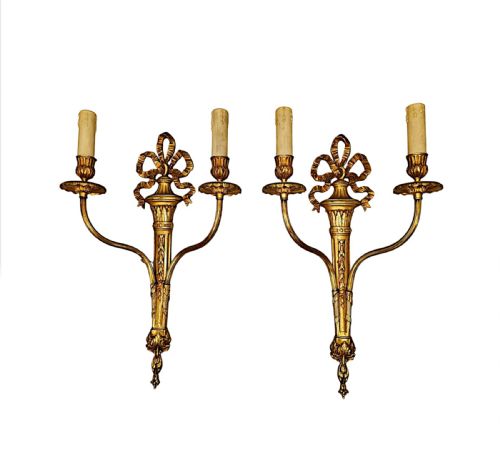
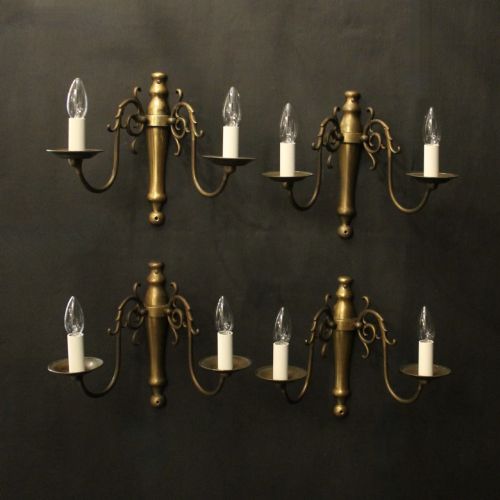
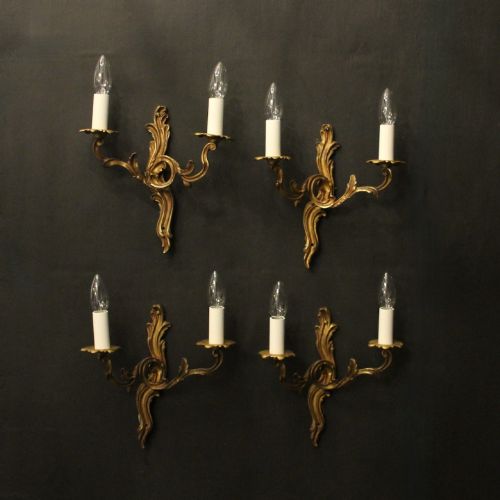
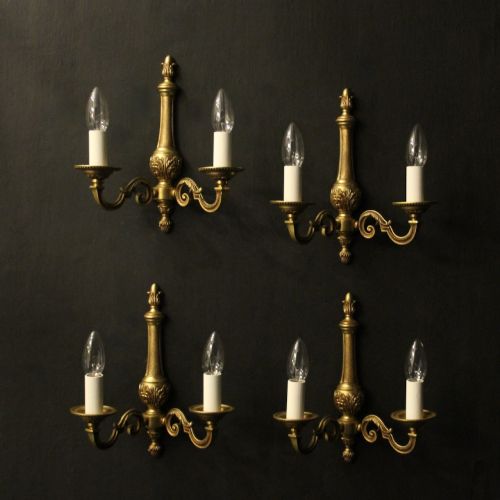
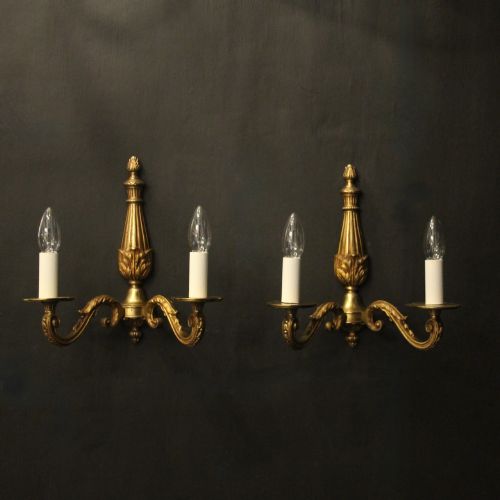
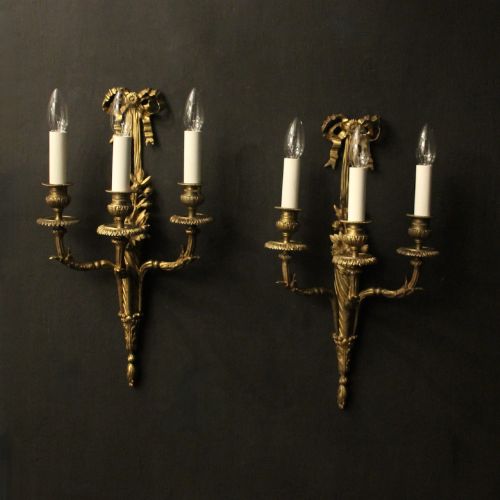
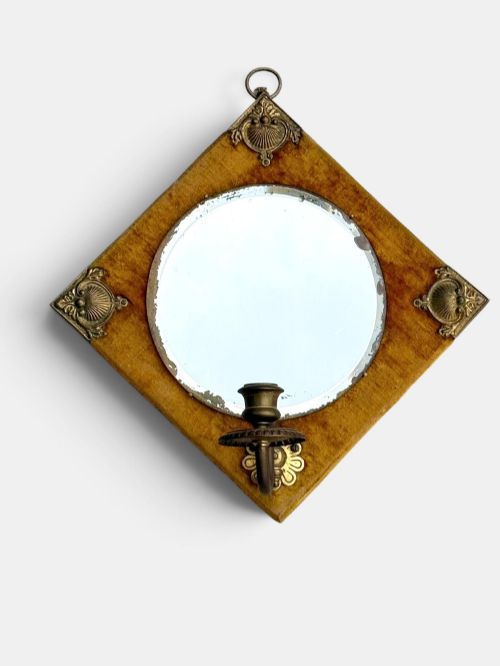
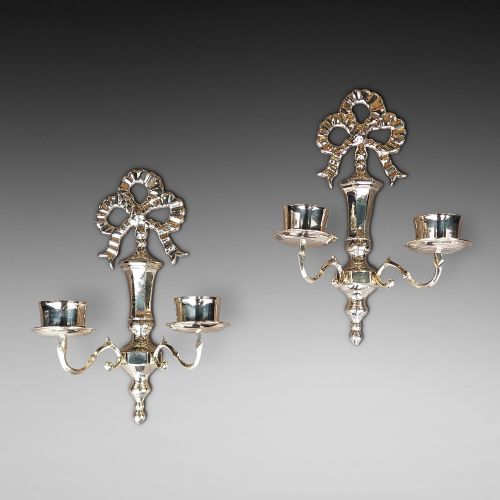
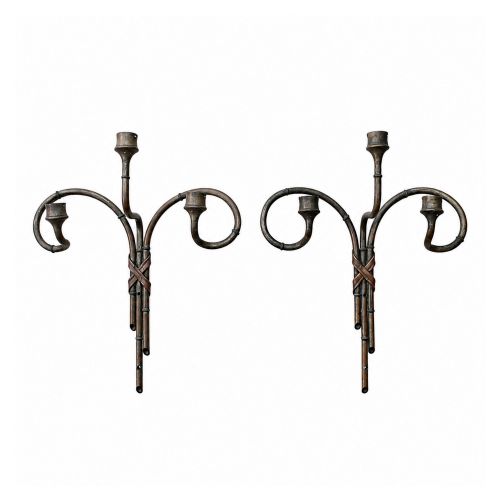
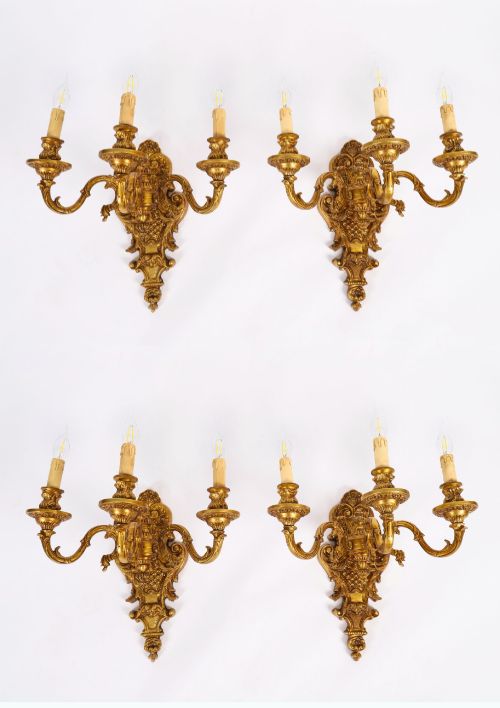
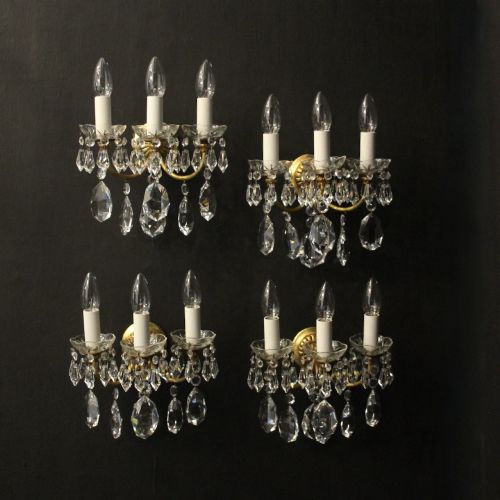
Brass candle wall sconces comprise mounted lighting fixtures designed to hold candles against a vertical surface, drawing on historical forms from the nineteenth and early twentieth centuries. When searching for brass candle wall sconces, buyers encounter various configurations including single, twin, and triple arm designs alongside mirror-backed pieces.
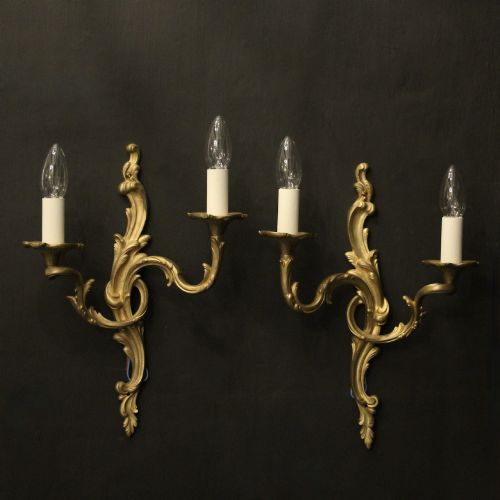
The selections available range from English traditional examples to French designs influenced by Rococo and Louis XVI styles. Pieces span periods from the Victorian era and the Edwardian years through to the 1920s and 1930s, often appearing in matched pairs or larger sets.
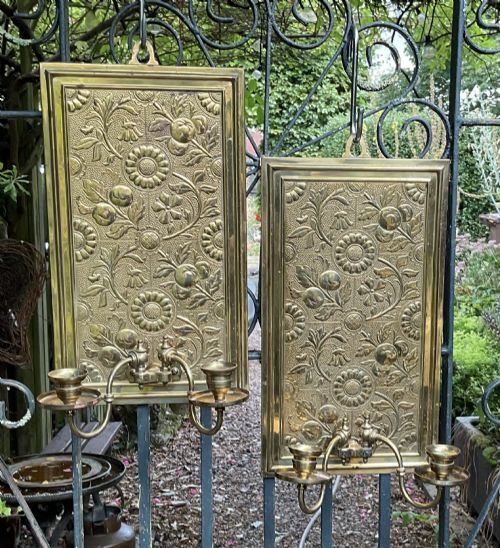
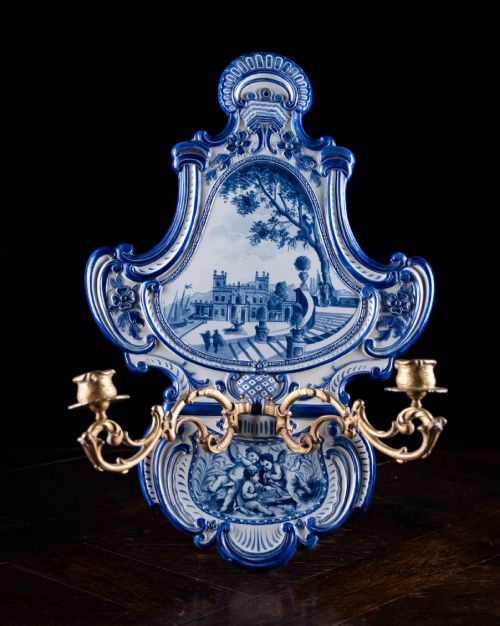
Makers and designers from the aesthetic movement also contributed distinctive metalwork to this category, alongside Dutch repousse work and continental gilt bronze interpretations. These wall-mounted fittings serve both functional illumination and decorative symmetry within historic and period interiors.
How they were made
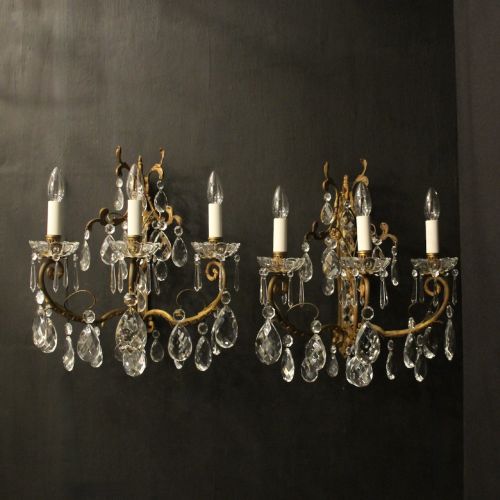
Makers utilised cast and sheet brass, gilt bronze, and ormolu, applying gilding or patination to enrich the metallic surfaces. Many examples incorporate glass crystals, porcelain flowers, or mirrored panels to amplify the candle light.
Techniques such as repousse work appear on Dutch and English vessels, creating raised relief patterns by hammering metal from the reverse side. Armatures and sconces were assembled from individual cast components, secured with threaded fixings or rivets.
Brass Candle Wall Sconces Retail Price Guide 2026
Typical asking prices for brass candle wall sconces among the pieces listed under this phrase on Sellingantiques today, from the lower quarter to the upper quarter. They describe what is for sale here now, not the wider market.
Some nineteenth-century brass wall sconces come with fighting cobras or porcelain flowers attached, proving Victorians loved botanical and zoological drama on their wallpaper.
What varies in quality
Quality separates pieces through the crispness of the casting and the depth of the chasing on the metal surface. Superior examples display sharply defined foliage, ribbons, or figural motifs without the softening typical of worn secondary moulds.
The weight of the brass or bronze, the integrity of the original gilding, and the matching of components across a set indicate the standard of manufacture. Finer pieces retain integrated drip pans and robust backplates that sit flush against the wall.
Bruce Talbert·Villeroy And Boch
The Brass Candle Wall Sconces Glossary
- Ormolu
- A gilded bronze technique utilising finely ground gold mercury amalgam applied to a bronze base, common in French lighting. This finish gives a warm, enduring lustre to decorative mounts and backplates.
- Repousse
- A metalworking technique where the artisan hammers the design from the reverse side to form raised patterns in relief. It is frequently seen on Dutch brass wall sconces.
- Girandole
- An ornamental branched wall light featuring a mirrored backplate designed to reflect and multiply the candlelight. These pieces combine reflective glass with protruding candle arms.
- Applique
- A French term for a wall-mounted light fixture or sconce fixed directly to the wall surface. Such fittings often match larger chandelier designs of the same period.
- Gilt brass
- A brass substrate treated with a gold-coloured wash or leaf to simulate solid gold or high-grade ormolu. It provides a bright metallic finish across Edwardian and later twentieth-century pieces.
Brass Candle Wall Sconces: Frequently Asked Questions
How do I clean antique brass sconces?
Dust gently with a soft, dry cloth to preserve any existing aged patina or surface gilding. Avoid harsh chemical polishes that strip historical layers from the metal.
Water and abrasive cleaners can damage delicate components like porcelain flowers, enamel, or silvered mirror backs. Professional guidance is recommended if deeper conservation is required.
Were these sconces wired for electricity?
Most period examples were originally built exclusively for wax candles before electrification became common in the twentieth century. Many surviving pieces retain their pure candle-holding configuration.
Some mid-century or later adaptations introduce electric fittings into the original arms or backplates. Buyers should check individual listings to see whether a piece is configured for candles or wired for modern bulbs.
How do I date a brass wall sconce?
Stylistic clues such as Rococo curves, Neoclassical symmetry, or Arts and Crafts simplicity provide the first indication of period. Construction methods, screw types, and the composition of the backplate also help narrow down the decade of manufacture.
Comparing the casting sharpness with documented pieces from the Victorian era or the 1920s refines the dating further. Material choices like heavy ormolu versus lighter gilt metal point toward specific manufacturing eras.
Are these sconces sold in pairs?
Many wall lights appear as matched pairs because symmetrical placement flanking mirrors, fireplaces, or doorways was standard historical practice. Larger rooms often utilised sets of four or six matching pieces.
Single sconces do appear for asymmetric spaces or hallway placements. Listings specify whether you are purchasing a single item, a pair, or a larger set.