


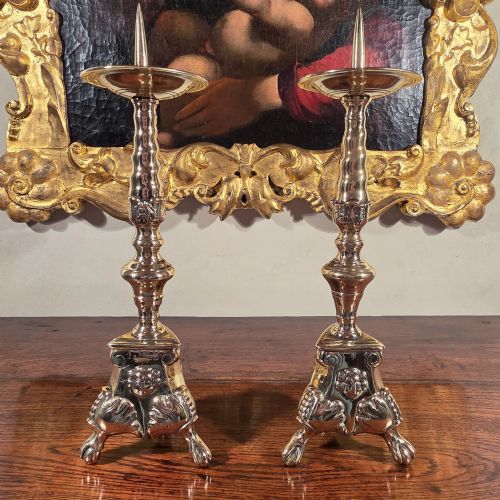

Brass Candle Sticks Pair
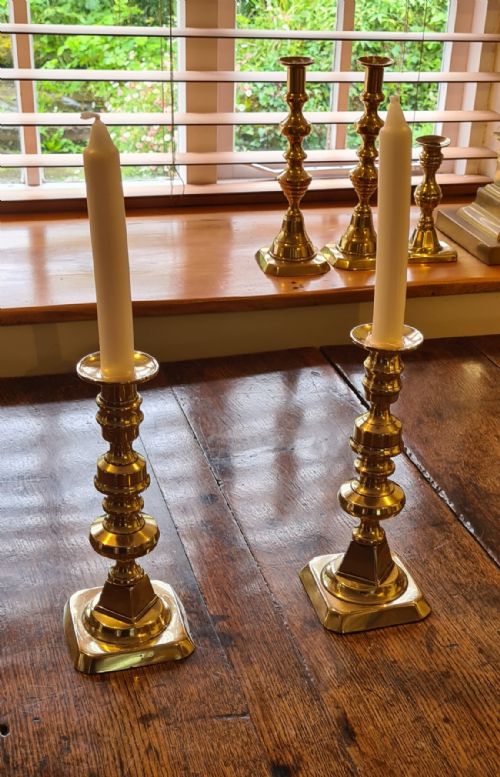
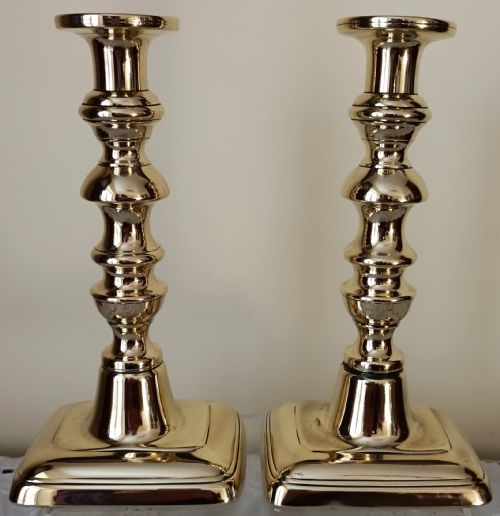
When searching for a brass candle sticks pair, expect functional metalwork spanning centuries of domestic and ecclesiastical lighting.
Brass Candle Sticks Pair
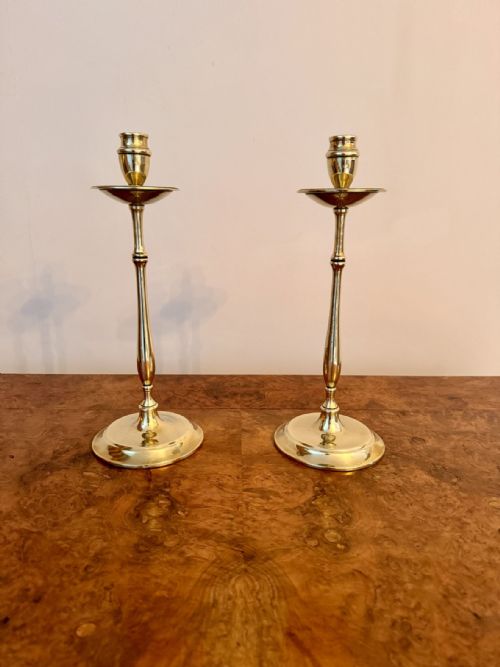
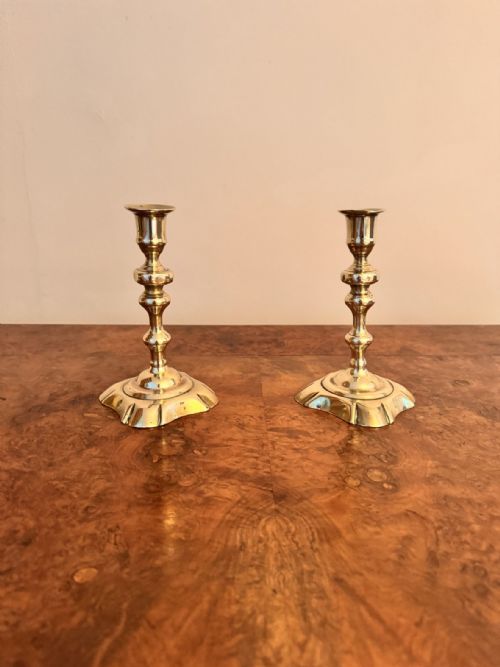
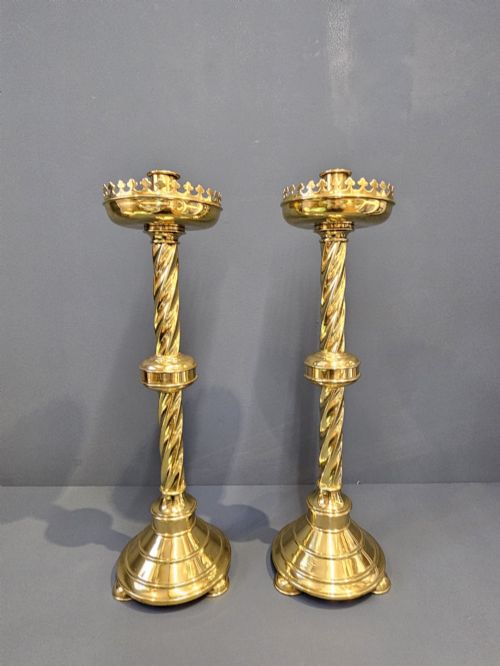
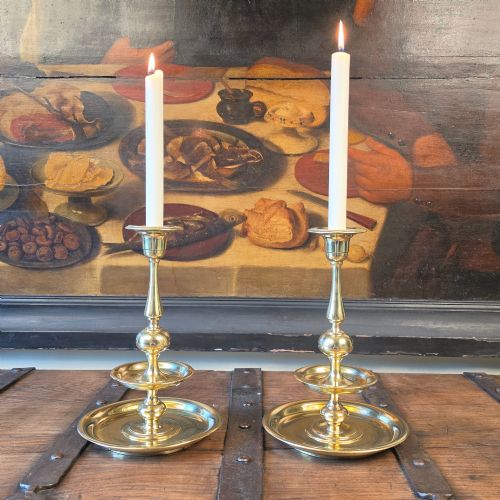
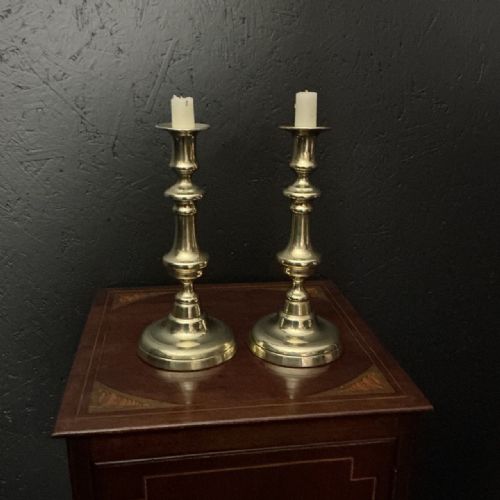
A brass candle sticks pair brings together matching lighting items designed for tabletops, altars, and mantelpieces. Buyers encounter domestic Georgian examples alongside heavier Victorian church pieces and later twentieth-century interpretations.
Forms range from simple push-eject mechanisms and barley twists to grander Gothic Revival and neoclassical shapes. Most examples originate from British and European workshops spanning the eighteenth to the early twentieth centuries.
How They Were Made
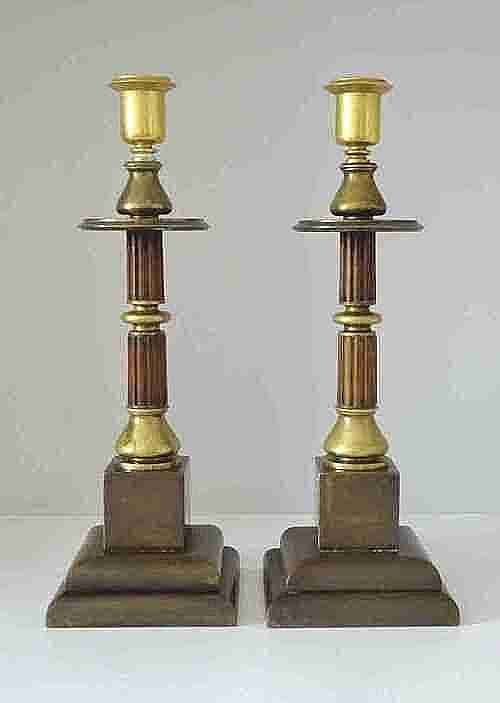
Construction relies heavily on casting methods, particularly the use of seamed moulds and later solid brass casting for heavier ecclesiastical and domestic forms. Workers also utilised turned wood, bronze, or ormolu accents alongside the primary metal.
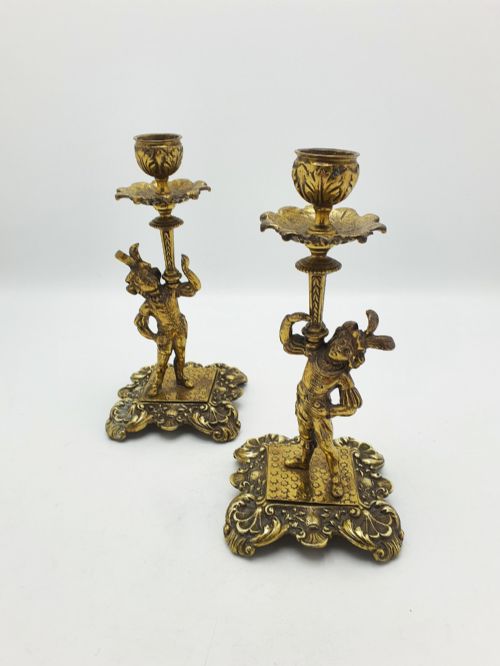
Surface finishing involves turning on lathes to create smooth columns, alongside applied chasing, engraving, and occasional inset materials such as marble or jasperware.
Certain nineteenth-century pairs feature clever branding stamps on their bases, including names like Queen of Diamonds and Ace of Diamonds.
What Varies in Quality
Quality rests in the crispness of the casting detail and the heft of the metal utilised in the construction. Superior pairs exhibit balanced proportions, cleanly turned profiles, and well-executed decorative motifs without excessive wear to the underlying material.
The integrity of the construction, such as tightly fitted joints and original components rather than later replacements, separates standard production items from finer workshop pieces.
J.T. & Co·J. Miller·James Clews·Erhard and Sons
The Brass Candle Sticks Pair Glossary
- Ejector
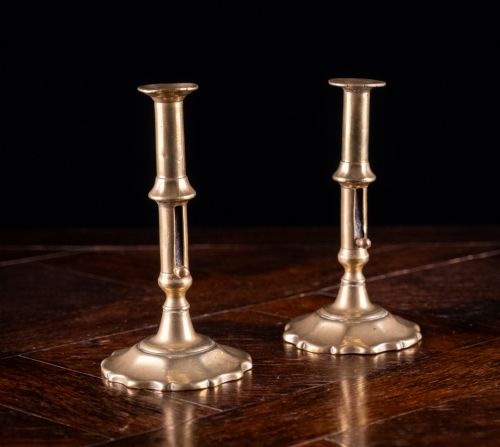
- A concealed internal mechanism featuring a small stem that pushes the candle stub upward for removal. This ingenious device appears frequently on nineteenth-century domestic brass designs.
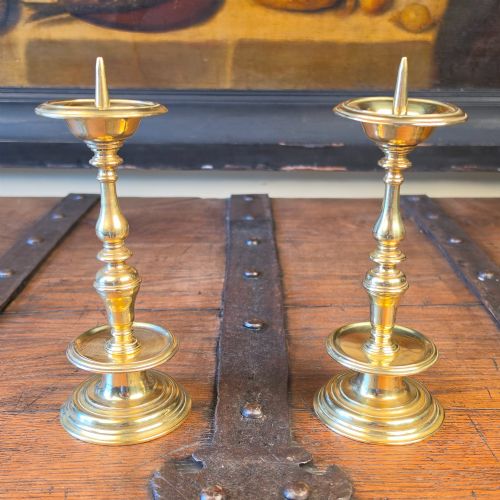
- Pricket
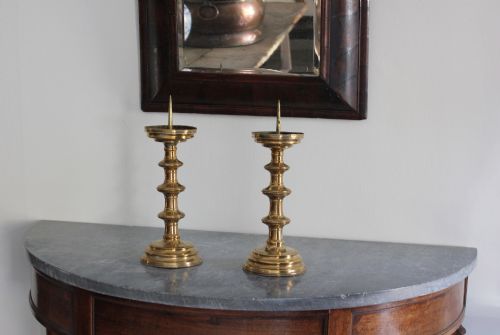
- A sharp metal spike set in the drip pan to secure a candle, most commonly found on church or altar pieces. Such items are designed for large candles rather than standard domestic tapers.
- Paktong
- A copper, nickel, and zinc alloy resembling silver, utilised by eighteenth-century makers for bright metallic lighting wares. This hard material accepts fine turning and polishing.
- Galleried
- Featuring a raised metal border or gallery encircling the drip pan or base tray to catch melting wax. This detail adds both security and visual definition to the silhouette.
- Barley twist
- A spiral column turned into the stem of the candlestick, echoing organic plant forms. This popular decorative technique appears across various periods from the Georgian era onward.
Brass Candle Sticks Pair: Frequently Asked Questions
How do I date an older pair?
Dating relies on observing manufacturing techniques, such as the presence of casting seams or lathe marks, alongside stylistic cues like neoclassical columns or Gothic Revival ornament.
Changes in base weights and fastener types across the eighteenth and nineteenth centuries further help narrow the period of production.
Were these used in homes or churches?
Both environments utilised matching pairs for illumination before the widespread adoption of gas and electric lighting.
Domestic examples tend to be lighter with ejector mechanisms, while church variants often feature larger prickets and heavier proportions.
What is an ejector mechanism?
An ejector mechanism uses a sliding thumbpiece on the stem to push an internal disc upward, releasing stuck candle stubs.
This practical addition became standard on many nineteenth-century domestic designs to simplify cleaning.
How do I care for antique brass?
Maintenance requires gentle dusting with a soft cloth to preserve the accumulated surface character built up over decades of handling.
Harsh abrasive cleaners should be avoided because they strip away the warm patination valued by collectors.