



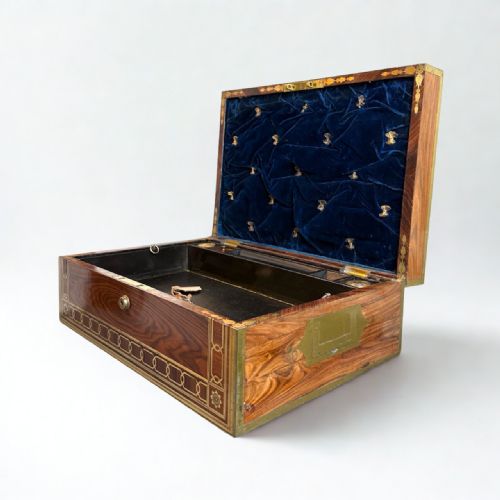
Brass Campaign Writing Box
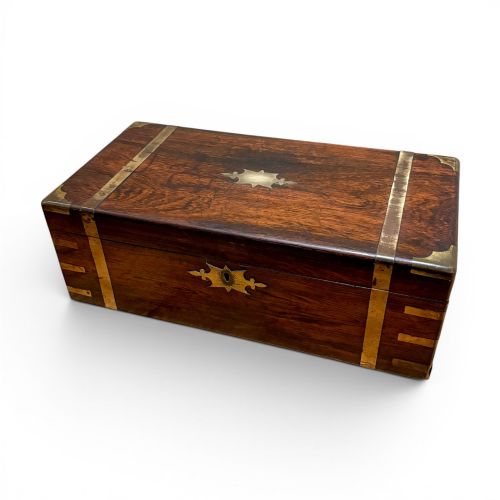
A brass campaign writing box offers portable elegance, built for travel during the Georgian and Victorian eras with durable timber and protective metal corners.
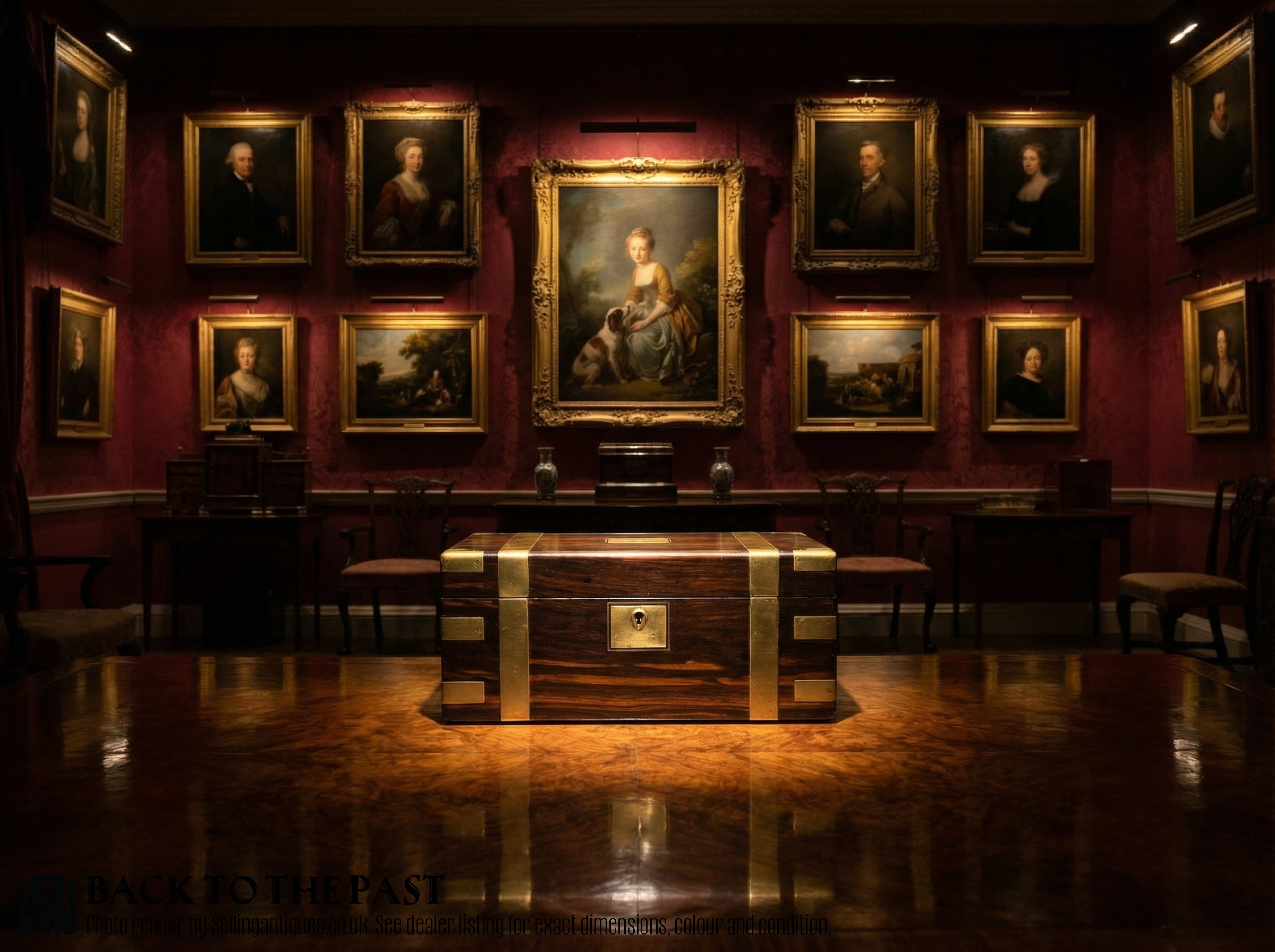
Brass Campaign Writing Box
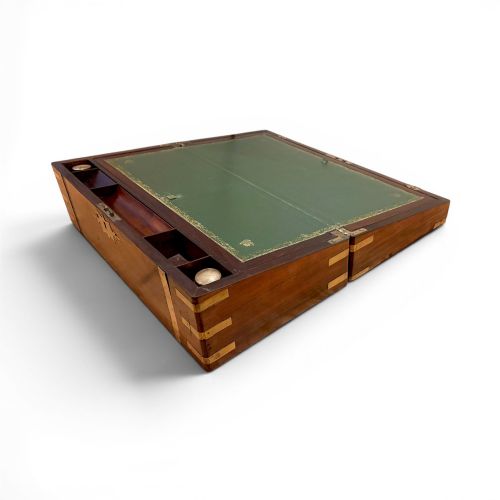
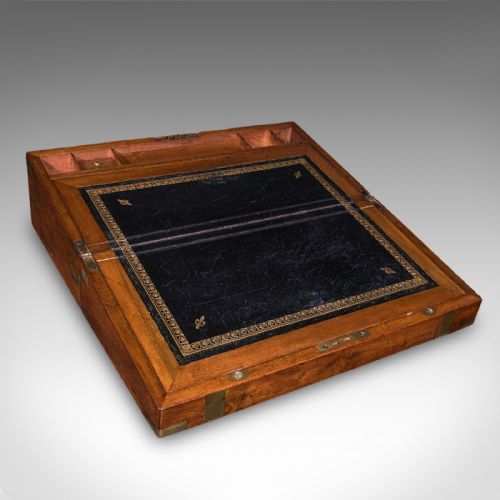
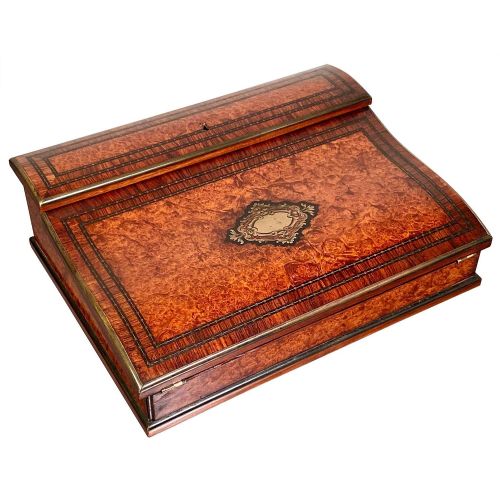
When you search for a brass campaign writing box, you encounter portable desks designed for officers and travellers on the move. These items fold open to reveal a sloping leather-lined writing surface and internal compartments for inkwells and pens.
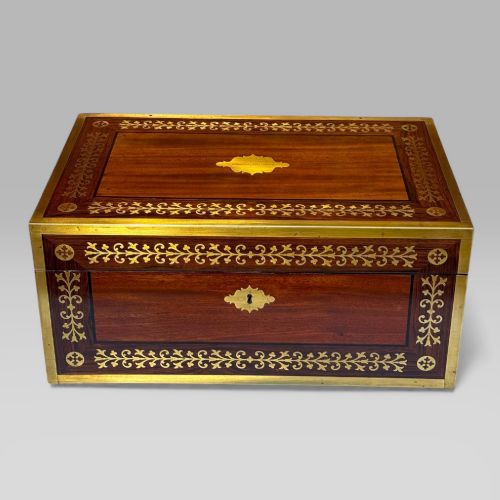
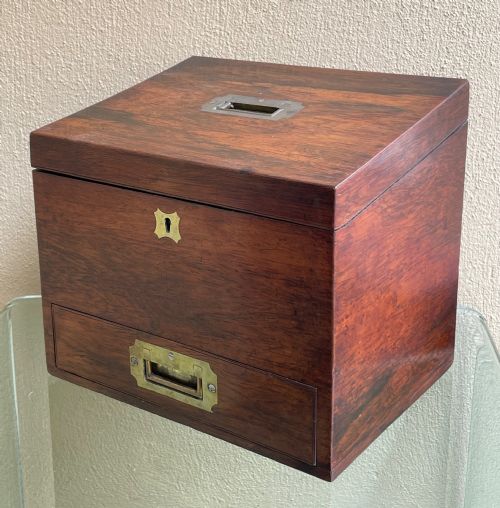
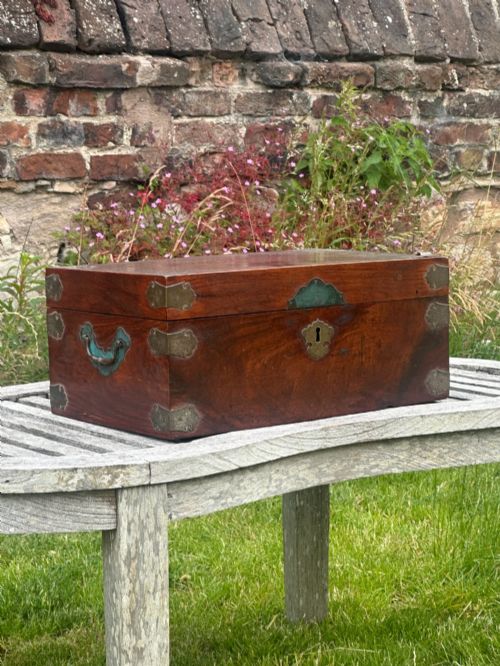
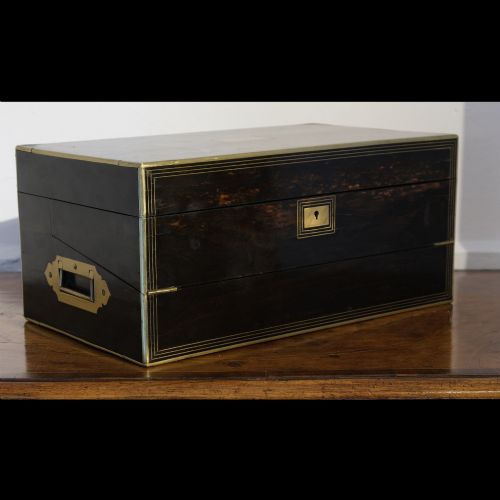
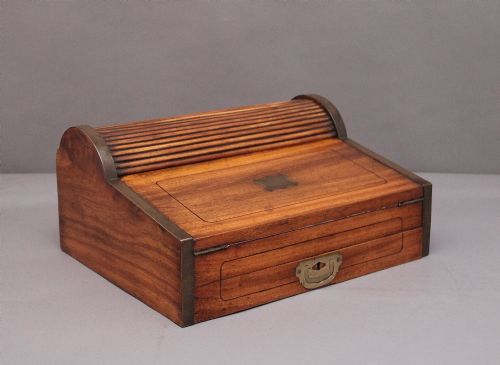
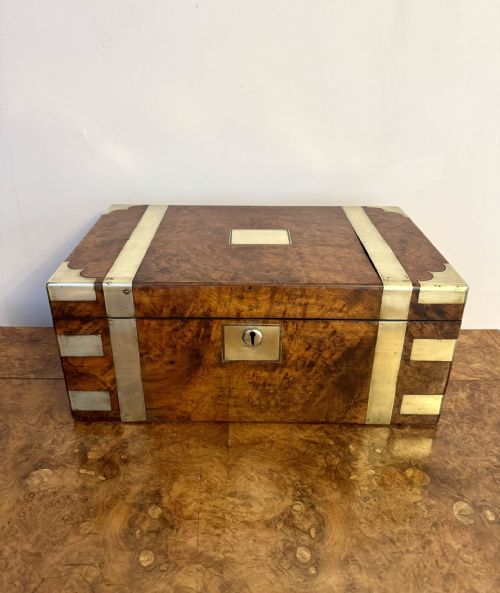
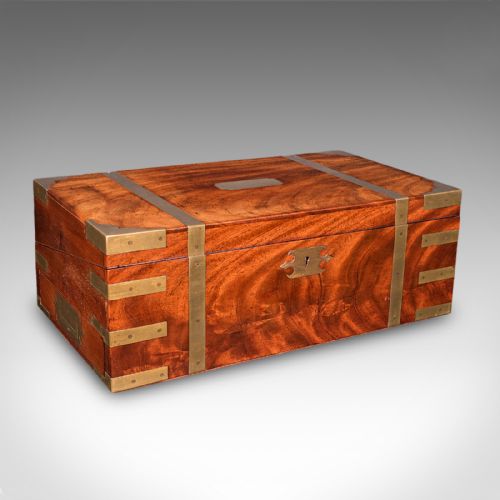
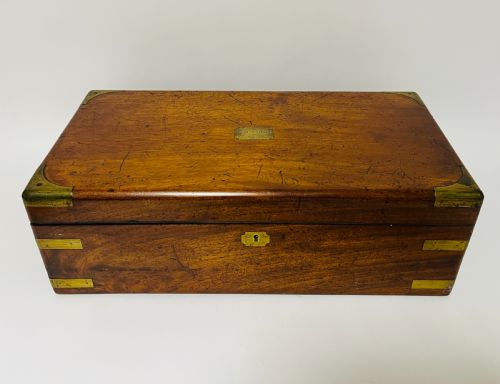
The version you are most likely to meet on this page is a Victorian or Georgian mahogany, walnut, or rosewood box reinforced with brass strapwork and corner plates. Many examples include secret drawers concealed beneath the stationery partitions to secure valuables during transit.
How they were made
Cabinetmakers constructed the carcass from dense hardwoods like mahogany, rosewood, and camphor, capable of withstanding tropical humidity and rough handling. Timber panels were often quarter-sawn to prevent warping and shrinkage.
Heavy brass corners, flush carrying handles, and straps were rebated directly into the wood and secured with countless tiny screws to protect the edges from impacts. Interiors combined fine leather writing surfaces with precision-turned glass inkwells and brass locking mechanisms.
Some military boxes hid secret sovereign sections alongside candle sconces, ensuring officers could manage their accounts long after lights out.
What varies in quality
The calibre of a brass campaign writing box depends on the crispness of the brass inlay, the grain selection of the primary timber, and the complexity of the internal mechanisms. Superior examples feature secret compartments released by hidden spring catches rather than simple pull panels.
Master makers integrated high-security locks by renowned inventors such as Bramah or Hobbs, which denoted a costly, bespoke commission. Lesser pieces relied on standard brass hardware and plain utility timbers without secondary accessory trays or candle sconces.
Hicks of London·William Austin
The Brass Campaign Writing Box Glossary
- Campaign box
- A portable desk or chest designed for military officers on active service, characterised by recessed brass mounts and folding sections.
- Secret drawers
- Hidden compartments concealed behind false partitions or triggered by sliding pins, intended for storing currency and confidential papers.
- Sloped writing surface
- A dual-flap hinged lid lined with tooled leather or velvet that angles upward to provide an ergonomic desk for handwriting.
- Bramah lock
- A patented high-security cylindrical lock invented by Joseph Bramah in the late eighteenth century, prized for its pick-resistant mechanism.
- Brass binding
- Flat brass strips countersunk into the edges and corners of wooden furniture to absorb shocks and reinforce structural joints.
Brass Campaign Writing Box: Frequently Asked Questions
What is a brass campaign writing box?
A brass campaign writing box is a portable timber desk reinforced with metal corners and straps, designed for military officers and travellers during the eighteenth and nineteenth centuries.
When opened, the hinged case reveals a slanted leather writing surface, compartments for ink and nibs, and often hidden drawers for secret documents.
How were these boxes used?
These boxes provided a stable writing surface and secure storage for correspondence and valuables while on military campaigns or long sea voyages.
Owners stored stationery, quills, and inkwells inside, locking the entire case with a brass key before transport.
How do I tell Victorian from Georgian boxes?
Georgian boxes typically display simpler brass corner mounts and lighter timbers like mahogany, reflecting earlier campaign utility.
Victorian examples frequently incorporate more elaborate brass inlay, heavier woods such as burr walnut and coromandel, and complex secret drawer mechanisms.
How do I care for the wood and leather?
Keep the timber conditioned with appropriate furniture wax to prevent the hardwood from drying out or cracking in heated rooms.
Protect the internal leather writing surface from moisture and avoid placing heavy objects on the folding flaps when the box is open.