


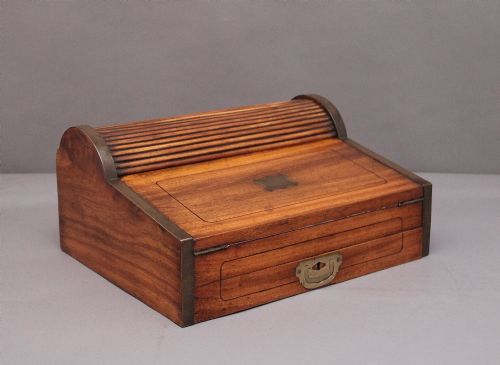
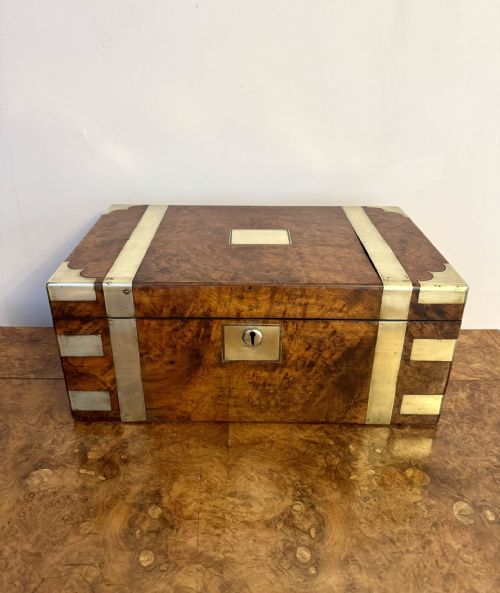
Brass Campaign Desk
A brass campaign desk offers portable utility built for travel, combining solid timbers with flush brass fittings.
Brass Campaign Desk
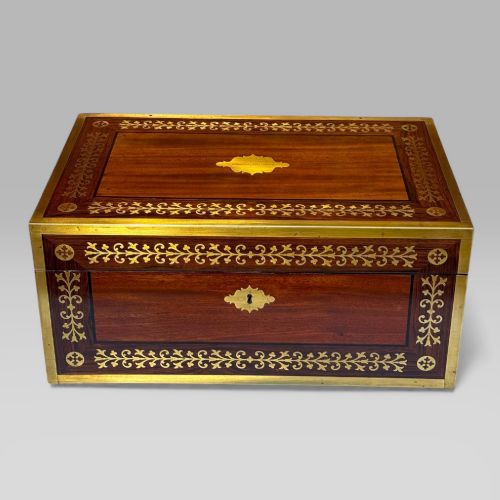
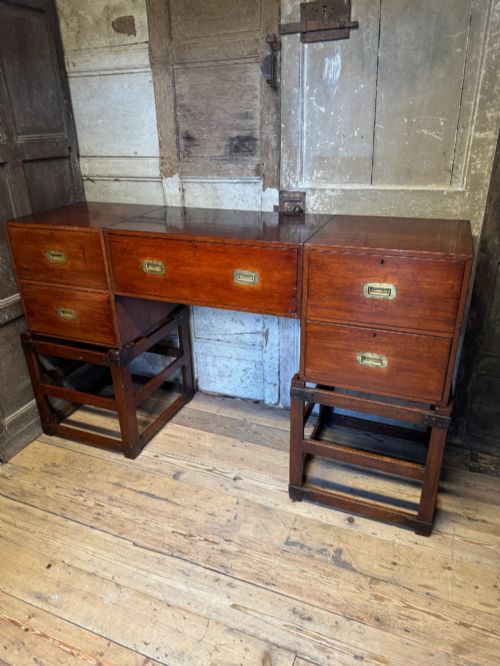
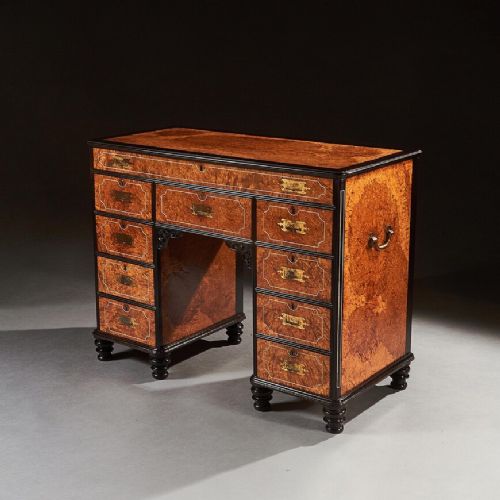
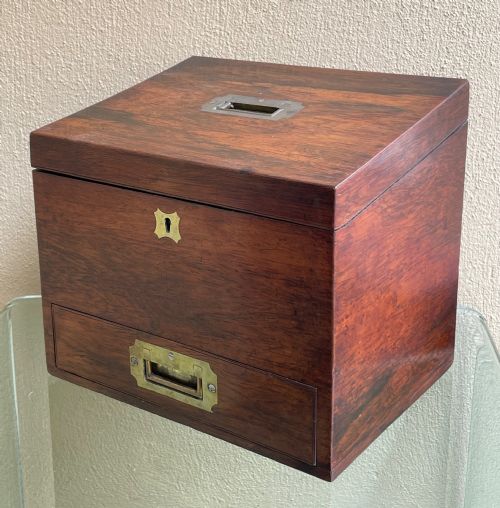
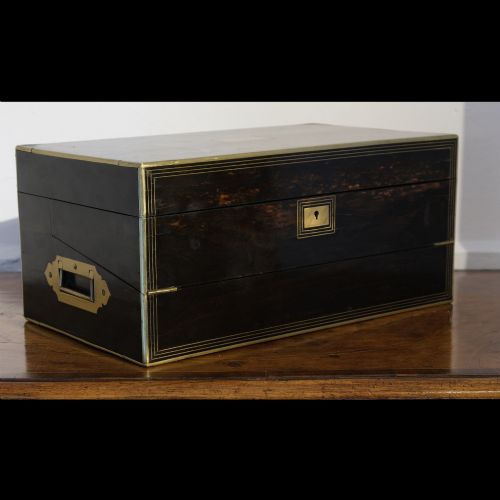
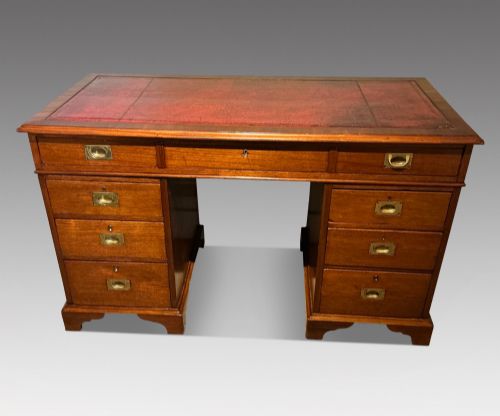
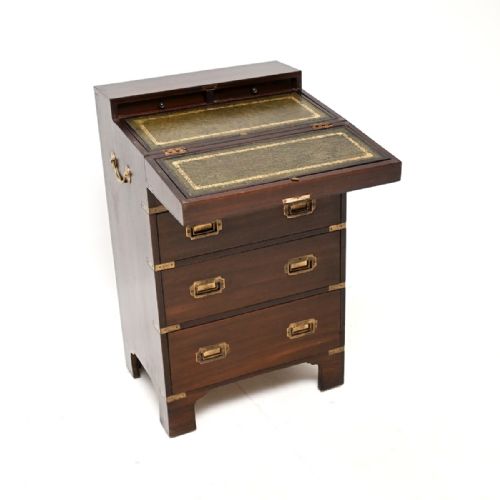
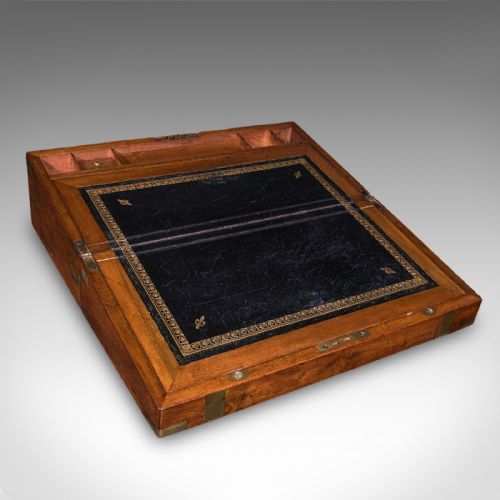
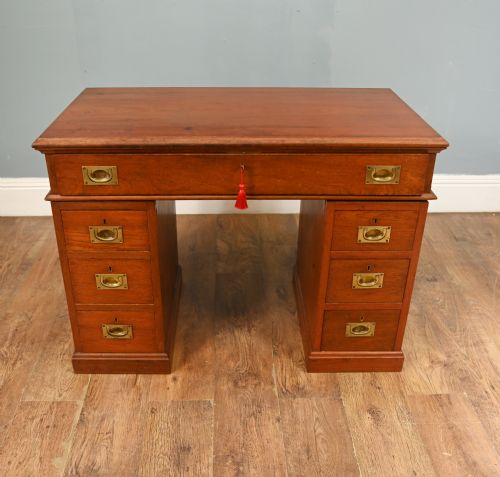
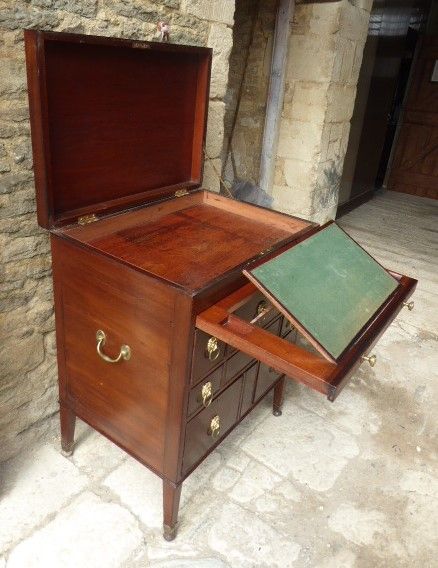
A brass campaign desk encompasses portable writing furniture designed for officers and travellers during the Georgian and Victorian eras, spanning items such as writing slopes, secretaire chests, and kneehole desks. These pieces appear frequently in mahogany, rosewood, and camphor wood, often fitted with recessed brass handles and corner brackets to withstand transit.
The most common formats met on this page are compact writing slopes and multi-section military chests featuring drop fronts or fitted desk interiors. Such items range from portable lap boxes placed on tables to substantial two-part pedestals built for field use.
How they were made
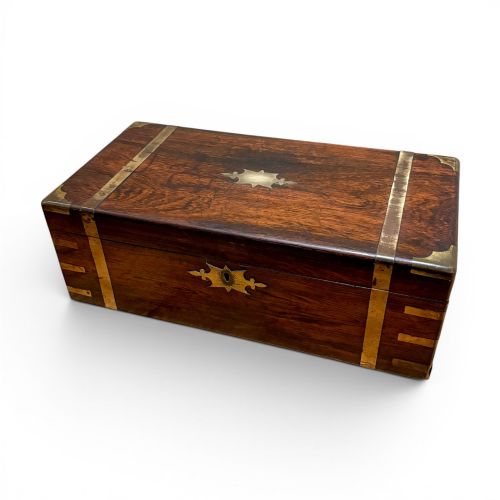
Timbers like mahogany, walnut, teak, and camphor wood provide dense structural stability, selected for their resistance to splitting in varied climates. Brass corners, binding, and flush-fitting handles are secured firmly into the wood to protect vulnerable edges during movement.
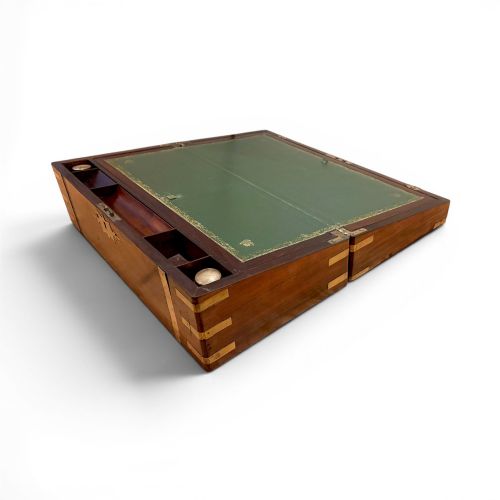
Interiors often incorporate secret drawers, pigeonholes, and inset leather writing surfaces. Construction methods rely on sturdy joinery and sectional dismantling, allowing large desks and chests to separate into manageable parts for transport.
Camphor wood chests retain their distinct herbal aroma after two centuries of travel.
What varies in quality
Quality differentiates through the choice of cabinet wood, the precision of brass inlay, and the complexity of internal compartments. Dense grains in figured walnut, amboyna, or rosewood paired with hand-cut brass mounts signal higher standards of production.
Fittings such as working locks with original keys, concealed secret drawers, and well-executed secondary timbers in drawer linings elevate a piece from standard utilitarian supply to finer workshop output.
Gillows·William Austin
The Brass Campaign Desk Glossary
- Campaign furniture
- Portable furnishings designed for military officers and travellers, characterised by sectional construction and protective brass mounts. These items dissemble or fold for ease of transit.
- Secretaire chest
- A chest of drawers featuring a dedicated top drawer that drops down to reveal a fitted writing surface and small compartments. It merges storage with desk utility.
- Writing slope
- A portable box with a hinged, sloping lid that opens to provide a slanted writing surface and internal storage for paper and ink. Many examples include secret compartments beneath the stationery wells.
- Brass bound
- Edges and corners reinforced with brass strips and brackets fastened flush to the wood. This technique prevents splitting and absorbs impact during travel.
- Camphor wood
- A fragrant timber utilised extensively in campaign pieces originating from or travelling through tropical regions. Its natural scent offers insect-repellent properties.
Brass Campaign Desk: Frequently Asked Questions
What is a campaign desk?
A campaign desk is portable furniture made for officers on the move, designed to pack down or fold securely for travel.
These pieces use durable hardwoods and flush brass mounts to protect corners and edges from heavy handling.
How do I use a writing slope?
A writing slope opens to reveal an angled surface designed for writing letters, with internal compartments for inkwells and stationery.
Many examples include secret drawers hidden beneath the removable pen trays or letter partitions.
What woods were used?
Cabinetmakers utilised dense timbers such as mahogany, rosewood, walnut, teak, and camphor wood.
These materials were chosen for strength and resistance to warping during long journeys across different climates.
How do I date a campaign piece?
Dating relies on timber choices, brass mounting styles, and construction techniques found across Georgian and Victorian examples.
Earlier pieces from the late eighteenth century often feature simpler brass work, while mid-nineteenth-century versions incorporate complex internal mechanisms.