




Brass Bound Oak Stand
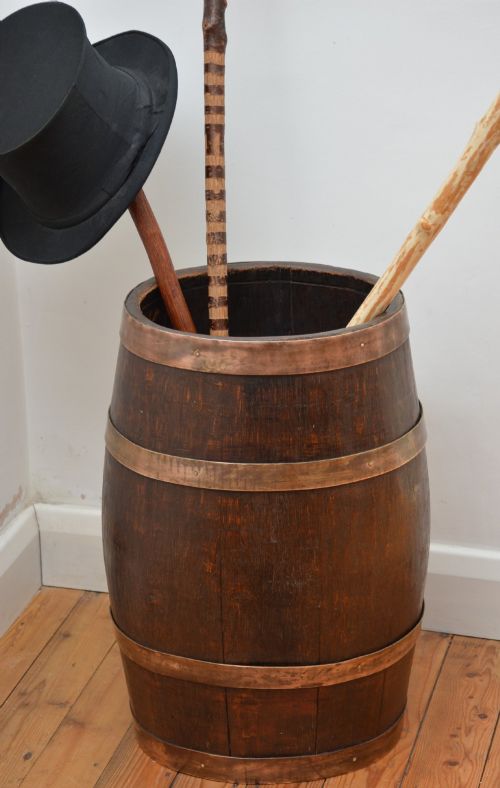
A brass bound oak stand brings robust utility and traditional warmth to a hallway, channelling centuries of coopered craftsmanship into a practical piece.
Brass Bound Oak Stand
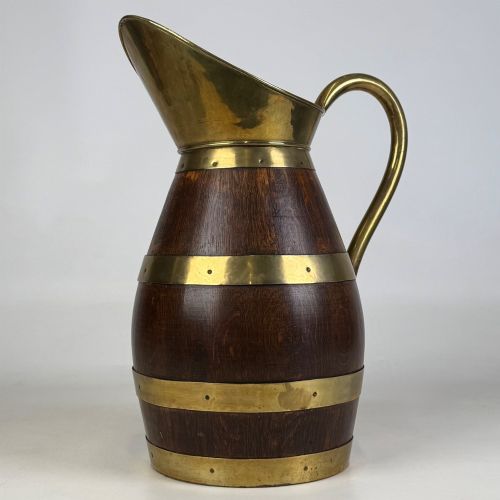
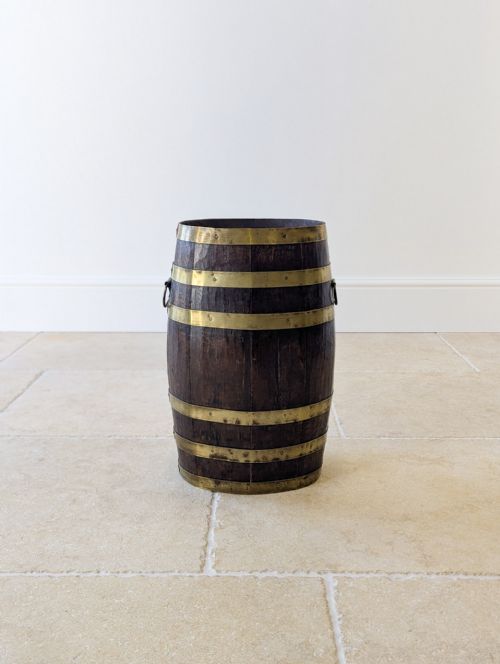
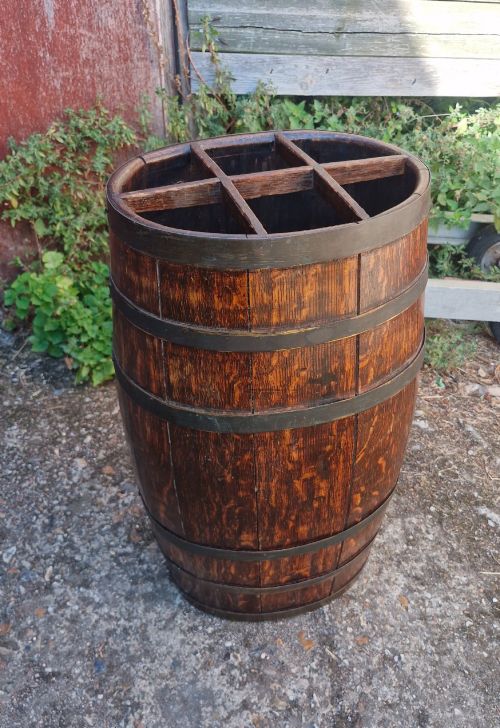
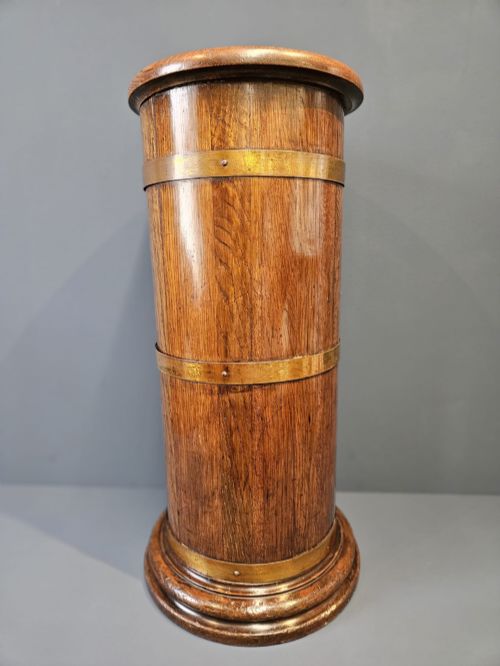
A brass bound oak stand takes several functional forms across the centuries, most commonly appearing as umbrella stands, stick stands, and coopered barrels designed for daily household use. You will frequently encounter Victorian and Edwardian examples on this page, alongside pieces stretching back to the nineteenth century and into the early decades of the twentieth.
These items transition fluidly between roles, serving equally as planters, jardiniere stands, and pitchers or jugs depending on their depth and proportion. The traditional English country house aesthetic dominates the selection, though variations such as Arts and Crafts or Black Forest pieces also emerge among the listings.
What varies in quality
The standard of timber selection and the precision of the cooperage define the upper tier of these stands. Denser hardwood staves that fit seamlessly together without excessive filler create a stable vessel that resists the drying effects of household environments.
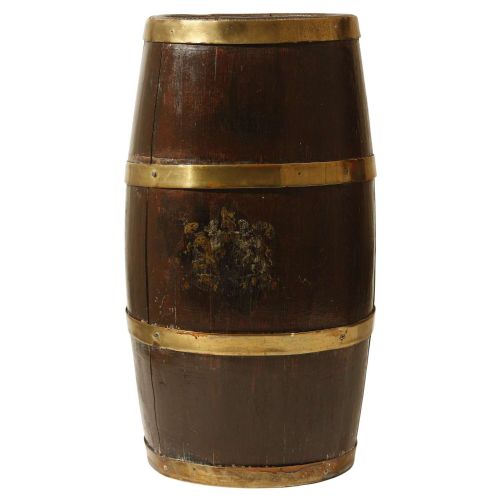
Hardware execution also separates standard utility items from finer decorative pieces, particularly where brass braces are hand-fitted or feature specific heraldic details like a coat of arms. The balance of proportion between the oak body and the metal bands determines the visual harmony of the piece.
Alternative forms within the category include planters, jardiniere stands, and jugs alongside standard umbrella and walking stick containers.
Lister and Co·R.A. Lister
The Brass Bound Oak Stand Glossary
- Coopered
- Constructed from curved wooden staves bound together with metal hoops, much like a traditional drinking cask or barrel. This method provides immense strength to hollow wooden vessels.
- Jardiniere
- A large ornamental pot or stand for holding flowers and plants, frequently adapted from coopered barrel forms. These indoor planters often share identical brass-bound construction with umbrella stands.
- Stave
- One of the narrow vertical strips of oak that form the sides of a coopered barrel or stand. Precision shaping of each stave dictates the final contour of the vessel.
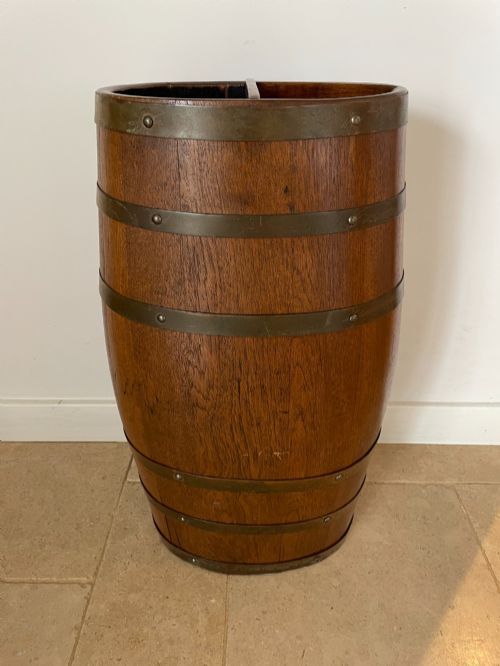
- Semi-circular
- Describing a flat-backed umbrella or stick stand designed to sit flush against a hallway wall. This configuration optimises floor space in domestic entryways.
Brass Bound Oak Stand: Frequently Asked Questions
What is a brass bound oak stand?
A brass bound oak stand is a coopered wooden vessel reinforced with metal bands, traditionally utilised in hallways for holding walking sticks and umbrellas.
Over time, many of these durable containers have also been adapted to serve as plant holders, jardiniere stands, and decorative floor vessels.
How do I care for my stand?
Maintain the wood by occasionally applying a suitable wax to nourish the oak staves and preserve the natural grain. Avoid placing the vessel directly next to intense heat sources to prevent the timber from splitting.
Keep the interior dry when possible, or use a suitable liner if employing the stand for live plants to protect the base from prolonged moisture.
How can I tell the period?
Dating relies on observing the construction details, metal patination, and any applied ornamentation such as coats of arms or distinct stylistic markers. Victorian and Edwardian examples often display specific hardware fastenings and wood finishes characteristic of their respective decades of manufacture.
Comparing the construction methods against documented styles like Arts and Crafts or traditional English country pieces helps narrow down the age.
Where were these stands used?
These pieces historically stood in the grand entrance halls and boot rooms of English country houses to manage wet weather gear. Their robust construction was engineered to withstand daily handling in busy domestic environments.
Today, they transition easily into modern hallways, living spaces, and conservatories as both practical storage and decorative plant displays.