



Brass Bound Mahogany Tub
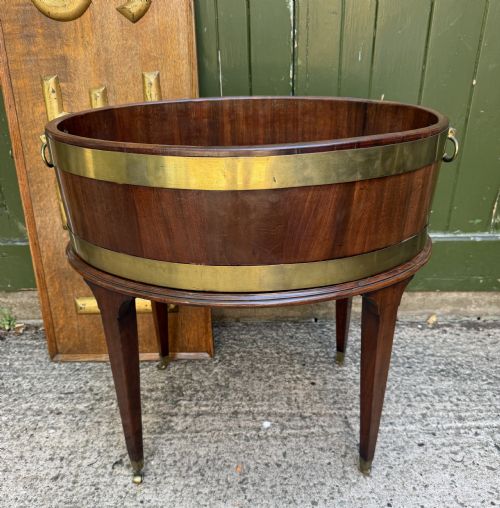
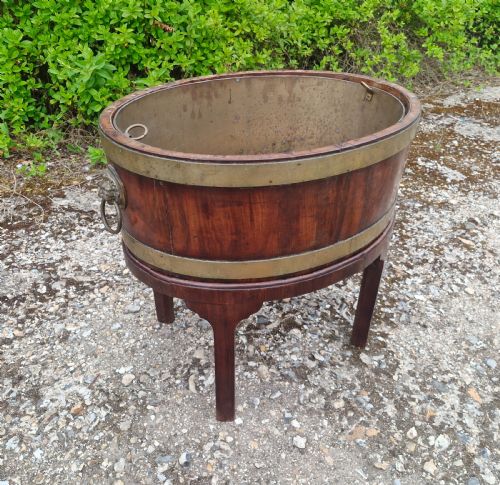
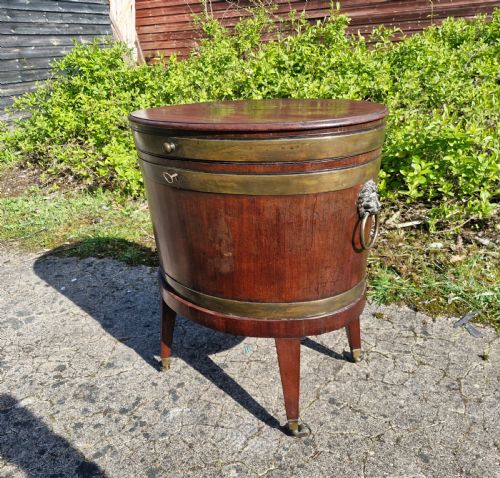
These pieces of brass bound mahogany tub furniture serve primarily as wine coolers, jardinières and buckets, offering classic Georgian proportions and rich timber character for traditional interiors.
Brass Bound Mahogany Tub
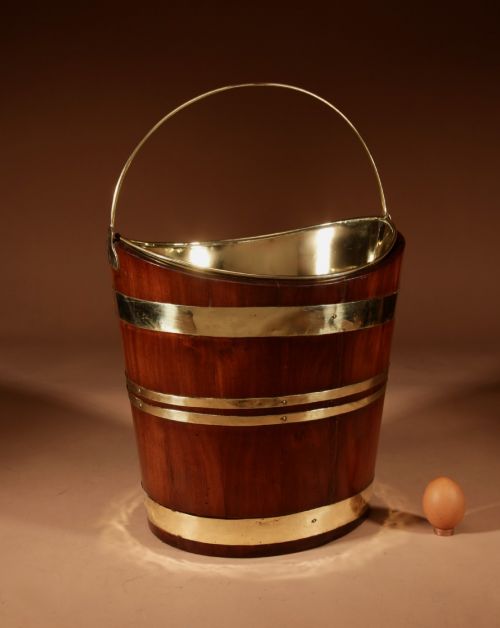
When you search for a brass bound mahogany tub, you are looking at substantial coopered vessels that served various domestic purposes from the eighteenth century onwards. These cylindrical or oval containers were built to hold ice and wine bottles, peat, or growing plants.
The pieces you meet most often on this page belong to the Georgian and late Georgian eras, including George III examples and Dutch country variants. They appear as standalone buckets, boat-shaped vessels, or raised upon dedicated stands.
Makers designed these items to function as wine coolers and cellarettes, though many serve equally well today as planters and fireside accessories. Their sturdy timber construction and metal reinforcements ensured they survived centuries of active household use.
What varies in quality
The fineness of the timber grain and the depth of the mahogany patination separate standard examples from superior pieces. Older vessels often display richer, denser figuring across the staves.
The weight and finish of the brass fittings indicate the standard of production. Heavier, hand-beaten bands and finely cast handles demonstrate superior craftsmanship compared to simpler utilitarian versions.
Some nineteenth-century versions take the exact shape of a tiny wooden boat, ready to sail across your hearth.
The Brass Bound Mahogany Tub Glossary
- Coopered
- Constructed from curved wooden staves joined together to form a rounded vessel, held tightly by exterior metal bands. This technique provides exceptional structural strength.
- Cellarette
- A lockable container designed to store bottles of wine and spirits securely in the dining room. Many examples feature fitted wooden interiors for individual bottles.
- Jardinière
- An ornamental pot or stand designed to hold growing plants or flowers. These receptacles often double as decorative indoor planters.
- Schuitje
- A boat-shaped vessel used historically for burning peat or holding fuel near the hearth. The distinctive hull profile allows easy placement by the fireplace.
- Patination
- The natural sheen and surface transformation developed by timber over decades of handling and polishing. It offers a visual record of an object's age.
Brass Bound Mahogany Tub: Frequently Asked Questions
How were these tubs used originally?
These vessels functioned primarily as wine coolers, filled with ice to chill bottles during formal meals. They also served as peat buckets near the fireplace or as planters for indoor greenery.
Over time, owners adapted them to suit changing domestic needs while retaining their traditional timber presence in the room.
What is the difference between a wine cooler and a cellarette?
A wine cooler typically refers to an open tub or bucket designed to hold ice and bottles during dining. A cellarette more often includes a fitted interior or locking lid for secure bottle storage.
Both forms utilise robust coopered construction and brass banding for durability.
Can I use an antique tub as a planter?
Many of these vessels function successfully as jardinières or plant holders in modern interiors. Many retain protective metal liners that help manage moisture.
Placing a modern saucer inside the liner further protects the historic timber from water damage.
How do I distinguish an 18th-century piece?
Eighteenth-century examples often display deep mahogany patination, hand-cut dovetails on associated stands, and heavier brass bands secured with early fixings. Georgian proportions tend to be particularly balanced and refined.
Comparing the timber density and construction methods helps separate these earlier pieces from later nineteenth-century interpretations.