


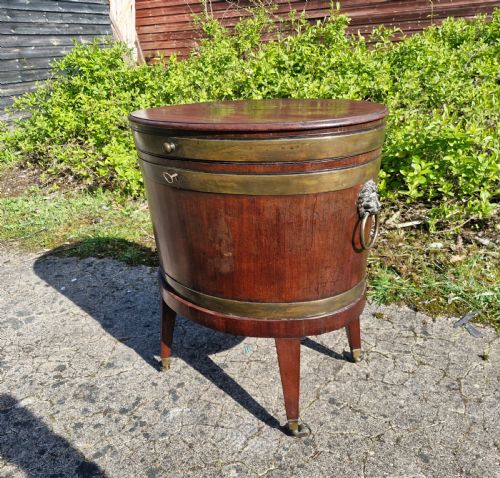


Oval Brass Bound Cooler
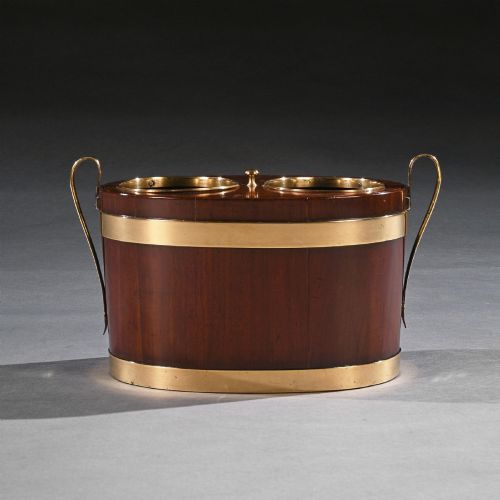
An oval brass bound cooler is a masterclass in dining room theatre, holding ice and bottles or serving as a grand planter.
Oval Brass Bound Cooler
An oval brass bound cooler is primarily designed for chilling wine during formal dining, though many survivors now function as plant jardinières. When you examine this page, you meet pieces built during the eighteenth and nineteenth centuries, spanning the Georgian, Regency, and Victorian eras.
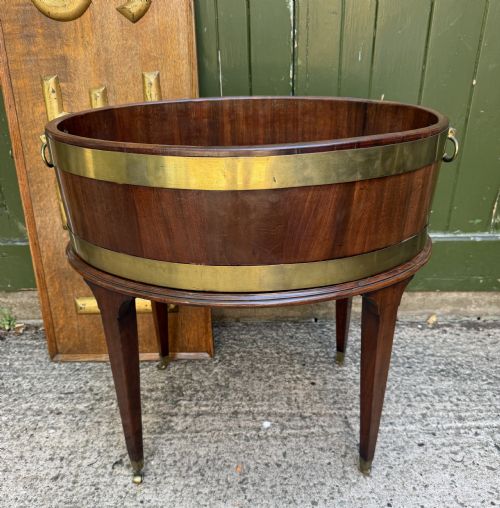
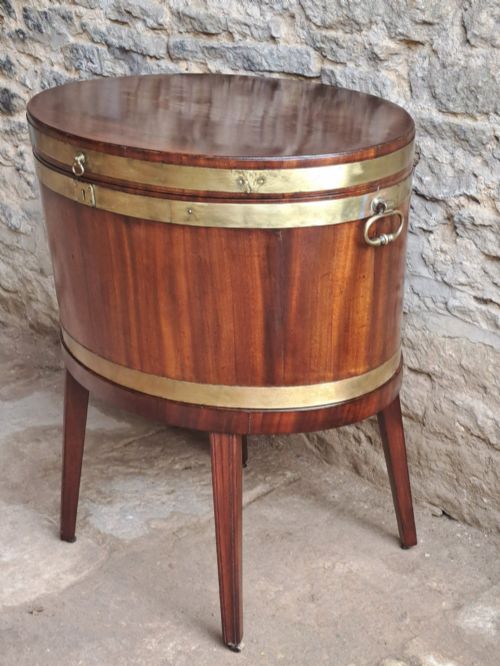
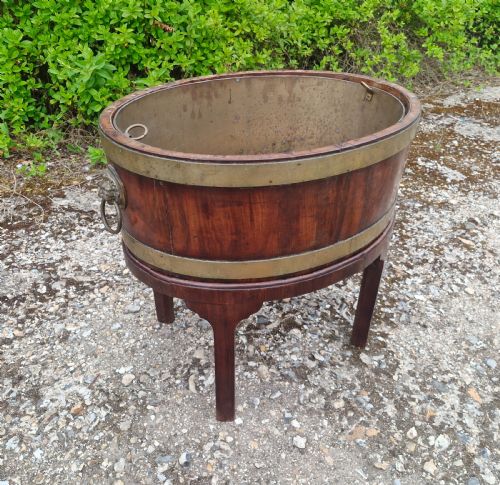
The dominant form is a coopered timber bucket, shaped with curved staves and secured by heavy metal hoops. You will find examples resting directly on the floor, while others are raised on dedicated stands with square or tapered legs.
Makers of the period also incorporated decorative stringing and inlay into the wood, alongside drop handles and liners made of zinc or metal. Some pieces from this selection emerge in alternative forms such as boat shapes or open vessels.
Materials and Construction Methods
Makers constructed the body using solid mahogany or walnut staves joined by a cooperage technique akin to barrel-making. Boxwood stringing often provides subtle linear contrast along the timber surface.
Heavy brass bands encircle the timber body, secured with pins, and provide structural tension alongside decorative contrast. Metal or zinc linings protect the wood from melting ice and moisture during use.
Stands utilise matching hardwoods joined with traditional cabinetmaking techniques, carrying the same attention to timber grain and edge profiling.
Listings feature mahogany as the dominant wood, accompanied by walnut, boxwood, and brass.
Distinguishing Quality Among Examples
The standard of timber selection dictates much of the visual weight, with rich figuring and deep natural patina marking out the superior examples. The crispness of the cooperage work and the thickness of the brass bands reveal the maker's original investment of time and material.
Survival of the original stand or matching zinc liner elevates an example, as many lost these components over centuries of use. The integration of delicate details like inlay, drop handles, and period-correct fixings separates standard utility items from high-status dining room pieces.
The Oval Brass Bound Cooler Glossary
- Cellarette
- A lockable container used for storing wine bottles near the dining table before service. It shares many construction traits with the cooler.
- Coopered
- Built from curved wooden staves fitted together and bound by metal hoops, following traditional barrel-making methods. This technique allowed the vessels to hold liquids securely.
- Jardiniere
- An ornamental pot or stand designed to hold plants and flowers. Many wine coolers found a second life in this role.
- Stringing
- A thin inlay of contrasting wood used to create decorative borders on cabinet furniture. It highlights the geometric form of the piece.
- Patina
- The deep surface sheen and colour developed by wood over centuries of handling and exposure to light. It is a sign of genuine age.
Oval Brass Bound Cooler: Frequently Asked Questions
How were these coolers used originally?
Servants filled the wooden vessel with ice and water to chill wine bottles before or during grand meals. The metal or zinc lining prevented moisture from rotting the timber staves.
After dining, the cooler sat on the floor or its stand, ready to receive empty bottles or fresh supplies. Today, owners frequently repurpose them as indoor planters or storage bins.
Are these pieces waterproof today?
Most historic metal liners have developed small gaps or corrosion through centuries of temperature change and dampness. Pouring water directly inside risks leaks onto historic timber.
Placing a modern plastic tray or nursery pot inside allows you to use the vessel safely as a plant holder. Dry storage is recommended if you wish to protect the original internal surfaces.
How do I spot a later revival piece?
Revival items made around eighteen-eighty often display different milling marks and machine-cut screws rather than hand-forged or cast brass fixings. The timber grain and colour can also appear uniform compared to eighteenth-century examples.
Examining the underside and internal base reveals the tool marks left by the maker. Comparing these against authenticated period pieces clarifies the manufacturing date.
Do these coolers need a separate stand?
Some designs sit directly on the floor as heavy floor-standing buckets, while others require a dedicated table or frame. Both variations appear in the historical record depending on the dining room fashion of the decade.
A matching stand elevates the vessel for easier access during dinner service. Ensure the weight of the vessel matches the stability of the support frame.