


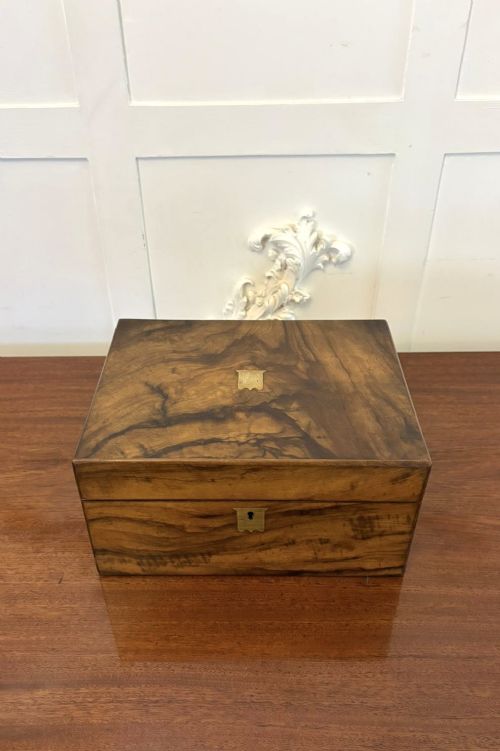

Brass Bound Desk Box
A brass bound desk box brings solid timber and gleaming metal straps together for portable writing and correspondence.
Brass Bound Desk Box
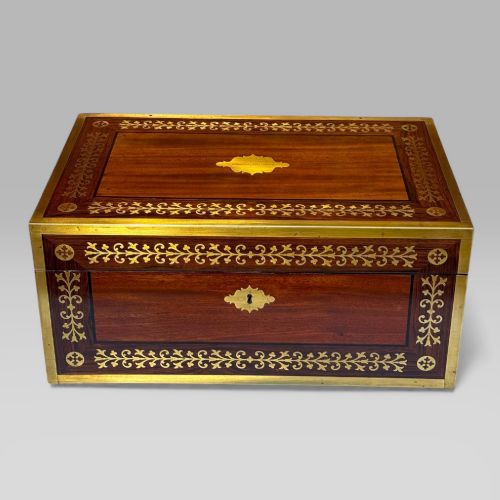
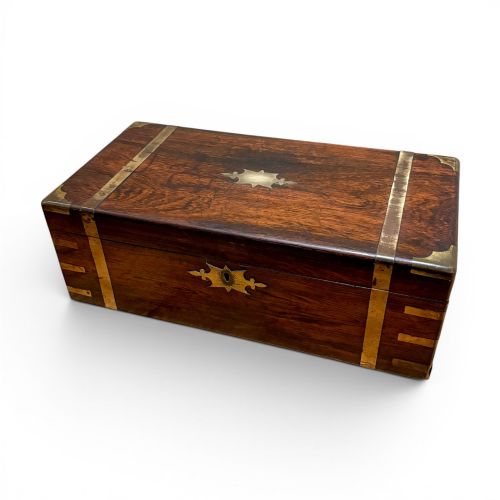
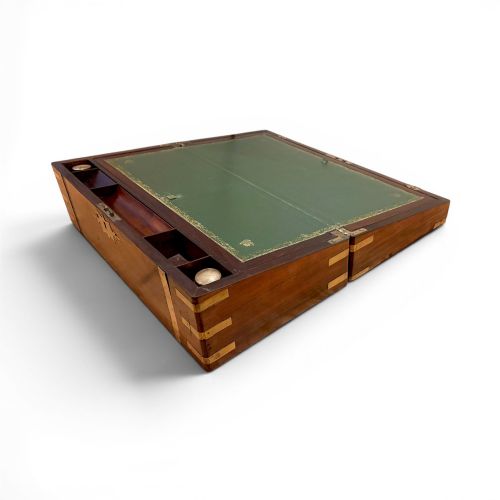
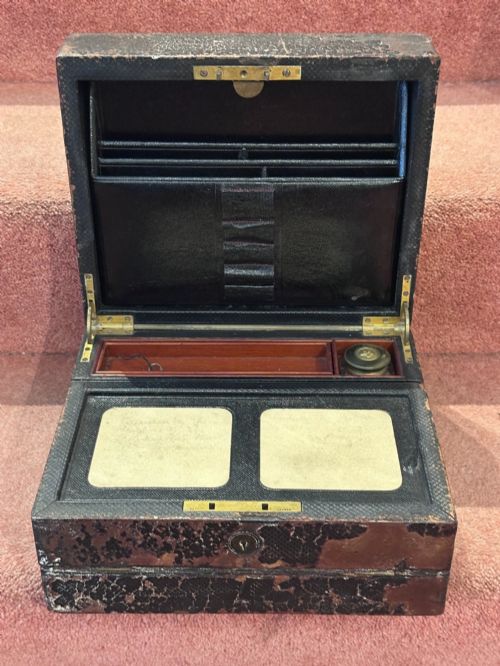
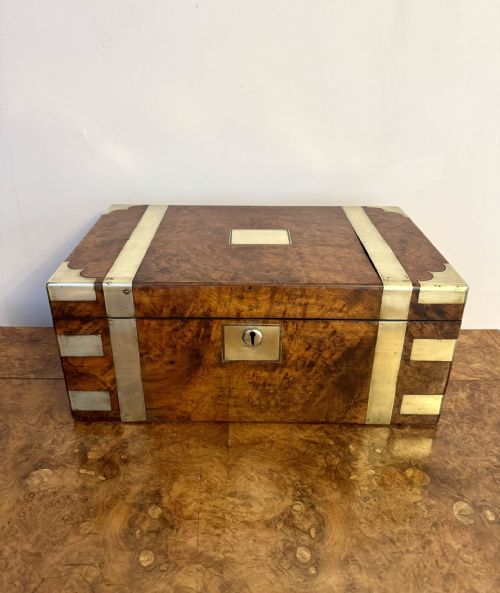
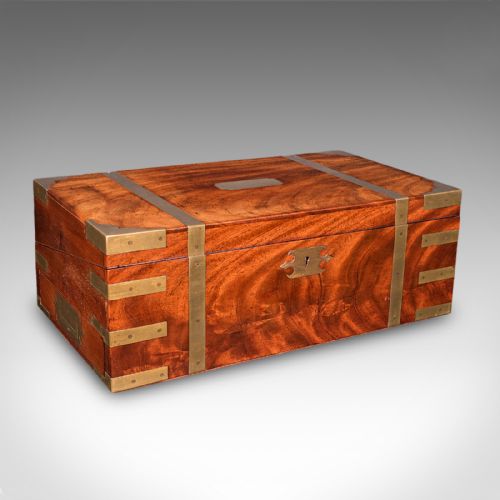
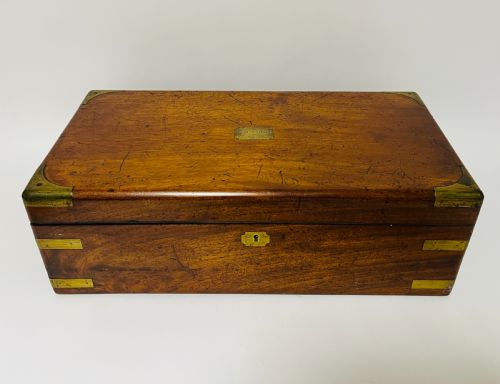
A brass bound desk box is a portable writing slope or document case designed to travel or sit securely on a table. When you search for this phrase, you encounter sturdy mahogany, rosewood, and walnut containers reinforced with brass corners and straps for durability on the move.
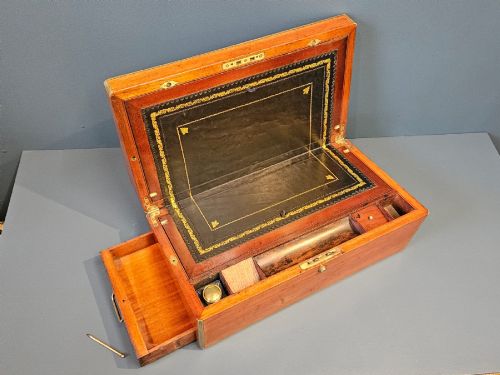
The versions most common on this page date from the Georgian and Victorian eras, often featuring folding lids that reveal sloped writing surfaces, inkwells, and hidden compartments. Many examples reflect campaign styles originally built for officers and travellers who required a mobile desk.
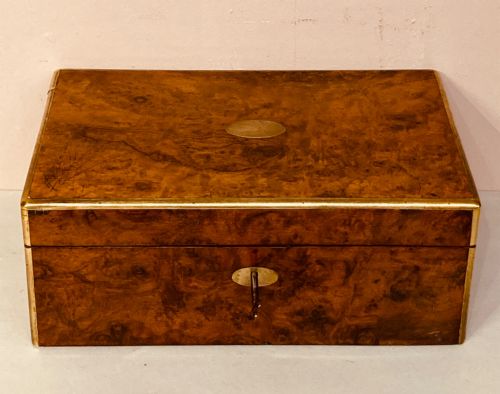
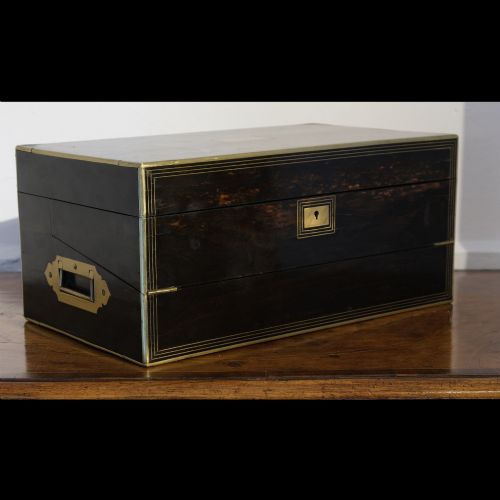
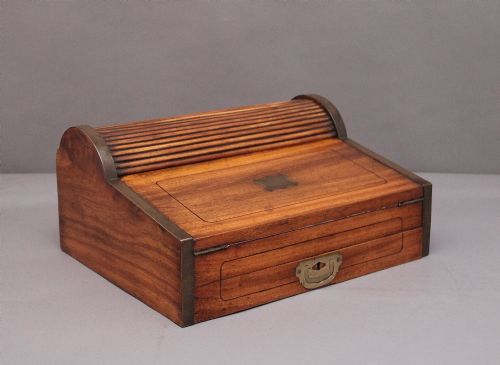
Beyond standard writing slopes, the category encompasses stationery boxes, document chests, and letter caskets fitted with brass edging or inlay. These items combine practical desk storage with decorative timber grains such as burr walnut and coromandel.
Materials and construction methods
Cabinet makers constructed these boxes from dense hardwoods like mahogany, rosewood, pollard oak, and exotic coromandel, often veneered over sturdy secondary woods. Selected timbers display rich natural figuring, particularly in burr walnut and amboyna examples.
Heavy brass corners, straps, and flush-fitting campaign handles were screwed into the wood to protect vulnerable edges during transport. Interior fittings included fitted leather writing surfaces, velvet linings, and specialised compartments secured by quality lever locks such as Bramah mechanisms.
Distinctions in quality and finish
The grade of an antique box depends largely on the selection of timber veneers and the precision of the brass inlay work. Finer pieces exhibit thick, unbroken brass banding neatly flush with the surrounding wood, alongside complex secret drawer mechanisms hidden beneath the stationery compartments.
Superior examples retain original working keys, matched glass inkwells, and unblemished leather writing surfaces that demonstrate careful preservation. The presence of secondary timbers, tight dovetail joinery, and robust hardware separates standard utilitarian containers from master cabinet work.
The Brass Bound Desk Box Glossary
- Writing slope
- A portable box with a hinged lid that opens to form an inclined writing surface lined with leather or velvet. Inside, partitioned sections hold pens, ink, and paper.
- Campaign style
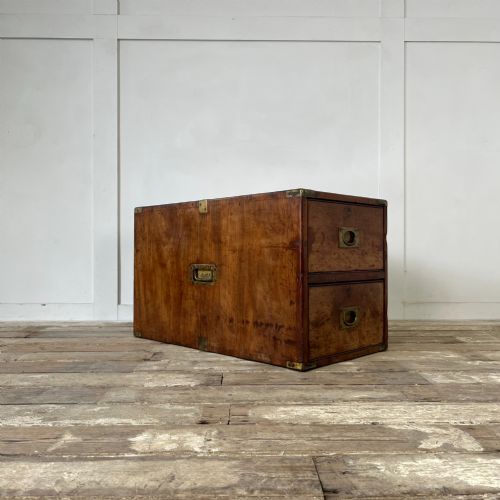
- Furniture and accessories built for military officers and travel, characterised by brass reinforcement, sturdy framing, and flush recessed handles for easy packing.
- Secret drawers
- Concealed compartments hidden behind removable panels or false bottoms within the interior of a desk box, used for storing valuables or sensitive correspondence.
- Bramah lock
- A high-security cylindrical lock patented in the late eighteenth century, commonly found on better quality Victorian and Georgian writing boxes.
- Coromandel
- A dense, heavily figured Southeast Asian timber utilised for luxury nineteenth-century boxes and writing slopes, often displaying dark brown and pale yellow stripes.
Brass Bound Desk Box: Frequently Asked Questions
What is a brass bound desk box?
A brass bound desk box is a portable wooden container reinforced with metal corners and straps, designed to hold writing materials, documents, or personal valuables during travel or home use.
These pieces typically feature hinged lids that fold flat to create a stable writing surface, accompanied by internal compartments for inkwells, pens, and paper.
How were these boxes used originally?
Officers, travellers, and wealthy households utilised these portable boxes to maintain correspondence while away from a fixed library or study table.
The sturdy construction allowed documents to remain secure and protected from moisture or rough handling during transit by carriage or ship.
How do I identify the period of a box?
Georgian and Regency examples tend to feature simpler internal layouts and leaner proportions in woods like mahogany and rosewood. Victorian pieces frequently incorporate more ornate timbers such as coromandel and burr walnut alongside complex secret drawer mechanisms.
Hardware styles, timber grain patterns, and lock types also provide reliable indicators of a box's manufacturing era.
Can I use a vintage box for modern writing?
Many people continue to use these boxes for storing stationery, correspondence, or modern desk accessories while displaying them on tables or shelves.
The sloping interior provides a practical platform for writing letters or organising documents just as it did in the nineteenth century.