




Brass Bound Campaign Drawers
Brass bound campaign drawers bring the robust modular design of nineteenth-century military transport into domestic interiors.
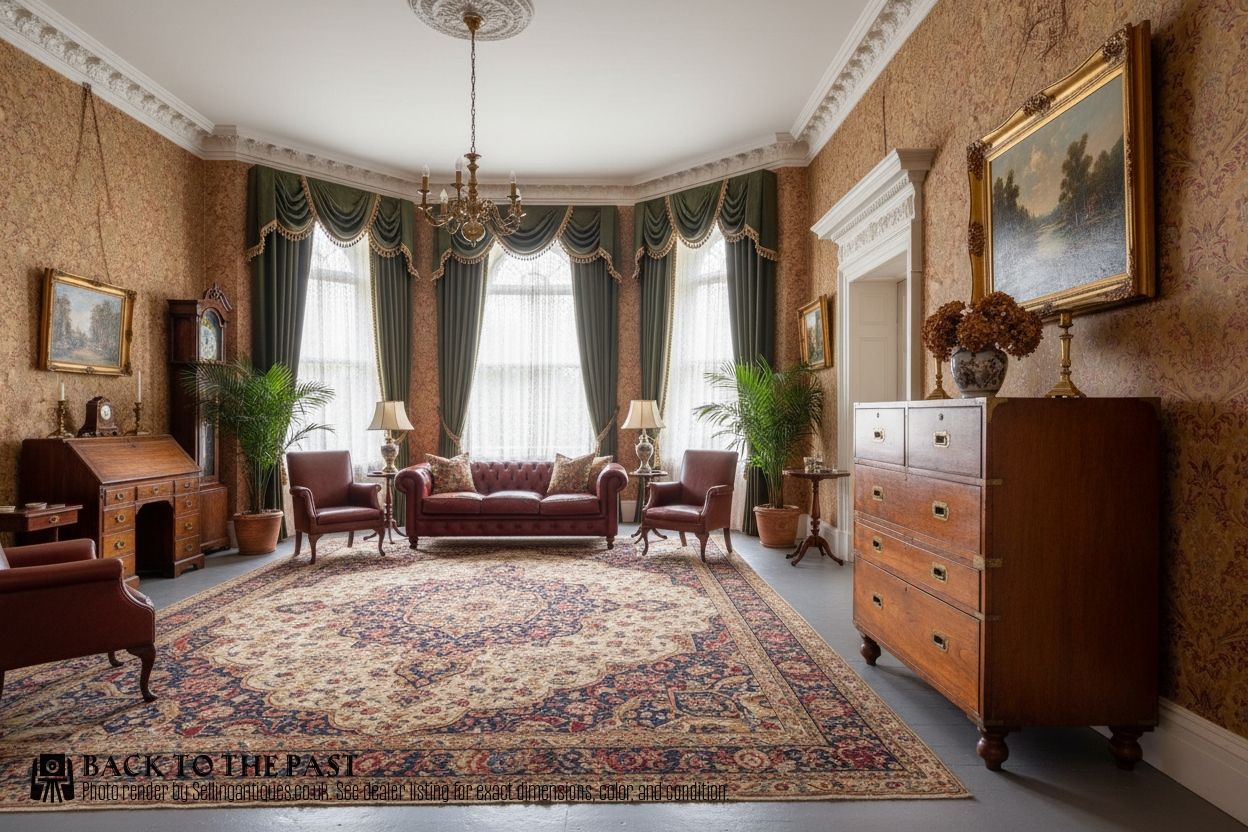
Brass Bound Campaign Drawers
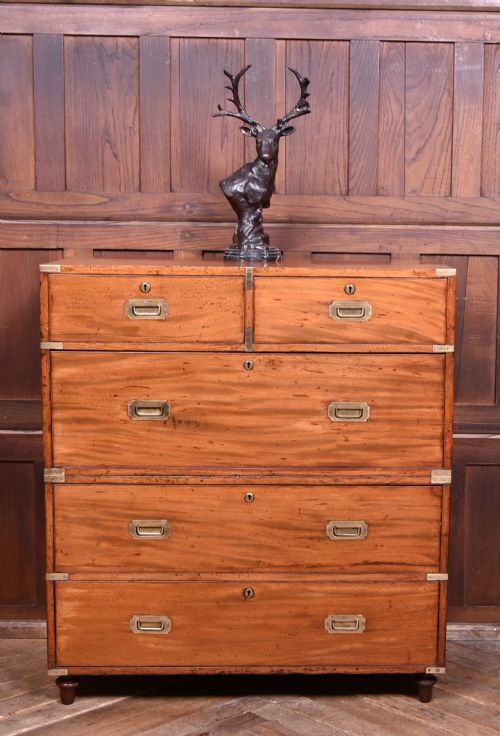
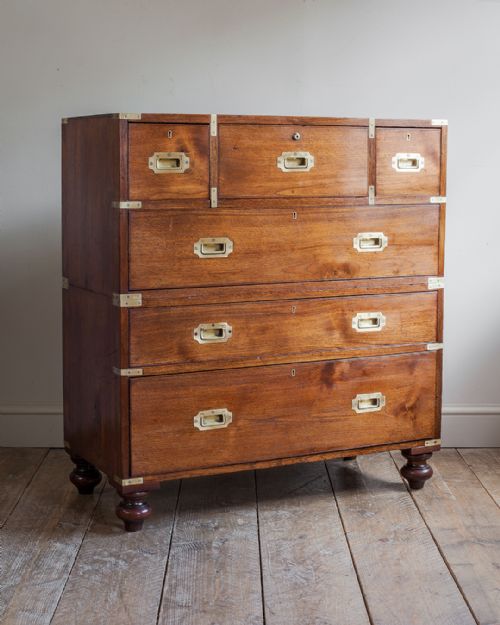
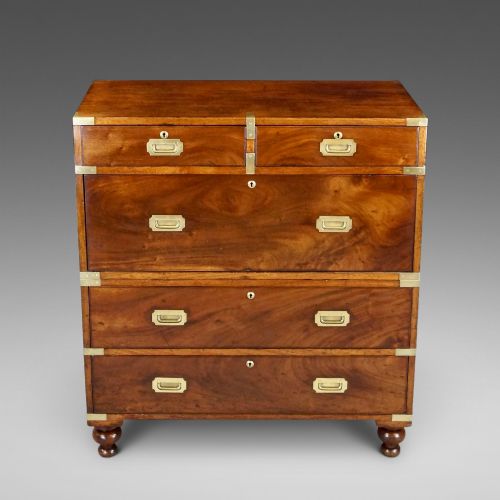
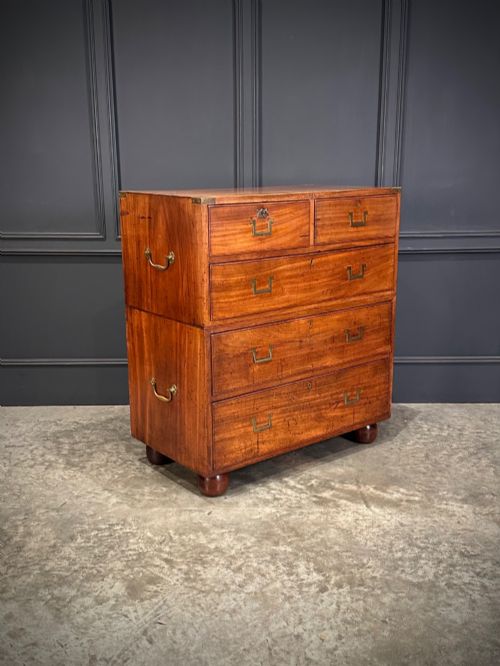
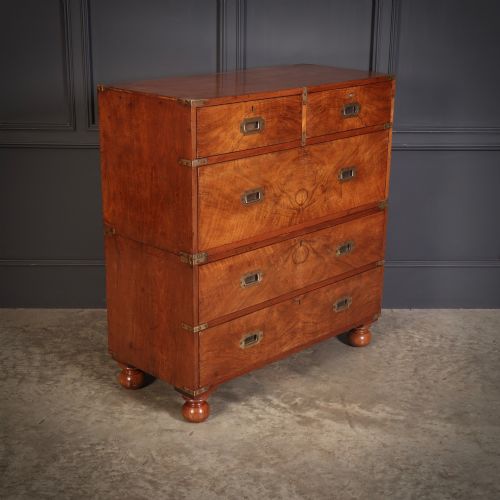
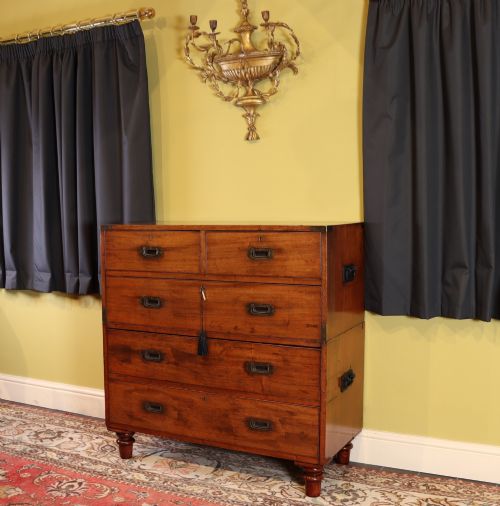
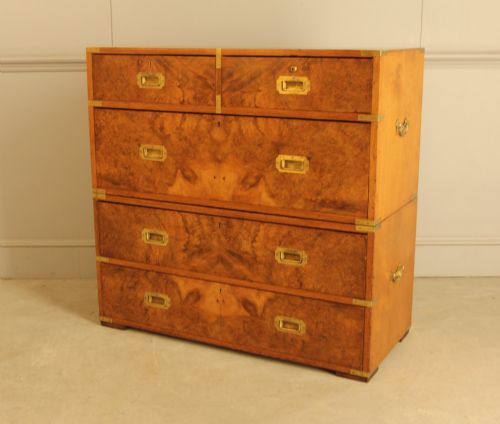
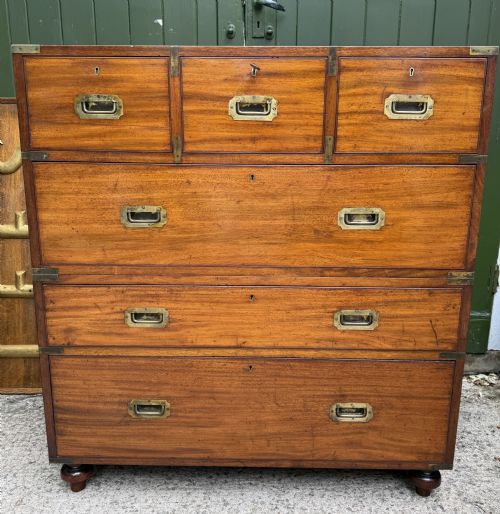
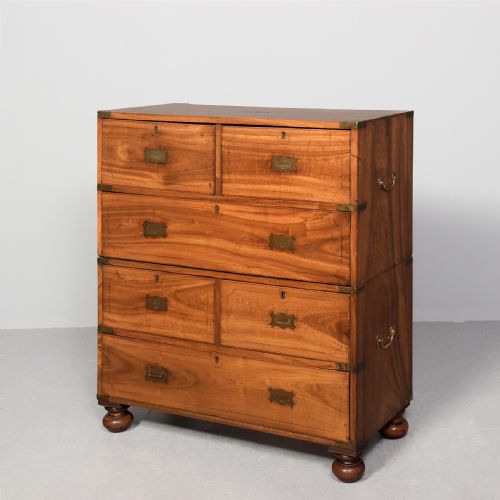
Brass bound campaign drawers comprise modular chests built in sections to travel easily on military campaigns during the nineteenth century. These pieces divide into stacking parts fitted with recessed brass handles and corner brackets to endure rough handling.
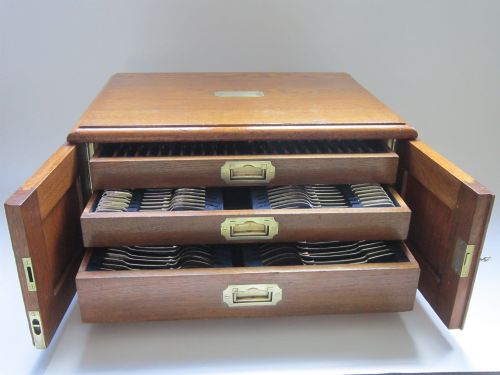
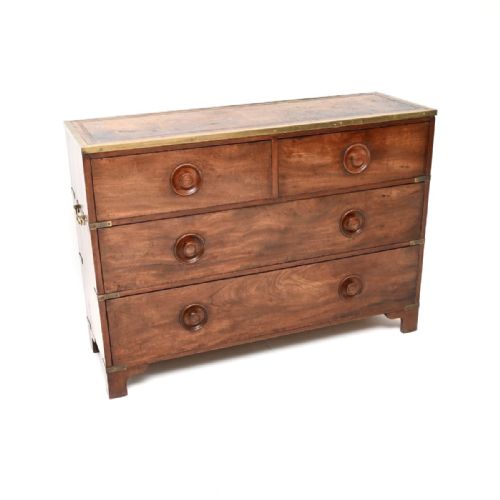
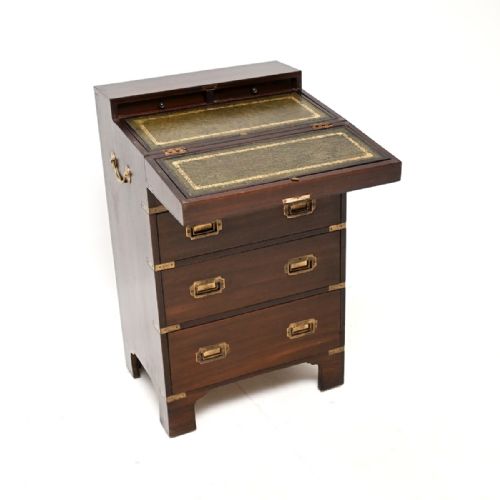
The chests on this page appear primarily in mahogany, teak, and camphor wood, originating from Georgian, Victorian, and Anglo-Chinese colonial periods. Alongside standard chests of drawers, the selection includes secretaire variants, compact desktop storage, and related writing slopes.
How they were made
Cabinet makers utilised dense hardwoods such as mahogany, teak, and camphor wood to withstand tropical climates and constant transit. These timbers were joined with robust secondary woods like oak for drawer linings.
Brass corners, strapwork, and flush-fitting inset handles were screwed into the timber to protect edges from impact during military deployment. Sectional construction required precise internal framing so that upper and lower cabinet halves aligned reliably.
Cabinet forms on this page include chests of drawers, writing slopes, bureaux, and serving cabinets.
What varies in quality
Quality rests in the choice of timber and the precision of the brass hardware integration. Finely figured mahogany, burr walnut, and solid camphor wood distinguish high-grade pieces from standard utility items.
The structural integrity of the internal carcass and the original working condition of flush brass pulls and recessed carrying handles dictate the tier of craftsmanship.
S. W. Silver & Co·Ross & Co·Army & Navy CSL
The Brass Bound Campaign Drawers Glossary
- Secretaire chest
- A chest of drawers incorporating a fitted writing drawer with a fold-down front and small internal compartments. This form provided officers with a portable desk space.
- Recessed handle
- A metal pull inset flush into the drawer face so it does not project beyond the timber surface. This prevented snags and damage during transit.
- Two-part chest
- A cabinet constructed as separate upper and lower modules that lock together for stability. This division made heavy furniture manageable for transport.
- Camphor wood
- An aromatic hardwood native to Asia utilised for campaign furniture because its natural scent repelled insects. It frequently appears in Anglo-Chinese colonial pieces.
Brass Bound Campaign Drawers: Frequently Asked Questions
Why are these chests made in two parts?
Two-part construction allowed officers to pack and transport heavy wardrobes across rough terrain with limited manpower. Each modular section could be lifted independently and stacked securely upon arrival.
This method also protected the contents by distributing weight and preventing structural strain during long journeys.
What is a secretaire campaign chest?
A secretaire campaign chest contains a dedicated writing drawer that drops open to reveal pigeonholes and small compartments. Officers utilised this feature for paperwork and correspondence in the field.
Externally, the drawer often mimics standard drawers to maintain a uniform appearance across the front of the cabinet.
How do I identify a nineteenth-century piece?
Nineteenth-century campaign pieces display traditional joinery methods, hand-cut dovetails, and heavy timber construction. Look for rich patination on hardwoods like mahogany, teak, and camphor wood.
Original hardware typically consists of heavy brass straps and flush-fitting handles secured with slotted brass screws.
How do I care for camphor wood furniture?
Camphor wood benefits from minimal polishing and regular dusting with a dry cloth. Avoid placing the wood in direct sunlight or near heat sources to prevent the natural oils from drying out.
Good ambient humidity in the room keeps the timber stable and preserves the characteristic aromatic scent of the material.