


Brass Base Paraffin Lamp
These brass base paraffin lamp designs are Victorian and Edwardian domestic lighting pieces that bring period warmth and practical illumination to a room.
Brass Base Paraffin Lamp
A brass base paraffin lamp is a domestic lighting fixture designed to burn paraffin oil, typically featuring a metal reservoir and heavy metal foot for stability. When searching for a brass base paraffin lamp, buyers encounter various nineteenth-century forms, predominantly originating from the Victorian and Edwardian eras.
The versions most frequently met on this page combine polished or cast brass columns with ceramic, glass, or metal reservoirs. Examples range from simple cottage table models to elaborate reeded column designs and converted electric fittings.
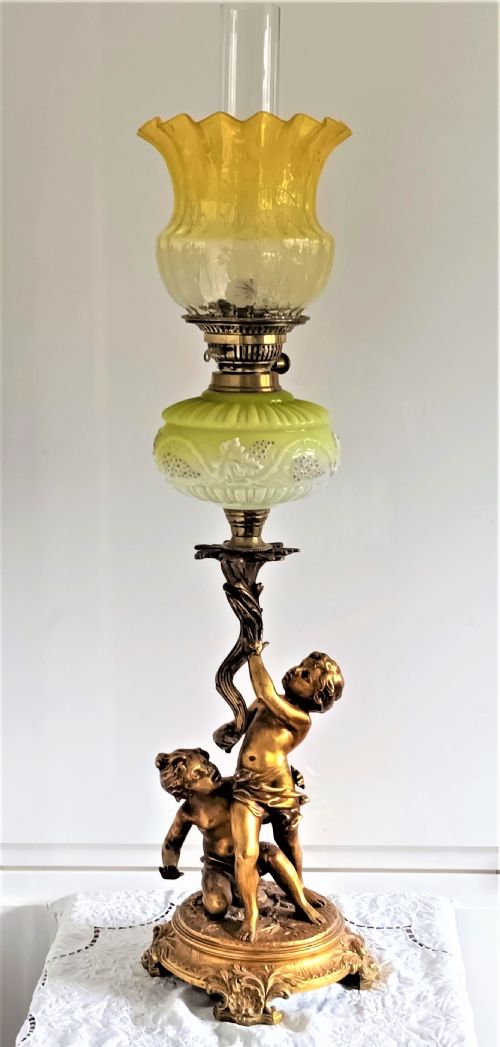
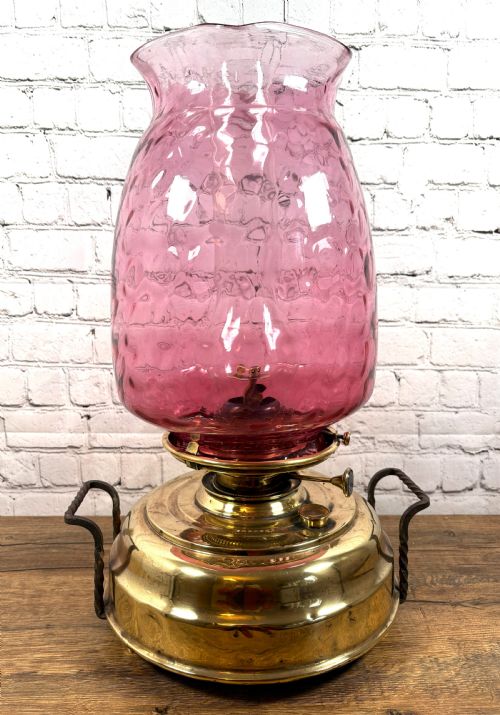
Many specimens incorporate coloured glass components, such as cranberry or pink opaque vessels, alongside decorative ormolu and bronze accents. These pieces reflect the varied domestic interior styles of the nineteenth century, including Gothic Revival and Art Nouveau influences.
Materials and construction
Makers utilised cast and spun brass to form the structural columns and weighted bases of these lamps, ensuring stability on a table. Brass components were frequently polished, gilt, or combined with cast iron and copper to create varied surface textures and tones.
Vessels and shades were constructed from blown glass, including satin glass and cranberry glass, or shaped from glazed ceramics and porcelain. Metal mounts, ormolu details, and enamel work were often applied to enrich the decorative appearance of the body.
Napoleon III cherubs sometimes join the brass orchestra to keep your parlour illuminated.
Markers of quality
Quality in these lighting pieces rests on the weight of the metal casting and the crispness of the chased or reeded details on the column. Superior examples display substantial brass work and well-balanced proportions between the base, reservoir, and any applied glass elements.
The integration of materials dictates the finish of the piece, where clean junctions between brass mounts, ceramic bodies, and coloured glass shades show superior craftsmanship. Finer specimens often include complex colour treatments in the glass or detailed figural mounts in bronze and copper.
The Brass Base Paraffin Lamp Glossary
- Paraffin lamp
- A domestic lighting device that burns paraffin oil via a wick raised through a burner mechanism. These items were widely used before the widespread adoption of domestic electricity.
- Peg oil lamp
- A small oil lamp designed with a lower spigot or peg that fits directly into the socket of a candlestick or a dedicated base. This format allowed existing candlesticks to be temporarily converted for oil burning.
- Ormolu
- Gilded bronze or brass mounts applied to furniture and decorative objects for ornamentation. The technique involves applying a gold amalgam to a metal base.
- Reeded column
- A classical architectural column design decorated with parallel convex mouldings running vertically up the shaft. This motif is frequently found on Victorian brass lamp standards.
- Cranberry glass
- A rich red-pink transparent glass produced by adding gold chloride to the molten glass batch. It was highly popular for Victorian lampshades and vessels.
Brass Base Paraffin Lamp: Frequently Asked Questions
How do I clean a brass base?
Dust the brass gently with a soft, dry cloth to remove surface particles without scratching the metal.
Avoid harsh commercial metal polishes that can strip away original patination or damage adjacent glass and ceramic components.
Were these lamps converted to electricity?
Many surviving examples have been adapted to take modern electrical wiring for safe use in contemporary homes.
Original burners and fittings are sometimes retained alongside the wiring to preserve the historical appearance of the piece.
How do I identify a Victorian lamp?
Look for characteristic design motifs such as reeded brass columns, heavy cast metal bases, and opaque pink or cranberry glass reservoirs.
Construction methods typical of the nineteenth century include threaded metal joins and hand-blown glass components.
Can I still burn paraffin in them?
While many retain their original burners, operating them with paraffin requires a thorough check of the wick mechanism and fuel reservoir for integrity.
Many buyers choose to display them unlit or use them as converted electric lamps for daily convenience.