

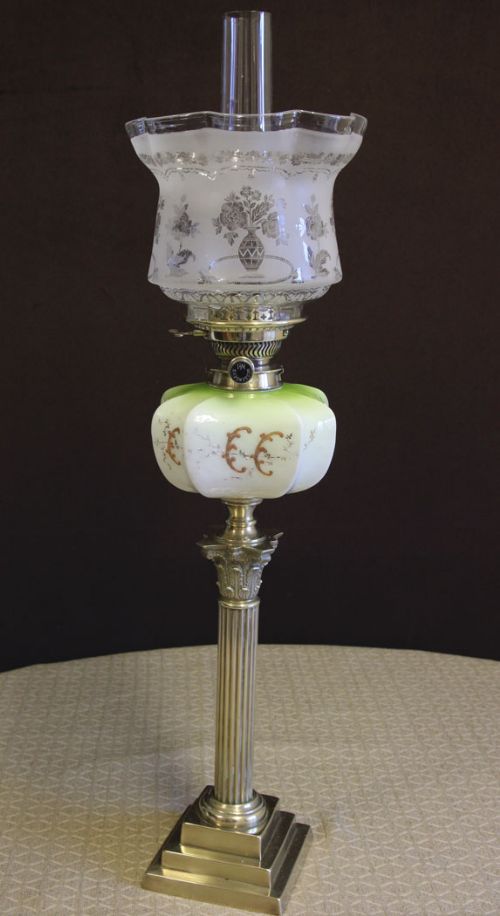
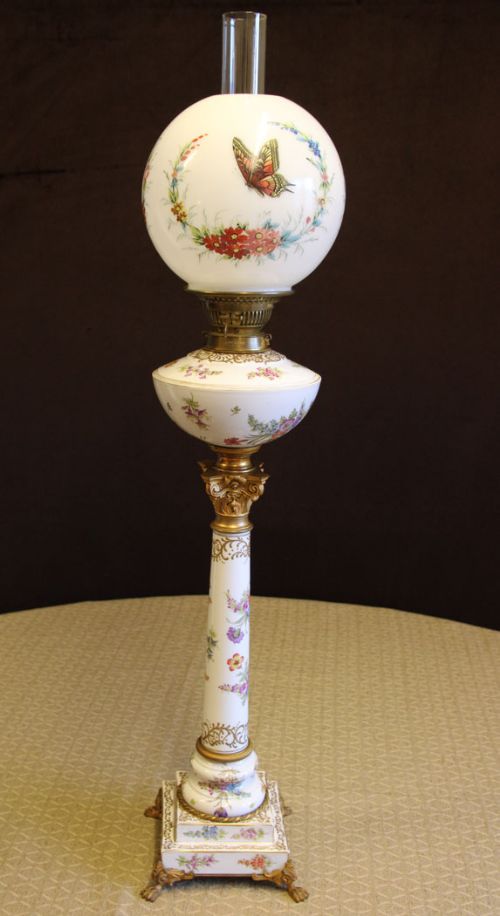
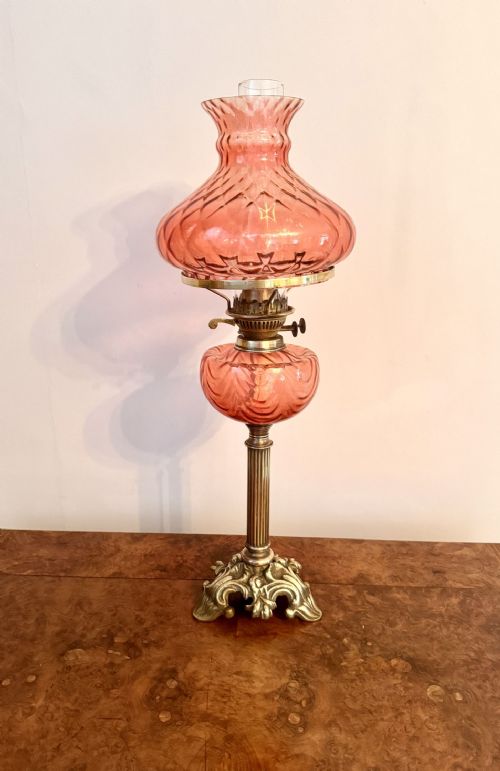
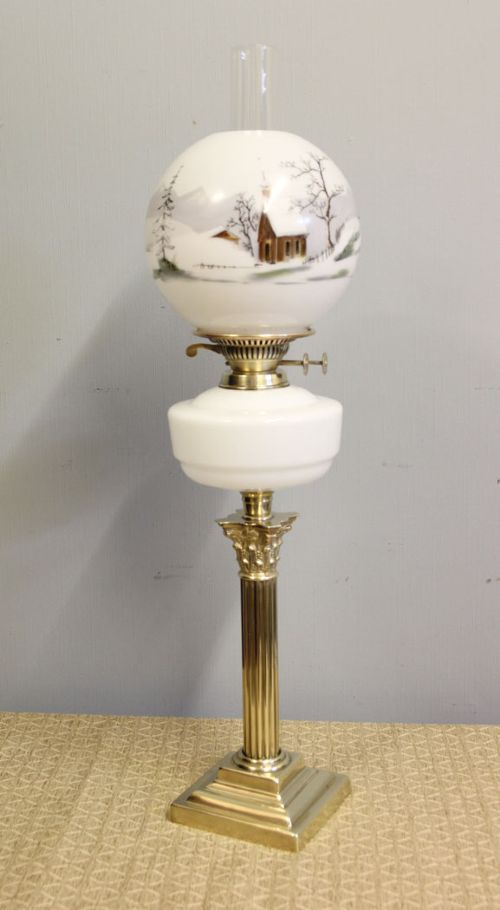


Decorative Glass Kerosene Lamp
A decorative glass kerosene lamp brings period warmth to a room, combining tactile nineteenth-century materials with functional design.
Decorative Glass Kerosene Lamp
A decorative glass kerosene lamp is a functional lighting piece from the Victorian and Edwardian eras, designed for table use. These lamps combine glass fonts with bases of brass, porcelain, ceramic, onyx, and copper.
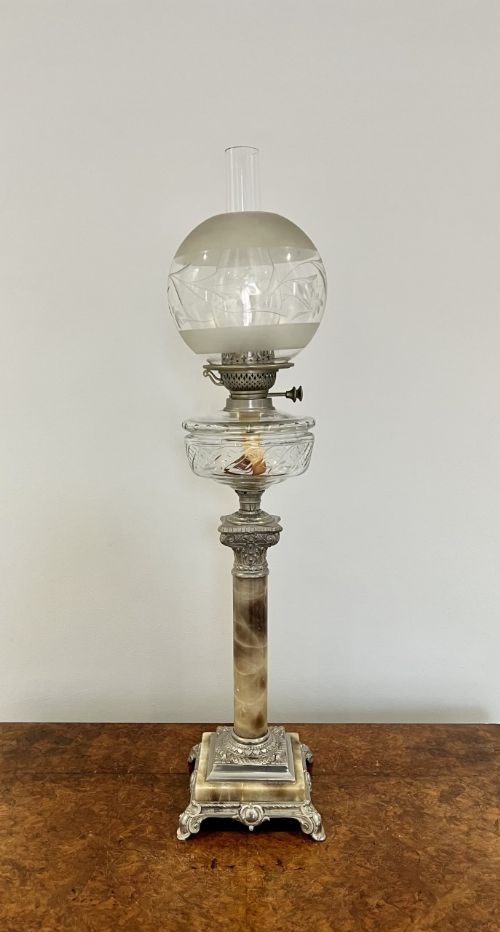
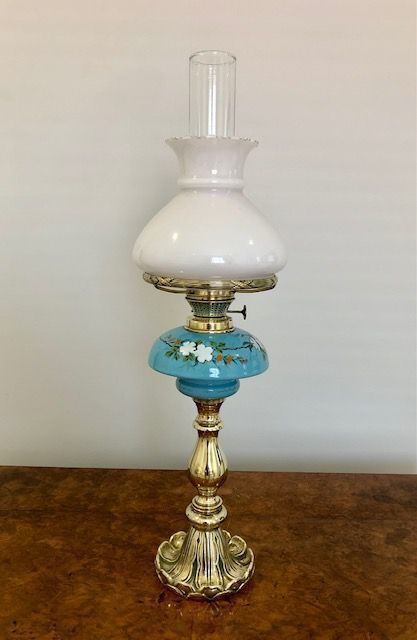
The pieces appearing on this page span from the mid-nineteenth century up to the early twentieth century, including Victorian and Edwardian styles. They take the form of table lamps and oil lamps, often featuring matching shades and hand-painted bowls.
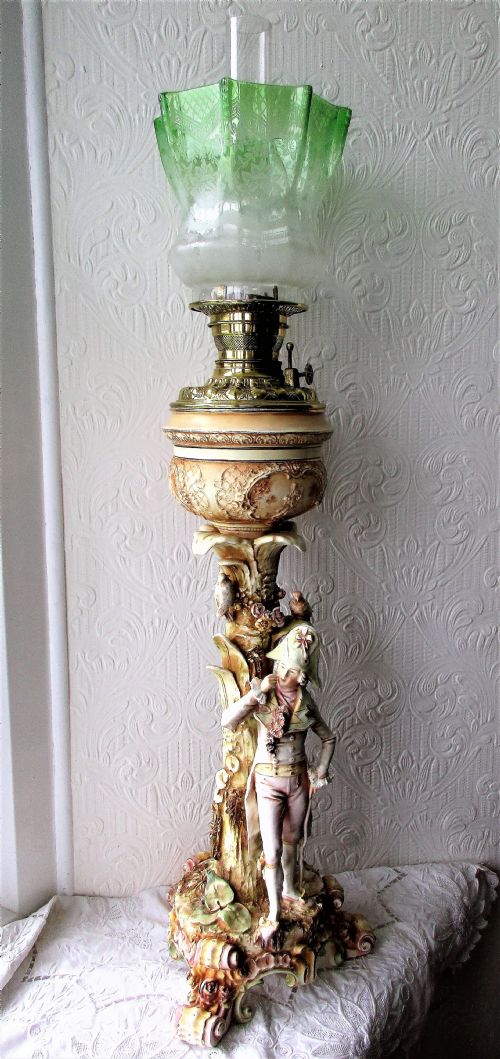
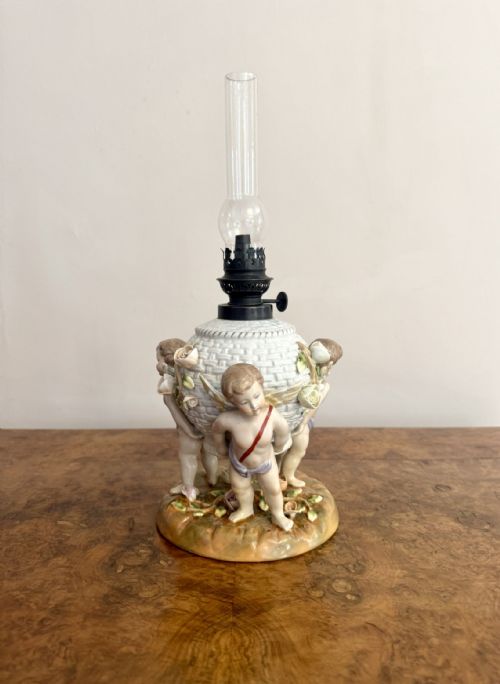
Buyers will find variations ranging from plain glass fonts to elaborate figural porcelain bases and cranberry glass designs. Many examples integrate brass Corinthian columns or opaline glass components alongside etched shades.
How they were made
Makers shaped the lamps using blown and moulded glass for the fonts and shades, alongside ceramics and porcelain for sculptural bodies. Coloured glass varieties such as cranberry, milk, and opaline glass required specific mineral additions during the melting process.
Metal components like brass and copper provide structural support and weighted bases, frequently paired with onyx or ceramic plinths. Decorative elements include hand-painted scenes on the bowls and etched patterns on the glass shades.
Decorative Glass Kerosene Lamp Retail Price Guide 2026
Typical asking prices for decorative glass kerosene lamp among the pieces listed under this phrase on Sellingantiques today, from the lower quarter to the upper quarter. They describe what is for sale here now, not the wider market.
The selection includes table lamps and oil lamps featuring cranberry glass, milk glass, and opaline glass alongside hand-painted bowls.
What varies in quality
Quality rests in the weight and finish of the materials, from simple brass and glass combinations to heavy porcelain figural bases and onyx columns. Finer examples display crisp casting in the metalwork and detailed painting on the ceramic bodies.
The presence of matching original shades with etched or painted snow scenes elevates a piece above standard utility lamps. Superior items often feature complex colour combinations in the cranberry or opaline glass fonts.
Sitzendorf
The Decorative Glass Kerosene Lamp Glossary
- Cranberry Glass
- A rich red transparent glass coloured using gold chloride, popular in Victorian decorative wares. It appears frequently in the fonts and shades of these lamps.
- Opaline Glass
- A semi-opaque glass with a delicate milky appearance, often used for lamp shades and bodies during the nineteenth century. It diffuses the light softly.
- Corinthian Column
- A classical architectural style adapted for lamp bases, featuring ornate acanthus leaf capitals atop a fluted column. These are usually cast in brass.
- Figural Lamp
- An oil lamp incorporating sculpted human or animal figures into the porcelain or ceramic base. These pieces often date to the Victorian period.
Decorative Glass Kerosene Lamp: Frequently Asked Questions
How can I tell a Victorian lamp from an Edwardian one?
Victorian lamps often lean towards ornate porcelain bodies, heavy brass castings, and rich cranberry glass, reflecting the elaborate tastes of the nineteenth century. Figural designs and Corinthian columns are also typical of this earlier period.
Edwardian examples tend to show a lighter touch in their decorative painted bowls and simpler glass forms, bridging into the early twentieth century styles.
Did these lamps originally come with shades?
Many of these lamps were manufactured and sold as complete units paired with matching glass shades, while others survived with replacement shades added later. Etched glass shades and painted glass shades are both common across the Victorian and Edwardian selections.
The presence of an original shade significantly contributes to the unified appearance of the table lamp.
Where should I place a table oil lamp in my home?
A table oil lamp makes a striking centrepiece on a sideboard, console table, or large desk where the glass and brass elements can catch the light. Their varied heights and decorative fonts allow them to anchor a room scheme.
Ensure they sit on a stable, flat surface away from busy edges due to the combined weight of the metal and glass components.