

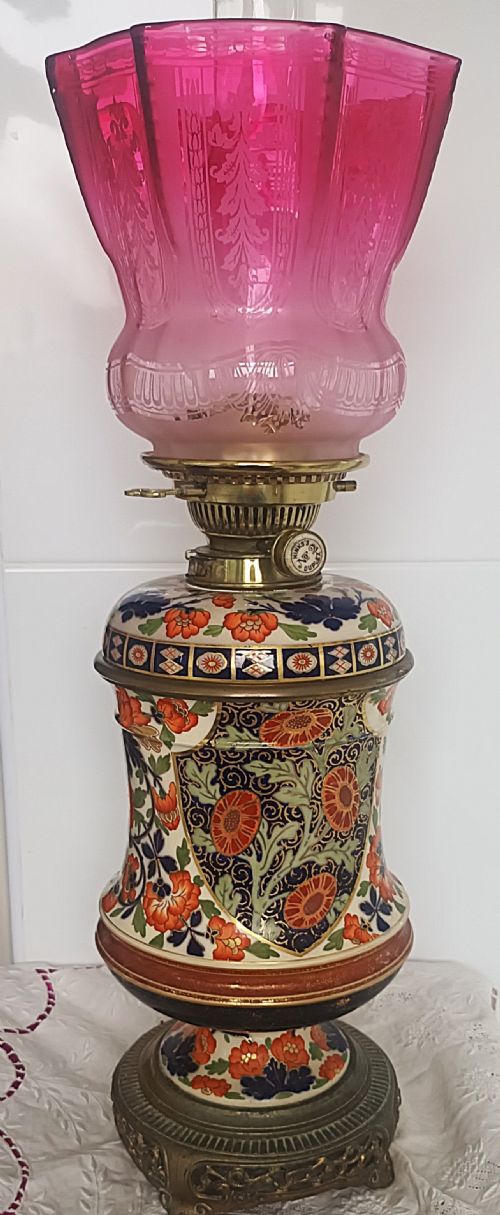


Edwardian Cranberry Glass Lamp
An edwardian cranberry glass lamp combines rich pink-red hues with gleaming metalwork, offering both warm illumination and striking period character to a room.
Edwardian Cranberry Glass Lamp
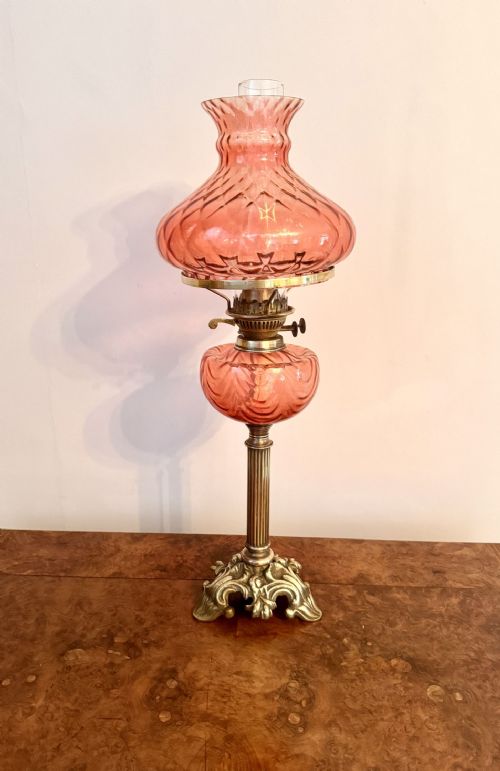
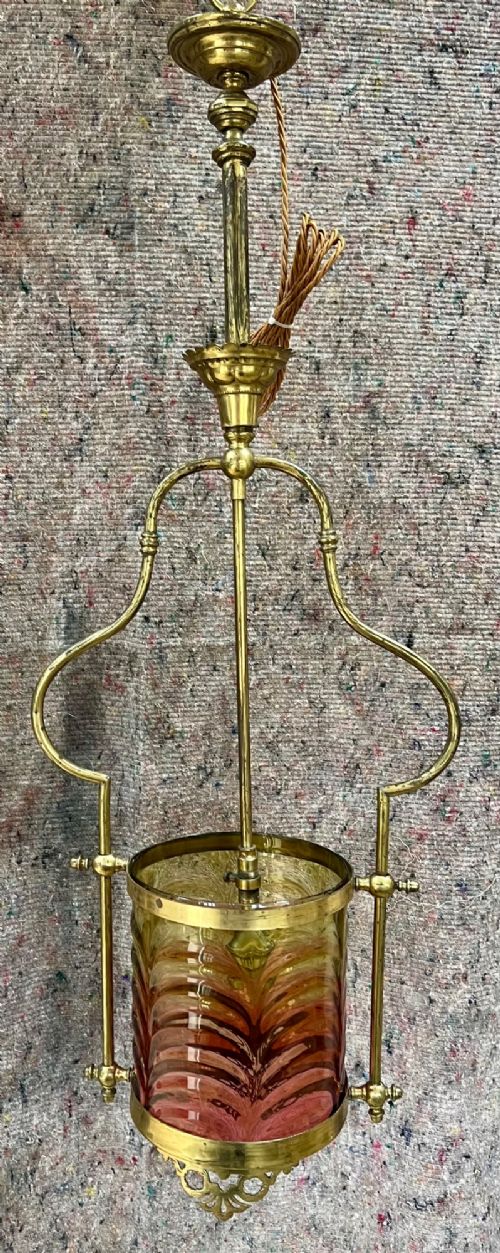
When you search for an edwardian cranberry glass lamp, you are looking at domestic lighting forms spanning the late nineteenth and early twentieth centuries, though pieces from the Edwardian period itself and the broader Victorian era dominate the selection. The objects on this page appear primarily as table and floor oil lamps, alongside hanging lights, ceiling fittings, and desk lamps that bring vivid colour to interior spaces.
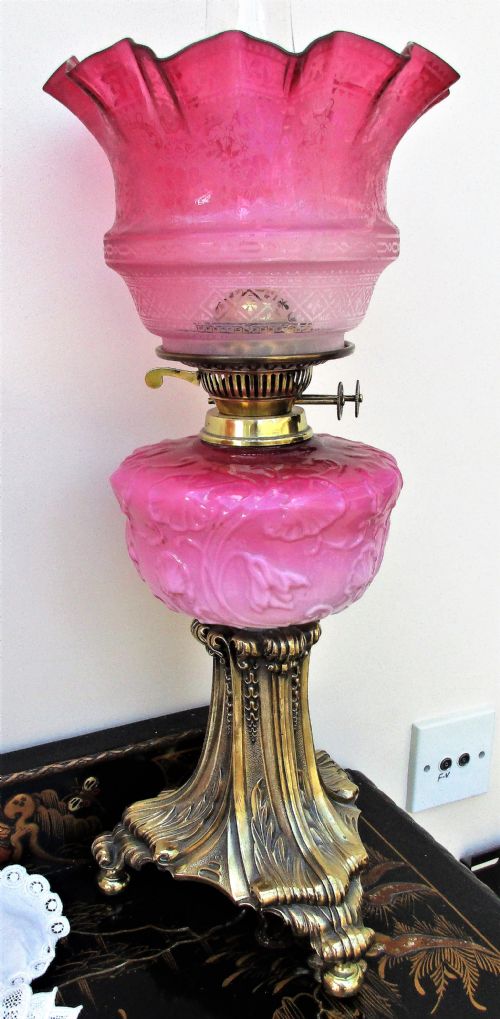
The aesthetic bridges several distinct movements, encompassing standard Victorian silhouettes, flowing Art Nouveau lines, and sturdy Arts & Crafts metalwork. These lamps often combine deep red glass fonts or shades with structured brass stands, sometimes incorporating ceramic bases, slate, or clear cut glass elements for added visual contrast.
You will encounter various configurations ranging from tall floor standing examples and adjustable desk lamps to multi-branch ceiling lights and wall sconces. Many of these pieces have been converted from oil to electricity for modern use, while retaining their original period mounts and hand-finished glass components.
Materials and construction
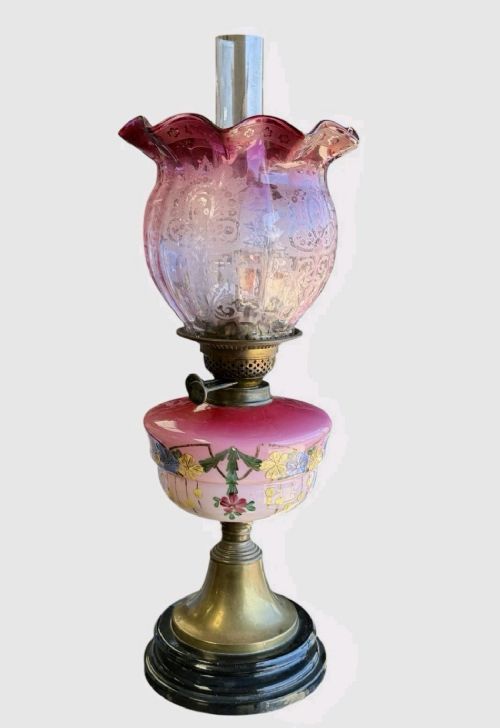
The primary material combination relies on rich cranberry glass paired with heavy brass castings, forming the structural and decorative foundation of each piece. Glassmakers achieved the distinctive pink-red hue by adding gold chloride to the molten glass batch, before shaping the vessels through blowing, moulding, or hand-painting.
Metal components were cast and turned in brass, occasionally supplemented by copper, slate, or ceramic elements to provide stable weight for tall oil lamps and standard lamps. Shades frequently feature decorative techniques such as crimping, etching, or hand-painted floral motifs across the cranberry surface.
Edwardian Cranberry Glass Lamp Retail Price Guide 2026
Typical asking prices for edwardian cranberry glass lamp among the pieces listed under this phrase on Sellingantiques today, from the lower quarter to the upper quarter. They describe what is for sale here now, not the wider market.
Listings feature pieces spanning the late nineteenth century through the Edwardian era, incorporating brass, slate, and ceramic alongside hand-painted and cut cranberry glass.
Assessing quality and craftsmanship
Quality reveals itself in the weight and precision of the brass work, where heavier castings, robust adjustment mechanisms, and cleanly turned threads separate finer pieces from standard production. The glass shade or font displays artistry through depth of colour, crispness of etched patterns, and the careful execution of hand-painted details.
Proportion and integrity dictate the overall standard of the object, ensuring that the glass shade matches the scale of the brass column and base. Surviving fittings, original burners, and uncompromised metal patination contribute significantly to the standing of an individual lamp.
The Edwardian Cranberry Glass Lamp Glossary
- Cranberry glass
- A transparent red-pink glass produced by adding gold to the molten batch. It is characteristic of Victorian and Edwardian decorative lighting.
- Font
- The oil reservoir of a lamp, usually positioned above the base and beneath the burner. In these pieces, the font is frequently made of coloured or cut glass.
- Standard lamp
- A tall floor-standing lighting fixture designed to illuminate a room from a vertical brass or metal shaft. They often feature adjustable heights.
- Art Nouveau
- A style of design prevalent around 1900 characterised by fluid, organic lines and natural motifs. It heavily influences many brass lamp frames of this era.
- Crimped shade
- A glass lampshade whose rim is pinched or folded into wavy patterns while hot. This technique softens the light output and adds texture.
Edwardian Cranberry Glass Lamp: Frequently Asked Questions
How do I clean cranberry glass?
Wash the glass components gently in warm water using a mild, non-abrasive detergent and a soft cloth. Avoid harsh chemical cleaners that might damage hand-painted details or delicate surface finishes.
Dry the pieces thoroughly with a lint-free towel to prevent water spots, and use a dedicated brass cleaner on the metal parts only while taking care to keep polish off the glass.
Can I adjust the height of the lamp?
Several tall floor lamps and desk models incorporate sliding brass keys or screw mechanisms designed for height adjustment. These functional elements allowed nineteenth-century users to direct light precisely where needed.
When adjusting an antique mechanism, support the weight of the upper section with one hand to avoid straining or stripping the original brass threads.
What is the difference between Victorian and Edwardian styles?
Victorian lighting design tends towards ornate, heavy ornamentation with Corinthian columns, rich hand-painted floral decorations, and complex brass castings. The pieces reflect a taste for elaborate detail and substantial presence.
Edwardian and later pieces often lean towards simpler, more streamlined silhouettes influenced by Art Nouveau or Arts & Crafts principles, prioritising clean metal lines and functional form.