


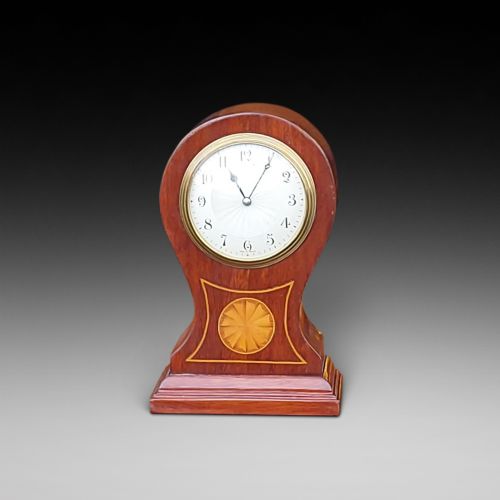


Brass Balloon Clock
These brass balloon clock pieces offer elegant curves and refined period presence, bringing traditional timekeeping charm to any mantelpiece.
Brass Balloon Clock
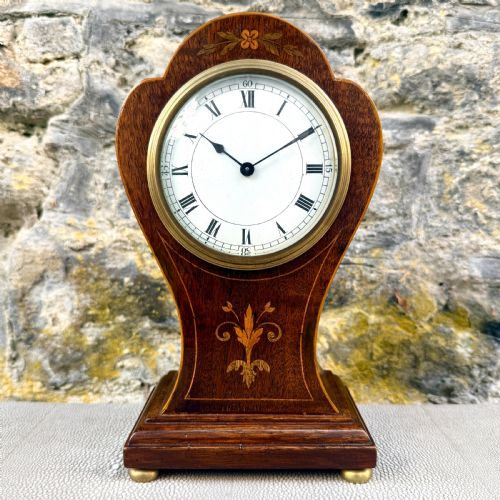
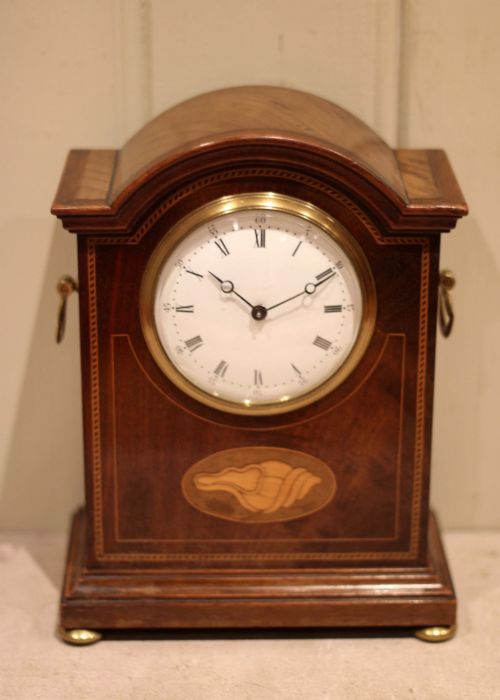
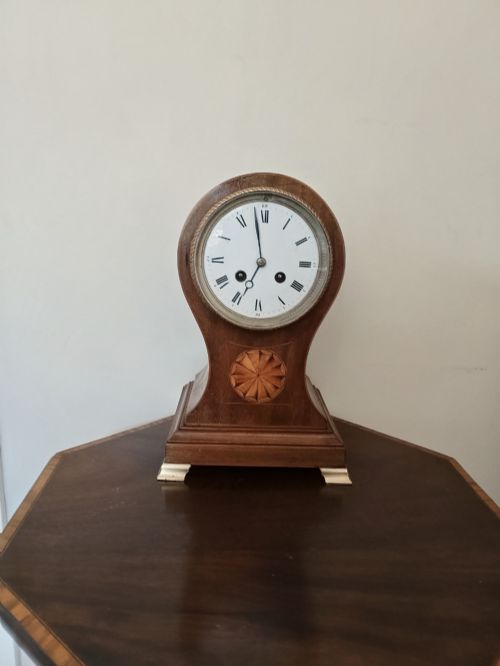
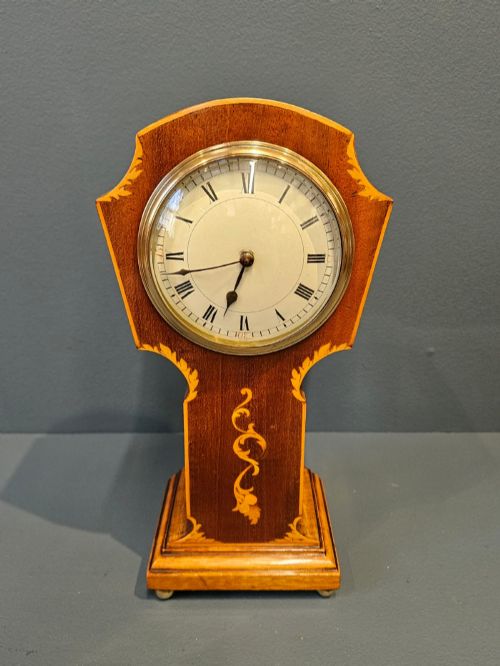
A brass balloon clock presents a distinctive swelling case profile reminiscent of a hot air balloon, housing a traditional mechanical movement. When searching for a brass balloon clock, buyers encounter pieces spanning from the mid-eighteenth century through the Edwardian era, with Edwardian mahogany examples appearing most frequently.
These items function primarily as mantel or bracket clocks, designed to sit prominently on furniture surfaces. The inventory reflects diverse regional origins, incorporating French striking models alongside English fusee movements.
Materials and construction methods
Casework relies heavily on mahogany, often enhanced with boxwood and satinwood inlay or delicate herringbone patterns. Ebonised wood and oak also feature among select examples, providing structural contrast.
Visual detail centres on enamel or silvered dials paired with brass bezels and mounts. Movements utilise single or twin fusee mechanisms to regulate time accurately.
Periods represented span from George III and Georgian eras through Victorian and Edwardian times.
Evaluating craftsmanship and distinction
Quality differentiates through the precision of the cabinetwork and the complexity of the internal movement. Twin fusee mechanisms and refined marquetry inlay elevate a piece above simpler timepieces.
The crispness of brass casting on bezels and dials determines visual refinement. Finer examples display meticulous attention to proportion across the curved balloon silhouette.
Joseph Jump·John Leroux·William Smith·Percy Webster
The Brass Balloon Clock Glossary
- Fusee
- A conical pulley used in older clocks to maintain even tension on the chain as the mainspring unwinds. This mechanism helps ensure consistent timekeeping.
- Balloon clock
- A mantel clock featuring a curved, bulbous case shape resembling a balloon. The design gained popularity during the Georgian and Victorian periods.
- Bracket clock
- A portable clock traditionally designed to sit on a wall bracket or table surface. Many feature substantial brass carrying handles.
- Silvered dial
- A metal clock face treated with a silver compound to produce a matte finish. Numerals and markings are typically engraved and darkened for legibility.
- Marquetry
- Decorative woodwork where thin pieces of veneer are fitted into a backing material to create intricate patterns. Satinwood and boxwood frequently serve this purpose.
Brass Balloon Clock: Frequently Asked Questions
How do I wind a fusee movement?
Use the appropriate winding key to turn the square arbor clockwise until resistance is felt. Care must be taken not to overwind the mechanism.
Ensure the key matches the arbor size precisely to avoid damaging the internal components during routine maintenance.
Where should I place my clock?
Position the piece on a stable, level surface away from direct sunlight and draughts. Mantelpieces and sturdy wooden sideboards provide ideal placement.
A level foundation ensures the pendulum or balance wheel maintains an even beat for accurate timekeeping.
What is an Edwardian balloon clock?
An Edwardian example dates from the early twentieth century, typically constructed from mahogany with delicate string inlay. These models often showcase refined Edwardian cabinet-making techniques.
They combine traditional balloon silhouettes with lighter decorative motifs characteristic of the period.
How do I distinguish French and English movements?
English examples frequently employ fusee movements designed for precision and longevity. French counterparts often utilise platform escapements and striking trains.
Inspecting the interior mechanism reveals distinct architectural differences in plate design and escapement layout.