
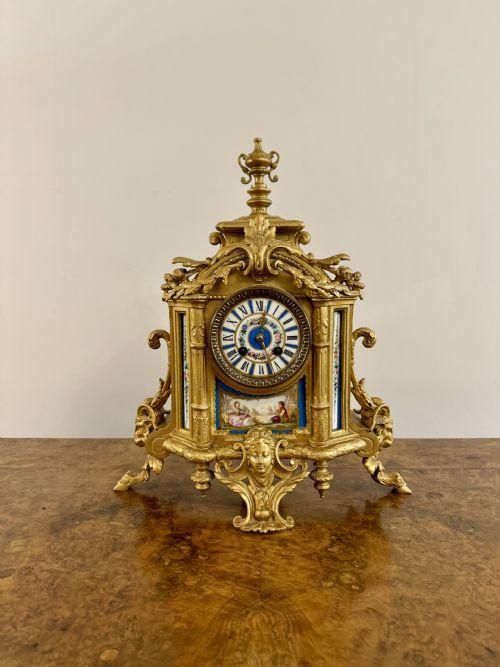


Brass and Porcelain Clock
When you look for a brass and porcelain clock, you enter a world of nineteenth-century French mantel pieces and carriage clocks marrying gilt metal with painted ceramic panels.
Brass and Porcelain Clock
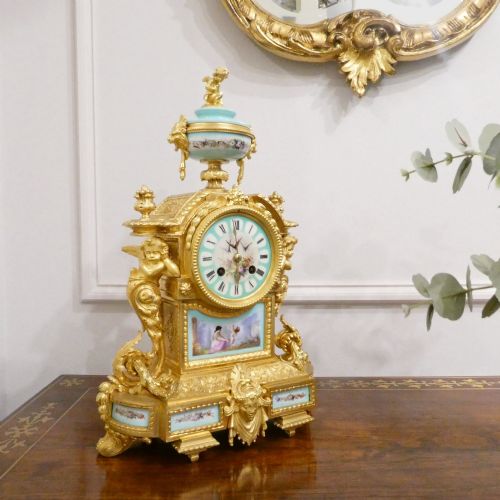
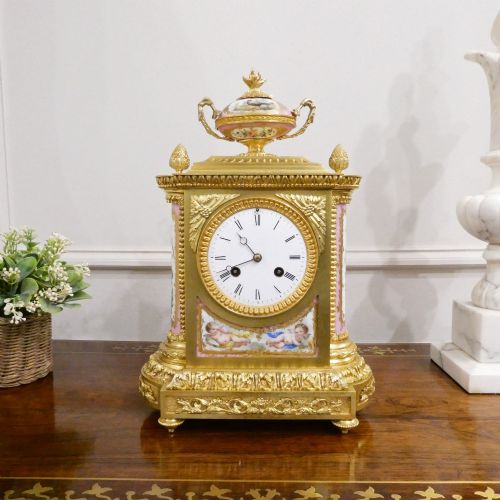
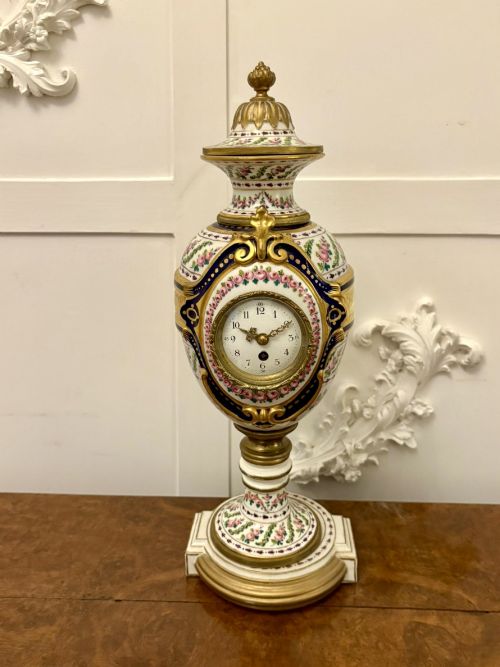
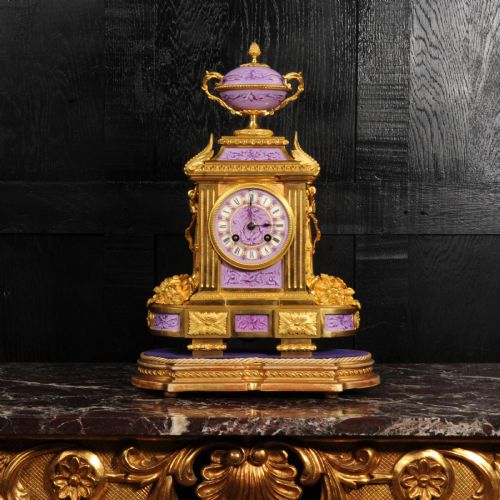
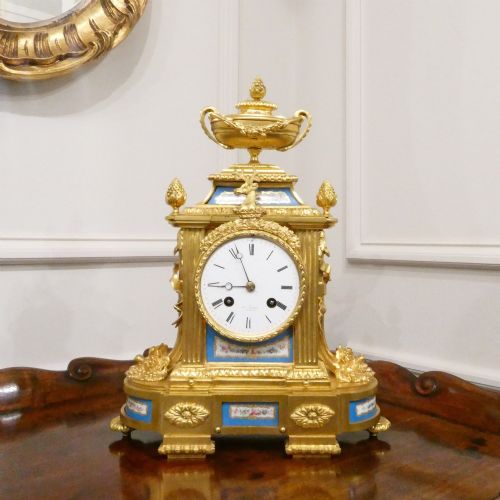
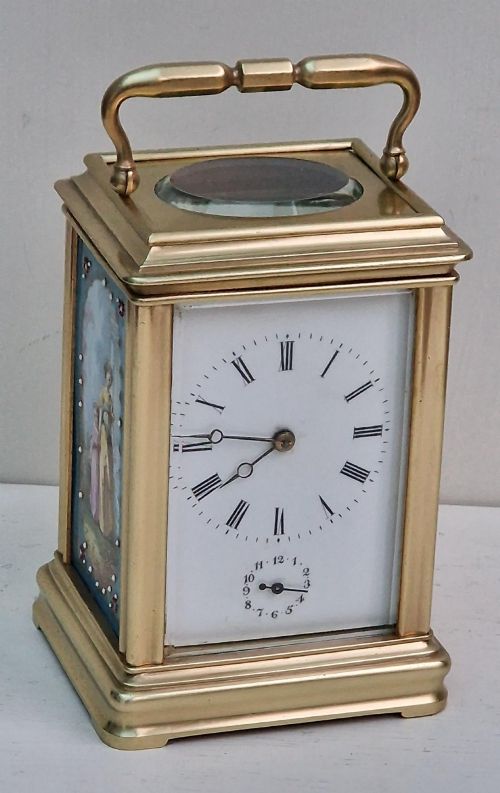
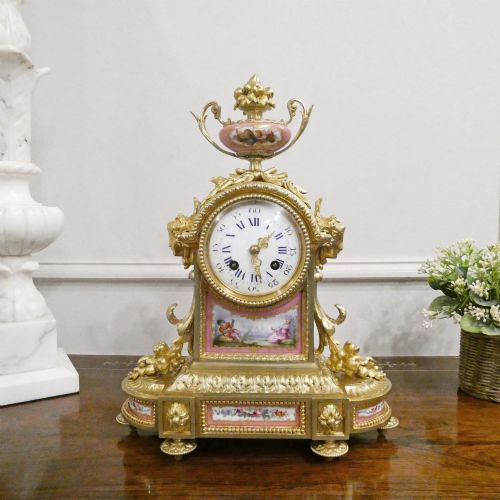
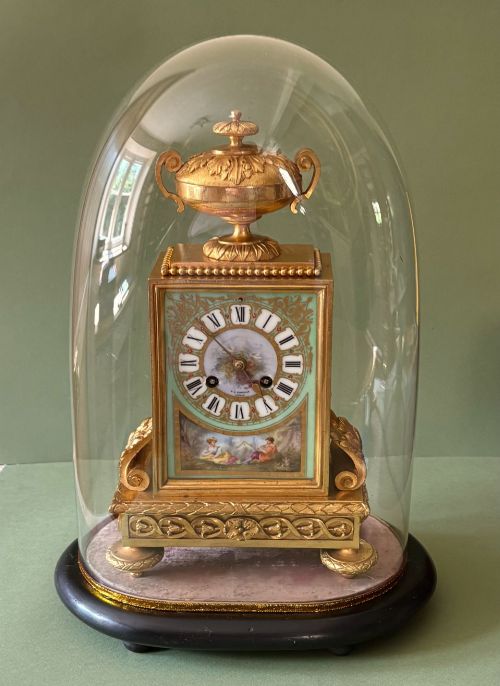
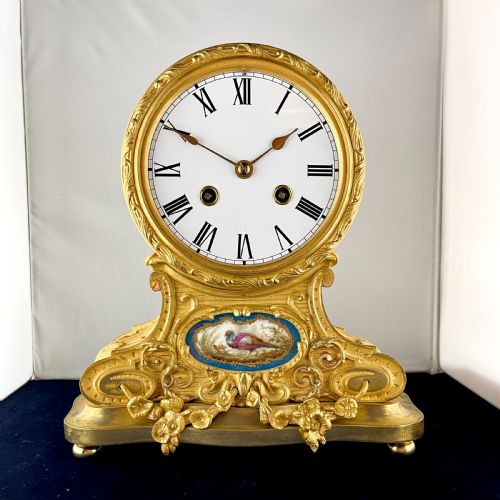
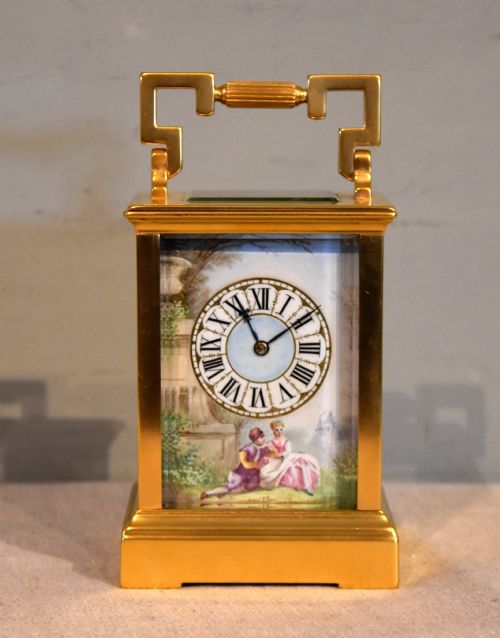
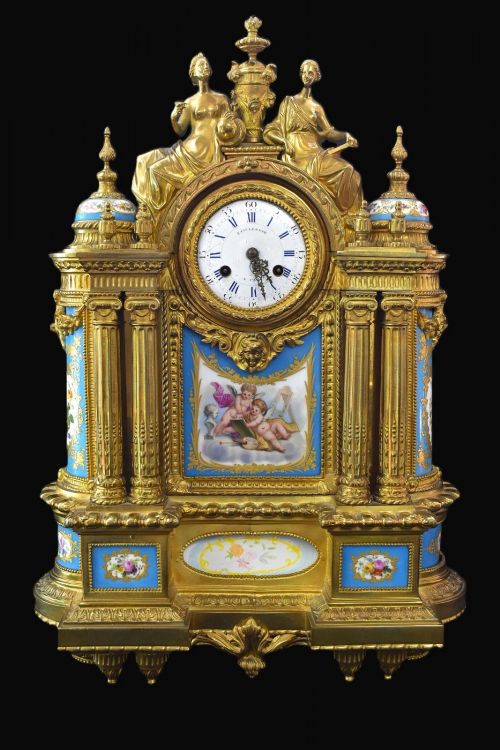
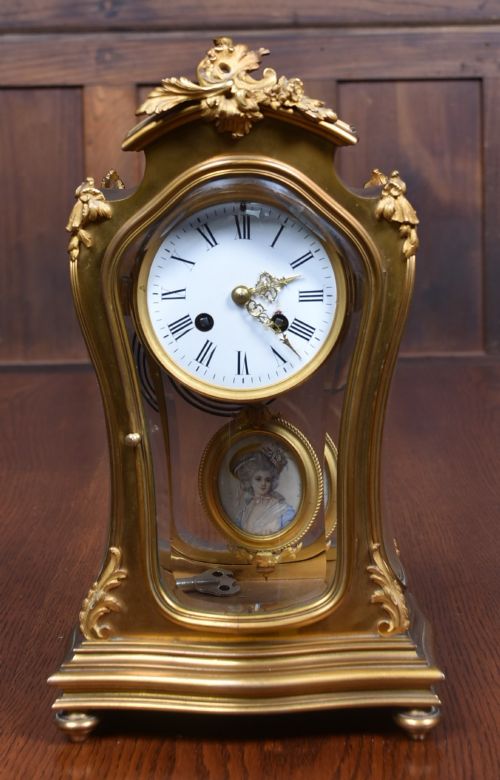
A brass and porcelain clock typically takes the form of an ornate nineteenth-century French mantel clock, a crystal regulator, or a portable carriage timepiece. These objects combine cast metal frameworks with hand-painted ceramic dials, urns, or inset panels.
The prevailing aesthetic draws heavily upon Louis XVI style, Second Empire ambition, and French Rococo Revival ornamentation. Buyers encounter substantial architectural mantel garnitures alongside domestic boudoir pieces manufactured across the Victorian era.
Many specimens incorporate Sèvres-style ceramic plaques or miniature paintings depicting romantic scenes and floral motifs. The integration of glazed panels and ceramic dials defines this distinct category of antique horology.
How they were made
Maker workshops utilised cast brass, gilt bronze, and ormolu to form the structural housings and decorative mounts of each timepiece. These metal components were frequently mercury gilt or polished to create rich reflective surfaces that complemented the ceramic elements.
Porcelain components arrived as hand-painted dials, urn bodies, or flat rectangular plaques inserted directly into the clock chassis. Artisans applied enamel paints and fired the ceramic pieces before mounting them securely within the metal frames.
Some nineteenth-century mantel clocks surprise owners by sharing living space with porcelain elephants and miniature painted skeletons.
What varies in quality
The standard of a brass and porcelain clock rests upon the crispness of the bronze casting and the artistic merit of the painted ceramic decoration. Superior examples display finely chased ormolu mounts and delicately detailed miniature paintings on their porcelain faces and panels.
The reputation of the movement maker heavily influences the standing of an individual piece within the market. Signed movements from established Parisian foundries and master horologists command greater recognition than anonymous workshop productions.
Jean-Baptiste Delettrez·Achille Brocot·Henry Marc·Japy Freres·Etienne Lenoir·Drocourt·Vincenti of Paris·Gustav Becker
The Brass and Porcelain Clock Glossary
- Ormolu
- A technique of applying finely ground high-carat gold to an object of bronze. This process creates a rich golden finish characteristic of luxury French mantel clocks.
- Carriage clock
- A small, portable spring-driven timepiece designed for travelling officers and wealthy Victorians. These often feature brass framing inset with glass or porcelain panels.
- Crystal regulator
- A mantel clock featuring glass panels on four sides allowing a clear view of the interior movement. They frequently incorporate enamelled porcelain dials.
- Garniture
- A matching set consisting of a central clock flanked by decorative matching ornaments such as urns or vases. These sets were designed to sit upon a mantelpiece.
- Cloisonné
- An ancient technique for decorating metalwork objects using vitreous enamel. Thin metal wires are applied to form raised barriers holding different coloured enamel pastes.
Brass and Porcelain Clock: Frequently Asked Questions
How do I wind my clock?
Most nineteenth-century mechanical clocks utilise a matching metal key inserted into winding squares on the porcelain dial. Turn the key gently until you feel resistance, taking care not to over-wind the mainspring.
Different arbours control the going train for the time and the striking train for the hours. Maintaining a regular winding schedule helps keep the movement running accurately.
Where should I place a mantel clock?
These heavy brass and ceramic timepieces require a sturdy, level surface such as a firm mantelpiece, sideboard, or sturdy table. Stability is essential to ensure the pendulum swings evenly and the escapement ticks in proper beat.
Keep the clock away from direct sunlight, heating vents, and damp exterior walls to protect the delicate porcelain panels and vintage metal gilding.
How do I clean the porcelain panels?
Dust ceramic surfaces and painted plaques gently with a soft, dry artist brush or microfiber cloth. Avoid using water, chemical solvents, or abrasive cleaners which can damage hand-painted enamel decoration.
Professional horological conservators should handle any deep cleaning or restoration required for the painted ceramic elements and delicate gilt bronze mounts.
Why does my clock stop running?
Mechanical clocks often stop due to being slightly out of beat or requiring professional lubrication after years of stationary use. Dust accumulation within the brass gear train can also impede the movement.
Ensure the clock casing sits completely level on its supporting surface. If adjusting the position fails to restart the tick, consult a qualified clock restorer.