

Brass and Mahogany Shelves
Brass and mahogany shelves combine warm timber with polished metal to create practical display storage spanning the Regency to the Edwardian period.
Brass and Mahogany Shelves
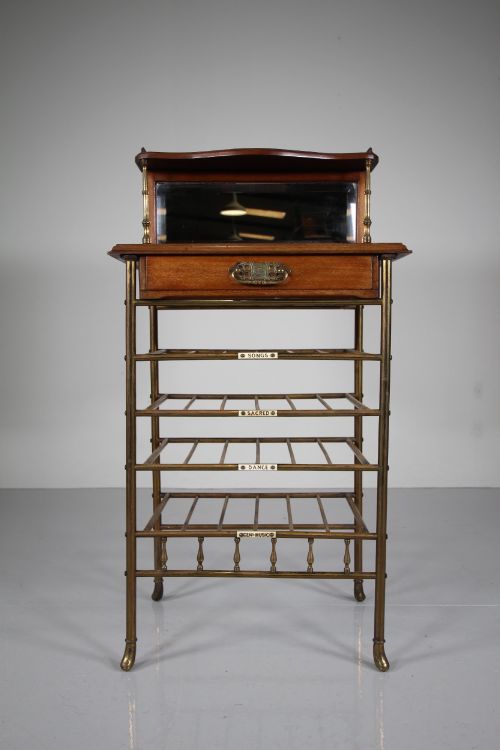
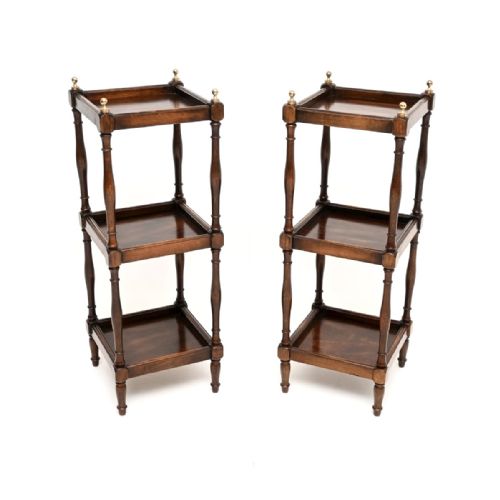
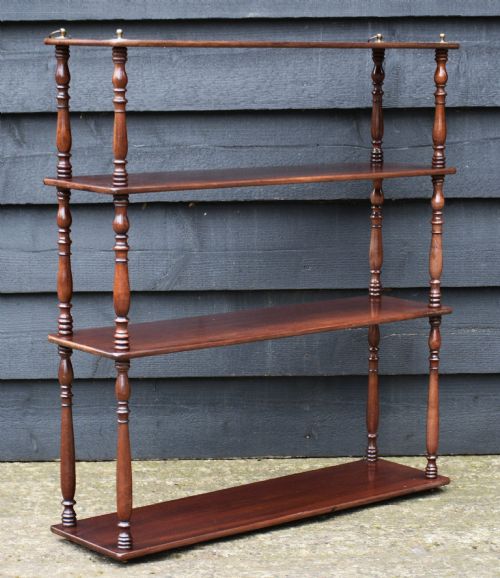
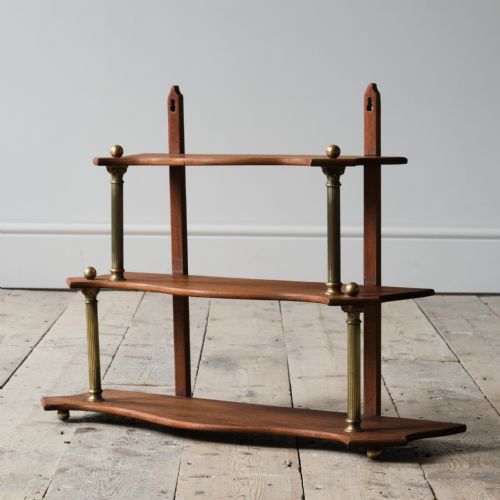
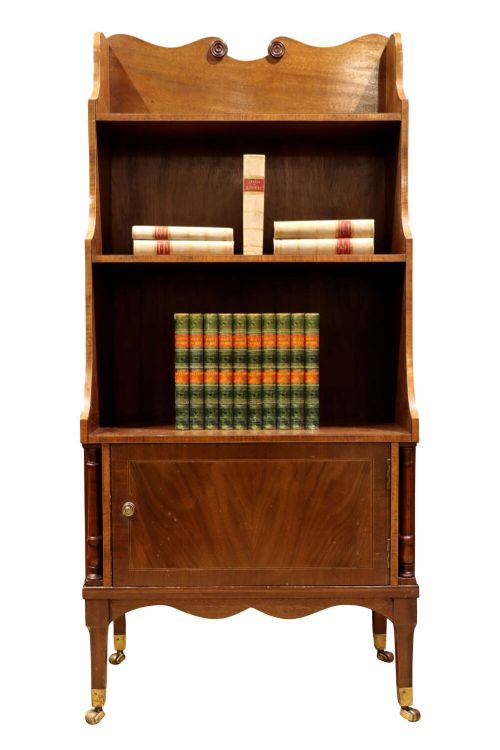
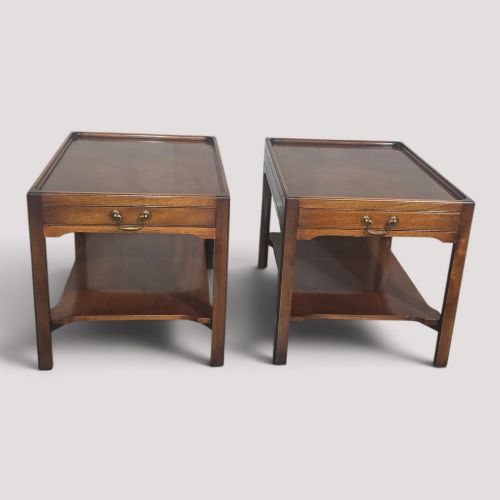
When you search for brass and mahogany shelves, you encounter wall-hanging display tiers, multi-shelf open bookcases, and column-supported stands designed for domestic storage. The pieces seen here largely originate from the nineteenth century, Regency, and Edwardian eras, combining rich timber boards with metal supports.
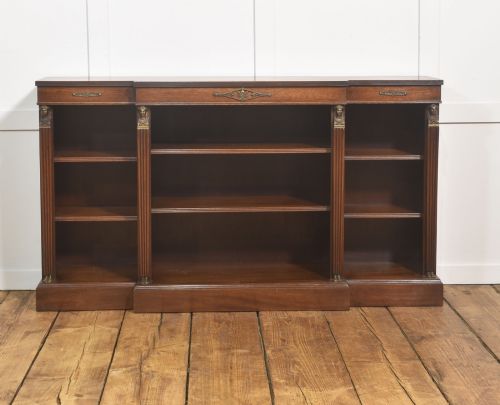
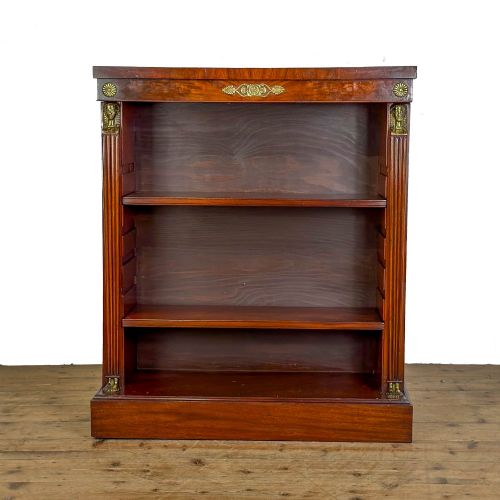
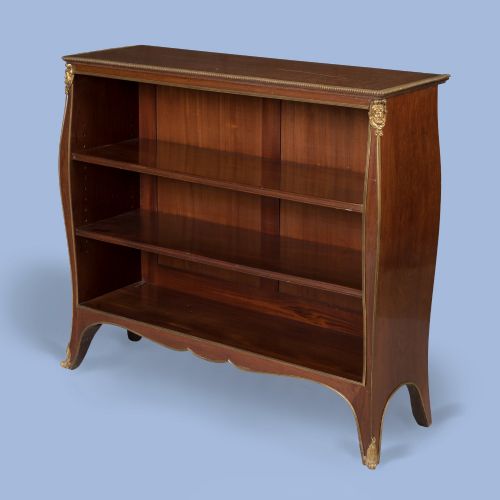
Hanging variations and multi-tier open bookcases form the core of what appears on this page, often featuring brass uprights, rails, or castors. These items served as functional furniture for books and ornaments in period rooms, utilising durable hardwoods alongside bright metal fittings.
Materials and construction
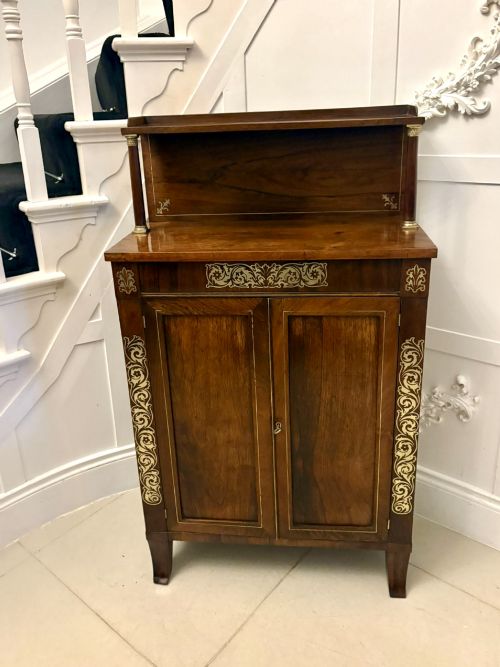
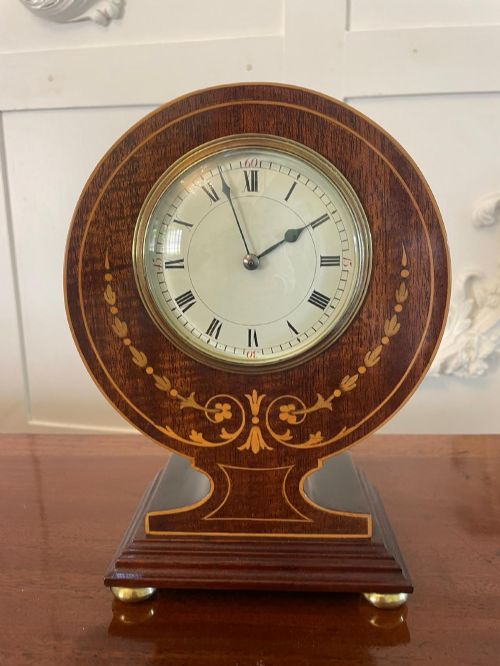
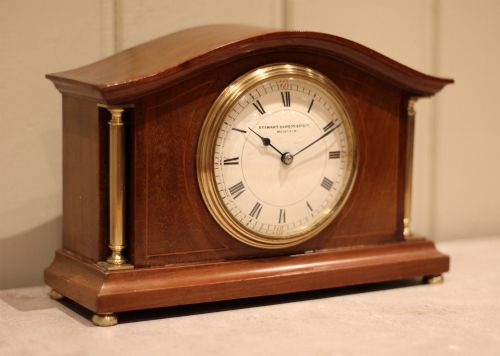
Makers built these pieces primarily from solid or veneered mahogany, frequently accented with boxwood inlay, satinwood, and ormolu mounts. The timber provides a deep reddish-brown grain that forms the main body of the shelves and cabinets.
Brass elements function both structurally and ornamentally, appearing as support columns, hanging brackets, gallery rails, and castors. Joinery techniques from the nineteenth and early twentieth centuries ensure rigidity in multi-tier open designs and wall units.
Brass and Mahogany Shelves Retail Price Guide 2026
Typical asking prices for brass and mahogany shelves among the pieces listed under this phrase on Sellingantiques today, from the lower quarter to the upper quarter. They describe what is for sale here now, not the wider market.
Listings span the nineteenth century, Regency period, and Edwardian era, utilising mahogany, brass, boxwood inlay, and ormolu.
Assessing quality and craftsmanship
The standard of a piece rests on the selection of the mahogany timber, the crispness of any inlay work, and the weight of the brass components. Superior examples display finely figured wood grain alongside heavy, well-cast metal fittings rather than thin plated brass.
Proportion and structural integrity distinguish finer items from simpler utility pieces, particularly in the alignment of tier supports and the finish applied to the wood surfaces over the decades.
Brockbanks And Atkins·Charles Pratt London·Piggin Norwich·Robert Strahan
The Brass and Mahogany Shelves Glossary
- Mahogany
- A durable tropical hardwood known for its rich reddish-brown colour and fine grain. It serves as the primary structural and visual timber across these listings.
- Ormolu
- Gilded bronze or brass applied as decorative mounts and accents. It provides a bright metallic contrast against dark mahogany surfaces.
- Whatnot
- An open set of multi-tiered shelves used for displaying ornaments and small objects. These pieces often incorporate brass columns or spindle supports.
- Inlay
- A decorative technique where contrasting materials such as boxwood or satinwood are inserted into recesses in the mahogany surface. This creates geometric or floral patterns.
- Campaign style
- Furniture designed for portability, typically featuring brass corner braces, flush handles, and sturdy mahogany construction. It originates from military use during the nineteenth century.
Brass and Mahogany Shelves: Frequently Asked Questions
How do I hang wall shelves safely?
Wall-hanging shelves require secure fixings into wall studs or solid masonry to support the combined weight of the mahogany timber and heavy volumes. Ensure the brass hanging brackets attach firmly to the main vertical supports of the frame.
Distribute weight evenly across the tiers to prevent strain on the historical joints and wall fixings over time.
What rooms suit these shelves?
These shelves fit studies, libraries, and living rooms where books and small decorative objects require open display. The combination of dark timber and polished brass complements both traditional and contemporary interiors.
Keep pieces away from direct heat sources and strong sunlight to protect the mahogany finish and prevent timber movement.
How do I clean brass and mahogany?
Dust mahogany regularly with a dry lint-free cloth and apply a traditional beeswax periodically to nourish the grain. Avoid silicone sprays that build up residue on the timber surface.
Polish the brass components gently with a specialised metal cleaner, taking care not to let the cleaning agents touch the surrounding wood.
How do I date these pieces?
Dating relies on examining construction methods, timber thickness, and the style of brass hardware used in the assembly. Regency and nineteenth-century pieces often feature hand-cut joints and heavier cast brass elements.
Edwardian and later iterations show standardised fixings and lighter framing while maintaining the traditional mahogany and brass palette.