

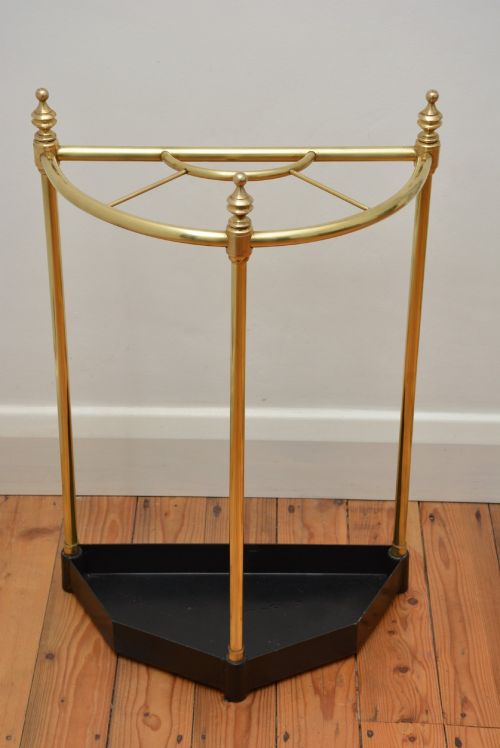


Brass and Iron Rack
A brass and iron rack provides sturdy utility and classic metalwork for the hallway or kitchen.
Brass and Iron Rack
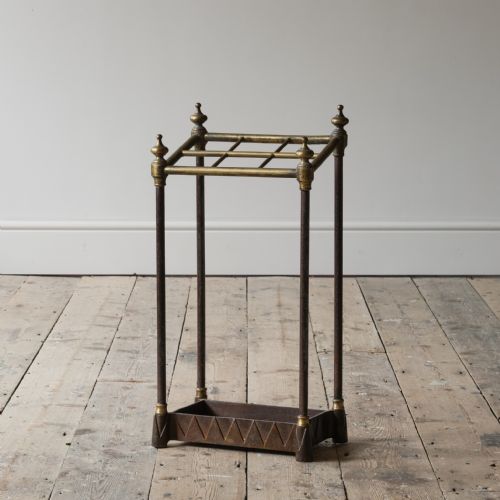
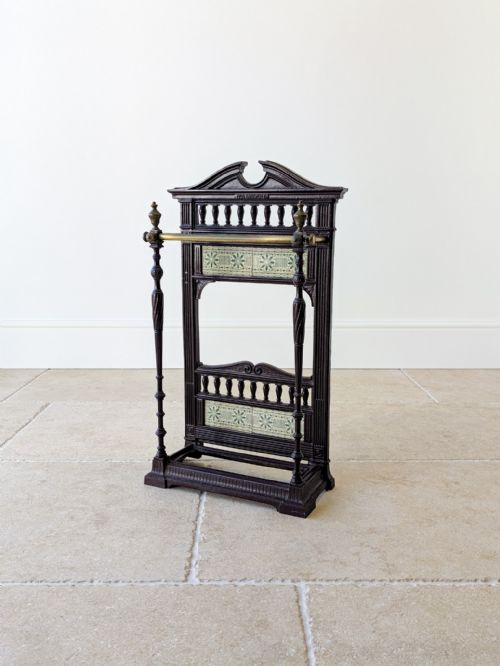
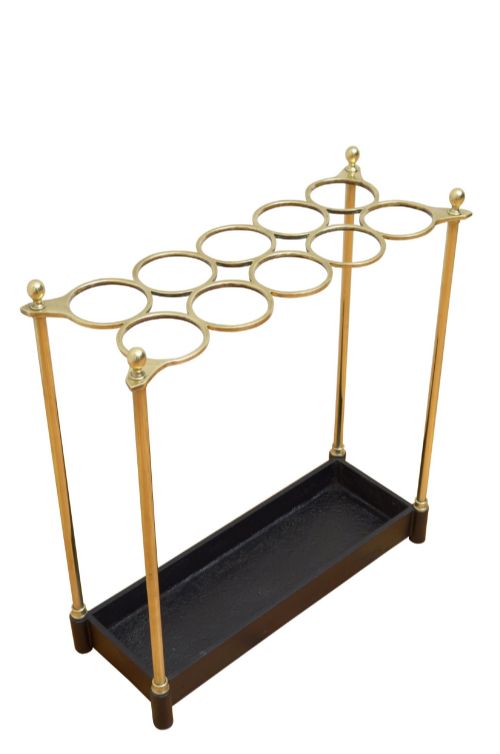
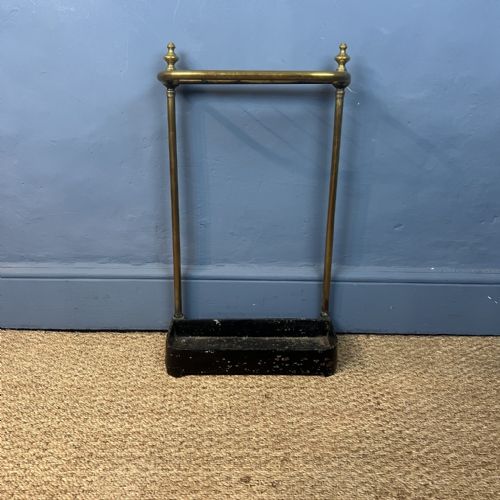
A brass and iron rack encompasses functional hallway furniture and heavy utility shelving from the nineteenth and early twentieth centuries. The selection here leans heavily towards umbrella and stick stands, alongside large French baker's racks and shop display units.
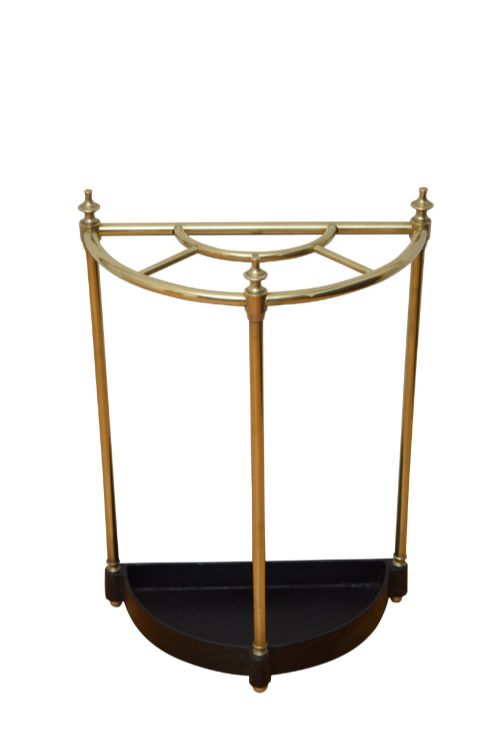
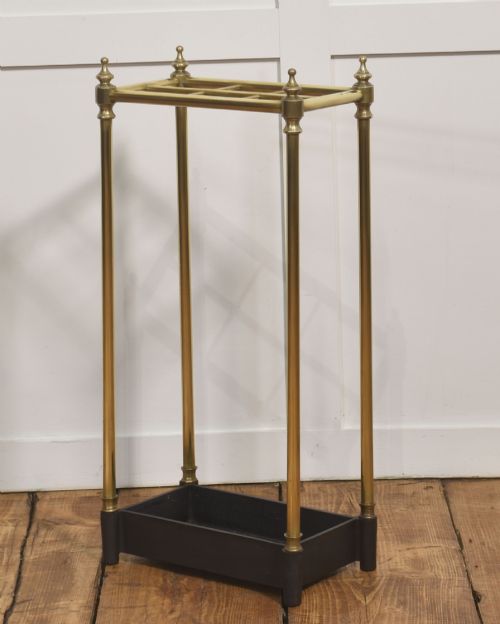
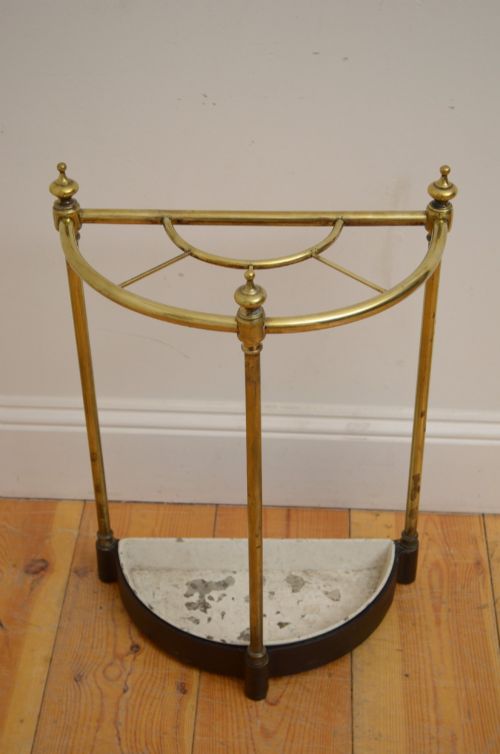
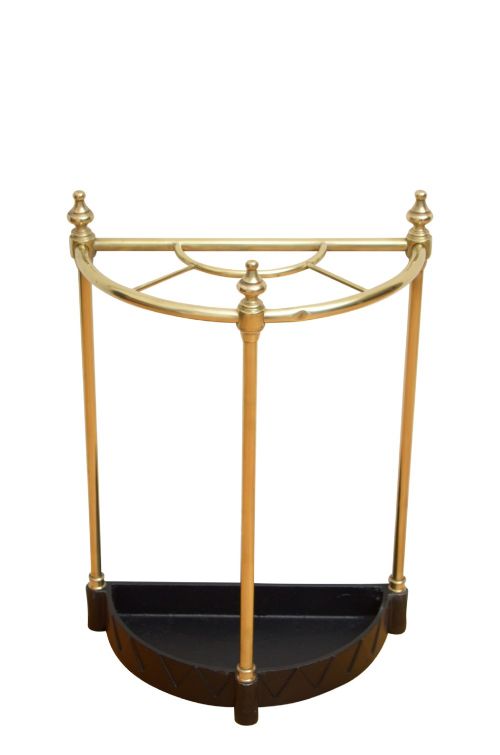
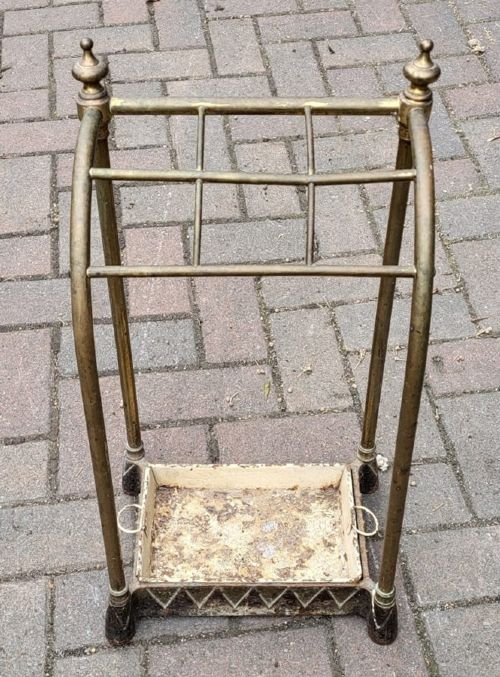
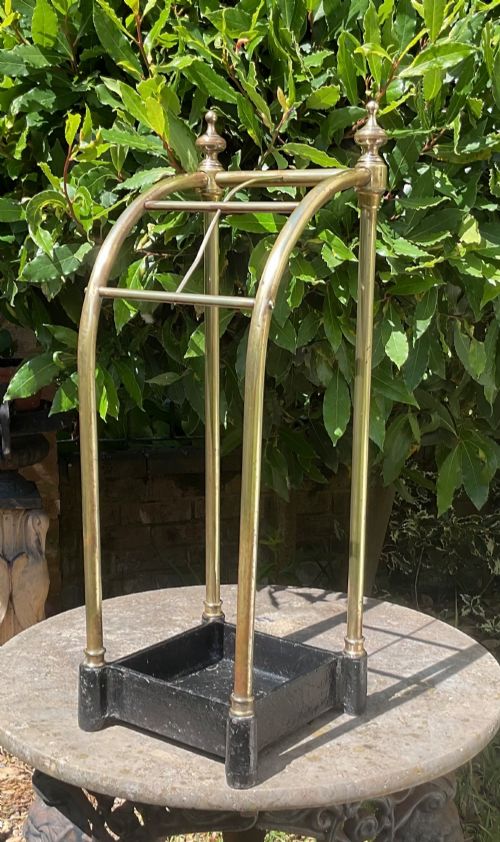
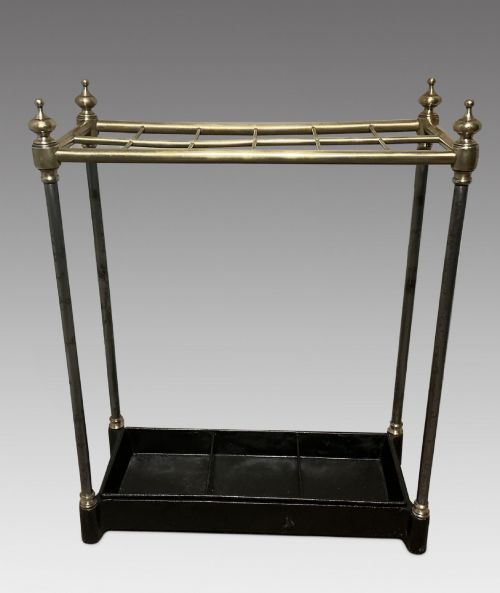
Most examples combine gleaming brass rails or finials with robust cast iron or wrought iron frames. Half-moon or demi-lune umbrella stands dominate the British pieces, designed to sit flush against hallway walls.
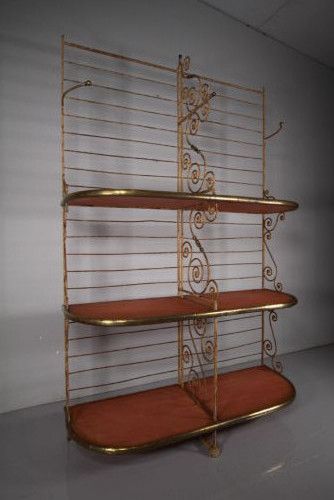
French pieces in this category often take the form of industrial baker's racks or patisserie shelving. These larger structures utilise iron frameworks with timber or wire tiers for commercial or domestic storage.
Materials and Technique
The construction relies on the contrast between malleable brass and rigid iron. Cast iron provides heavy, stable bases for tall umbrella stands, preventing toppled sticks and damp floors.
Brass components, including decorative ball finials and drip trays, are turned or cast separately before joining the iron structure. Wrought iron elements on baker's racks show signs of manual forging and riveting.
Listings span the Victorian, Edwardian, and early twentieth-century periods, incorporating French industrial designs alongside British hallway furniture.
Evaluating Quality
Quality rests upon the weight of the metal and the crispness of the casting. Heavier iron bases and thicker gauge brass tubing indicate superior durability and original intent.
Details such as stamped maker marks, removable ceramic or metal drip trays, and integrated umbrella loops elevate standard utility items into accomplished decorative pieces.
Coalbrookdale·Dubois of Lyon·Shoolbred·Harrods
The Brass and Iron Rack Glossary
- Demi-lune
- A half-moon shape designed to fit flat against a wall. This profile is common in hallway stick stands to save floor space.
- Finial
- A decorative crowning ornament, often found in spherical brass forms on the corners of these racks.
- Baker's rack
- A tall metal shelving unit historically used in French boulangeries for cooling bread and pastries. They utilise open ironwork frames.
- Drip tray
- A removable metal or ceramic tray positioned at the base of a rack to catch moisture from wet umbrellas.
Brass and Iron Rack: Frequently Asked Questions
What is a demi-lune stick stand?
A demi-lune stick stand is a hallway rack built with a flat back and a semi-circular front. This shape allows the piece to rest neatly against a wall without protruding too far into a narrow corridor.
These stands typically combine a cast iron base with brass rails and feature built-in drip trays underneath to protect wooden flooring from wet umbrellas.
How do I use a baker's rack today?
A baker's rack serves as versatile shelving in kitchens, living rooms, or dining spaces for storing cookware, books, or plants. Their open iron frameworks offer high load capacity without dominating a room visually.
Larger antique examples provide substantial vertical storage while adding an industrial aesthetic to modern interiors.
Were these racks made for homes or shops?
The inventory includes items built for both domestic hallways and commercial retail environments. Smaller umbrella stands and hat stands served Victorian and Edwardian homes.
Larger shelving units and display stands originated in French bakeries, patisseries, and English shops before entering the domestic market.
How do I clean brass and iron?
Cleaning requires a soft cloth to remove dust from both the brass elements and the iron framework. Avoid abrasive pads that scratch the metal surfaces.
Unlacquered brass develops a natural patina over time, which many collectors prefer to leave undisturbed rather than polishing to a bright shine.