


Brass and Bronze Candlesticks
Brass and bronze candlesticks bring weight and warm metallic reflection to a room, spanning French Empire, Victorian and Regency designs.
Brass and Bronze Candlesticks
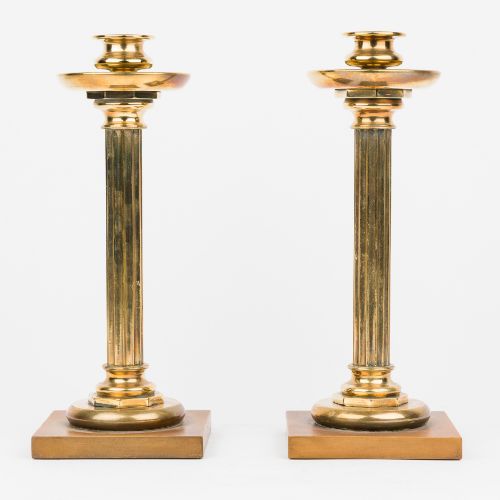
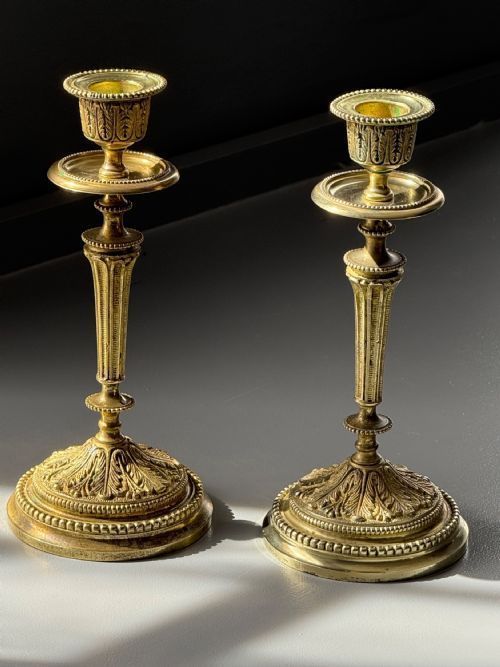
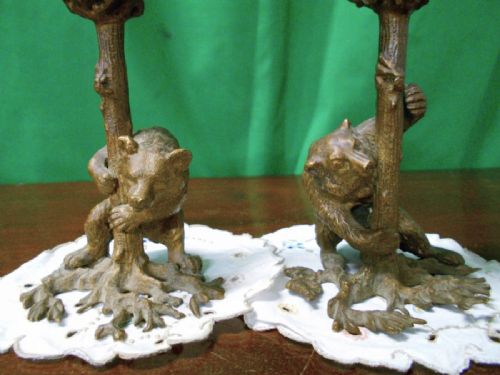
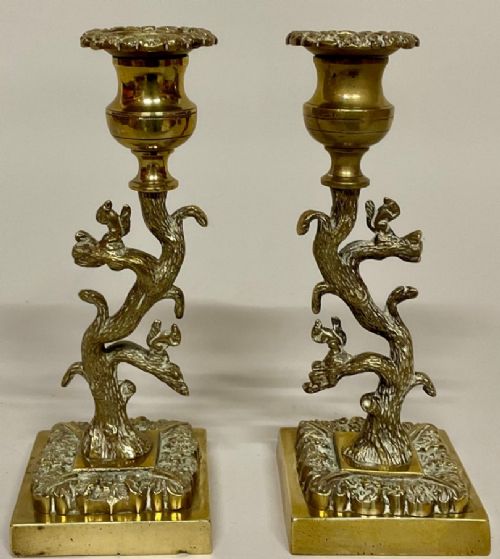
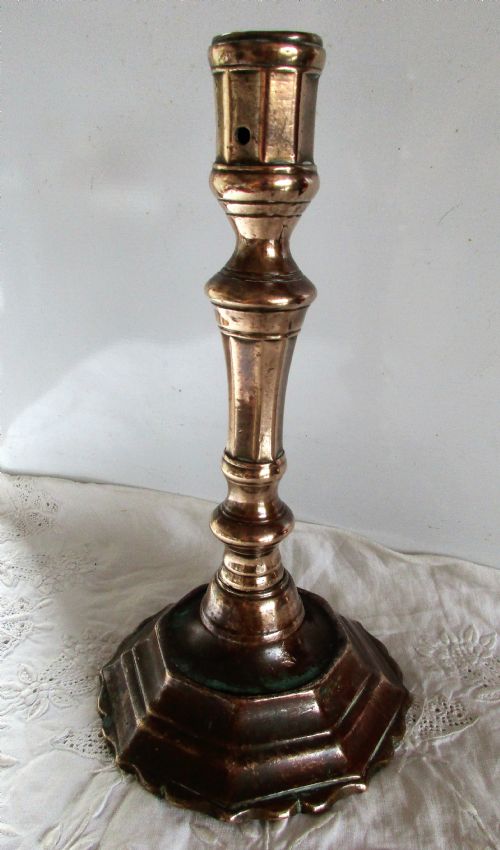
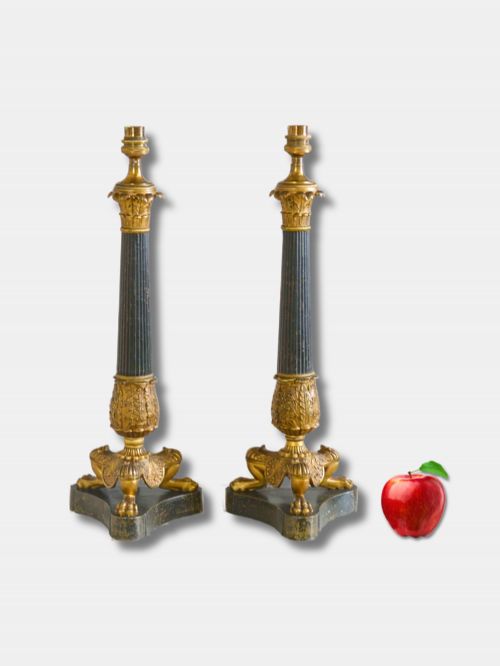
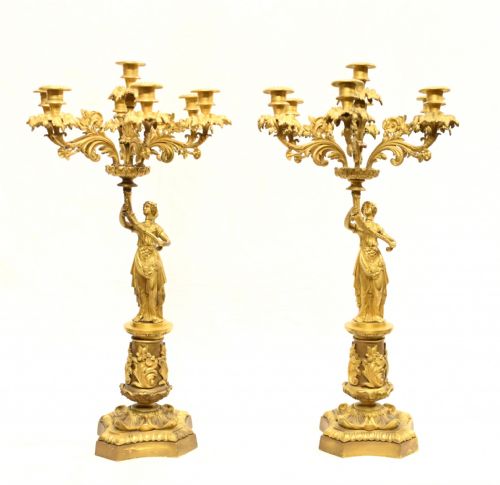
Brass and bronze candlesticks encompass lighting supports and candelabra formed from cast copper alloys, often paired with marble, onyx or fabric elements. When collectors search for brass and bronze candlesticks, they encounter pairs cast as classical columns, figural sculptures, or architectural prickets.
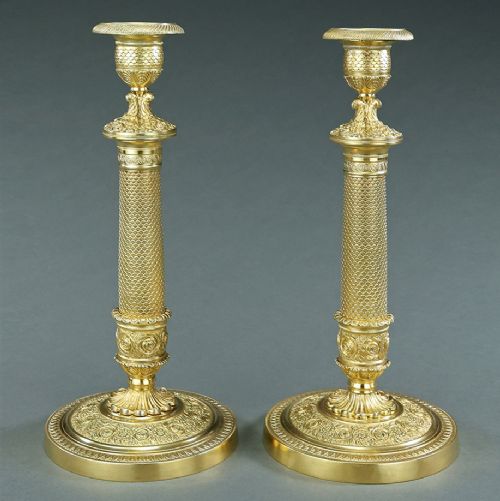
The pieces on this page lean heavily towards nineteenth-century French and English manufacture, including Louis XVI style revivals, Gothic forms, and Empire designs. Pairs dominate the selection, utilised historically on dining tables, mantelpieces and sideboards to reflect candlelight.
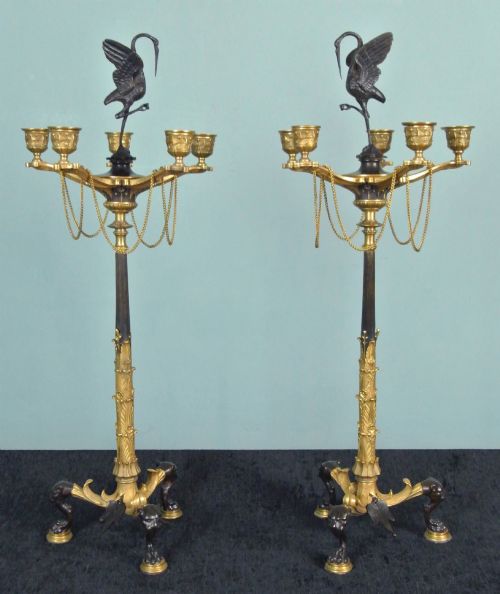
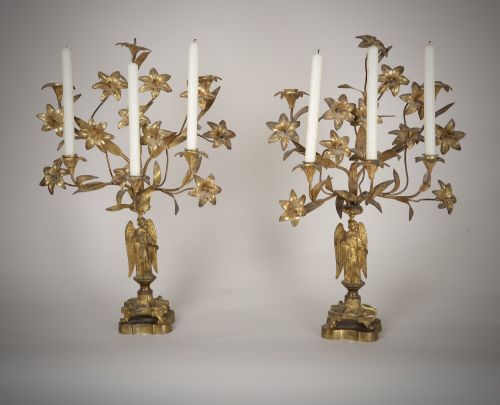
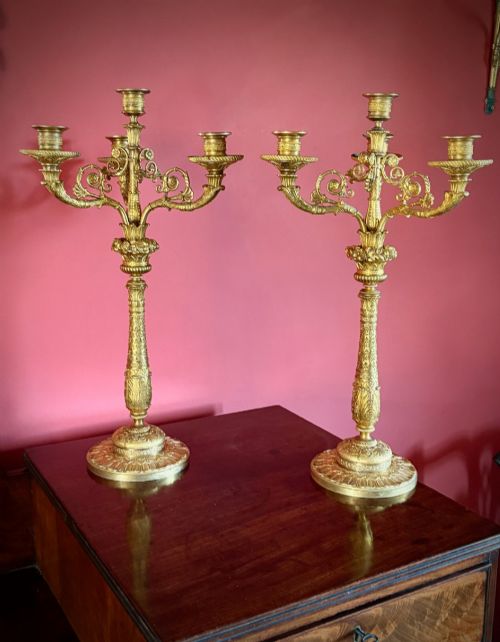
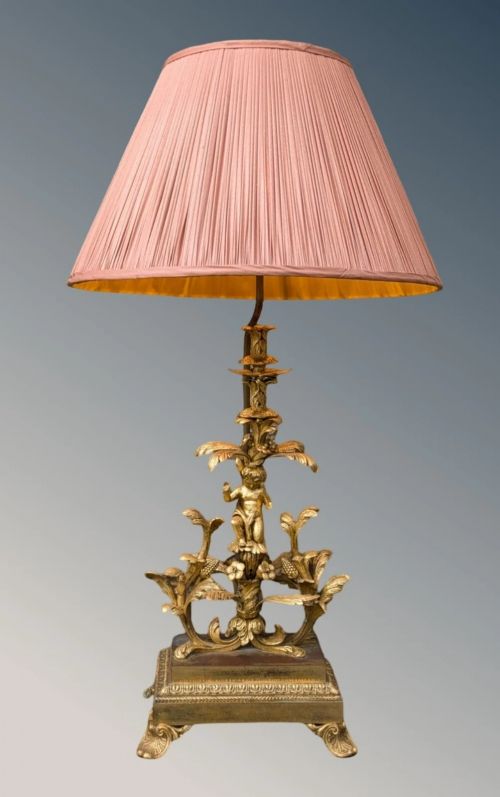
Alongside standard single-nozzle sticks, the inventory records multi-arm candelabra, wall sconces and table lamps converted from earlier lighting bases. These items range from modest domestic brass examples to grand ormolu and gilt bronze display pieces.
How they were made
Foundry workers utilised traditional sand casting and lost-wax methods to form the metal bodies, pouring molten brass or bronze into bespoke moulds. Complex items like figural groups or foliate arms were cast in separate sections before being joined mechanically or pinned together.
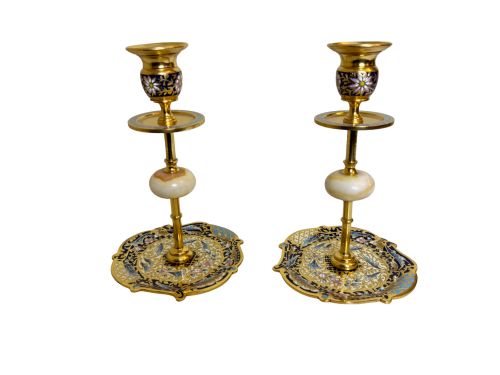
Surface finish required significant hand labour, employing mercury gilding for ormolu, chemical patination to darken bronze, and fine chasing tools to sharpen cast details. Elements such as white marble bases, onyx panels and champleve enamel sections were integrated during final assembly.
Brass and Bronze Candlesticks Retail Price Guide 2026
Typical asking prices for brass and bronze candlesticks among the pieces listed under this phrase on Sellingantiques today, from the lower quarter to the upper quarter. They describe what is for sale here now, not the wider market.
Materials recorded across the inventory include gilt bronze, patinated bronze, ormolu, white marble, onyx and champleve enamel.
What varies in quality
The crispness of the chasing defines the upper tier of production, where hand-tooling after casting brings out individual feathers, hair strands and acanthus leaf edges. Lesser pieces rely solely on the raw cast without subsequent metalwork refinement.
Weight and structural substance separate substantial foundry output from lighter commercial variants. The integration of high-grade materials like genuine fire-gilt ormolu and solid statuary marble elevates the visual depth compared to thin brass plating or synthetic substitutes.
Barbedienne·Abel Landry
The Brass and Bronze Candlesticks Glossary
- Ormolu
- Gilt bronze created by applying a mixture of gold and mercury to a bronze base and heating it to vaporise the mercury. This technique produced a durable, rich golden surface on French decorative objects.
- Pricket
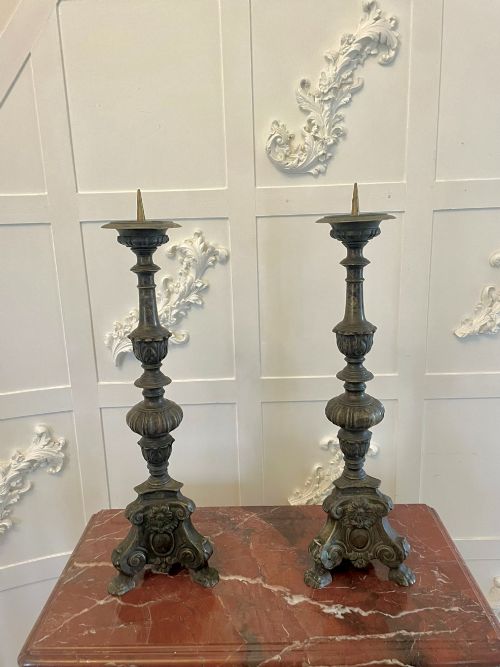
- A sharp metal spike set in the centre of a drip pan to hold a candle upright. These are commonly found on ecclesiastical or Gothic revival altar pieces.
- Champleve
- An enamelling technique where troughs are dug into the metal surface and filled with vitreous paste before firing. The resulting coloured patterns sit flush with the surrounding brass or bronze frame.
- Candelabra
- A branched lighting fixture designed to hold multiple candles simultaneously. They frequently incorporate removable nozzle inserts and central decorative shafts.
- Grand Tour
- Souvenirs purchased by wealthy travellers visiting continental Europe during the eighteenth and nineteenth centuries. These included miniature bronzes and architectural models styled on classical antiquities.
- Campana
- A vase-shaped candle sconce resembling an upturned classical bell. This form appears frequently on Regency and Empire candlesticks.
Brass and Bronze Candlesticks: Frequently Asked Questions
How do I clean antique ormolu?
Antique ormolu requires only gentle dusting with a soft brush and dry cloth to remove accumulated particles. Avoid chemical polishes or abrasive cloths, which strip away the thin layer of historic fire gilding.
Moisture can seep into microscopic fissures or damage underlying base metals, so liquid cleaners must be strictly avoided. Professional conservation is recommended for pieces requiring deeper intervention.
Were these electrified later?
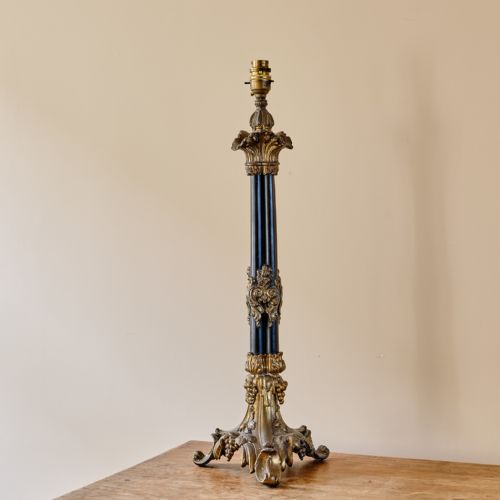
Many nineteenth-century candlesticks and candelabra on the market have been converted into table lamps during the twentieth century. This process sometimes involved drilling through the original metal or fitting brass stems inside the central socket.
Buyers should examine the base and wiring channels to determine if the conversion is reversible. Unconverted pairs retaining their original prickets or drip pans remain scarcer.
What is the difference between brass and bronze?
Brass is an alloy primarily composed of copper and zinc, yielding a bright yellow or golden metallic tone. Bronze consists mainly of copper combined with tin, resulting in a heavier, darker material suited to detailed figural casting.
Many antique pieces combine both metals or apply surface patination and gilding that masks the base alloy. The distinction usually rests on the intended function and sculptural detail of the object.
How do I spot a reproduction?
Authentic nineteenth-century pieces display consistent casting seams, hand-chased surface details appropriate to the period, and natural wear patterns around handling points. Modern reproductions often show uniform machine finishing and lack the varied patination accumulated over generations.
Examining the construction methods inside the base reveals assembly techniques consistent with historical foundry practices rather than modern mass production.