

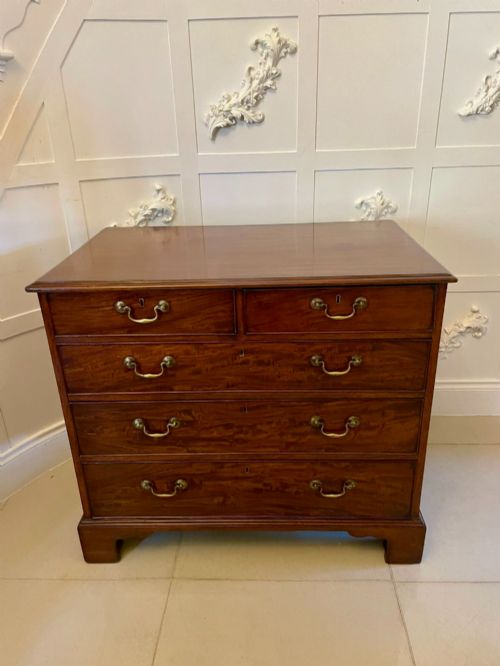
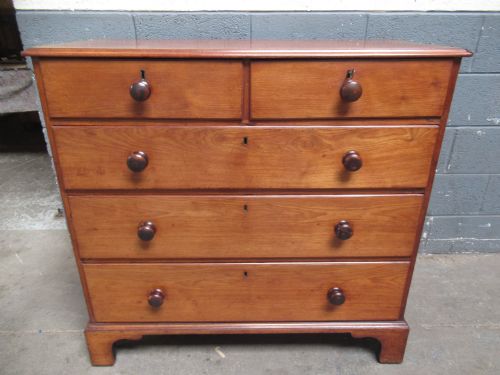
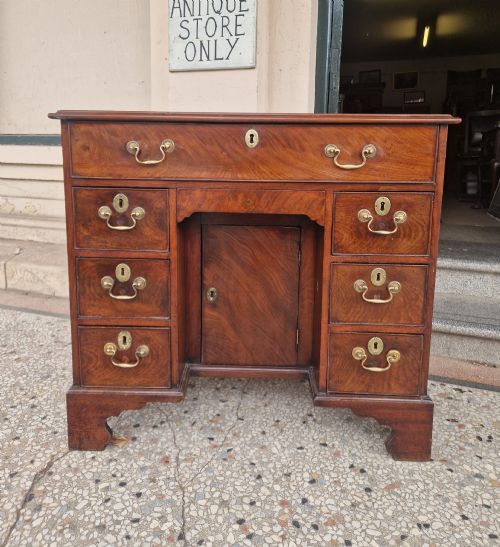
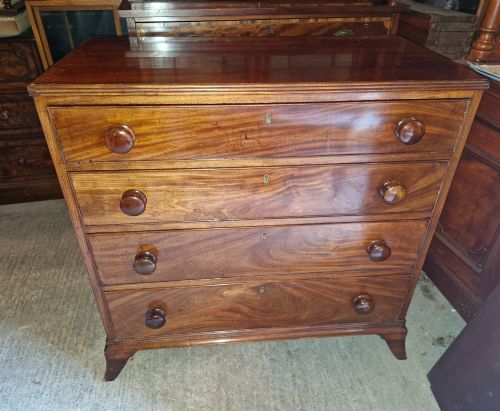
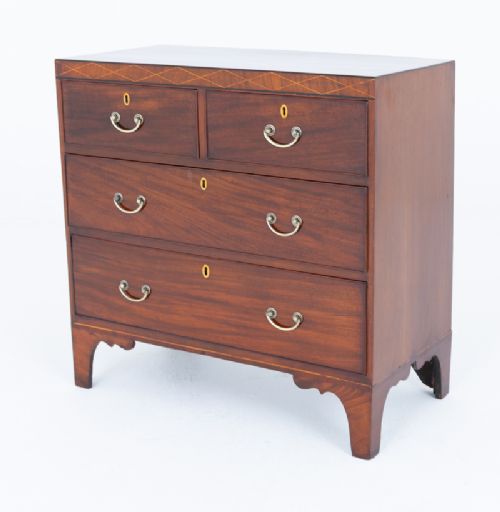
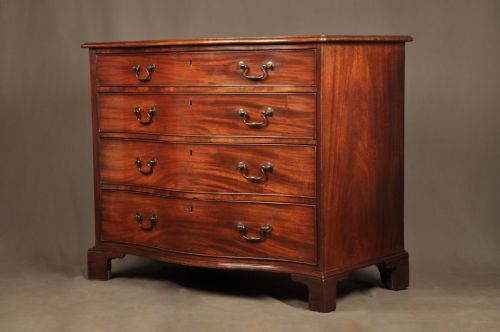
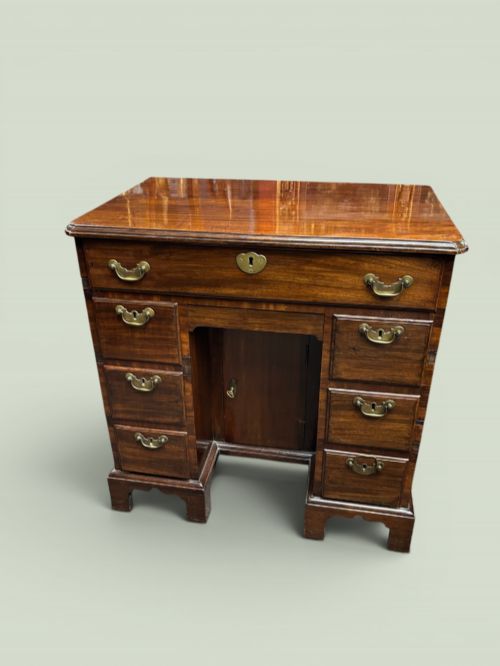
Bracket Feet Mahogany Bureau
When you want a bracket feet mahogany bureau, you are looking for a practical writing desk built to last centuries.
Bracket Feet Mahogany Bureau
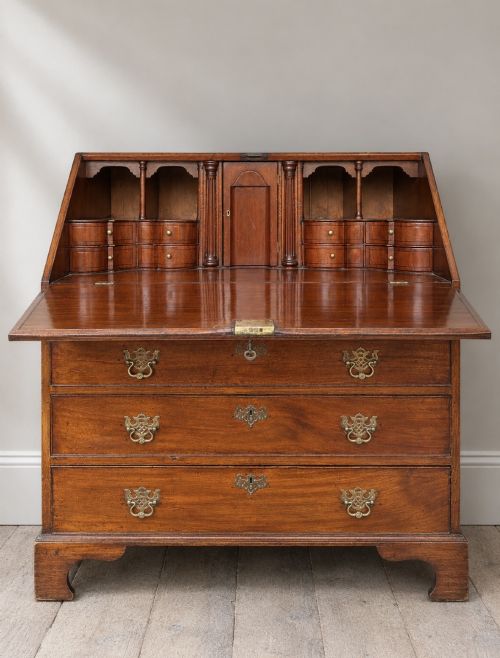
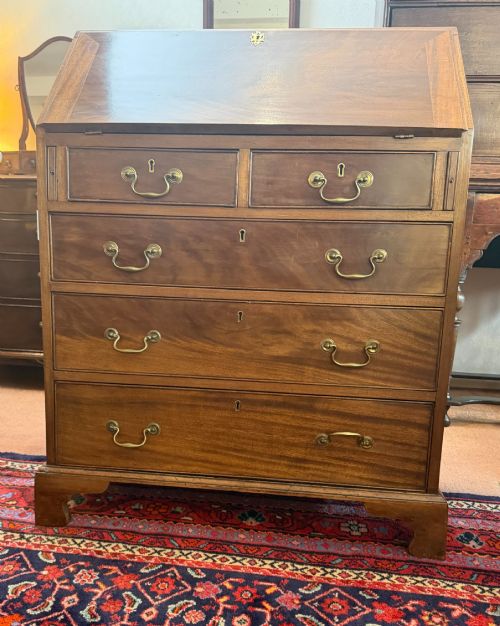
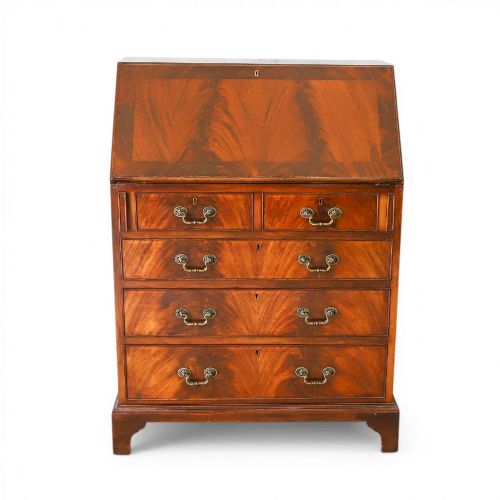
A bracket feet mahogany bureau is a writing desk fitted with a fall front that opens to reveal internal compartments and drawers, supported by shaped feet at each corner. These pieces frequently date from the Georgian and Regency periods, though later Edwardian and revival examples also appear.
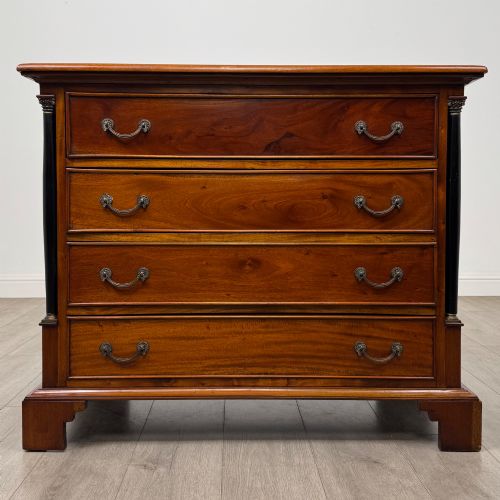
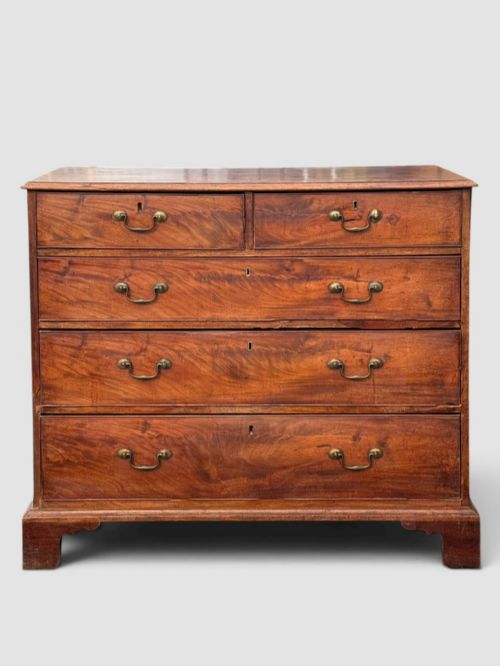
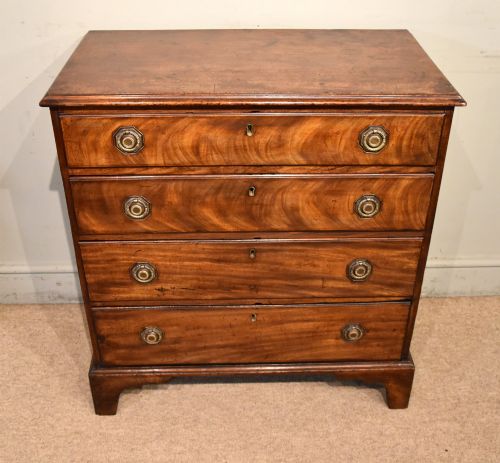
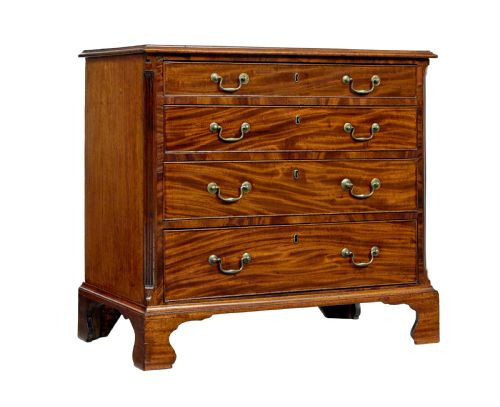
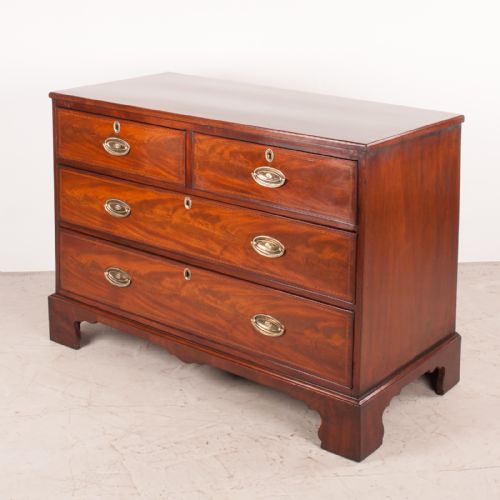
The most common form on this page is the traditional bureau with multiple long drawers beneath a writing flap, alongside related kneehole desks and chests of drawers. Each piece combines storage capacity with a dedicated writing surface, designed to sit flat against a parlour or study wall.
Buyers seek these items for their rich timber grain and reliable proportions, which anchor a room while providing functional workspace. They bridge the gap between ornamental furniture and daily utility, surviving from the eighteenth century into the twentieth.
How they were made
Cabinet makers constructed these bureaux using solid mahogany and mahogany veneers applied to secondary woods such as oak, often utilising brass handles and escutcheons for drawer fittings. Interior compartments frequently incorporate contrasting timbers like boxwood or satinwood stringing.
Structural stability relied on tightly joined drawer frames and stable bracket feet secured at the base corners to lift the weight off the floor. Finishers polished the timber surfaces to bring out the natural depth and warm colour of the grain.
Many surviving bureaux retain the original tiny key for the fall front, proving that someone spent centuries refusing to lose it.
What varies in quality
The depth of figure in the mahogany timber determines much of the visual appeal, ranging from straight grain to highly figured curl mahogany on the fall front and drawer faces. Superior pieces display careful book-matching of veneers and crisp, hand-cut dovetails on the drawer sides.
Proportion and intact internal fittings also distinguish finer examples from standard workshop production, with secondary woods and original brass hardware remaining consistent with the period of manufacture.
The Bracket Feet Mahogany Bureau Glossary
- Bracket foot
- A simple foot shape resembling a bracket, mitred at the corner and supporting the base of a chest or bureau.
- Fall front
- The hinged writing flap on a bureau that drops down to form a horizontal desk surface.
- Curl mahogany
- Timber cut from the fork of the mahogany tree, creating a distinctive flame-like pattern prized by cabinet makers.
- Kneehole desk
- A compact desk featuring a central recessed space for the legs flanked by columns of small drawers.
- Brushing slide
- A pull-out wooden shelf positioned above the top drawers, historically used for dusting or writing notes.
Bracket Feet Mahogany Bureau: Frequently Asked Questions
What is a bracket feet mahogany bureau?
It is a traditional writing desk featuring a hinged writing flap and internal pigeonholes, raised off the floor on shaped corner supports.
These pieces combine storage drawers with a practical writing surface, made primarily from mahogany timber during the Georgian and later periods.
How do I use a bureau in a modern room?
A bureau serves well as a compact workspace in a living room, bedroom, or home office where floor space is limited.
Closing the fall front conceals papers and writing materials instantly, keeping the room tidy when work finishes for the day.
How can I tell a Georgian bureau from a later copy?
Examine the construction methods inside the drawers and carcass, looking for hand-cut dovetails and timber characteristics appropriate to the eighteenth century.
Revival pieces from the Edwardian era often use machine-sawn elements and lighter secondary woods while imitating earlier styles.
What wood was used inside the desk?
Cabinet makers used secondary woods like oak for drawer linings and structural framing behind the primary mahogany surfaces.
Small internal drawers and pigeonholes frequently incorporate lighter decorative timbers such as boxwood or satinwood for contrast.