


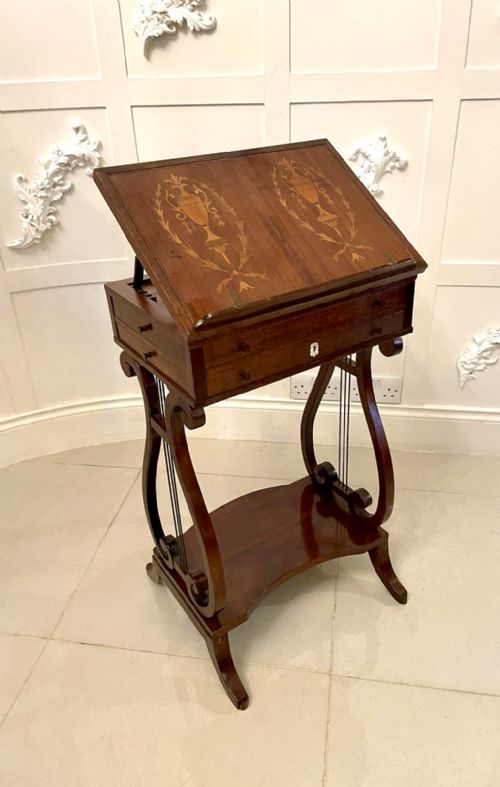
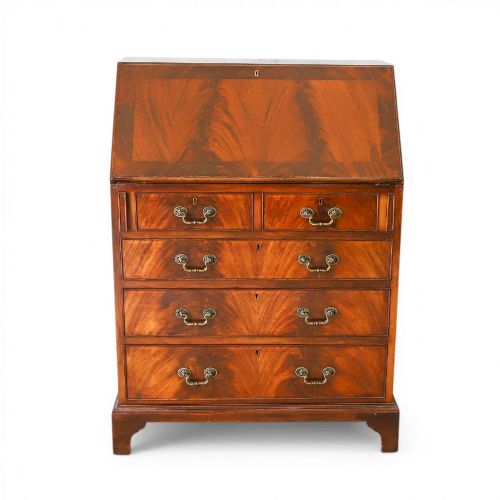
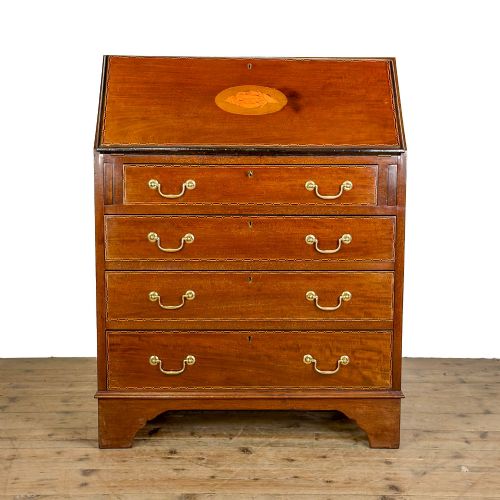

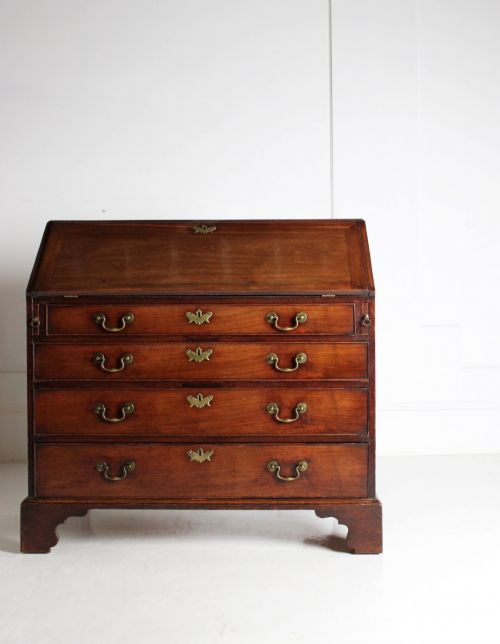
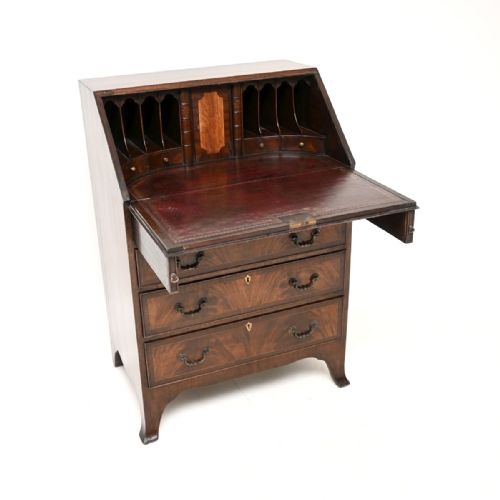

Brown Mahogany Slant Desk
These brown mahogany slant desks offer practical writing surfaces combined with secure storage, bringing traditional craftsmanship and rich timber tones into daily use.
Brown Mahogany Slant Desk
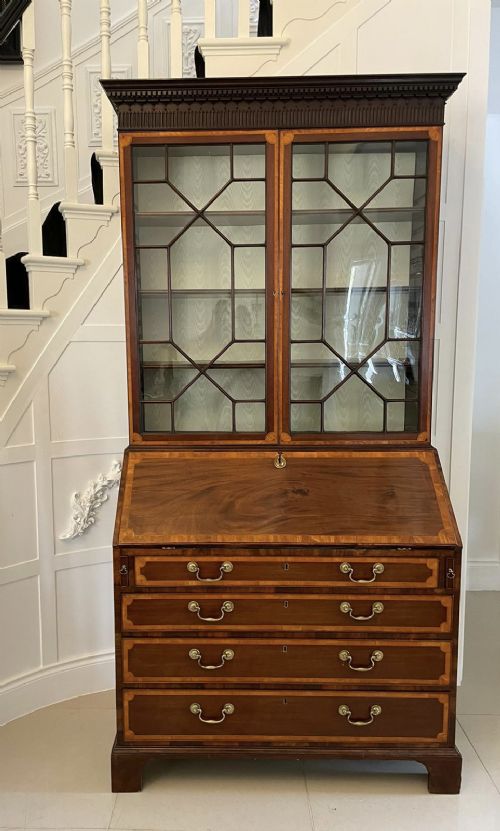
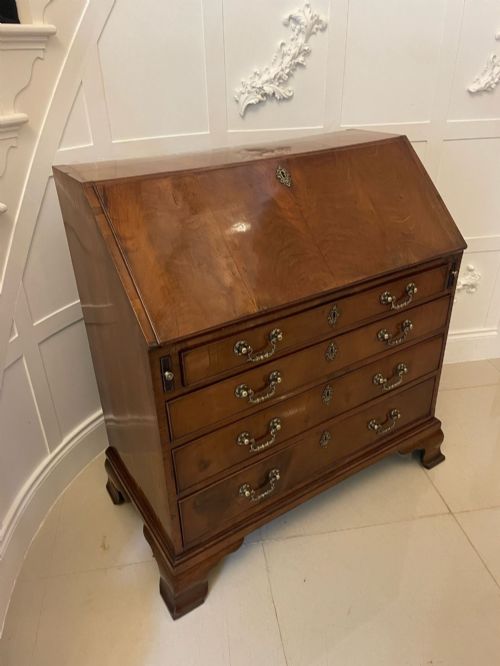
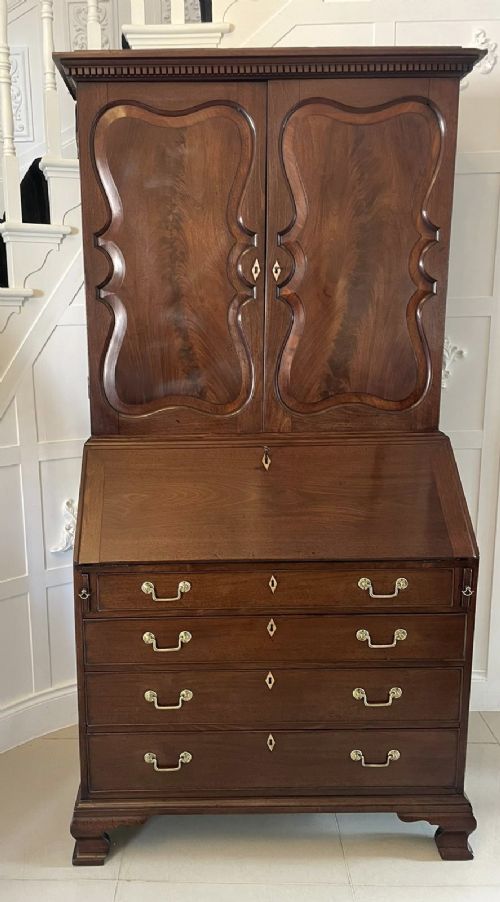
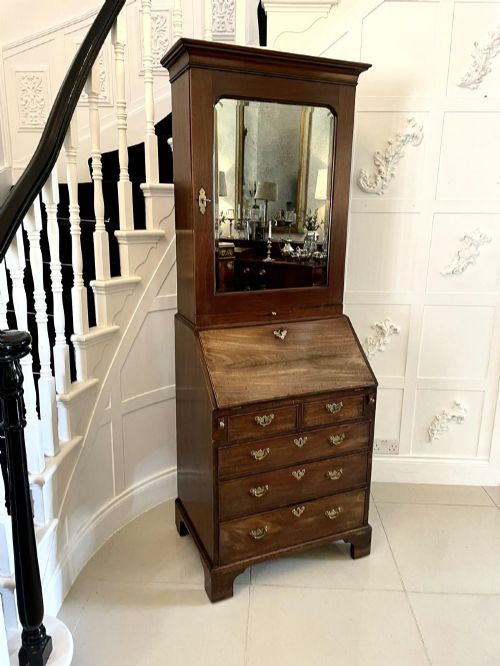
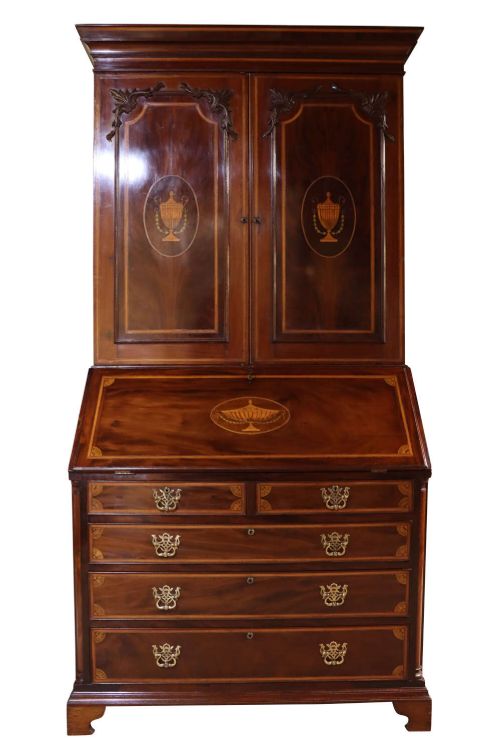
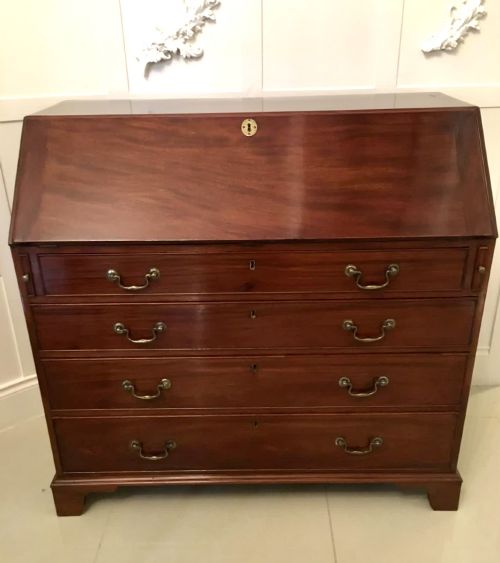
When searching for a brown mahogany slant desk, buyers encounter forms ranging from compact writing chests to towering bureau bookcases spanning the Georgian, Victorian, and Edwardian eras. The most common version met on this page is the standard bureau featuring a hinged writing flap that opens to reveal fitted interior compartments.
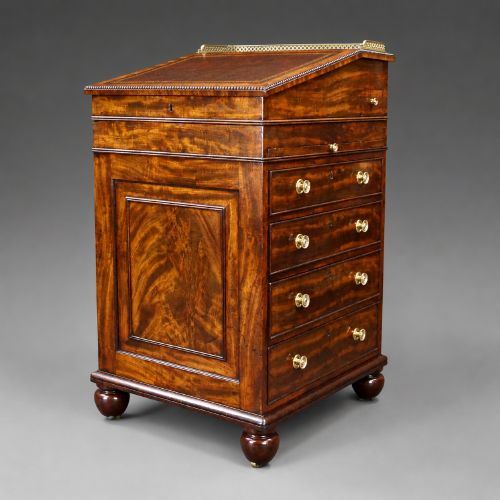
Pieces originate across the eighteenth and nineteenth centuries, taking the shape of fall front bureaux, Davenport writing desks, and architectural pieces with upper shelving. Makers utilised figured and flame mahogany timbers, often incorporating satinwood inlay, oak linings, and brass hardware to define the regional and period styles.
How they were made
Cabinet makers constructed these desks using solid and veneered mahogany over secondary timbers such as oak, employing dovetail joints for drawer construction and pegged frames for structural stability. Surfaces were finished to highlight the natural grain, utilising flame mahogany figures and delicate satinwood stringing.
Writing surfaces frequently incorporated inset leather panels for a durable writing medium, whilst fall fronts relied on brass hinges and internal support slides. Bureau bookcases combined upper glazed cabinetry with lower desk units, joining complex carpentry with glass and brass fittings.
Brown Mahogany Slant Desk Retail Price Guide 2026
Typical asking prices for brown mahogany slant desk among the pieces listed under this phrase on Sellingantiques today, from the lower quarter to the upper quarter. They describe what is for sale here now, not the wider market.
Several pieces preserve their original keys, reminding us that private correspondence once required actual iron security.
What varies in quality
Quality separates through the selection of timber figures, where exceptional pieces display rich flame mahogany and carefully matched veneers across the fall front and drawer faces. The sophistication of the interior fitments, including secret compartments, pigeonholes, and small drawers, distinguishes superior workshops from standard production.
Proportions also dictate standard, with smaller, slimmer proportions and well-integrated bureau bookcases commanding attention for their refined balance. The crispness of inlaid satinwood stringing and the retention of original brass hardware further mark the distinction between ordinary and outstanding examples.
Gillows
The Brown Mahogany Slant Desk Glossary
- Bureau
- A desk with a sloping hinged lid that covers a collection of small drawers and pigeonholes. This form serves as the primary shape associated with the search phrase.
- Davenport
- A small compact writing desk with a sloping top and drawers opening to the side. These desks emerged during the Regency and Victorian periods.
- Flame mahogany
- A wood veneer figure resembling flickering flames, created by cutting across the branch forks of the mahogany tree. Cabinet makers selected this for prominent surfaces like fall fronts.
- Bureau bookcase
- A two-part piece comprising a lower slant desk combined with an upper shelving or cabinet section. These tall pieces often feature glazed doors.
- Satinwood inlay
- Contrasting light-toned timber inserted into the mahogany surface in thin decorative lines or geometric patterns. This technique grew popular during the Georgian and Edwardian periods.
Brown Mahogany Slant Desk: Frequently Asked Questions
What is a slant desk?
A slant desk is a writing cabinet featuring an angled hinged flap that opens downwards to form a flat writing surface. Beneath this flap lie internal compartments for papers and writing implements.
In mahogany examples, this sloping front displays the timber grain and conceals storage drawers built into the desk body.
How do I date a mahogany bureau?
Dating relies on observing construction methods, timber choice, and stylistic details such as bracket feet, interior pigeonhole design, and brass handles. Eighteenth-century pieces often feature solid oak drawer linings and simpler internal layouts.
Later Victorian and Edwardian examples incorporate factory-made elements, lighter mahogany tones, and differing proportions associated with revival styles.
Where were these desks placed?
These desks functioned as private writing and correspondence centres within the home, typically housed in studies, libraries, or withdrawing rooms. Their secure storage compartments allowed owners to keep financial records and personal letters locked away.
Bureau bookcases served a dual purpose by displaying books in the upper cabinet whilst providing a fold-down writing surface below.