
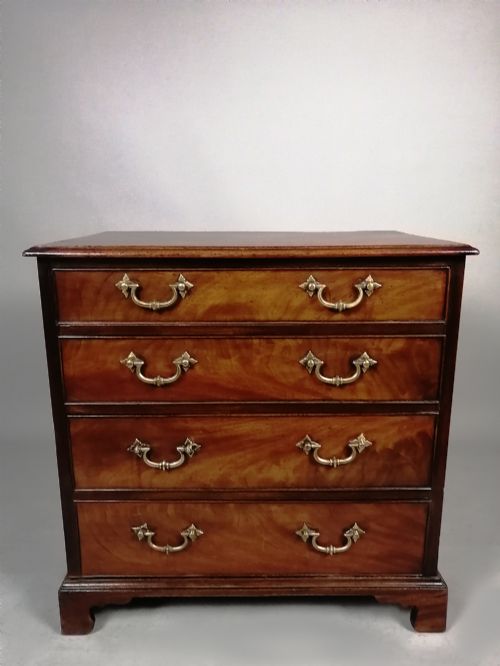
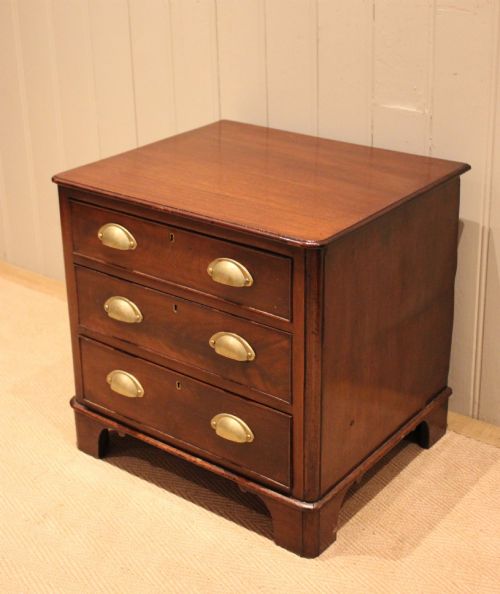
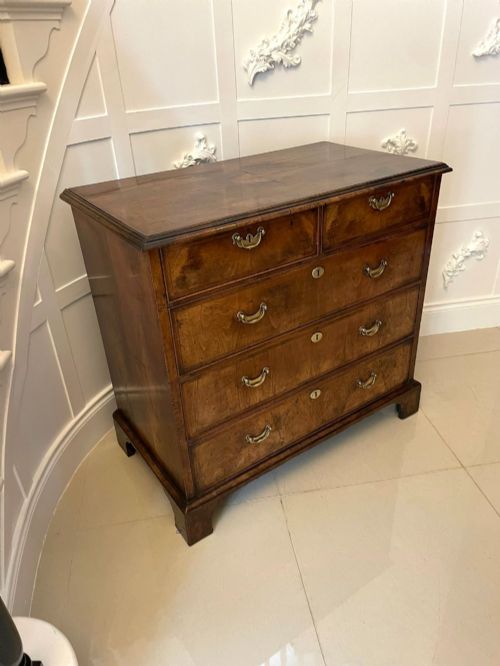
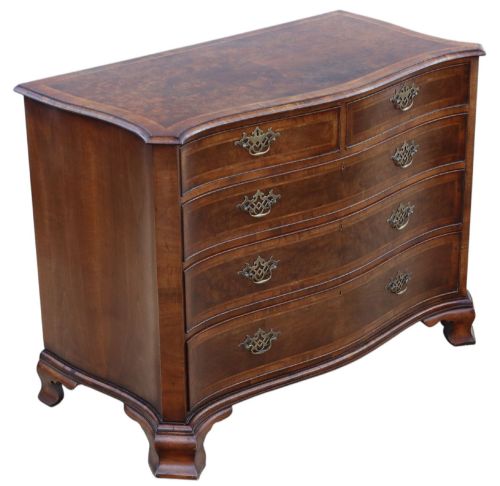
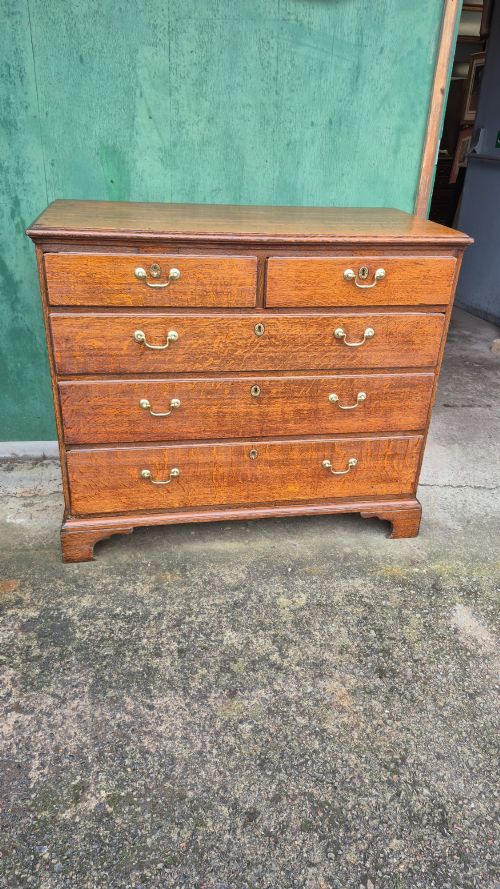
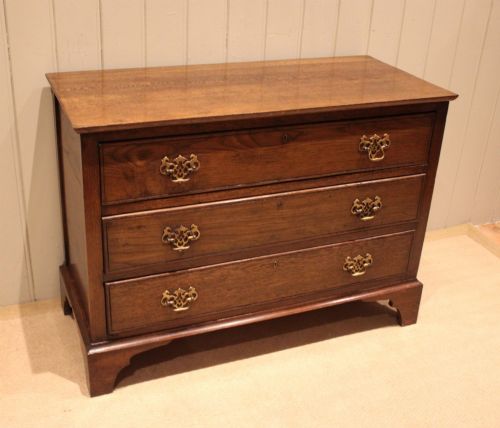

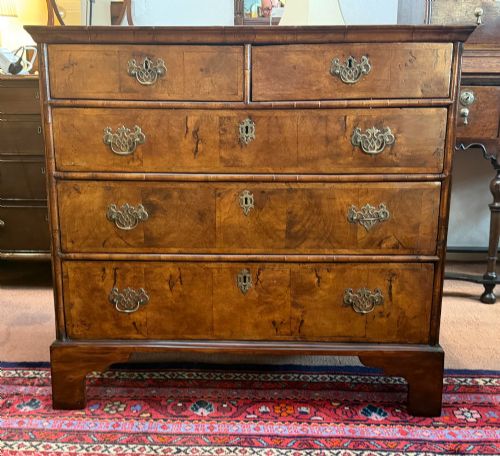
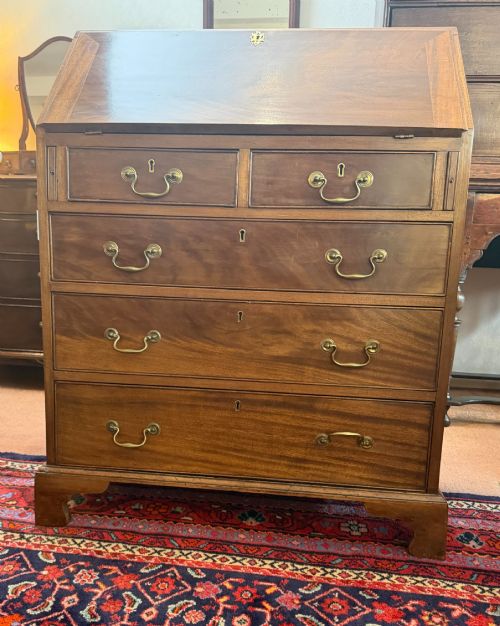
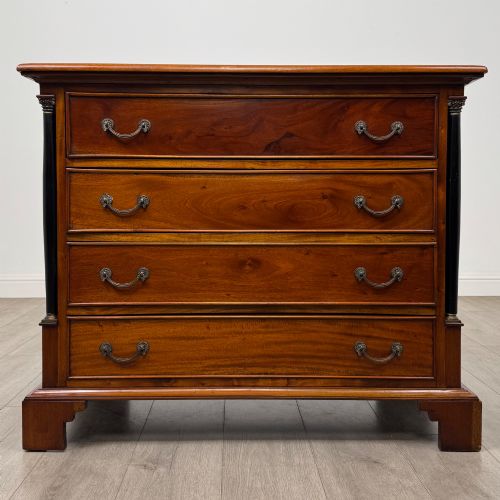
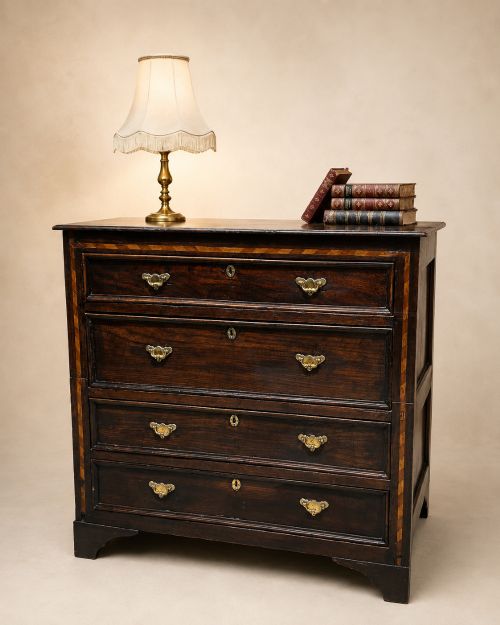
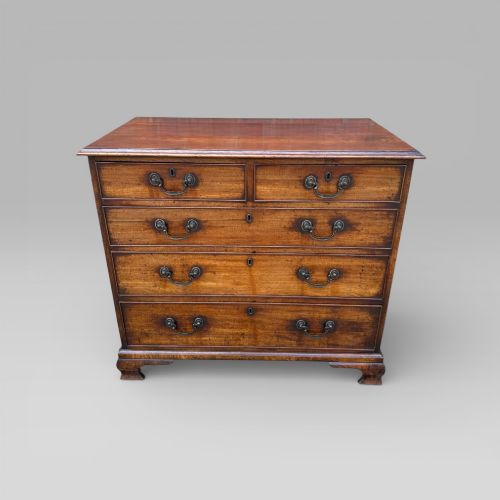
Bracket Feet Chest of Drawers
When you select a bracket feet chest of drawers, you choose a storage piece anchored by architectural wooden supports that elevate the case.
Bracket Feet Chest of Drawers
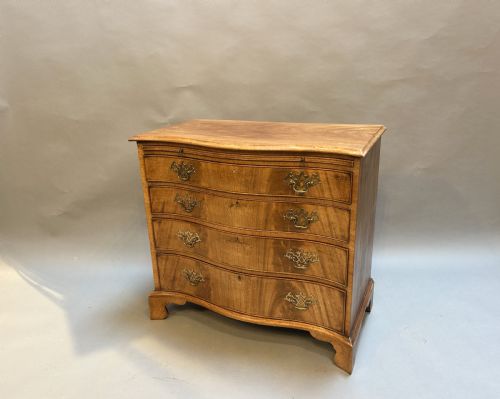
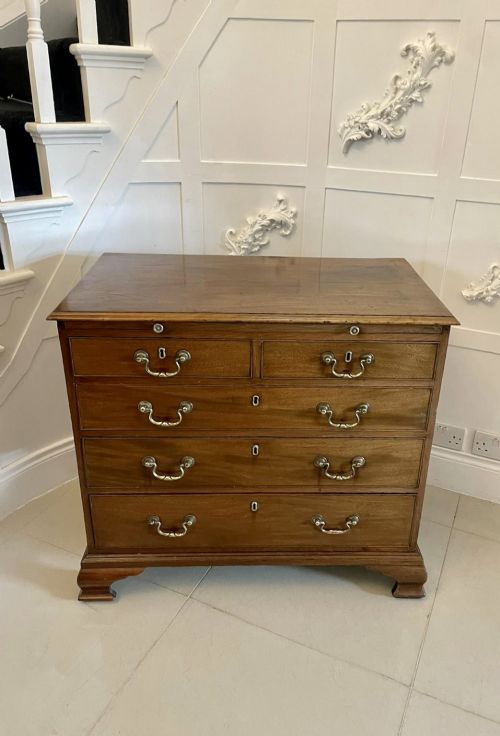
A bracket feet chest of drawers is a storage case featuring distinctive corner feet that project outward to support the main body. The pieces seen here span the eighteenth and nineteenth centuries, with Georgian examples forming a significant part of the selection alongside later Victorian and Edwardian interpretations.
Forms vary from standard multi-drawer chests and compact bedside tables to larger chests on chests and serpentine commodes. Oak and mahogany are the predominant timbers, supplemented by walnut, burr walnut, pine, and yew wood.
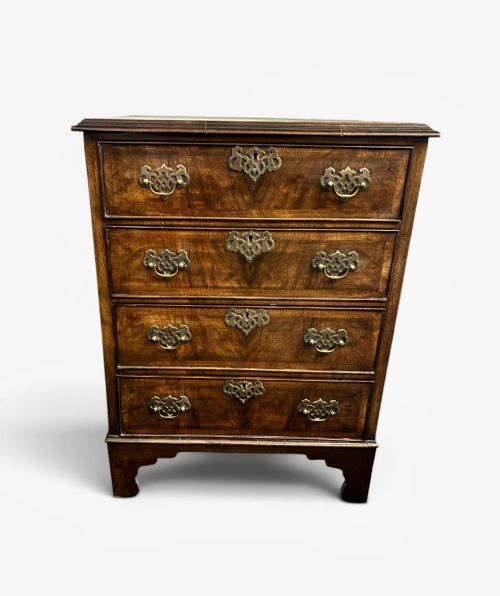
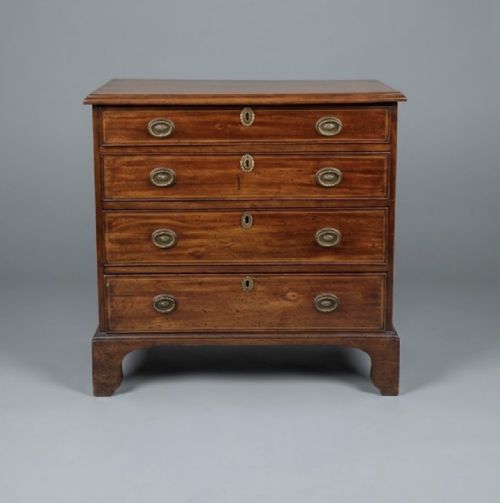
Buyers will encounter formal pieces with finely figured veneers and crossbanding as well as simpler country pieces in solid oak or painted pine. Many incorporate useful additions such as brushing slides, brass handles, or inlaid banding.
How they were made
Cabinet makers built these cases using solid timbers like oak and mahogany, often applying decorative veneers such as burr walnut or flame mahogany to primary surfaces. Drawer fronts frequently featured crossbanding, boxwood inlay, or fruitwood inlay to create contrasting borders.
The supporting feet were shaped from timber and joined to the base corners of the case, sometimes taking the form of swept brackets, splayed brackets, or ogee bracket feet. Brass handles, escutcheons, and occasional hand-painted geometric designs completed the construction.
Available forms include standard chests, chests on chests, bedside tables, and writing bureaux.
What varies in quality
Quality rests in the selection of timbers and the precision of the cabinet work, from the choice of highly figured walnut to the plain utility of pine. Finer pieces display careful grain matching across drawer fronts and delicate inlay work that requires high skill to execute.
The structural integrity of the bracket feet and the retention of original brass handles and fittings elevate an example's standing. Proportion also plays a part, with smaller, well-proportioned proportions generally commanding greater interest than standard dimensions.
J Moorcroft
The Bracket Feet Chest of Drawers Glossary
- Bracket foot
- A corner foot shaped like an L-bracket that supports a case piece. It lifts the chest off the floor and provides a stable architectural base.
- Brushing slide
- A pull-out shelf located beneath the top surface of a chest. It was utilised for writing or dusting clothes before the main drawers were opened.
- Serpentine
- A front outline that curves outward at the centre and inward at the sides. This fluid shape demands advanced woodworking techniques.
- Crossbanding
- A strip of veneer laid around the border of a drawer front with the grain running perpendicular to the centre panel. It creates a defined decorative frame.
- Ogee bracket foot
- A foot shaped with an S-curve profile that flows outward and then back inward. It adds an ornate silhouette to the base of the furniture.
Bracket Feet Chest of Drawers: Frequently Asked Questions
What is a bracket feet chest of drawers?
A bracket feet chest of drawers is a wooden storage unit raised on corner feet shaped like brackets. These pieces range from compact Georgian chests to larger nineteenth-century examples.
Cabinet makers constructed them in materials like mahogany, oak, and walnut, often incorporating multiple graduated drawers for domestic storage.
How were these chests used?
These chests served primarily for storing clothing, linens, and personal valuables in domestic bedrooms and dressing rooms. Some variations included pull-out brushing slides for temporary writing surfaces.
Their robust construction and compartmentalised drawers made them central items of furniture in period homes.
How do I live with one?
Living with a period chest involves placing it on a flat surface away from direct heat sources to protect the timber and veneer. Regular dusting with a dry cloth helps maintain the polished wood finish.
The deep drawers offer practical storage for modern use while adding traditional character to a room.
How do I tell periods apart?
Distinguishing periods relies on observing timber choices, hardware styles, and overall silhouette design. Early eighteenth-century pieces often feature solid oak and simple bracket feet, while Georgian and Regency versions frequently utilise mahogany and refined inlay.
Later Victorian and Edwardian examples reinterpret these earlier styles with varied woods and proportions.