

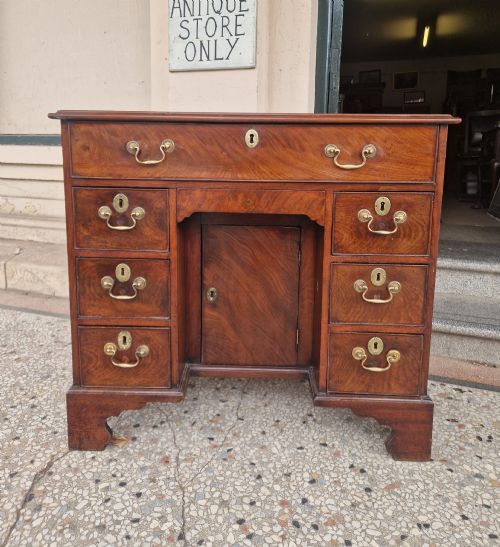
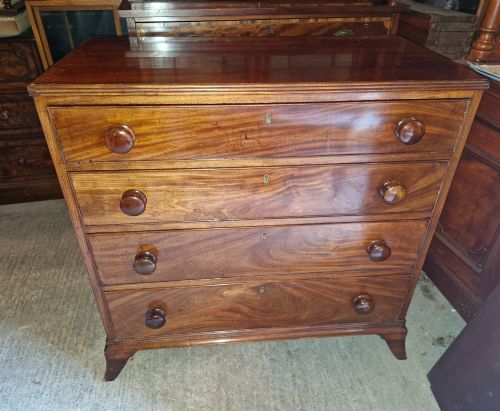
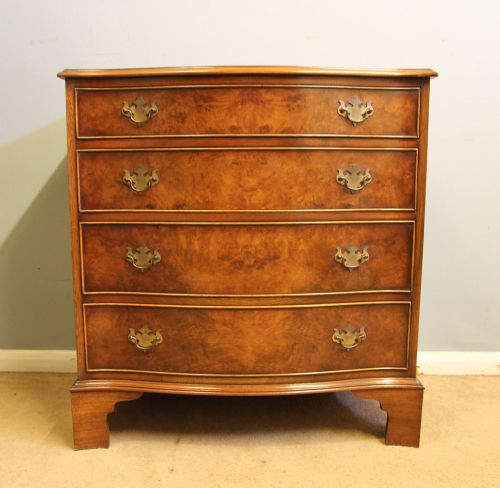

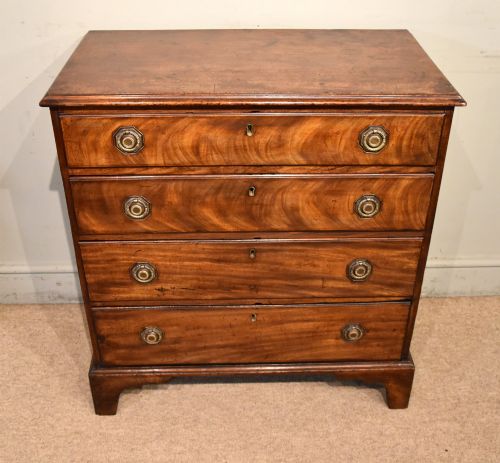
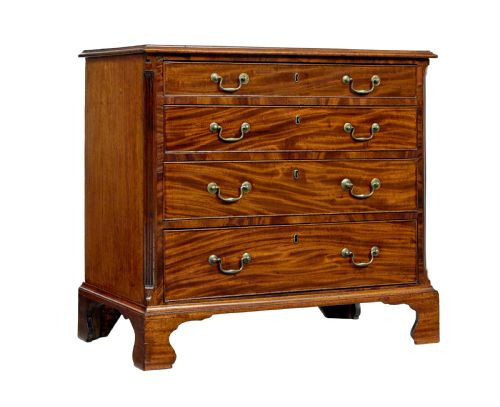
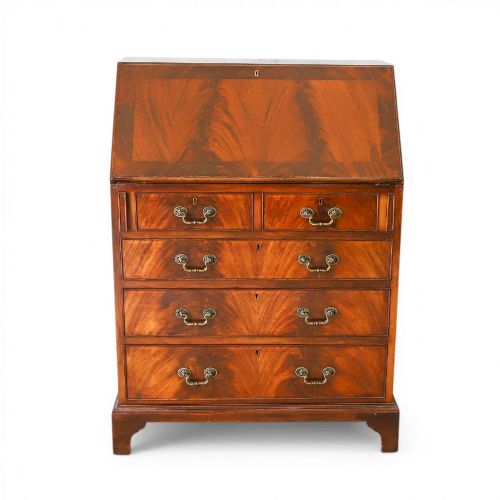
Bracket Feet Bureau
These bracket feet bureau pieces combine sloping writing desks with practical drawers, offering traditional workspace and storage rooted in Georgian craftsmanship.
Bracket Feet Bureau
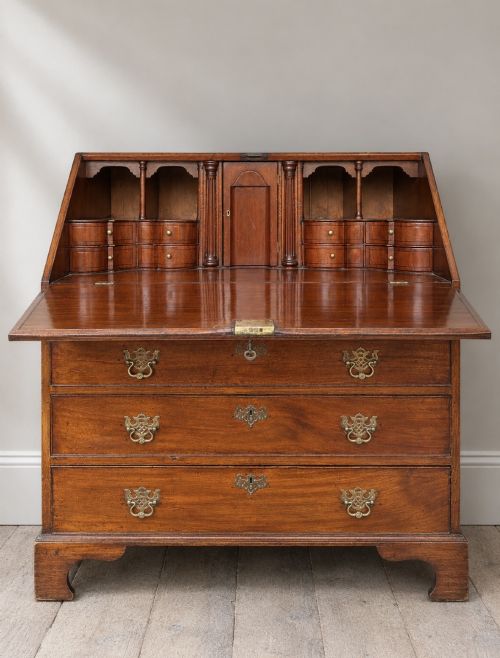
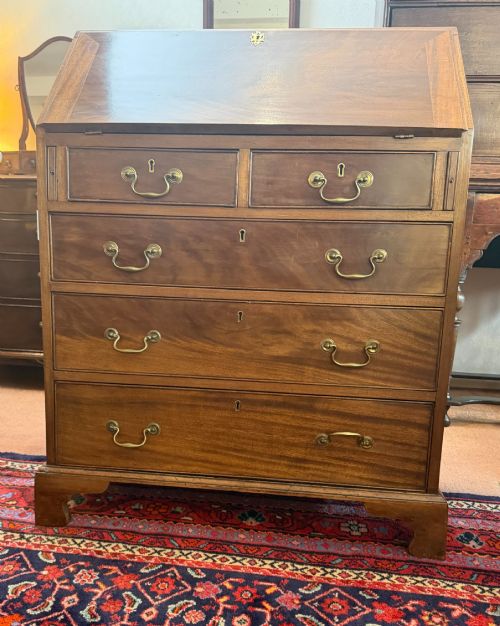
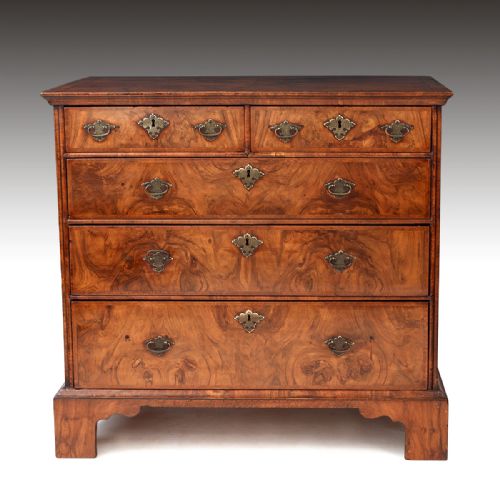
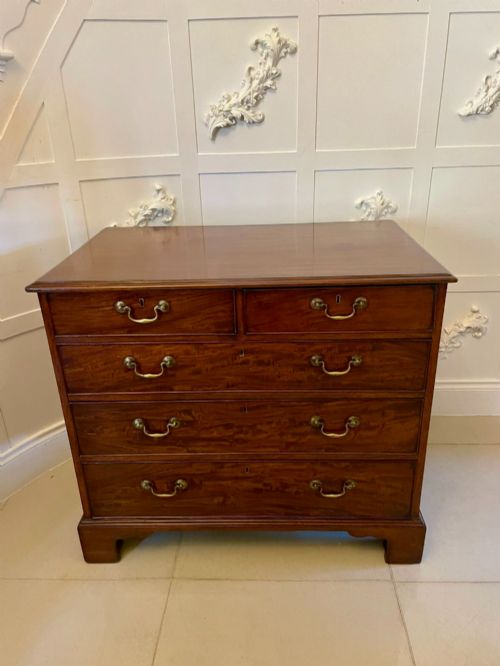
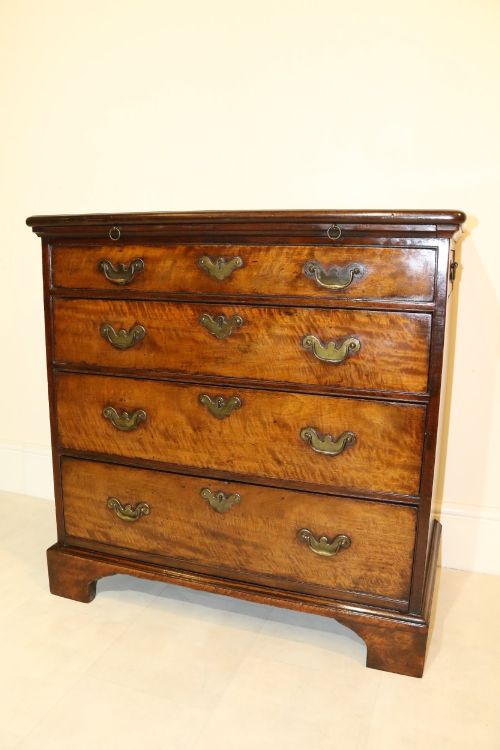
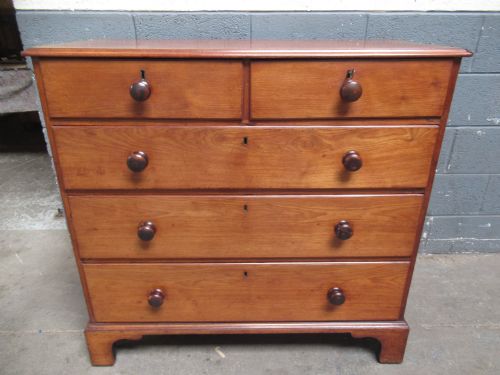
A bracket feet bureau typically presents a fall-front writing surface that opens to reveal fitted pigeonholes and small drawers above a chest of drawers. The design sits upon four bracket feet, providing a stable architectural foundation.
The form bridges the gap between a desk and a chest of drawers, making it a versatile item for modern living spaces where traditional writing furniture is utilised.
Materials and construction methods
Cabinet makers constructed these pieces primarily using solid timbers and veneers of mahogany, oak, and walnut, sometimes incorporating burr walnut or flame mahogany for visual depth. Drawer linings frequently employ secondary woods, while brass hardware secures handles and escutcheons.
Joinery methods rely on traditional dovetailing for drawers and mortise and tenon joints for the main carcase, ensuring structural longevity. Bracket feet are joined securely to the base corners to support the weight of the writing compartment and drawers above.
Many writing compartments hide miniature secret drawers that challenge modern finders to locate the hidden spring releases.
Elements of distinction
The sophistication of the interior fitments, including secret compartments and inlaid woodwork, distinguishes finer examples from simpler functional writing desks. Timber selection also plays a major role, with figured grain patterns and matched veneers elevating the overall presence of the piece.
Originality of the brass handles, locks, and bracket feet influences the standing of a bureau. Cohesion in proportion and the crispness of the cabinet work separate standard workshop production from superior examples.
The Bracket Feet Bureau Glossary
- Bracket feet
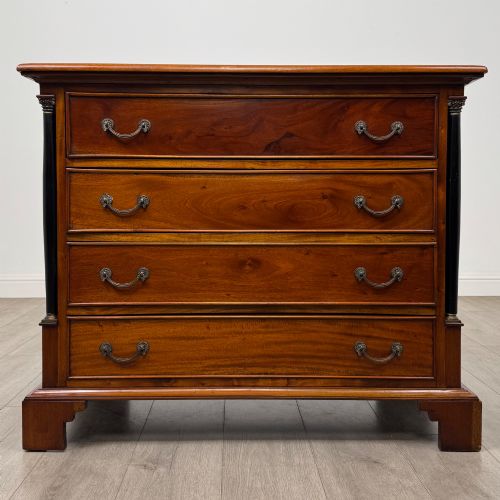
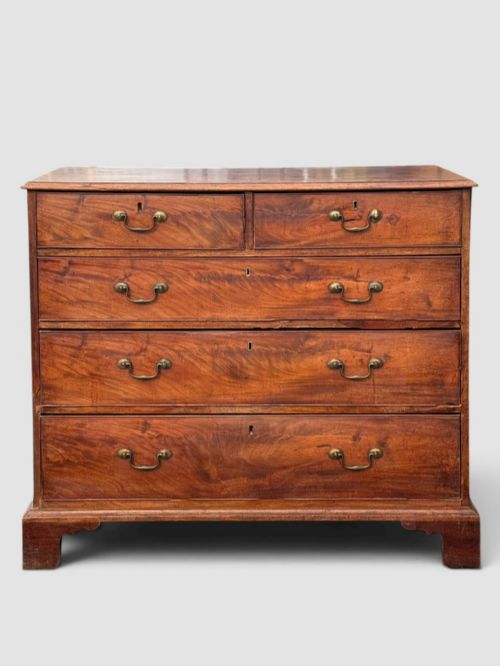
- Simple, corner-supporting feet shaped like a bracket, often with a ogee or mitred profile.
- Bureau
- A writing cabinet featuring a sloping lid that drops down to form a desk surface.
- Escutcheon
- A protective plate surrounding a keyhole, frequently cast in brass on these pieces.
- Pigeonhole
- A small open compartment within the desk interior used for sorting letters and papers.
- Veneer
- A thin layer of decorative wood applied over a secondary timber base to create a figured surface.
Bracket Feet Bureau: Frequently Asked Questions
What is a bracket feet bureau?
A bracket feet bureau is a writing cabinet with a sloping flap that opens to reveal a fitted interior, positioned above a set of drawers and raised on bracket feet.
This form combines the functions of a desk and a chest of drawers, offering workspace alongside enclosed storage for documents and household items.
How were these desks used?
Owners used them primarily for correspondence, bookkeeping, and storing personal papers behind the locked drop-front writing surface.
The lower drawers provided everyday storage for linens, clothing, or documents, making the piece central to domestic administration in period homes.
How do I fit one into a modern room?
Their compact footprint allows them to function effectively as writing desks in living rooms, hallways, or home studies without dominating the floor space.
The enclosed writing flap keeps paperwork out of sight when not in use, maintaining a tidy appearance in contemporary interiors.
How can I tell the period?
Dating relies on timber choices, construction techniques such as hand-cut dovetails, and stylistic markers associated with Georgian or later revival periods.
Examining secondary woods inside the drawers and the style of the brass hardware helps narrow down the decade of manufacture.