


Boxed Sterling Silver Napkin Rings
Boxed sterling silver napkin rings bring formal dining history to the table, pairing solid precious metal with fitted presentation cases from the Victorian era to the mid-twentieth century.
Boxed Sterling Silver Napkin Rings
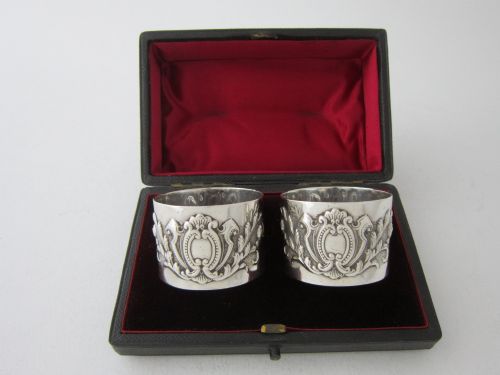
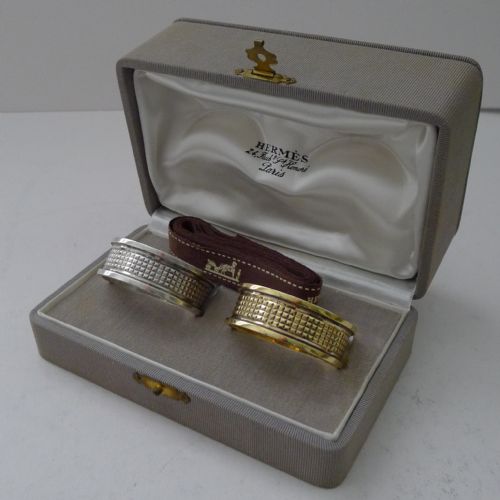
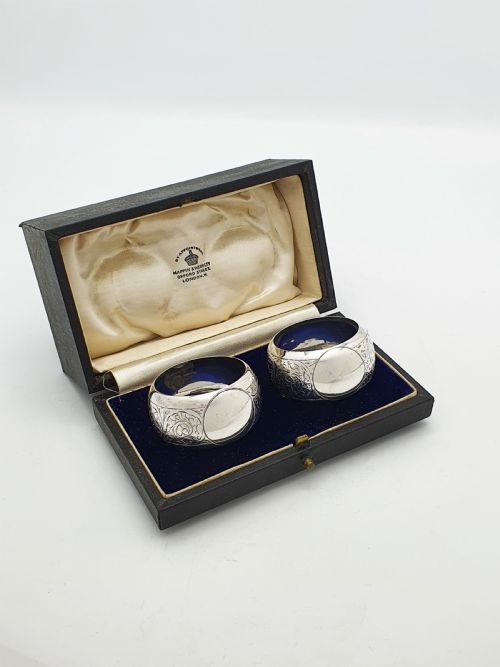
When searching for boxed sterling silver napkin rings, a buyer encounters matching pairs or full sets housed in original fitted cases. These accessories date primarily from the Victorian, Edwardian, and George V periods, extending into the nineteen-fifties.
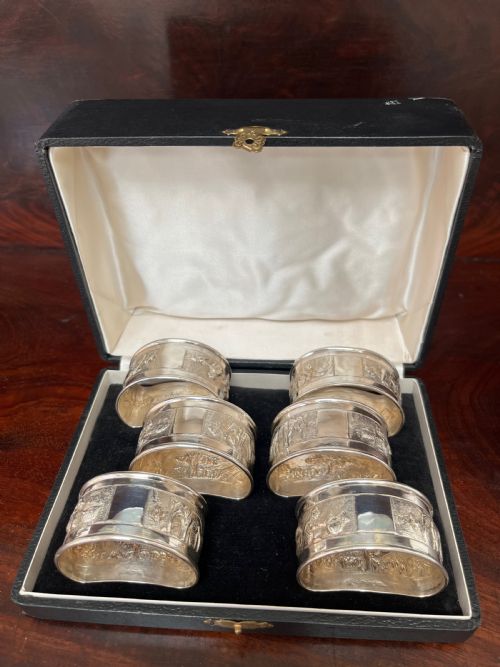
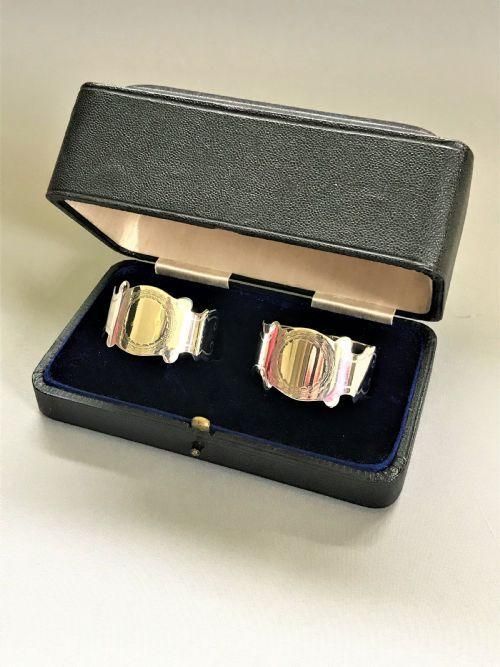
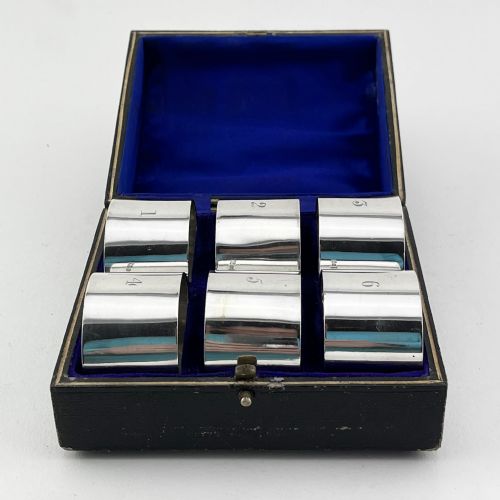
The sets on this page include individual rings, pairs, and sets of six, often complete with designated slots for each piece. Most examples originate from English silversmiths working in major assay towns like Birmingham, Chester, and London.
Beyond standard napkin rings, related table items such as three-piece christening sets occasionally appear within fitted presentation boxes. These objects reflect formal dining traditions where each household member possessed a distinct, marked place setting.
Materials and construction methods
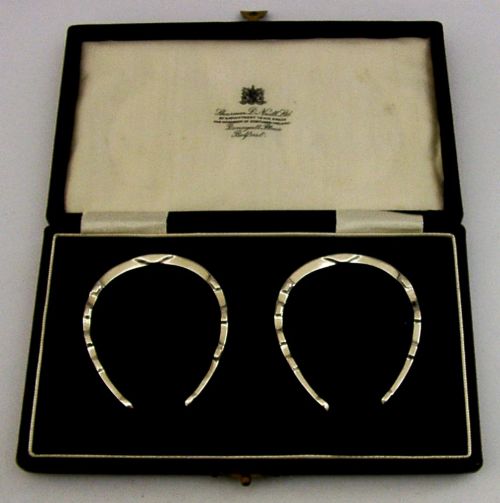
The rings themselves are formed from solid sterling silver or silver gilt, shaped into cylindrical bands and decorated with engine turning, engraving, or applied motifs like lucky horse shoes and shamrocks. Hallmarks stamped directly into the metal indicate the assay office, city, and year of manufacture.
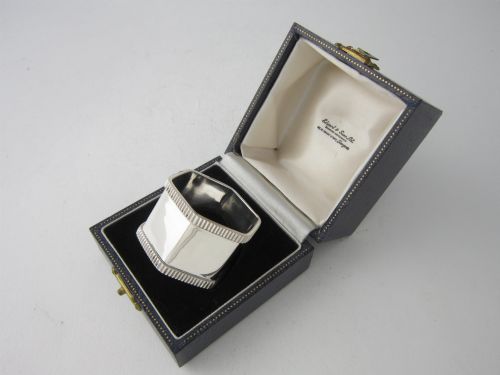
Presentation cases utilise a rigid exterior of leatherette, leather, or card, paired with a fitted interior lined in silk, velvet, or satin. These textiles protect the silver from tarnishing and keep the rings secure during storage and transport.
Silver components across the available inventory include both solid sterling silver and silver gilt finishes.
Evaluating craftsmanship and condition
The distinction between standard pieces and finer examples rests on the weight of the silver, the depth of the hand-engraving, and the integrity of the fitted box. Heavier gauges of silver resist denting, while crisp geometric patterns or botanical etchings demonstrate superior silversmithing skill.
Original presentation cases that retain their working clasps and undamaged silk or velvet linings elevate the overall completeness of a set. Well-preserved maker stamps inside the box lid provide additional historical context and signify higher workshop standards.
C.T. Burrows & Sons·Tiffany & Co·Mappin & Webb·Cartier·Walker & Hall·Hermes, Paris
The Boxed Sterling Silver Napkin Rings Glossary
- Sterling silver
- An alloy containing ninety-two point five percent silver by mass, with the remainder composed of copper or other metals to increase durability. This standard is indicated by the lion passant hallmark on British items.
- Assay office
- An official body that tests the purity of precious metals and stamps items with hallmarks. Towns such as Birmingham, Chester, and London maintained active assay offices during the Victorian and twentieth-century periods.
- Silver gilt
- Sterling silver that has been coated with a thin layer of gold on the surface. This technique provides a rich two-tone appearance inside the ring interiors.
- Engine turned
- A decorative mechanical technique that produces precise geometric patterns of engraved lines on metal surfaces. This method was widely utilised during the Art Deco period.
- Cartouche
- A framed panel left blank on a napkin ring specifically for personal monogramming or engraving. These shields appear in various shapes from oval to rectangular.
Boxed Sterling Silver Napkin Rings: Frequently Asked Questions
What periods do these napkin rings date from?
The pieces span from the late nineteenth century through the Edwardian era and the George V period, continuing into the nineteen-fifties.
Victorian and Edwardian examples often feature floral or fern engravings, while later twentieth-century items frequently display clean Art Deco geometric lines or engine-turned surfaces.
How are these rings stored in their boxes?
Each ring rests in a dedicated, recessed slot moulded directly into the base of the presentation case. The interior cavities are typically lined with soft silk, velvet, or satin to cushion the metal.
Matching satin flaps attached to the inner lid often fold down over the rings to provide further protection when the box is closed.
Are these napkin rings marked with hallmarks?
British sterling silver pieces feature official hallmarks stamped directly onto the metal, usually including a lion passant, a date letter, and an assay office symbol. These marks verify the silver standard and identify the year and location of manufacture.
Maker marks accompany the hallmarks, attributing the items to specific silversmiths or retail firms.
Can I use these silver rings for daily dining?
Solid sterling silver napkin rings are durable enough for regular table use provided they are handled with care and cleaned appropriately. Soft cloths and specialised silver polishes help maintain the shine without wearing down fine surface engravings.
Storing the rings back inside their lined presentation boxes prevents unnecessary tarnishing between meals.