


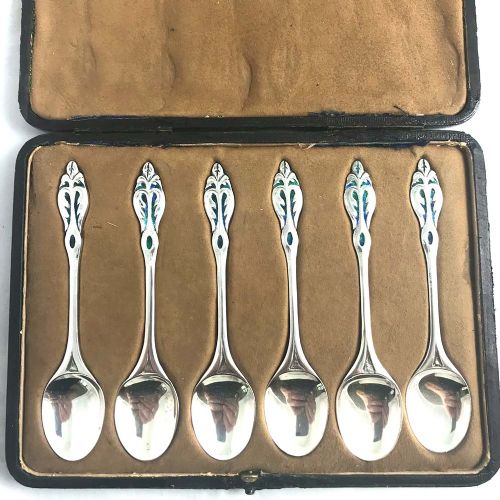
Boxed Coffee Spoons
Boxed coffee spoons are cased sets of small silver spoons designed for after-dinner coffee, offering both practical utility and elegant presentation.
Boxed Coffee Spoons
When searching for boxed coffee spoons, buyers encounter cased sets of small cutlery originating primarily from the Victorian era through the mid-twentieth century. These sets typically comprise six or twelve matching spoons, occasionally accompanied by matching tongs or ceramic coffee cans.
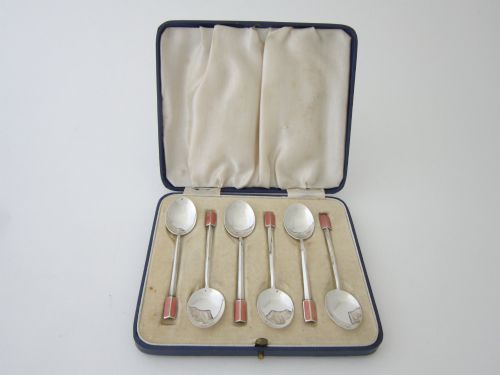
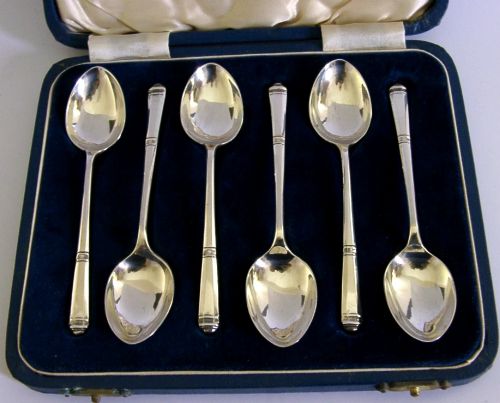
The most common examples on this page date from the Art Deco period, featuring geometric lines or vibrant enamel work. Alongside these, earlier Edwardian, Art Nouveau, and Arts & Crafts designs appear, reflecting shifts in British and European silver manufacturing.
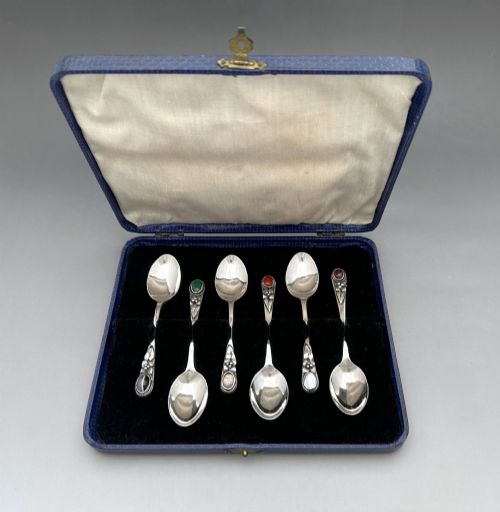
The presentation boxes themselves form an integral part of these objects, lined with silk, velvet, satin, or leatherette to protect the precious metal within. Surviving sets range from plain silver gilt tea spoons to elaborate Scottish demi-tasse sets set with semi-precious stones.
Materials and construction
Silversmiths utilised sterling silver and silver gilt as the primary media for these spoons, shaping them through casting, pressing, and hand-finishing techniques. Many examples incorporate intricate glass enamel applied in vibrant colours to the handles or terminals.
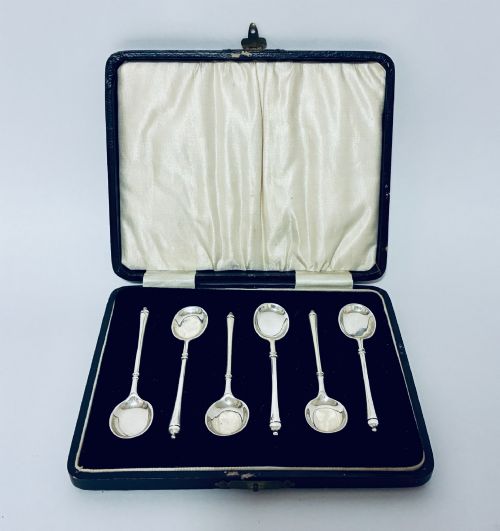
Specialised workshops also produced pieces featuring semi-precious stones or specific decorative motifs such as sailing club emblems and bean finials. The fitted cases were constructed from sturdy card or wood covered in leatherette, then lined with tactile fabrics like silk, satin, and velvet to secure the flatware.
Several sets feature tiny coffee bean terminals perched atop twisted stems, ensuring your after-dinner espresso comes with a dose of agricultural whimsy.
Distinctions in quality
Quality in these cased sets rests upon the crispness of the metalwork, the weight of the sterling silver, and the preservation of any enamel decoration. Pieces bearing clear hallmarks from established makers demonstrate superior craftsmanship compared to unmarked or generic equivalents.
The condition and original integrity of the fitted case also determine the desirability of a set, particularly when the interior silk and velvet linings remain unblemished. Complete sets with matching tongs or intact novelty finials represent the upper tier of the range.
David Andersen·Walker and Hall·Liberty and Co·Robert Stebbings·Cooper Brothers and Sons·Mappin and Webb
The Boxed Coffee Spoons Glossary
- Demi-tasse
- A small cup used for serving Turkish or espresso coffee, which required diminutive spoons of the scale found in these boxed sets.
- Silver gilt
- Sterling silver that has been coated with a thin layer of gold, imparting a warm, rich tone often seen on twentieth-century spoon bowls.
- Leatherette
- A simulated leather material commonly used to cover the exterior of twentieth-century presentation cases.
- Harlequin set
- A collection of spoons where each piece varies slightly in colour, pattern, or enamel work while remaining matched in overall size and form.
- Coffee bean spoon
- A specific style of spoon featuring a terminal shaped like a coffee bean, frequently mounted on a twisted stem.
Boxed Coffee Spoons: Frequently Asked Questions
What are boxed coffee spoons?
Boxed coffee spoons are matched sets of small silver spoons housed in dedicated presentation cases lined with silk or velvet. They were designed for after-dinner coffee service in middle and upper-class homes.
These sets gained immense popularity from the late Victorian period through the Art Deco era. They frequently served as wedding or anniversary gifts, which explains why many survive today in excellent, unused condition.
How do I date a set?
Dating these pieces relies primarily on the hallmarks stamped onto the silver, which indicate the assay office and year of production. Stylistic markers also help narrow down the period.
Art Deco sets feature geometric shapes and bright enamels typical of the nineteen-thirties, while earlier Victorian and Edwardian examples lean towards organic motifs. The typography on the silk inside the box lid can also offer clues to the retailer.
Were they used every day?
Most cased silver sets were reserved for formal entertaining rather than daily domestic use. The presence of fitted velvet or satin slots kept the spoons protected between gatherings.
This occasional usage is the primary reason why many surviving sets retain their original gilding and pristine case linings. They emerged from the sideboard specifically when guests arrived for post-meal coffee.
What is the difference between tea and coffee spoons?
Coffee spoons are noticeably smaller than standard teaspoons, proportioned specifically for use with small demi-tasse cups. Their bowls and handles are scaled down accordingly.
Many cased sets marketed for coffee also feature elongated stems to reach the bottom of deeper cups. Some specialised variants, such as coffee bean spoons, include decorative terminals designed to be held delicately.