

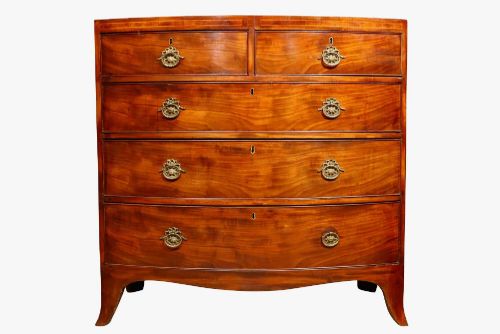
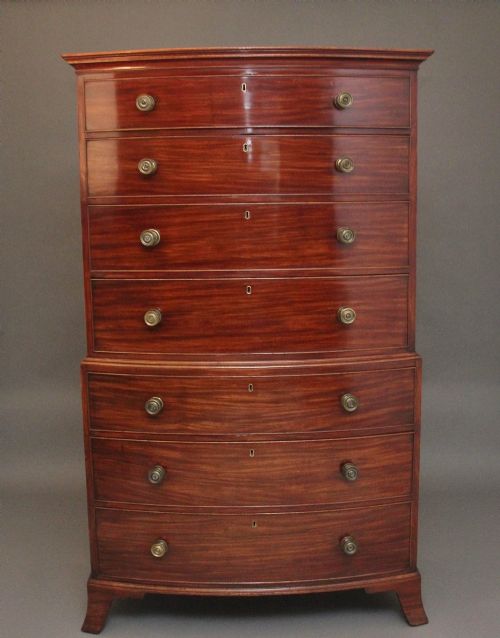
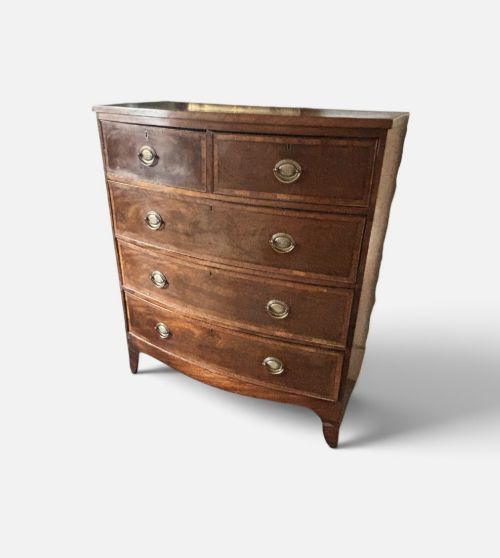
Bowfront Tallboy Chest
A bowfront tallboy chest combines vertical storage with a curved facade, offering generous capacity and distinct architectural presence.
Bowfront Tallboy Chest
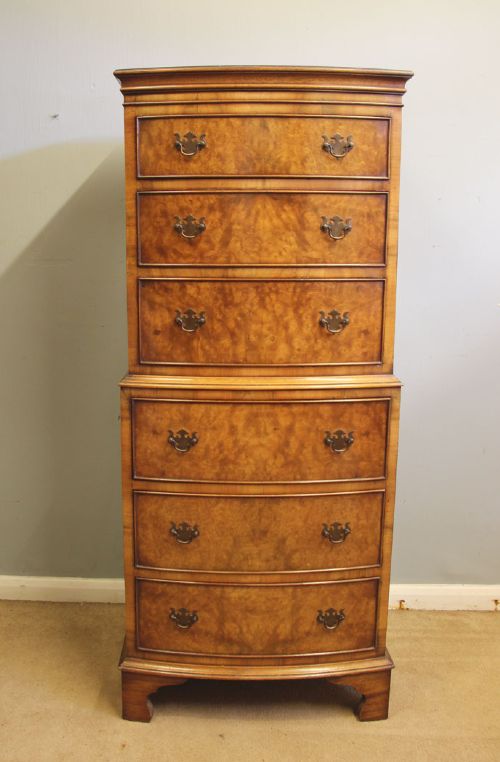
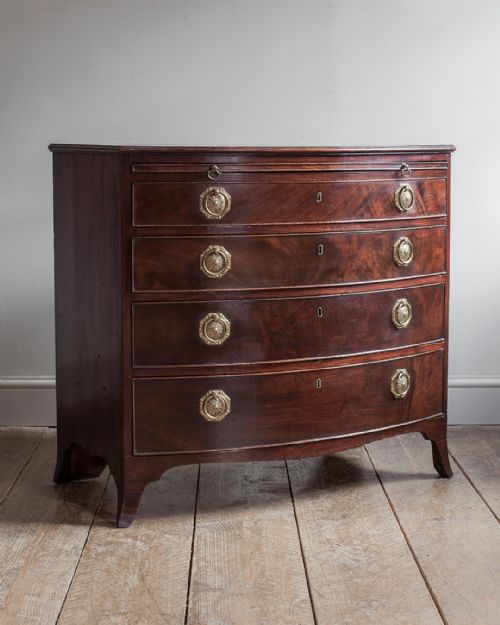
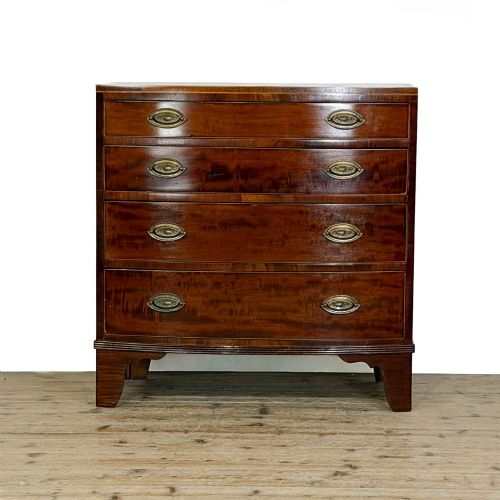
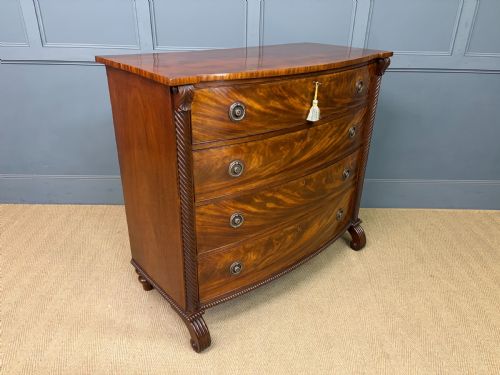
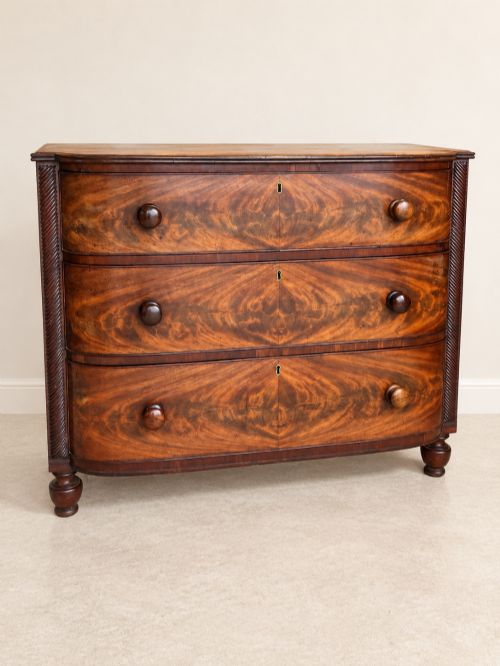
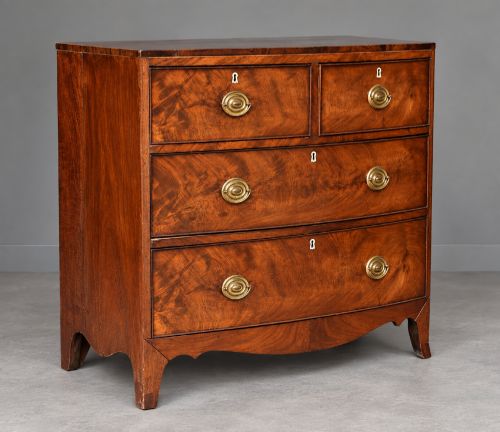
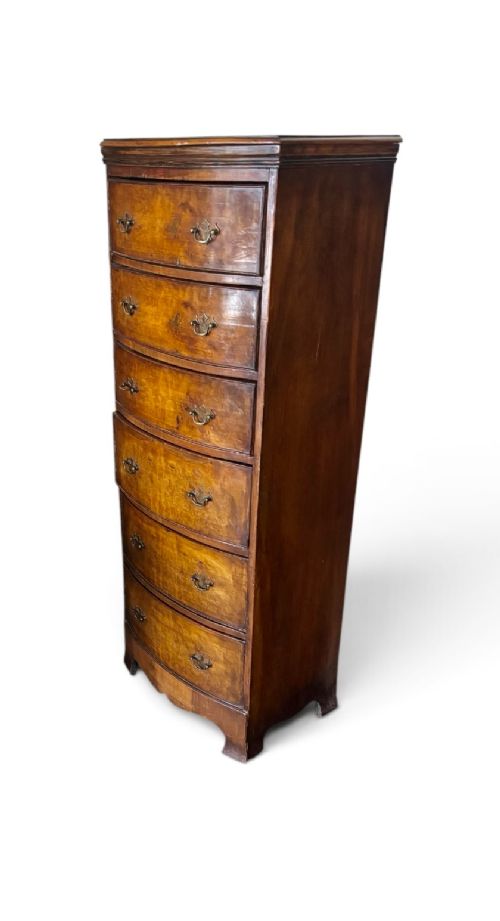
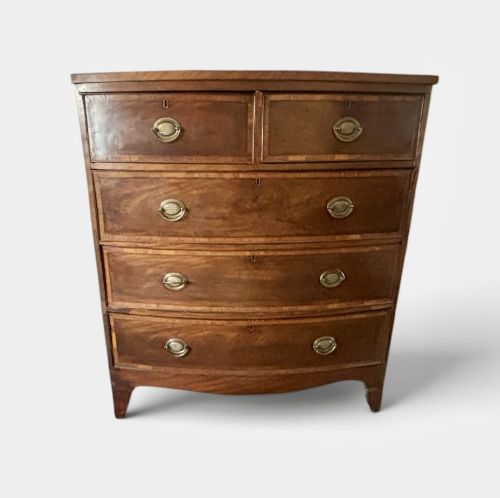
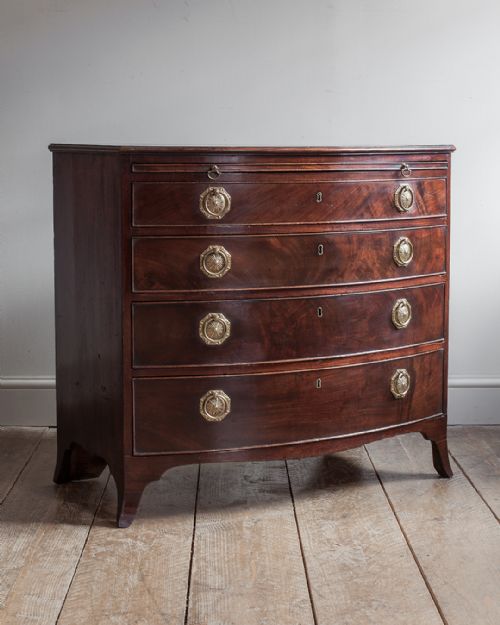
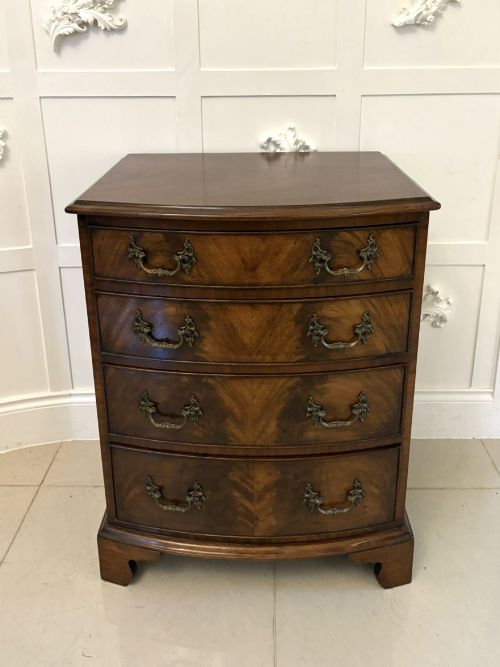
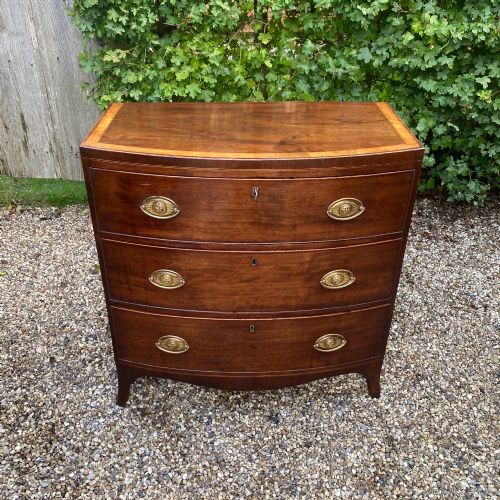
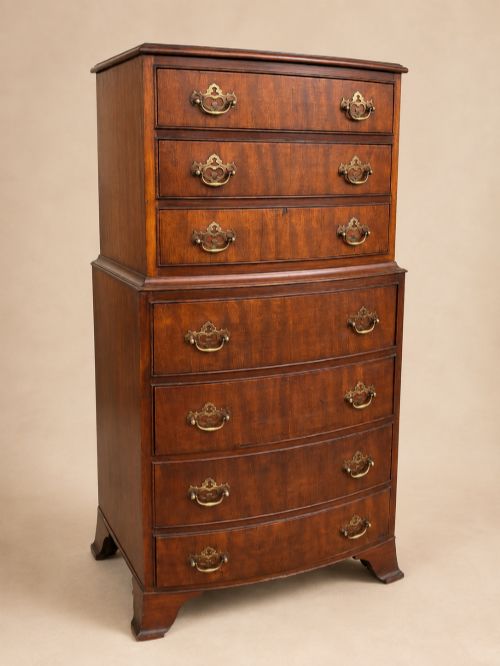
A bowfront tallboy chest provides substantial storage by stacking drawers vertically while projecting outward in a convex curve at the front. When searching for a bowfront tallboy chest, buyers encounter pieces primarily originating from the Georgian, Regency, Victorian, and early twentieth-century periods.
The selection ranges from traditional mahogany models built in the eighteenth and nineteenth centuries to later walnut interpretations produced around nineteen twenty and nineteen thirty. Formats vary from single tall chests to multi-tiered chest on chest constructions and linen presses.
Proportions shift between robust formal items and smaller, neat variants designed for compact domestic spaces. Walnut and mahogany dominate the offerings, frequently enhanced by decorative veneers and contrasting banded borders.
Materials and construction methods
Cabinet makers built these pieces using solid timbers like oak and mahogany for internal framing and drawer carcasses. Primary exterior surfaces relied on figured mahogany, flame mahogany veneer, burr walnut, and satinwood to create rich grain patterns.
Decorative detailing often involved contrasting satinwood banding and crossbanding applied around drawer perimeters and top edges. Solid brass handles and escutcheons completed the hardware, secured to dovetailed drawer construction.
Some chests hide secret top compartments large enough for midnight snacks or family jewels.
Factors influencing craftsmanship and desirability
The selection of timber grain largely dictates visual appeal, with highly figured flame mahogany and burr walnut commanding attention. Finely matched veneers across drawer fronts show deliberate planning by the maker.
Proportion and scale also separate standard items from superior examples, particularly neat or narrow formats that require tighter joinery. Crisp execution of the curved bowfront and intact original brass hardware elevate a piece's integrity.
The Bowfront Tallboy Chest Glossary
- Bowfront
- A furniture front that curves outward in a convex arc. This shape softens the room presence of a tall case piece while increasing internal drawer volume.
- Tallboy
- A tall chest of drawers, often constructed as a single unit or as a chest on chest. It maximises vertical storage capacity without demanding excessive floor space.
- Flame mahogany veneer
- Thin slices of wood cut from mahogany branches where the grain creates a flickering, flame-like pattern. It was prized for decorative drawer fronts.
- Crossbanding
- A border of veneer laid with the grain running perpendicular to the surrounding surface. This technique frames the primary wood panels for visual contrast.
- Caddy top
- A raised or moulded tabletop style with stepped edges, reminiscent of tea caddy lids. It adds subtle dimension to the upper surface of the chest.
Bowfront Tallboy Chest: Frequently Asked Questions
How do I identify a Georgian piece?
Georgian pieces typically display solid mahogany construction, hand-cut dovetails, and restrained proportions. Makers from this era focused on timber quality and subtle moulding rather than heavy ornamentation.
Look for pegged joints, cedar or oak drawer linings, and aged brass hardware consistent with eighteenth-century workshop practices.
Where should I place a tallboy?
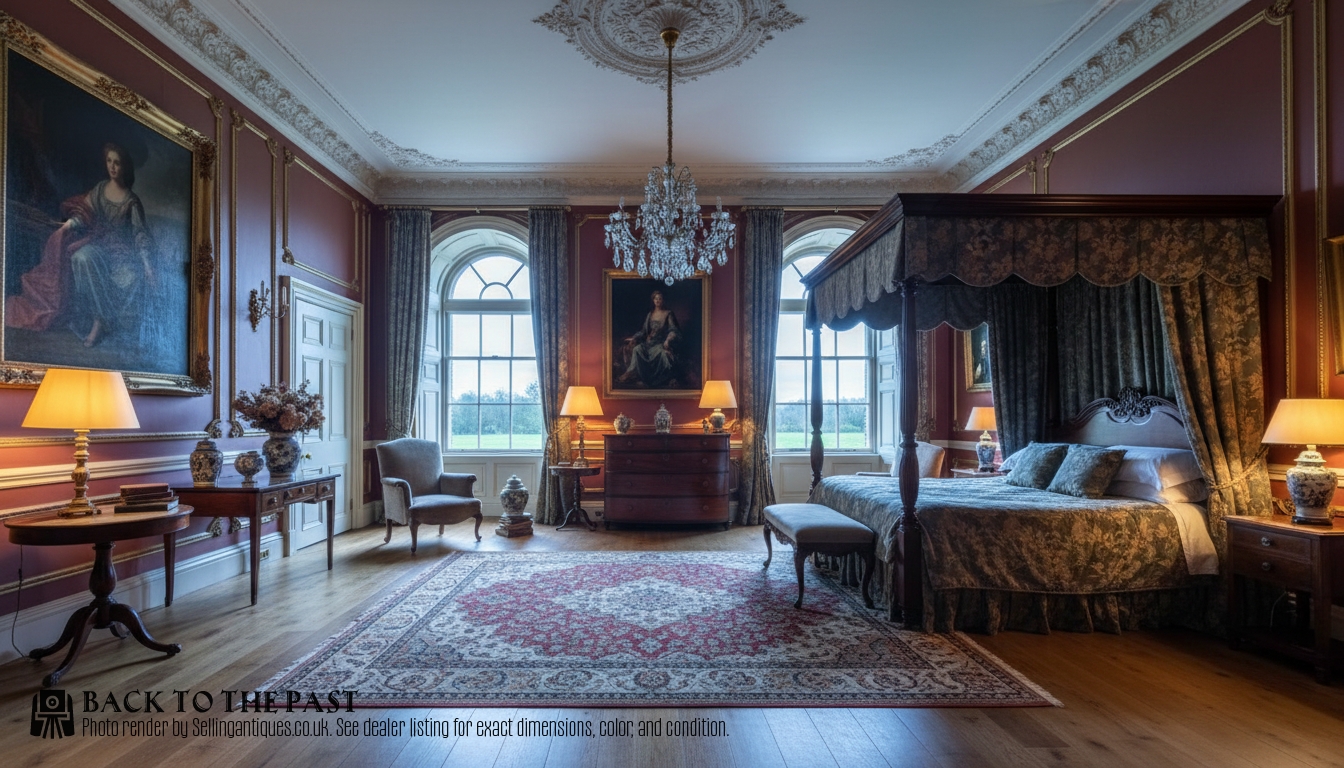
Tallboys suit bedrooms, dressing rooms, and large hallways where vertical wall space is available. Their height makes them effective for storing folded garments and linens without taking up excessive floor area.
Ensure placement allows clearance for drawers to open fully, particularly in rooms with low ceilings or narrow clearances.
What is the difference between a chest on chest and a tallboy?
A chest on chest consists of two separate stacked cabinet sections, usually a wider base with a slightly smaller top chest. A traditional tallboy often refers to a single tall vertical chest of drawers or a linen press.
Both forms offer elevated storage, but chest on chest designs frequently incorporate more complex cornice mouldings and proportions.