

Regency D Front Chest
When you search for a regency d front chest, you are looking at curved mahogany storage pieces built for early nineteenth-century interiors.
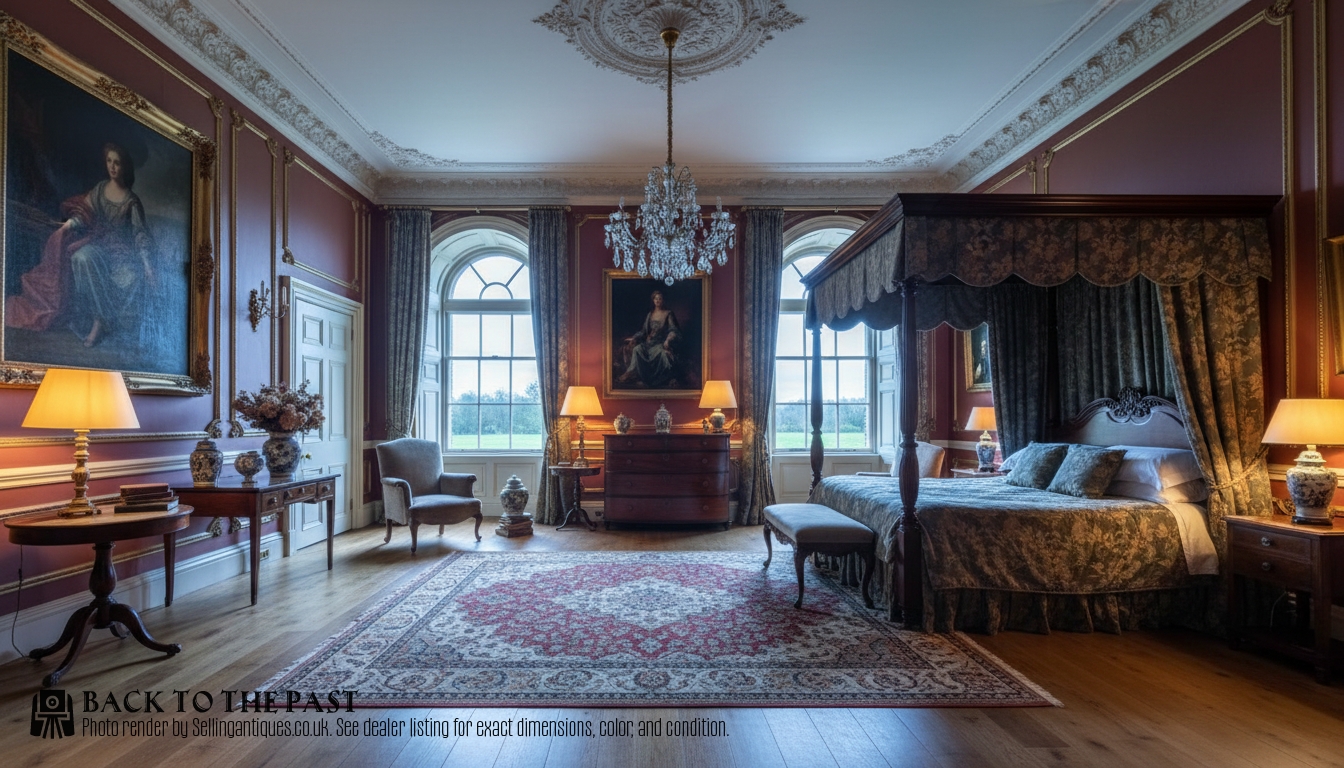
Regency D Front Chest
A regency d front chest typically presents a rounded or bowed front profile designed to soften the corners of a room while offering deep drawer storage. Most examples encountered on this page date from the Regency and wider nineteenth-century periods, constructed primarily as chests of drawers with occasional variations such as gentleman's dressing chests or tallboys.
The form relies on proportion and geometry, balancing stacked graduated drawers with outward-curving timber faces. Makers utilised native and imported hardwoods to give these carcases a substantial presence that suited formal bedchambers and parlours alike.
Materials and Construction
Makers built these carcases using solid timber frames faced with figured mahogany veneers, frequently enhanced by satinwood banding or crossbanding along the top edges and drawer borders. Flame mahogany and bird's eye maple appear in the evidence, chosen for their distinctive grain patterns that caught the ambient light.
Brass handles, often mounted on oval backplates, accompanied the drawer construction alongside concealed secret drawers tucked into the frieze. Cabinetmakers joined the curved fronts with precise woodworking techniques to maintain structural integrity across the sweeping radius.
Watch for secret drawers tucked just beneath the top surface, designed to keep private letters safe from prying eyes.
Evaluating Quality and Detail
The distinction between tiers of quality rests upon the selection of timber veneers and the precision of the inlay work. Pieces featuring book-matched flame mahogany or intricate satinwood crossbanding demonstrate a higher level of cabinet-making ambition.
Proportion and scale dictate the desirability of individual examples, with smaller, neat formats and well-figured grain patterns commanding greater attention from collectors. The integration of original brass hardware and smooth-running graduated drawers further separates standard utility pieces from finer commissions.
George Oakley
The Regency D Front Chest Glossary
- Bow front
- A convex, outwardly curved front profile characteristic of these chests. This shape softens rigid room geometry.
- Crossbanding
- A strip of veneer applied perpendicularly to the grain of the main surface. It frames the drawer fronts with a contrasting border.
- Flame mahogany
- Timber veneer cut from the branch forks of the tree. It creates a flamelike, rippling pattern across the drawer faces.
- Graduated drawers
- A series of drawers decreasing in depth from bottom to top. This arrangement maintains visual balance on the facade.
- Secret drawer
- A concealed compartment built into the upper section of the carcase. It requires a hidden release mechanism to access.
Regency D Front Chest: Frequently Asked Questions
How were regency d front chests used originally?
These pieces served primarily in bedchambers and dressing rooms for storing folded linens, garments, and personal valuables. Their generous drawer capacities made them essential furniture for daily domestic organisation.
Over time, they moved into formal entertaining spaces and hallways where their decorative wood grain could be appreciated by visitors and family members alike.
Where should I place a bow front chest at home?
The curved profile allows these chests to sit comfortably in hallways, living rooms, or bedrooms without sharp corners projecting into walkways. Their finished timber backs and polished tops also permit placement against interior partition walls.
Pairing the chest with a simple mirror or table lamp creates a balanced focal point that highlights the figured mahogany veneer in natural light.
How do I care for antique mahogany surfaces?
Maintaining the finish requires avoiding direct sunlight and extreme humidity fluctuations, which can dry out timber veneers. Regular dusting with a soft cloth keeps the polish intact without requiring heavy chemical polishes.
Applying microcrystalline wax occasionally helps protect the wood grain and preserves the subtle sheen developed over centuries of handling.
What defines the Regency period style?
The Regency style spans the early nineteenth century, drawing inspiration from classical Greek, Roman, and Egyptian design motifs. It emphasises clean lines, balanced proportions, and rich contrasting veneers rather than heavy carving.
Furniture from this era balances structural restraint with refined decorative details like satinwood stringing and brass mounts.