
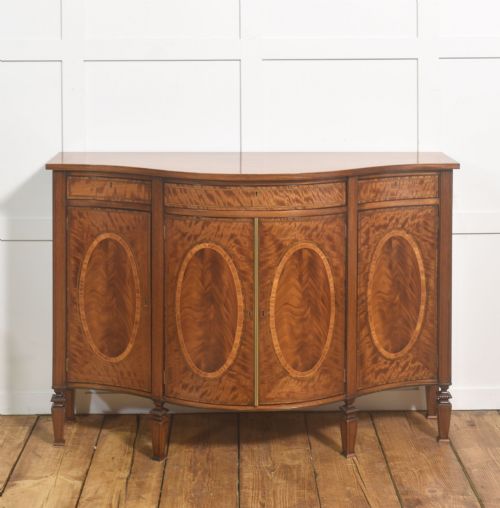
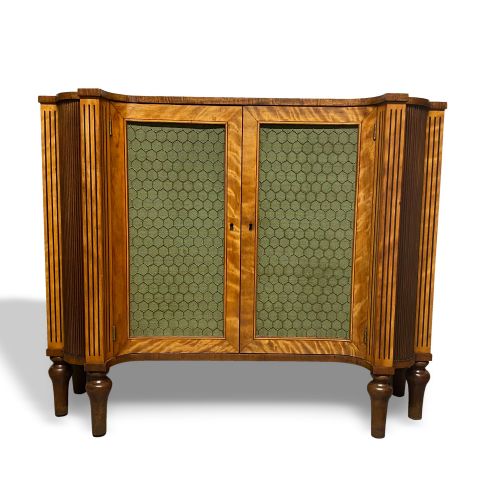
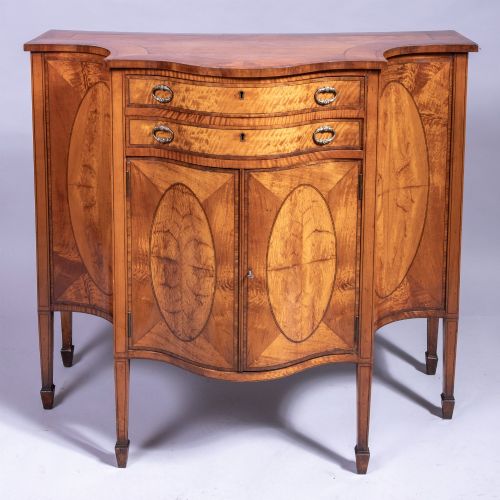

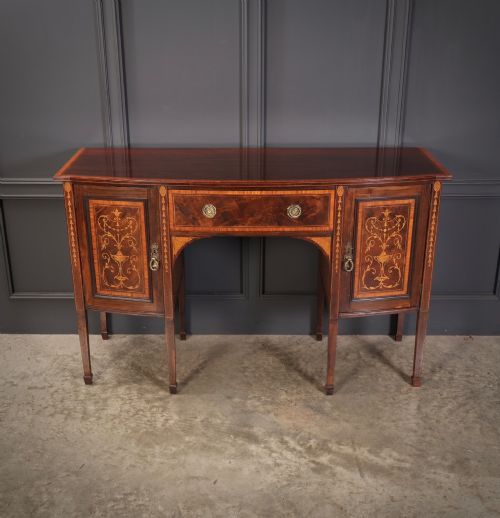

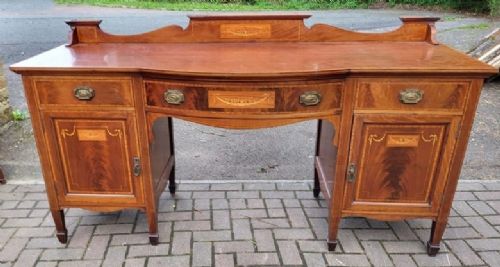


Bowfront Satinwood Credenza
A bowfront satinwood credenza delivers curved elegance and fine timberwork, offering a refined focal point for any dining room or hallway.
Bowfront Satinwood Credenza
When you search for a bowfront satinwood credenza, you are looking at sophisticated storage pieces originating largely from the late nineteenth and early twentieth centuries, alongside occasional eighteenth-century examples. These items frequently appear under related descriptions such as side cabinets, sideboards, and serving tables.
The dominant aesthetic draws heavily on Sheraton Revival and Georgian design principles, bringing disciplined proportions and curved silhouettes into domestic spaces. Most pieces utilise rich timber surfaces accented with delicate stringing and marquetry.
Edwardian and Victorian interpretations make up a large portion of what meets the eye, blending functional capacity with ornamental painted details and crossbanding. Each example balances utility with decorative refinement suited to formal reception rooms.
Determinants of quality
The distinction between standard examples and superior pieces rests on the precision of the marquetry and the choice of veneers. Finer items exhibit tightly figured satinwood and mahogany with seamless crossbanding that follows the tight curves of the bowfront without buckling.
Artistry in the painted decoration and the crispness of the inlaid boxwood and ebony stringing further separate exceptional cabinets from mass-produced equivalents. The weight and finish of the original brass fittings also signal the standard of the original workshop.
Some Victorian and Edwardian cabinets feature hand-painted floral panels that bring a touch of botanical artistry directly to the dining room.
The Bowfront Satinwood Credenza Glossary
- Bowfront
- A convex curving front profile characteristic of select sideboards and cabinets. This shape softens the room and catches the light across polished timber veneers.
- Satinwood
- A lustrous, light yellow timber prized for its smooth grain and reflective quality. It serves as a primary surface or a decorative veneer in finer cabinetmaking.
- Marquetry
- The art of forming decorative patterns using fitted pieces of wood veneer. Craftsmen apply contrasting timbers to create elaborate floral or geometric designs.
- Crossbanding
- A border technique where veneer strips run perpendicular to the main grain of the panel. This frames the top or drawer fronts with a neat, contrasting edge.
- Sheraton Revival
- A late nineteenth and early twentieth-century design movement inspired by late eighteenth-century neoclassical furniture. It emphasises graceful proportions, satinwood finishes, and delicate inlay.
Bowfront Satinwood Credenza: Frequently Asked Questions
How do I date a satinwood cabinet?
Dating relies on examining construction methods, secondary timbers inside drawers, and the specific style of the inlay work. Revival pieces from the Edwardian period often feature machine-sawn elements alongside hand-finishing.
Earlier eighteenth and early nineteenth-century examples display hand-cut dovetails and distinct timber ageing. Comparing the hardware fixings and finish type helps confirm the exact era of production.
Where should I place a bowfront credenza?
These pieces suit dining rooms, grand hallways, or drawing rooms where their curved profiles can be appreciated without obstructing foot traffic. Their shallow ends make them easier to fit into narrow spaces than rectangular sideboards.
Keep them away from direct sunlight and strong heat sources to protect the delicate satinwood veneer from fading or drying out over time.
How do I care for antique satinwood?
Maintain the timber by dusting regularly with a soft, dry cloth and applying high-quality beeswax occasionally to nourish the polished surface. Avoid using silicone sprays or household cleaning products that can damage antique finishes.
Maintaining stable room humidity prevents the timber from expanding or contracting, which protects the intricate marquetry and inlaid stringing from lifting.
What is the difference between a credenza and a sideboard?
While terms often overlap in the antique market, sideboards traditionally featured deep cupboards and central drawers designed specifically for dining room service. Credenzas and side cabinets often lean towards display and versatile storage in reception areas.
Both share similar proportions and decorative treatments, particularly within the Sheraton Revival and Georgian styles found across these listings.