
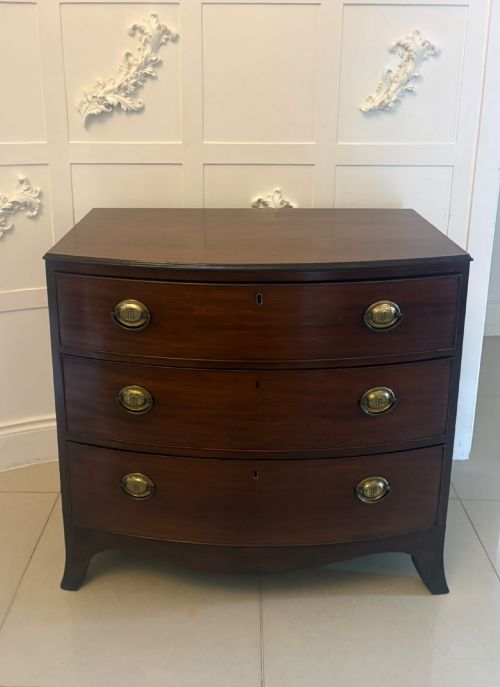
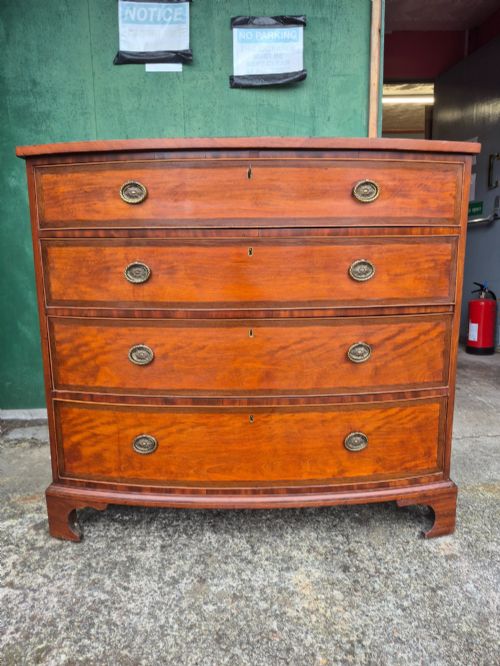
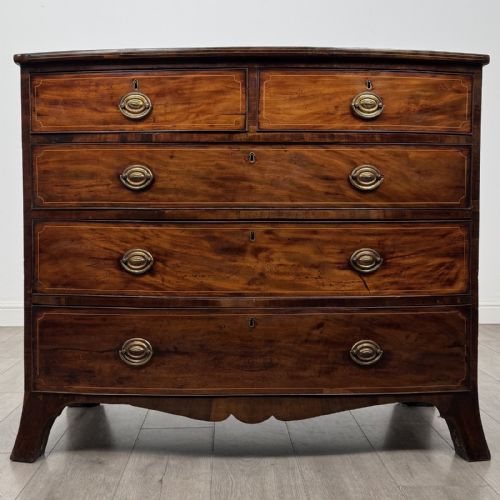
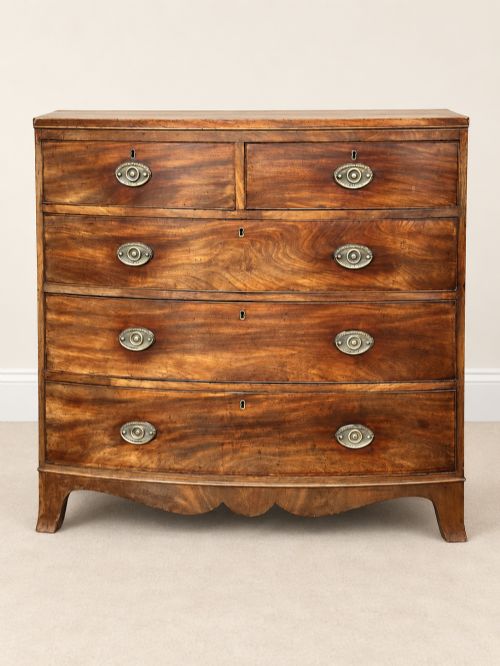

Bowfront Commode Dresser
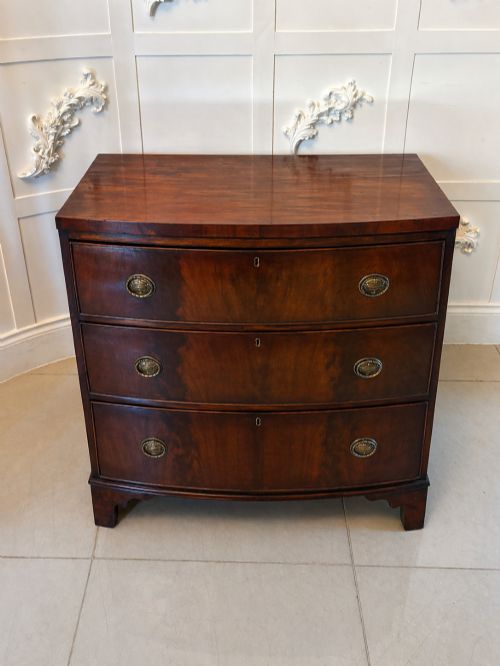
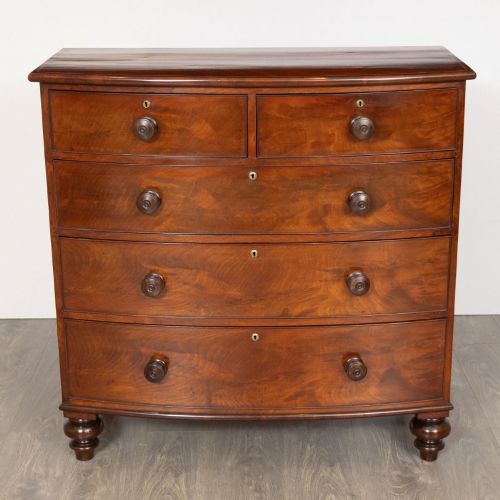
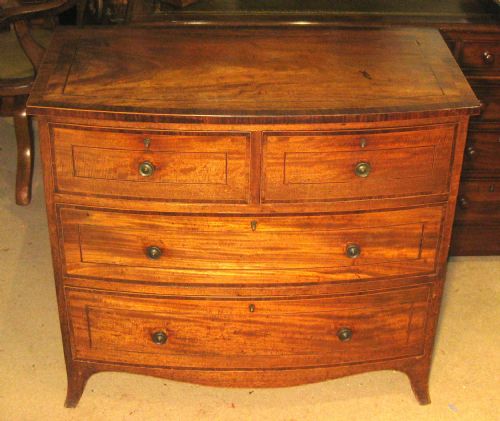
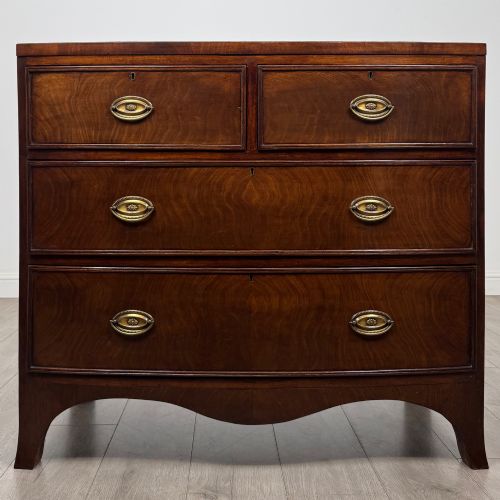
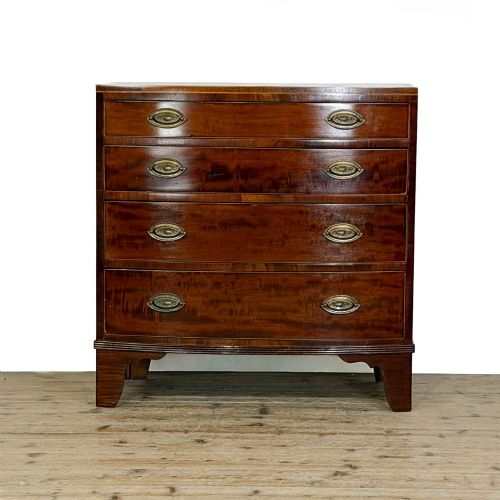
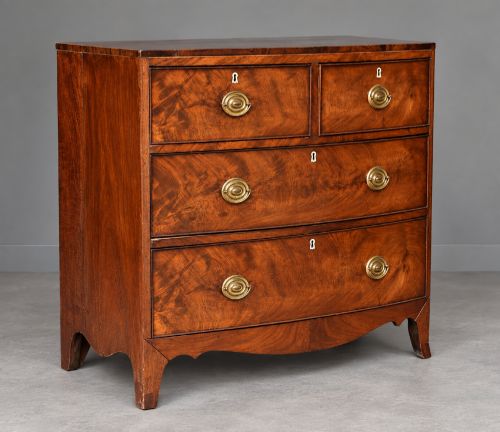
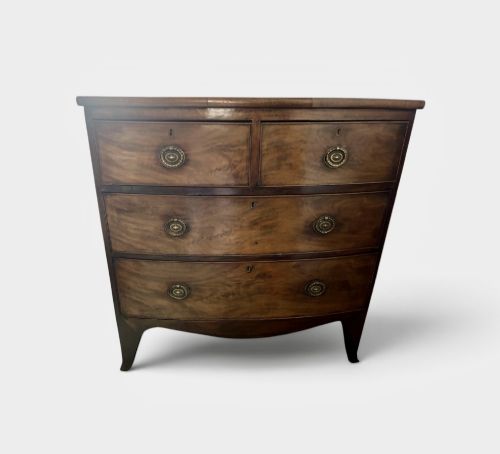
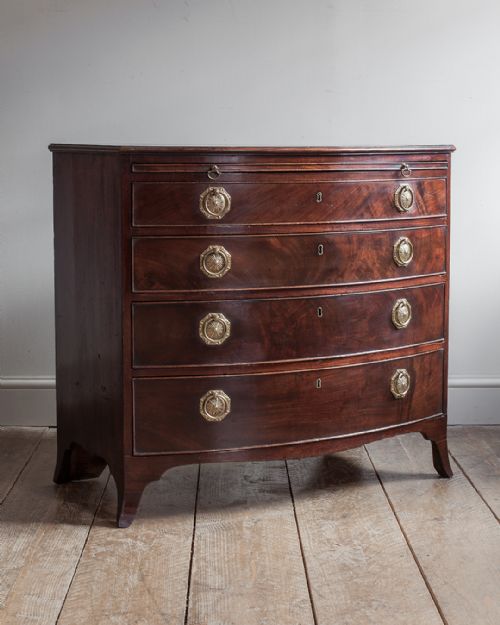
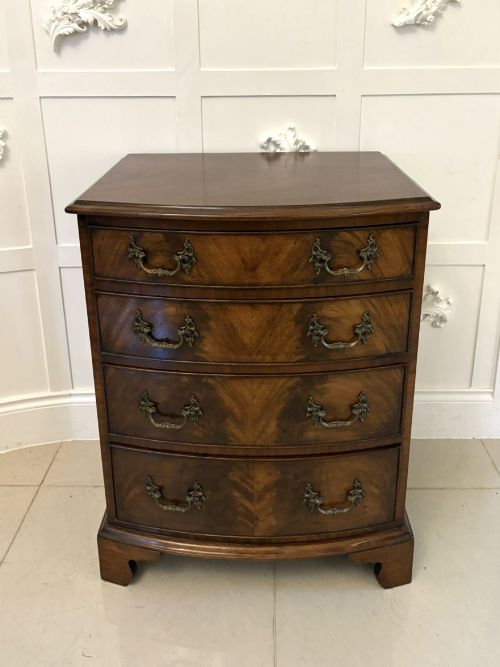
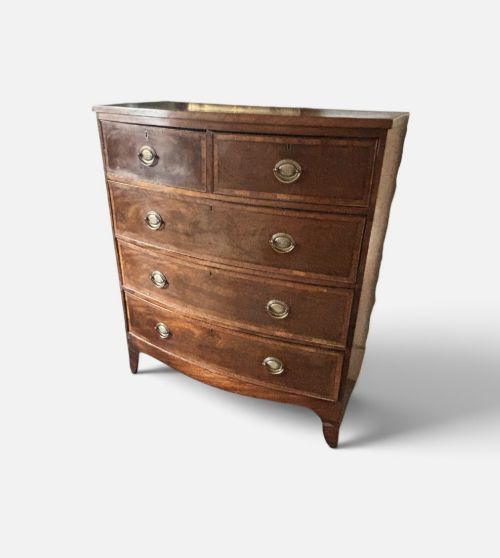
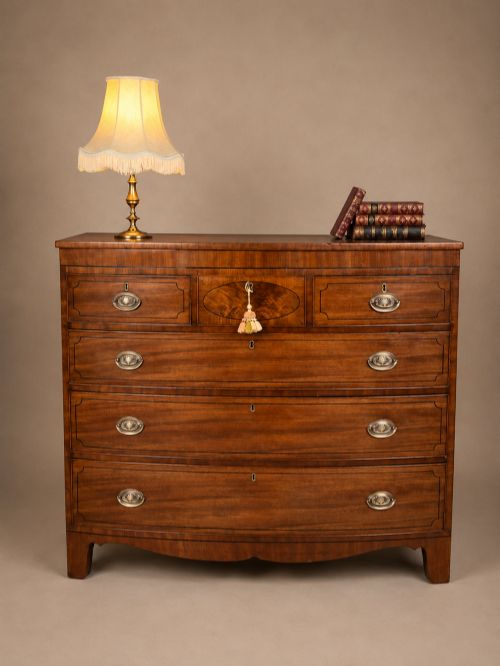
A bowfront commode dresser provides ample storage with a curved convex front that softens a room.
Bowfront Commode Dresser
A bowfront commode dresser takes the form of a chest of drawers featuring a rounded, protruding front profile. Buyers seeking these items encounter numerous examples originating from the Georgian, Regency, and Victorian periods.
The pieces listed on this page appear predominantly in mahogany, with flame mahogany veneer, oak, and satinwood appearing alongside pine carcasses. Workshops constructed these items as chests of drawers, offering graduated storage space within domestic interiors.
Materials and construction methods
Cabinet makers utilised solid timber alongside wood veneer, applying flame mahogany and satinwood across the curved drawer fronts to create decorative grain patterns. Crossbanding and brass hardware complete the primary structural elements.
Joiners shaped the curved carcasses using specialised framing techniques to maintain the structural integrity of the bow front. Drawers were fitted precisely into the curved frame, often incorporating oak linings and hand-cut dovetails.
Listings feature pieces spanning from the 18th century through the Victorian era, constructed primarily in mahogany with occasional examples in walnut and oak.
Distinctions in craftsmanship
The standard of timber selection separates finer examples from standard workshop production, particularly the figure and grain alignment of flame mahogany veneer. Superior pieces display carefully matched veneers that flow continuously across the curved drawer fronts.
Construction detail in the drawer linings and the subtlety of the bow curve indicate the maker's skill. Finer items integrate delicate satinwood crossbanding and retain original brass hardware that complements the proportions of the carcass.
The Bowfront Commode Dresser Glossary
- Bowfront
- A convex, curved front profile typical of certain chests of drawers and commodes. This shape projects outward in the centre, softening the linear geometry of furniture.
- Flame mahogany
- A distinct wood veneer figure resembling flickering flames, harvested from the branch junctions of the mahogany tree. Cabinet makers prized this figure for principal display surfaces.
- Crossbanding
- A narrow strip of veneer laid perpendicular to the surrounding grain along the edge of a drawer front. This decorative border frames the primary timber.
- Satinwood
- A durable, light-yellow timber used for contrasting inlay and stringing on late-period furniture. It provides a bright visual accent against darker woods like mahogany.
Bowfront Commode Dresser: Frequently Asked Questions
How do I date a bowfront chest?
Cabinet construction methods, timber choices, and hardware styles help determine the period of manufacture. Georgian and Regency pieces typically show hand-cut dovetails and specific aesthetic proportions.
Secondary woods inside the drawers also indicate age. Oak and pine linings point to distinct regional workshops and eras of production.
Where should I place a bowfront dresser?
These chests function effectively in bedrooms, hallways, or living rooms where floor space permits a protruding profile. The curved front allows easy movement past the corners in tighter spaces.
Pairing the chest with a simple mirror or wall art creates a balanced focal point in a traditional or transitional interior scheme.
What is the difference between a chest and a commode?
The terms often overlap in antique furniture descriptions, generally referring to drawer units designed for domestic storage. Eighteenth and nineteenth-century British makers typically labelled these multi-drawer case pieces as chests of drawers.
Regional variations in Britain sometimes applied the term commode to smaller, decorative drawer units. Both forms emphasise practical storage combined with refined cabinet work.
How do I maintain mahogany furniture?
Keep wooden furniture away from direct sunlight and heat sources to prevent the timber and veneer from drying out. Consistent indoor humidity protects both the solid structure and the decorative surface veneers.
Dust regularly with a dry, soft cloth and apply appropriate natural wax sparingly when the finish appears dry.