


Classic Georgian Chest
A classic georgian chest brings timber presence and disciplined storage to a room, built by cabinetmakers who understood proportion above all else.
Classic Georgian Chest
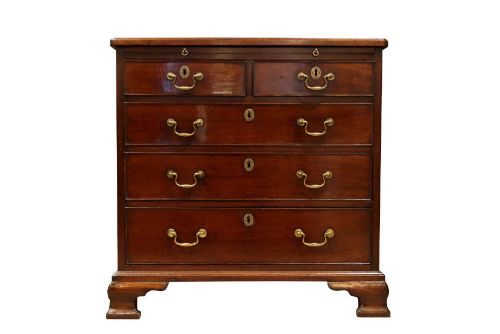
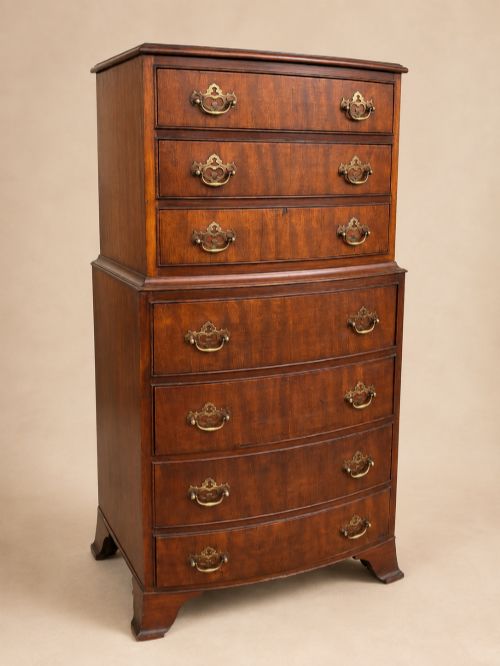
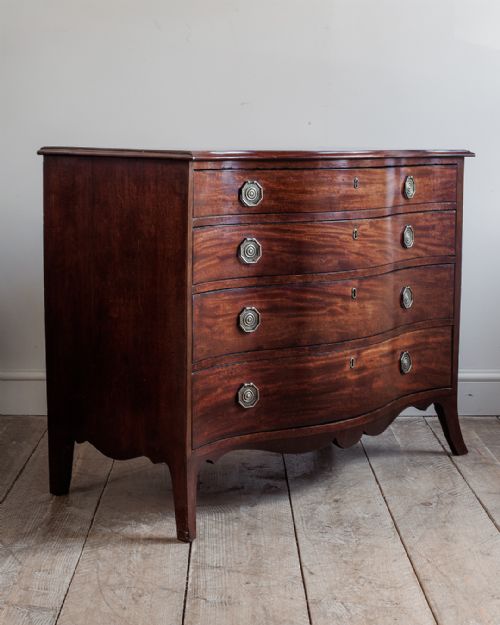
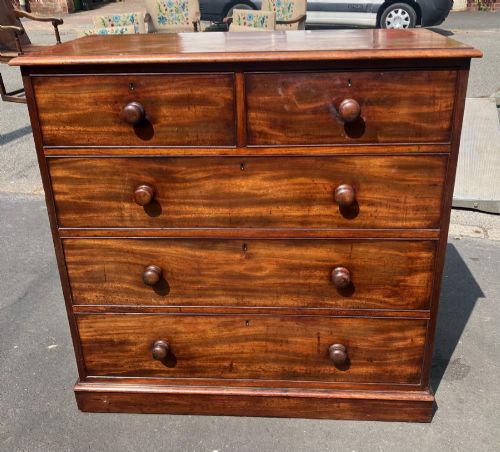
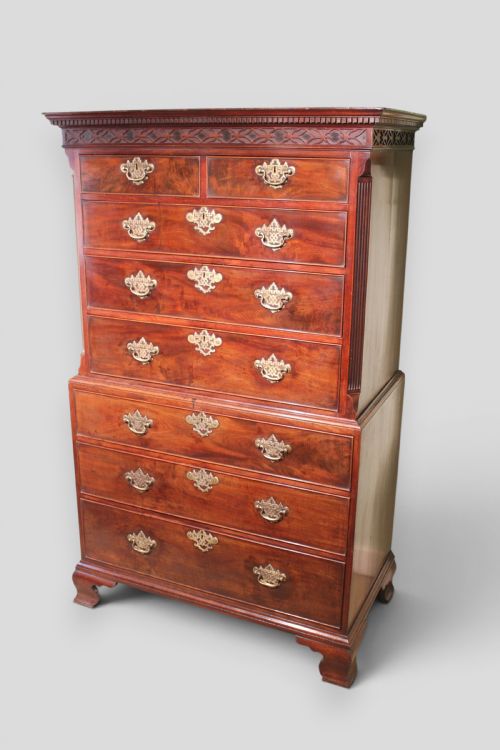
A classic georgian chest primarily takes the form of a chest of drawers, alongside taller chest on chest variants and fitted secretaire pieces. These storage items appear in periods spanning the eighteenth century through to later revivals, grounded predominantly in Georgian and Regency eras.
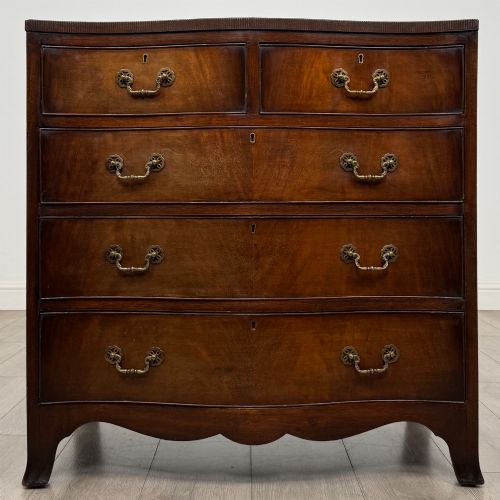
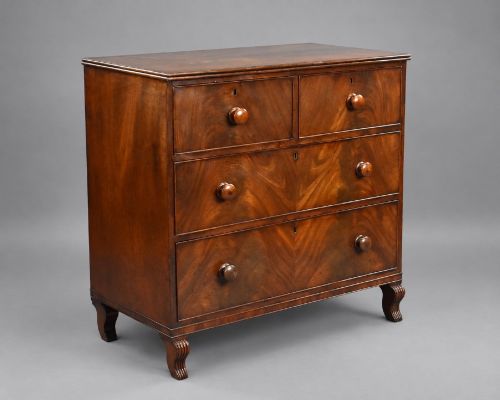
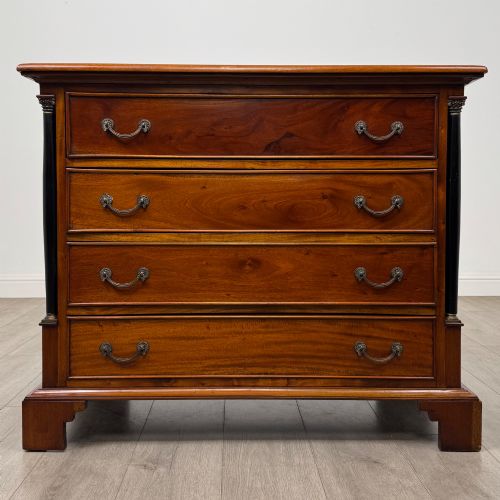
Mahogany dominates the form, often enriched with flame mahogany veneer, walnut, oak, and boxwood stringing. Buyers encounter straight fronts, bowfronts, and serpentine shapes that reflect evolving tastes in domestic British furniture.
How they were made
Cabinetmakers constructed these carcases using solid mahogany, oak, and walnut, frequently applying figured flame mahogany veneer to the main visual surfaces. Boxwood provided crisp contrasting stringing for inlay work on drawer fronts and top edges.
Brass handles and escutcheons secured the drawer fronts, working alongside hand-cut dovetails hidden within the drawer construction. Ebonised wood occasionally appeared to accent mouldings or provide dark contrast against lighter timbers.
Secret drawers hidden behind faux book spines or within secretaire compartments still occasionally spring open for modern finders.
What varies in quality
The selection of timber grain sets apart superior examples, particularly where symmetrical flame mahogany veneer covers the drawer faces. Superior pieces display thoughtful matching of wood figures across the entire front elevation rather than random timber cuts.
The precision of drawer construction and the crispness of moulded edges reveal the maker's hand. Higher quality work maintains tight joints and balanced proportions between the upper small drawers and the deeper lower drawers.
C. Hindley
The Classic Georgian Chest Glossary
- Bowfront
- A convex curved cabinet front that swells outwards in the centre. This curved facade became particularly popular during the Regency and late eighteenth periods.
- Serpentine
- A front profile shaped with a central convex curve flanked by two concave curves. It requires advanced cabinetmaking skill to shape timber to this undulating line.
- Secretaire
- A cabinet or chest incorporating a fitted writing drawer that pulls down to reveal small compartments and pigeonholes. These dual-purpose pieces served administrative needs in domestic rooms.
- Chest on chest
- A tall storage unit formed by stacking a smaller upper chest directly onto a wider lower chest. Also known as a tallboy, this form maximised vertical capacity.
- Flame mahogany
- Timber cut from the branch junction where the grain pattern resembles flickering flames. Cabinetmakers prized this veneer for principal display surfaces.
Classic Georgian Chest: Frequently Asked Questions
How do I spot a true period piece?
Examine the timber construction inside the drawers, looking for hand-cut dovetails and oak secondary woods. Period pieces carry signs of age and tool marks consistent with eighteenth and early nineteenth century workshop methods.
Compare the proportions and hardware against documented examples from the same decade. Alterations or later replacements of brass handles often alter the visual balance of the facade.
Where should I place a chest in my home?
These chests function effectively in bedrooms, hallways, or living rooms as practical storage and display surfaces. Their finished timber backs and polished tops allow them to anchor a room visually.
Keep wooden furniture away from direct sunlight and rapid temperature shifts to protect the veneer and polished finish. Maintaining stable indoor humidity prevents timber movement and splitting.
How do I care for antique mahogany surfaces?
Dust the timber regularly with a soft, dry cloth to prevent grit accumulation on the polish. Avoid silicone sprays and modern polishes that can build up a hazy film over the wood.
Apply traditional beeswax periodically to nourish the dry timber and maintain a deep lustre. Buff gently along the direction of the grain to preserve the patina.