

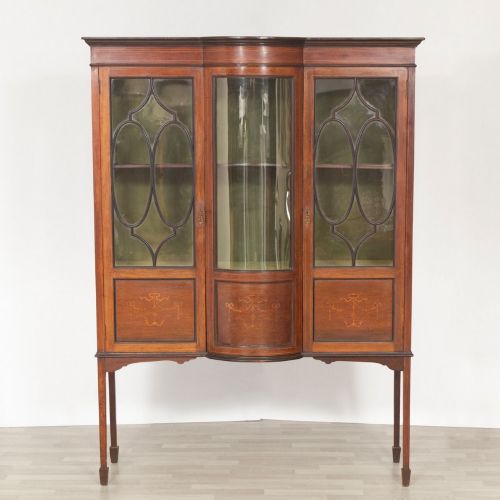


Bowfront China Cabinet
A bowfront china cabinet brings curved glass and refined timber into a room, holding cherished objects with quiet elegance.
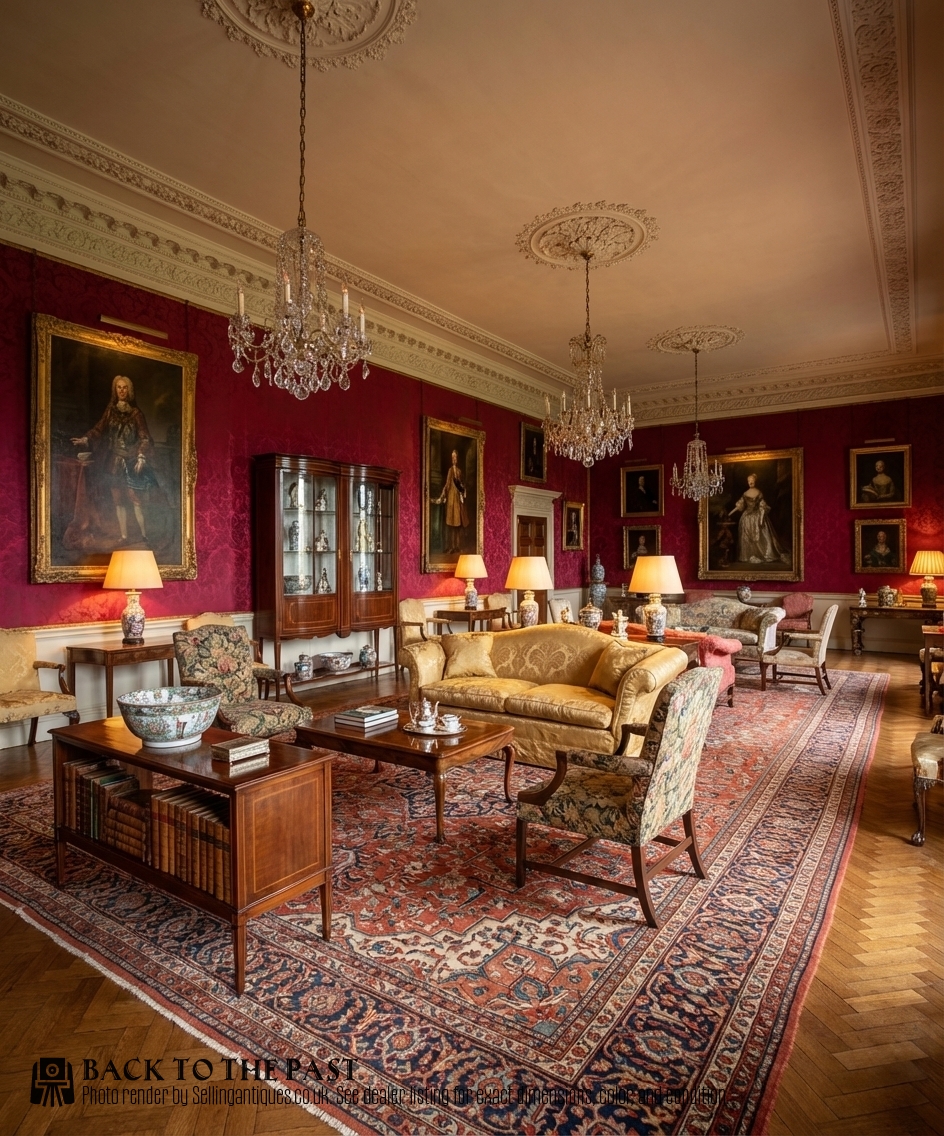
Bowfront China Cabinet
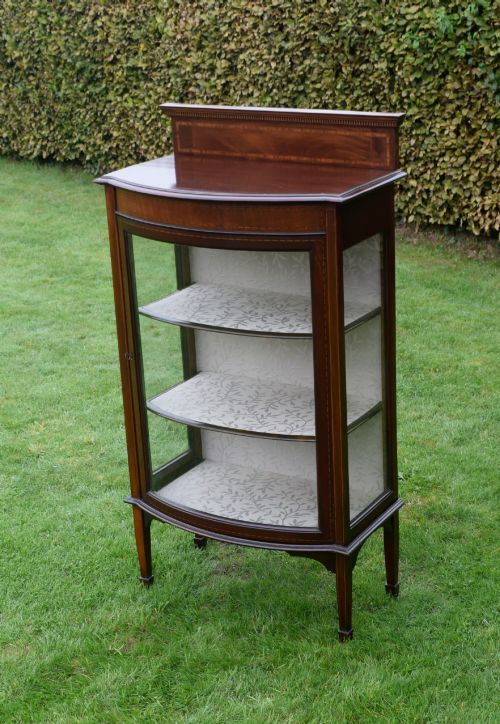
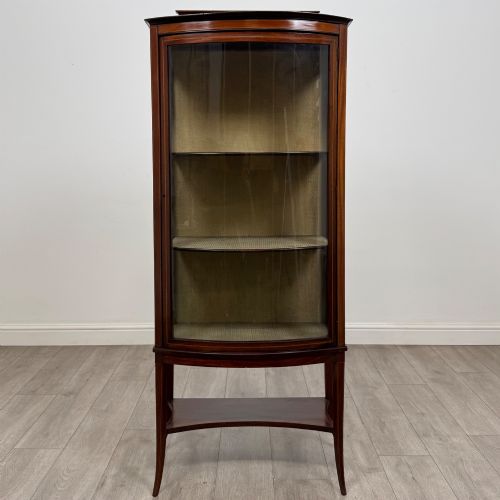
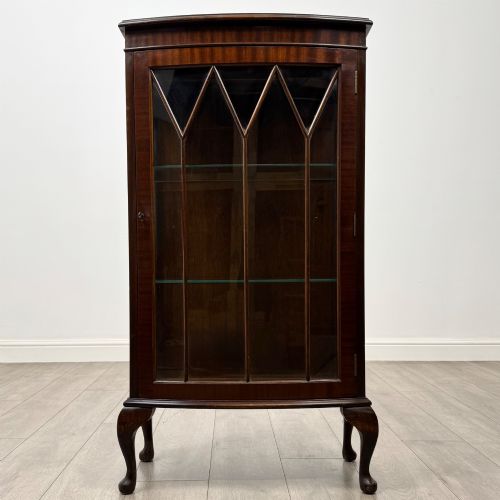
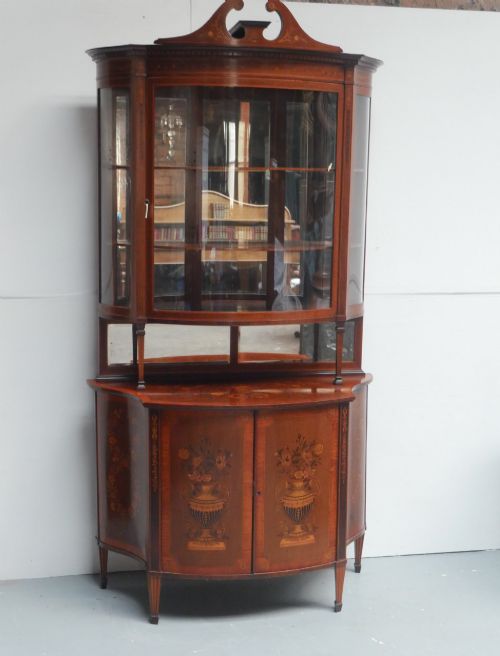
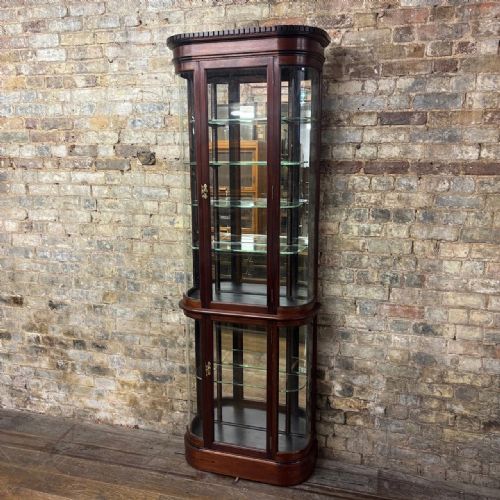
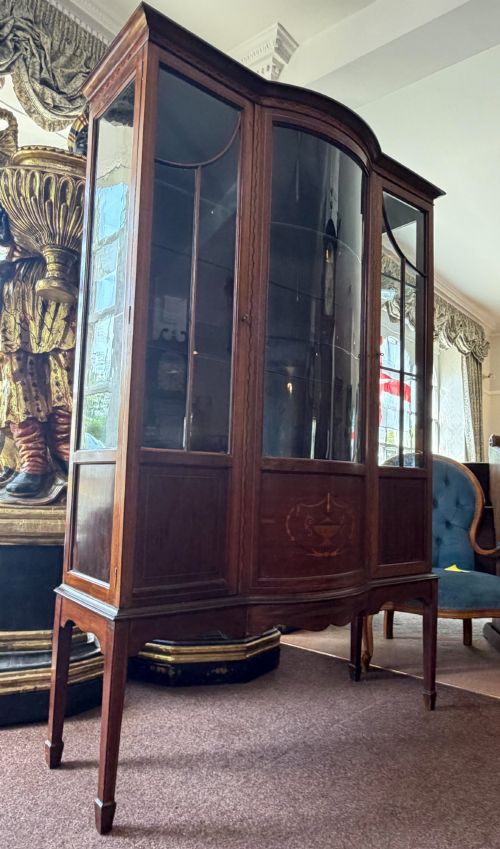
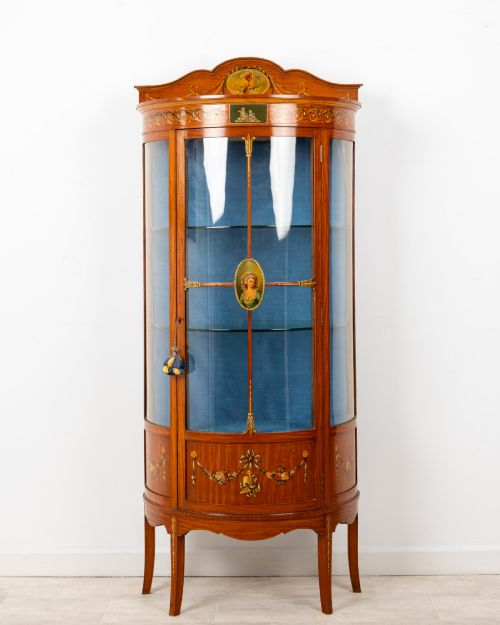
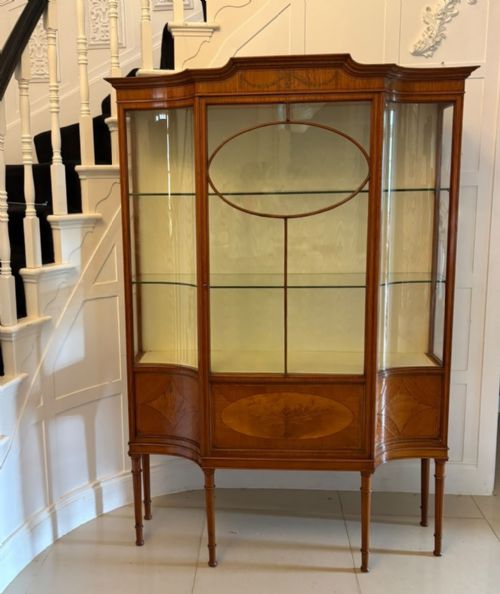
A bowfront china cabinet presents a curved glazed door or panels, offering a sweeping view of the interior shelves from multiple angles. These pieces primarily emerge from the Edwardian era and the nineteenth century, alongside later twentieth-century interpretations.
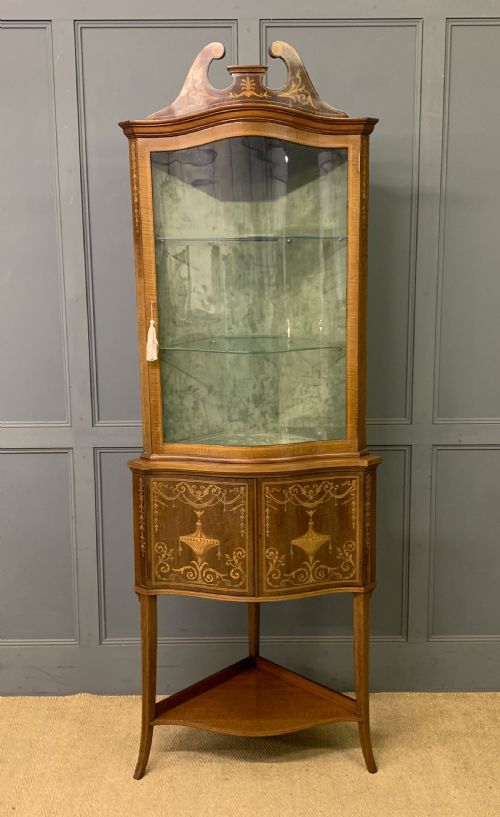
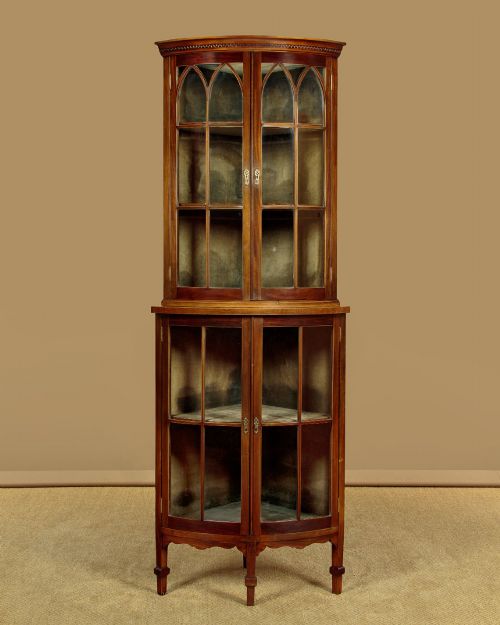
The layout typically takes the form of a freestanding display cabinet or a corner cabinet designed to utilise room angles efficiently. Mahogany forms the backbone of these constructions, frequently paired with lighter decorative timbers.
Makers and designers of the period drew upon Sheraton and Chippendale traditions, translating classical revival motifs into domestic display furniture. Buyers encounter both tall standing carcases and smaller two-part formats suited to varied room proportions.
Materials and construction
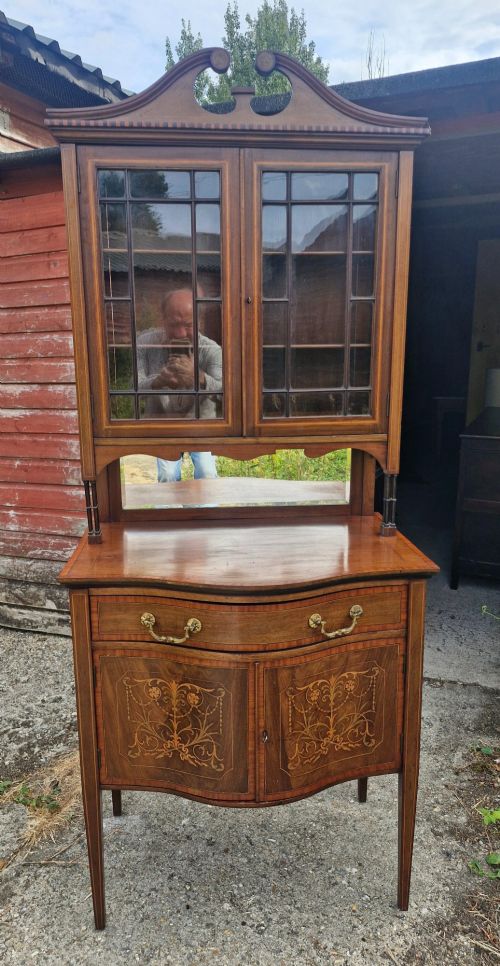
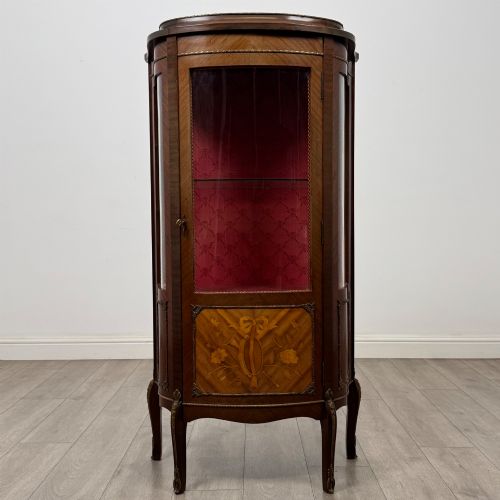
Cabinet makers built the carcase predominantly in solid mahogany or oak, applying veneers of satinwood and burr walnut to create figured surfaces. Fine stringing and marquetry inlay added linear contrast, often utilising lighter woods against the darker ground.
Glass panes required careful heating and bending to achieve the characteristic convex curve of the bowfront door without distortion. Brass hardware and mirrored backs completed the interior, reflecting light through the glazed display compartments.
Cabinet makers bent glass panes by hand over gentle heat, trusting their eye to achieve the perfect convex curve for the bowfront door.
Craftsmanship and detail
Superior examples demonstrate precision in the complex joinery required to curve solid timber and fit bowed glass accurately within the frame. The intricacy and preservation of the satinwood inlay, marquetry, and painted floral motifs signal the hand of a skilled workshop.
The choice of primary timber grain and the quality of the internal mirror backing distinguish standard commercial production from exceptional commission work. Structural integrity in the legs, whether tapered supports or bracket feet, ensures the tall glazed carcase remains stable.
Edwards and Roberts·Maurice Adams
The Bowfront China Cabinet Glossary
- Bowfront
- A convex curved cabinet front that projects outward in a smooth arc. This shape softens the corners of a room and enhances the visibility of interior items.
- Marquetry
- Decorative patterns formed by fitting together small pieces of wood veneer of different colours and grains. It frequently appears on cabinet doors and friezes.
- Vitrine
- A glass-fronted display cabinet used for showing porcelain, silver, and curiosities. The term derives from the French word for glass.
- Demi-lune
- A half-moon shape used for the footprint of corner or wall cabinets. This profile allows the piece to fit flush against a flat wall or snug into a corner.
- Satinwood
- A lustrous yellowish timber native to India and Ceylon, prized for its golden sheen. It serves as a contrasting veneer for stringing and panel decoration.
Bowfront China Cabinet: Frequently Asked Questions
How do I clean the curved glass?
Use a soft lint-free cloth and a mild glass cleaning solution applied directly to the cloth rather than the wood. Avoid spraying liquid near the antique wooden frame to prevent moisture damage to the finish.
Take care around delicate glazing bars and painted details during the wiping process. Gentle handling preserves the original putty or wooden retaining beads holding the glass.
Where should I place a corner cabinet?
A corner cabinet fits neatly into unused room junctions, making efficient use of floor space while introducing architectural interest. Ensure the floor is level so the tall glazed door hangs true and swings freely.
Keep the cabinet away from direct sunlight and strong heat sources to protect the mahogany and satinwood veneers from fading or drying out over time.
What is the difference between Edwardian and Victorian pieces?
Victorian cabinets generally feature heavier proportions and darker finishes, often drawing on robust revival styles from the nineteenth century. Edwardian examples tend to display lighter framing, delicate marquetry, and refined satinwood inlay.
Both periods embrace the bowfront format, but Edwardian pieces frequently lean towards Sheraton Revival lightness with painted floral motifs and subtle stringing.
Can these cabinets support heavy china?
Original wooden shelves are designed for porcelain plates, glassware, and decorative ornaments rather than heavy dinner services. Distributing weight evenly across the tiers protects the internal supports and brackets.
Heavier items risk bowing thin timber shelves over extended periods. Lighter display pieces ensure the structural integrity of the interior remains undisturbed.