




Bowed Glass Vitrine
A bowed glass vitrine brings together curving panes and timber framing to display silver, porcelain and curiosities.
Bowed Glass Vitrine
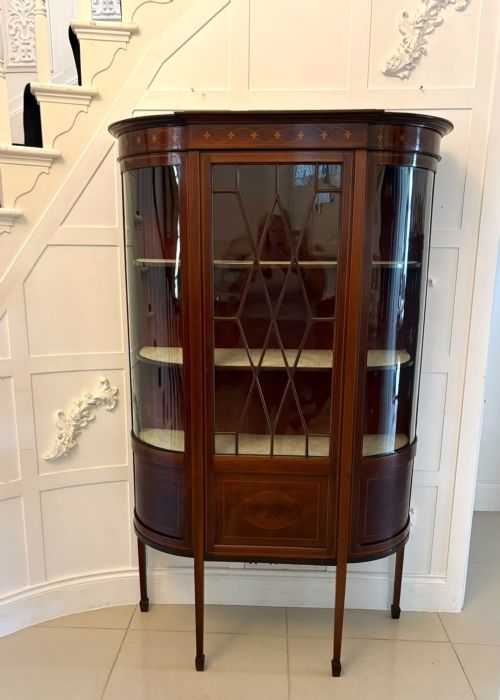
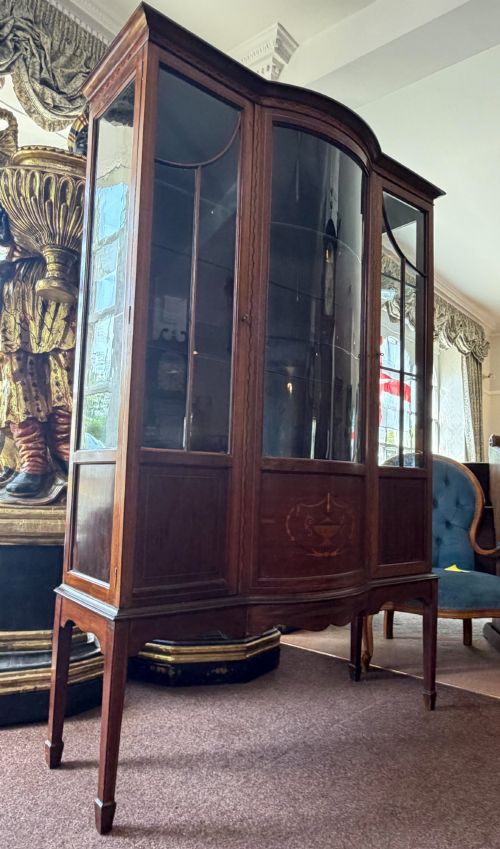
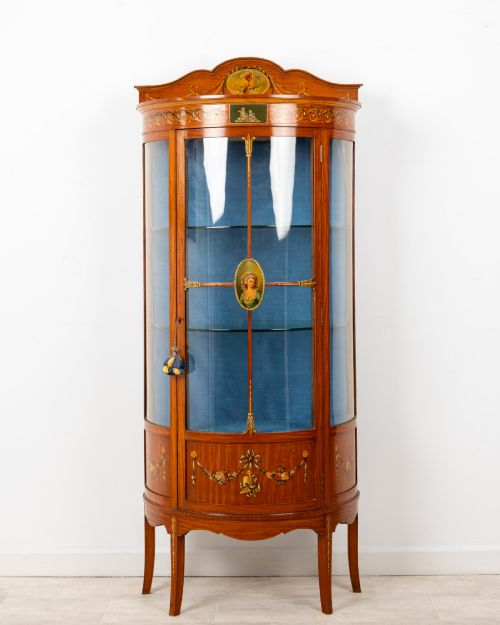
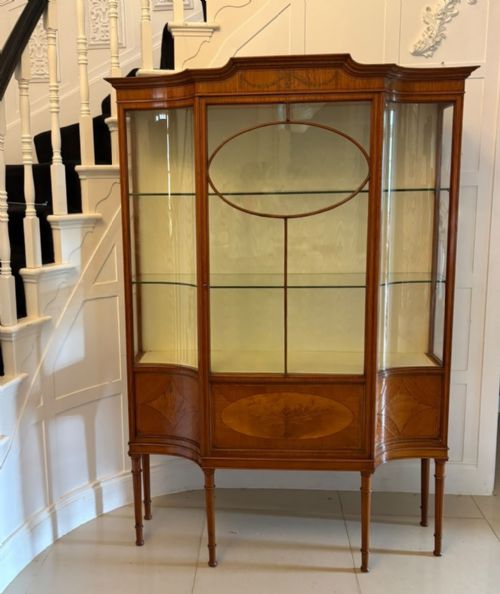
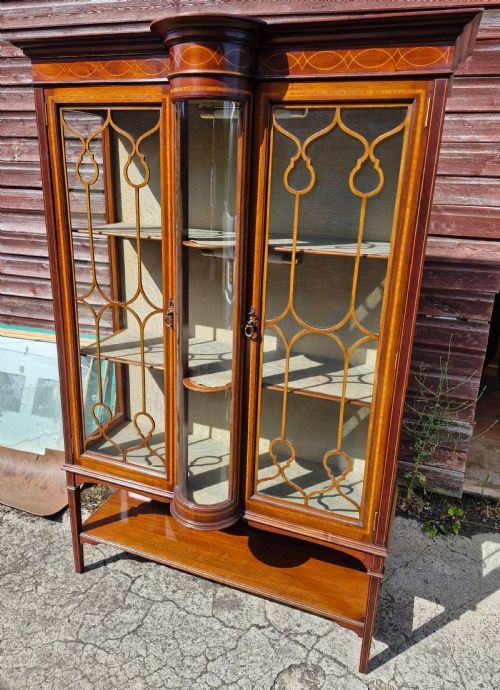
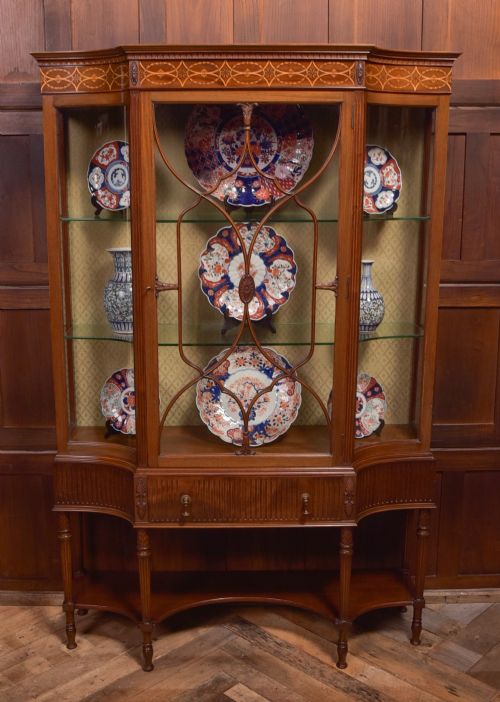
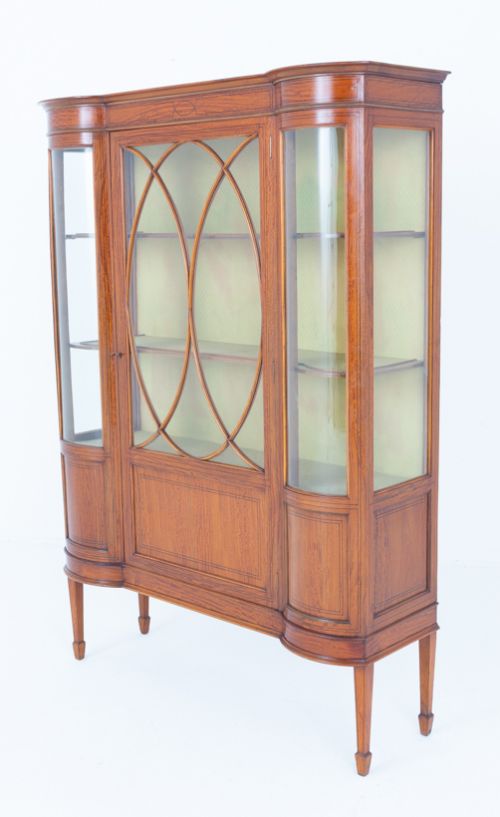
When you search for a bowed glass vitrine, you encounter tall display furniture built primarily during the Victorian, Edwardian and early twentieth century periods. These pieces serve to exhibit fragile ornaments and collections behind curved or bowed glazed doors.
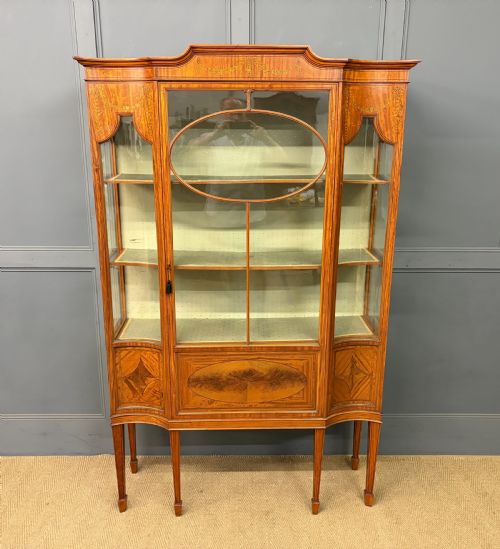
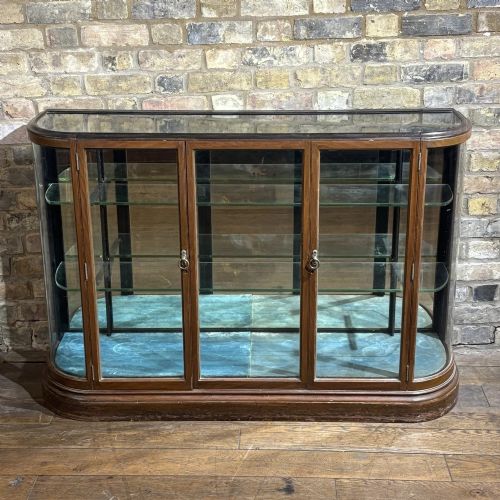
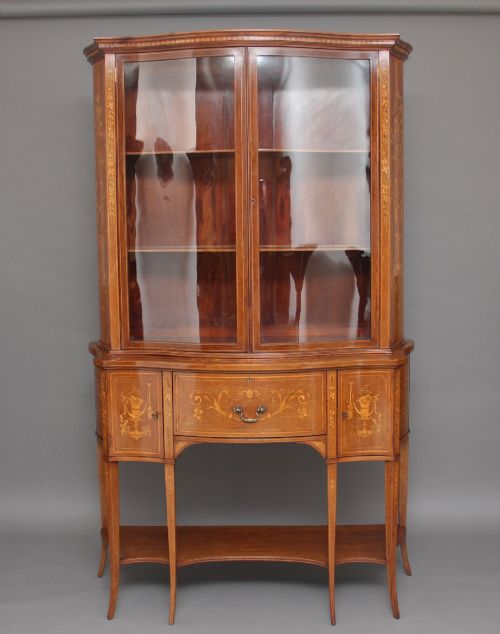
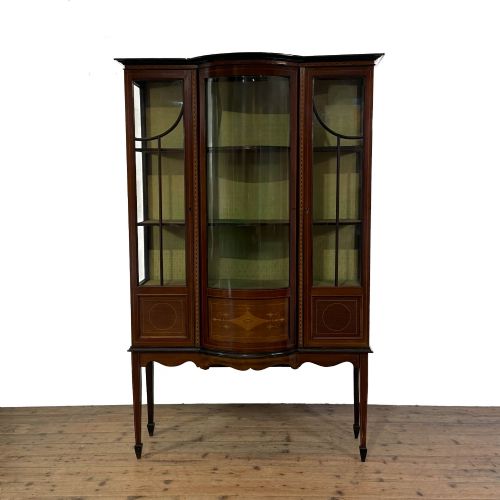
The most common examples on this page are Edwardian and late nineteenth century display cabinets built from mahogany or satinwood, often decorated with delicate stringing and inlay. Forms range from freestanding salon cabinets to shop display counters and corner cabinets.
Makers such as Maple and Co and James Hicks produced refined examples, alongside simpler workshop pieces intended for domestic parlours or retail spaces. The curved glass panels define the form, bending light across the contents inside.
How they were made
Cabinet makers constructed the frames using solid mahogany, burr walnut or satinwood, frequently applying contrasting timber veneers and fruitwood inlay. Brass mounts and handles add structural accents to doors and drawers.
The defining feature, the bowed glass, required specialist glass-bending techniques to achieve a smooth curve without distortion. Interior shelves are formed from glass or timber to support the display of items.
Listings span from the late Victorian period through the Edwardian era into the 1930s, featuring mahogany, satinwood and burr walnut.
What varies in quality
Quality rests in the crispness of the inlay work and the purity of the curved glass panes. Finer cabinets exhibit precise satinwood inlay and tight joinery around the door frames.
The selection of timber grain, particularly in burr walnut and figured mahogany examples, separates standard domestic pieces from finer cabinet maker productions. Interior linings of fabric and the condition of original brassware also indicate the tier of manufacture.
Maple & Co·James Hicks
The Bowed Glass Vitrine Glossary
- Vitrine
- A glass-fronted cabinet designed for displaying fine objects or collections. They became popular in domestic interiors during the Victorian period.
- Inlay
- A technique where pieces of contrasting timber, such as satinwood or fruitwood, are fitted into recesses in the primary wood surface. This creates decorative patterns and borders.
- Sheraton Revival
- A late nineteenth and early twentieth century design style that reinterprets eighteenth century neoclassical furniture forms. It often incorporates light timbers and delicate floral motifs.
- Bijouterie cabinet
- A shallow display table or cabinet with a glass top and sides intended for jewellery and small precious objects. They often feature fabric-lined interiors.
- Concave
- Curved inward like the interior of a circle. In these cabinets, it describes glass or timber framing that recedes from the viewer.
Bowed Glass Vitrine: Frequently Asked Questions
What is a bowed glass vitrine used for?
These cabinets were designed to display porcelain, silver, glassware and small collections in domestic reception rooms. The glass protection kept dust away while allowing objects to be viewed from multiple angles.
Commercial premises also utilised counter versions to showcase retail goods to customers. Today they continue to function as display furniture for prized possessions.
How do I date a bowed glass vitrine?
Dating relies on timber choice, decorative styles and construction methods. Edwardian examples often feature lighter satinwood and delicate floral inlay, whereas Victorian pieces tend to use darker mahogany and heavier proportions.
Stylistic influences such as Sheraton Revival or Art Nouveau provide further clues. Surviving trade labels or stamps occasionally confirm specific makers and eras.
Where should I place a vitrine?
These cabinets suit drawing rooms, dining rooms or hallways where natural light can illuminate the glazed display area. Placing them away from direct sunlight protects both the cabinet timber and any fabric linings inside.
Because many examples feature bowed or curved fronts, positioning them in corners or along unobstructed walls allows the glass profile to be fully appreciated.
How do I care for antique glass and timber?
Maintain the timber surfaces by dusting with a dry cloth and occasionally applying traditional beeswax to nourish the polish. Avoid modern silicone sprays that can damage antique finishes.
Clean the bowed glass panes gently with a mild glass cleaner applied to a cloth rather than sprayed directly onto the glass, preventing liquid from seeping into the timber frame joints.