
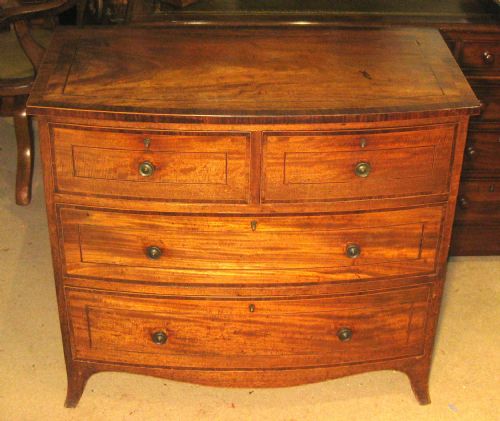
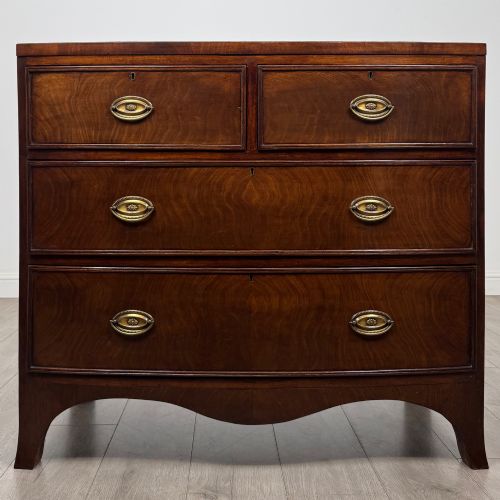
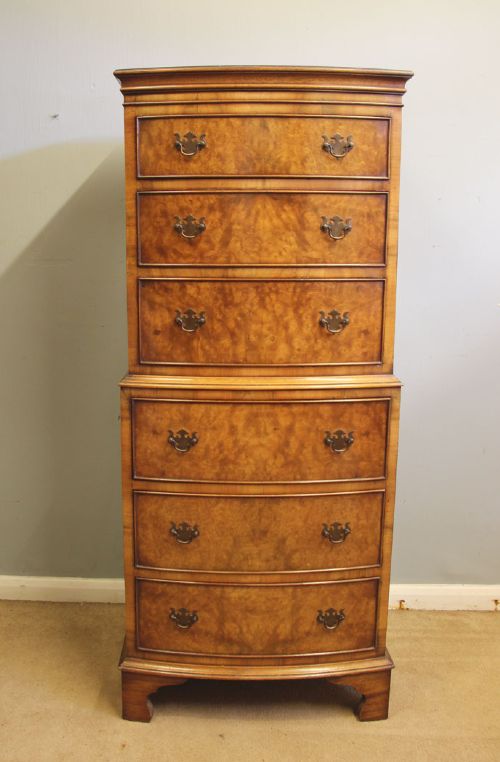
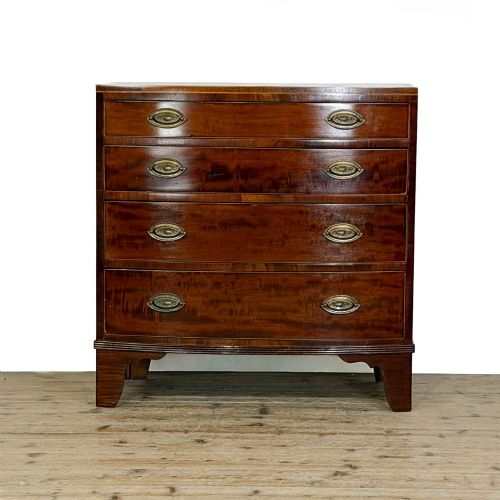
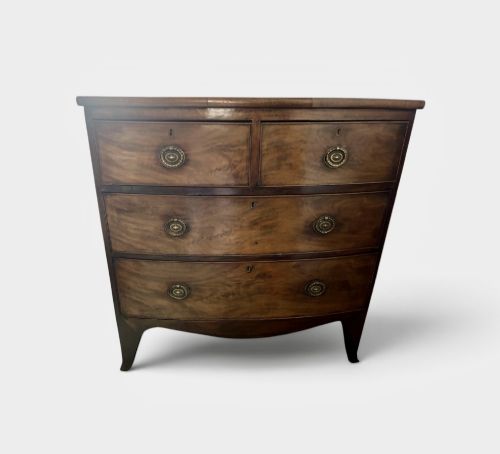
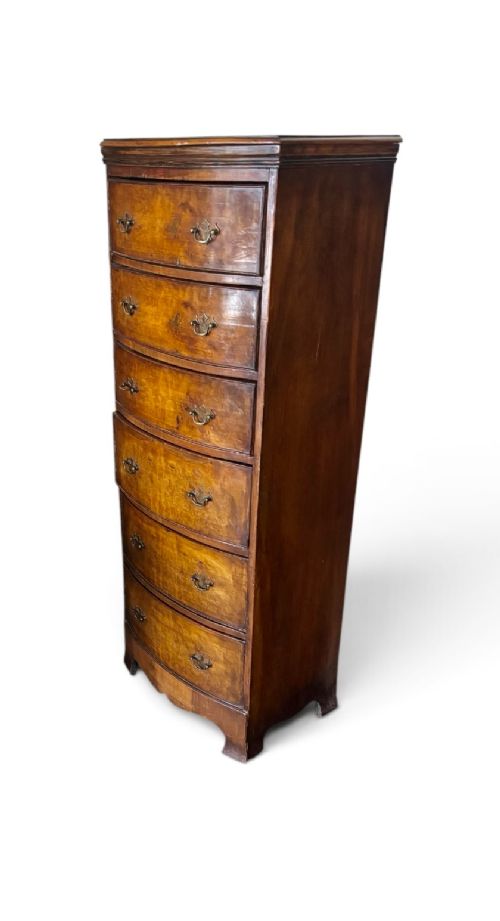
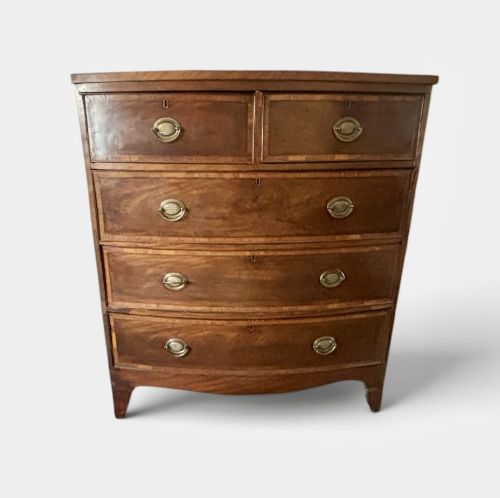

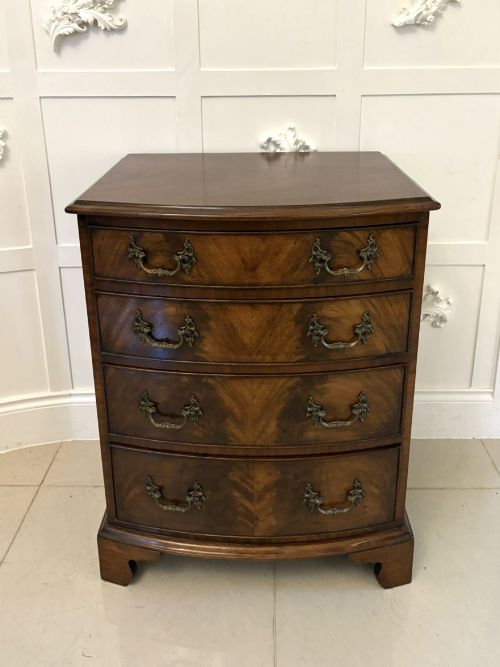
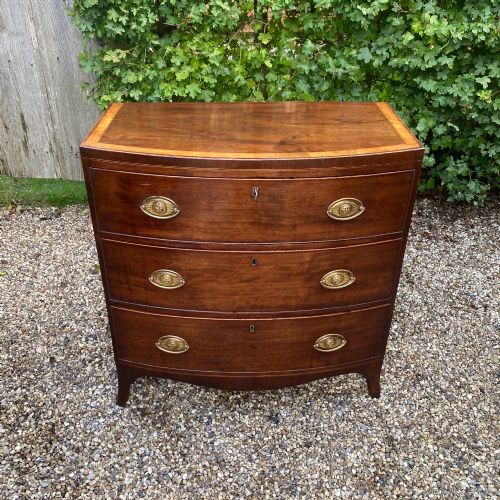
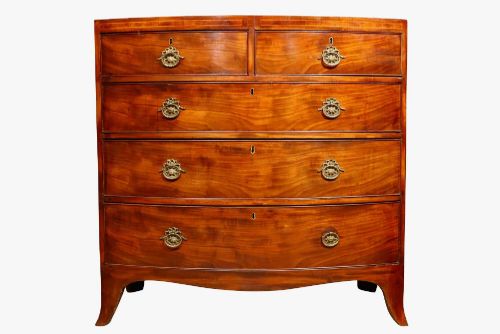
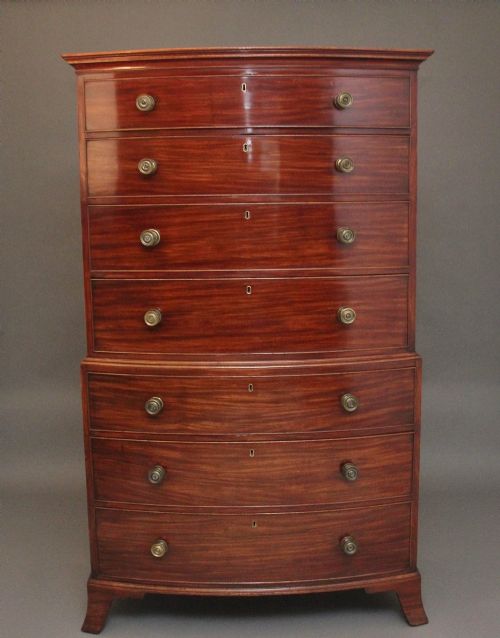
Bowed Front Chest Drawers
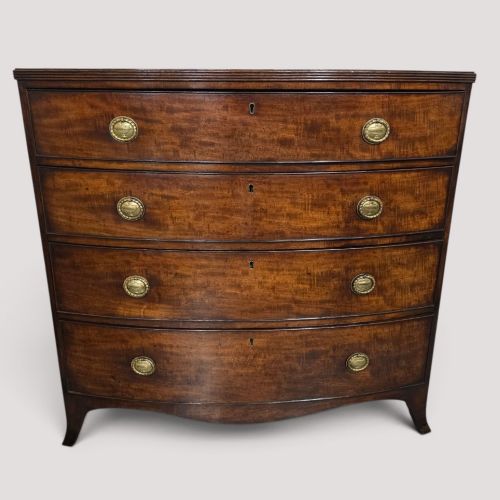
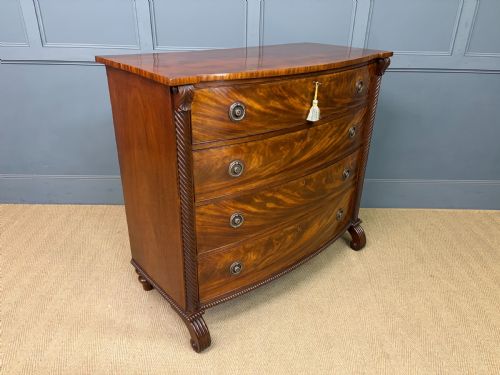
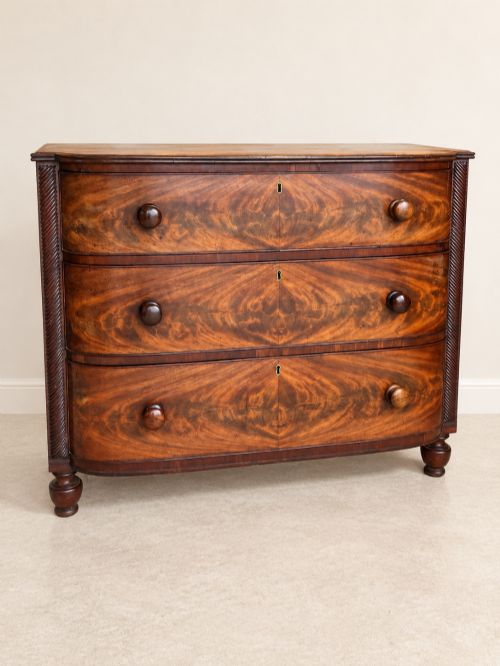
A bowed front chest drawers brings a subtle curve to a room, offering generous storage while softening traditional rectilinear lines.
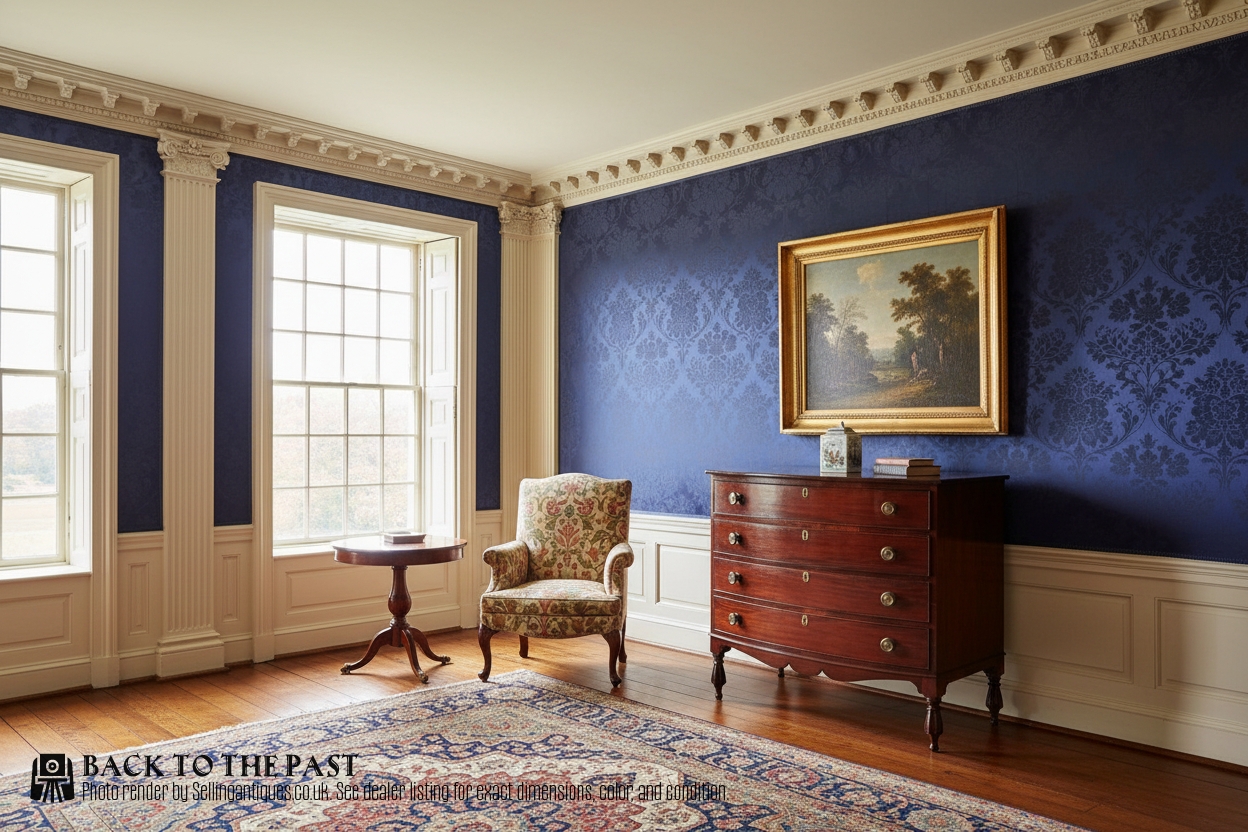
Bowed Front Chest Drawers
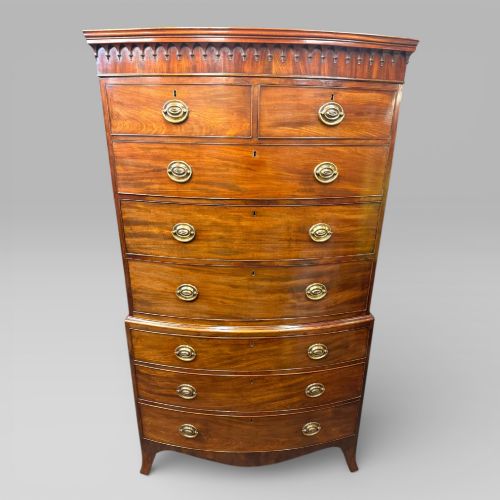
A bowed front chest drawers is a storage piece defined by its convex projecting front, appearing frequently in Georgian, Regency, and Victorian iterations alongside later 1920 and 1930 interpretations. Buyers encounter standard four-drawer models, taller chest on chest designs, and compact pieces intended for smaller spaces.
The materials span solid timbers and figured veneers, with mahogany and walnut forming the backbone of surviving examples. Secondary woods such as pine and oak appear in drawer linings and internal construction.
Originating largely from British workshops, these chests range from grand George III period commissions to neat Edwardian and early twentieth-century interpretations.
Materials and construction
Cabinetmakers utilised solid mahogany and walnut for primary surfaces, often selecting flame mahogany veneer or satinwood bandings to create visual contrast across the curved drawer fronts. Brass hardware, including drop handles and escutcheons, secures the functional operation of the drawers.
The curved facade requires specialised joinery to shape the timber frames and drawer fronts without compromising structural integrity. Secondary timbers like pine support internal carcases, whilst secret compartments occasionally appear concealed within the upper structure.
Listings feature periods spanning the eighteenth century through to the 1930s, constructed in mahogany, walnut, satinwood, and pine.
Craftsmanship and proportion
Superior examples demonstrate careful timber selection, where figured veneers match symmetrically across the curved drawers. The handling of the bowed profile dictates the elegance of the silhouette, separating refined proportions from heavier executions.
Internal construction details, such as the use of solid oak or mahogany for drawer linings and precise dovetail joints, distinguish superior workshop output from more utilitarian manufacturing.
The Bowed Front Chest Drawers Glossary
- Bowed front
- A convex curved cabinet front that projects outward from the centre. This shape softens the profile of standard case furniture.
- Flame mahogany
- A veneer cut from timber where the grain creates a flickering, flame-like pattern. Cabinetmakers prized this figure for principal drawer fronts.
- Crossbanding
- A strip of veneer laid perpendicular to the main grain along the border of a surface. It frames the central timber panel.
- Tallboy
- A tall chest of drawers, often constructed in two stacked sections. This form maximises vertical storage capacity.
- Secret drawer
- A concealed compartment built into the upper section of a chest. It requires a hidden release mechanism to open.
Bowed Front Chest Drawers: Frequently Asked Questions
How do I date a bowed front chest?
Dating relies on timber selection, handle styles, and construction methods. Georgian and Regency pieces show hand-cut dovetails and specific proportions, whereas later pieces incorporate twentieth-century manufacturing traits.
Secondary woods and veneer types further clarify the period of production, distinguishing eighteenth-century cabinetwork from 1920 or 1930 revivals.
What woods were used for these chests?
Mahogany and walnut dominate the surviving pieces, often utilised as solid timber or decorative veneers. Satinwood bandings and flame mahogany figure prominently on finer examples.
Internal elements typically employ utility woods like pine and oak for drawer sides and structural supports.
Where should I place a bow front chest?
The curved profile makes these chests suitable for hallways, living rooms, and bedrooms where a rectilinear cabinet feels too severe. Their projecting front requires adequate clearance in narrower corridors.
Pairing them with appropriate lighting allows the figured wood veneers and brass hardware to catch the light.
Are all bow front chests Georgian?
While the form gained immense popularity during the Georgian and Regency periods, production continued through the Victorian era and into the 1920 and 1930 decades.
Revival styles and later twentieth-century interpretations frequently replicate the earlier bowed aesthetic using period techniques.