

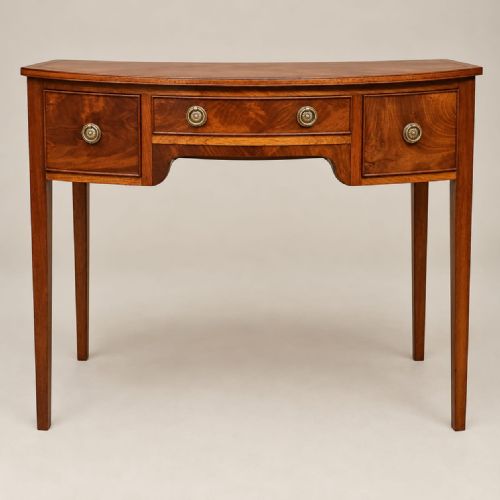
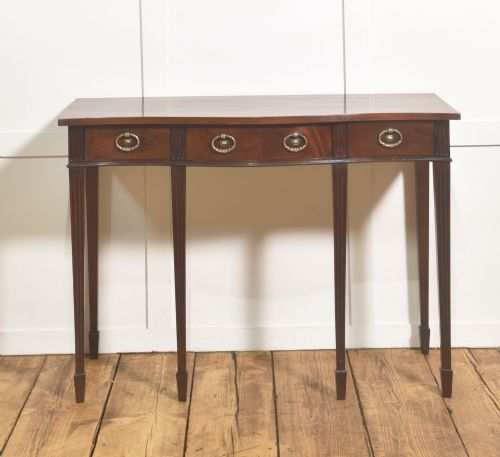
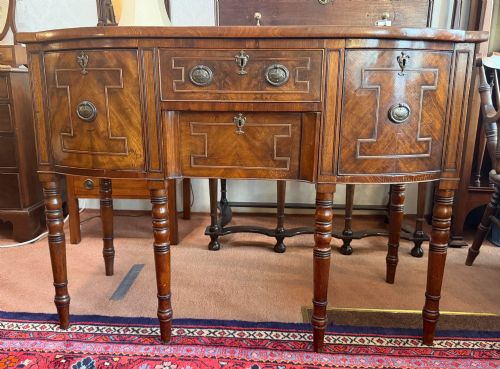
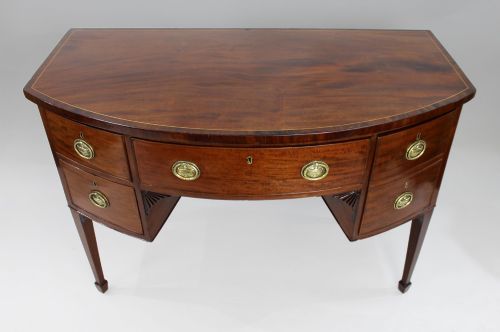
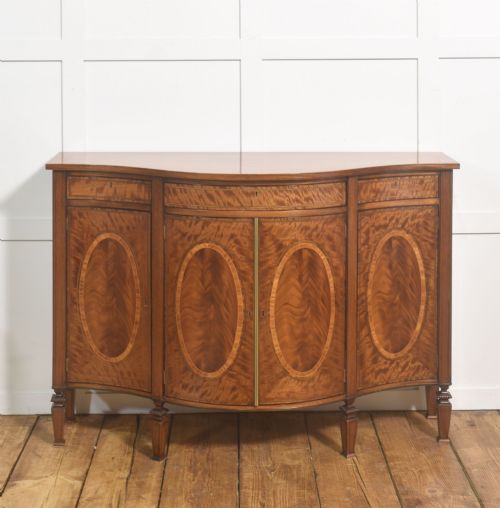
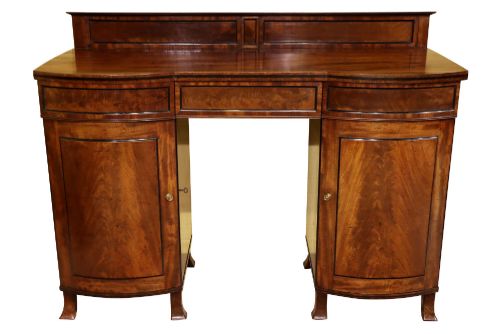
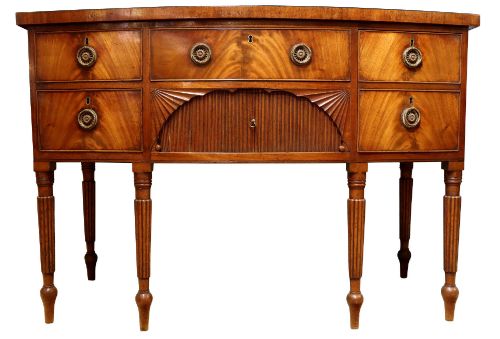
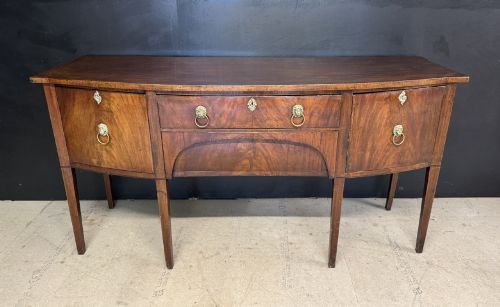
Bow Fronted Server
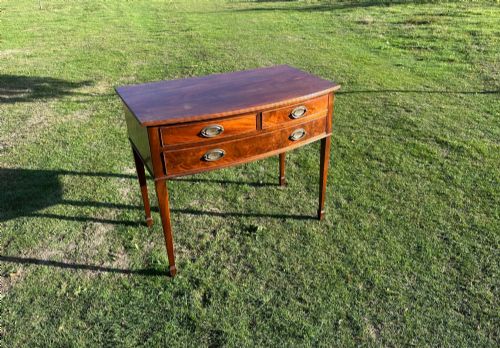
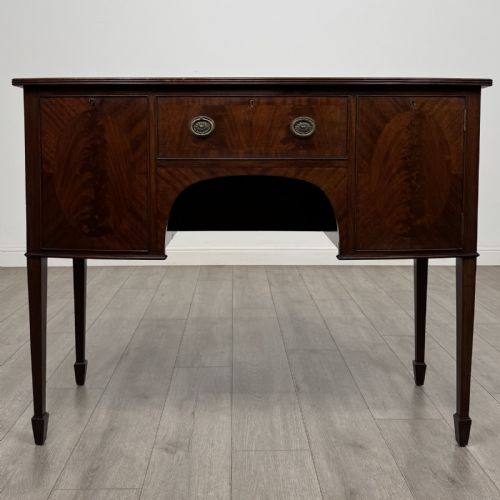
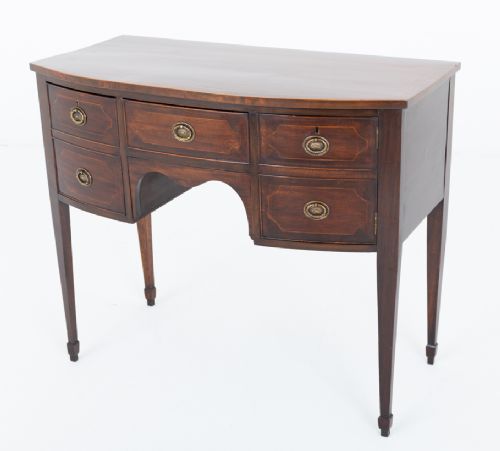
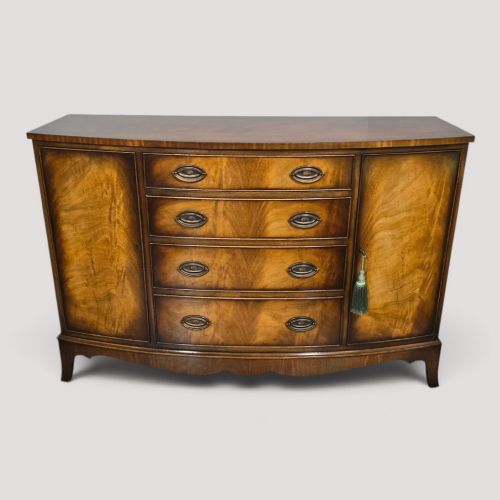
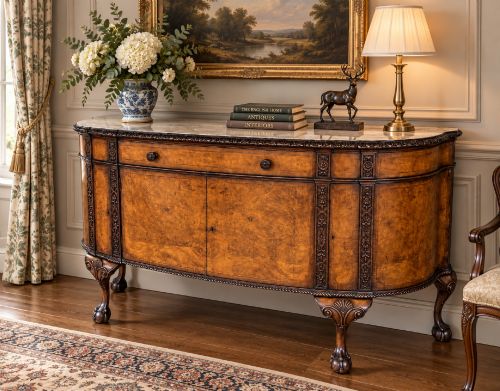
A bow fronted server brings elegant curved joinery and practical dining room storage into a traditional interior.
Bow Fronted Server
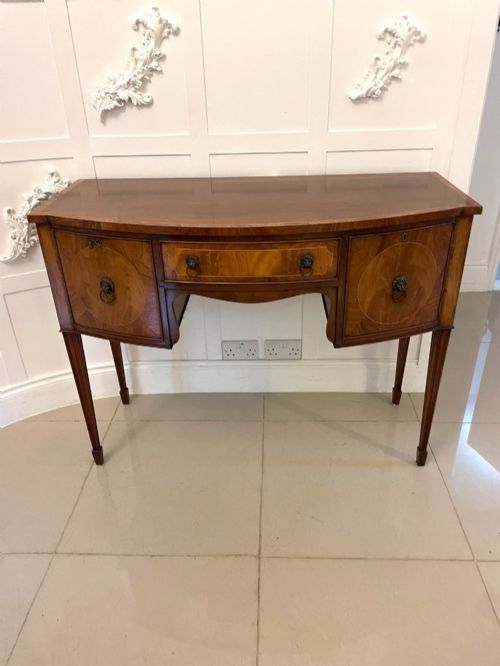
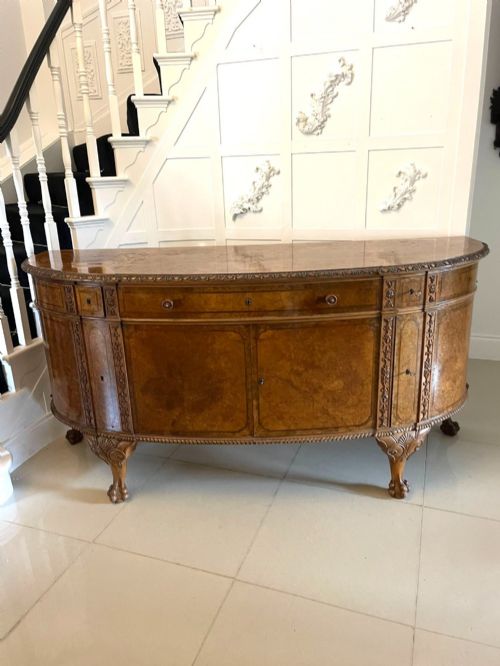
A bow fronted server is a substantial dining room furniture piece designed for serving food and storing tableware, characterised by its convex curved front. When searching for a bow fronted server, you encounter variations ranging from formal Georgian and Regency dining pieces to Edwardian revival cabinets and later 1920s interpretations.
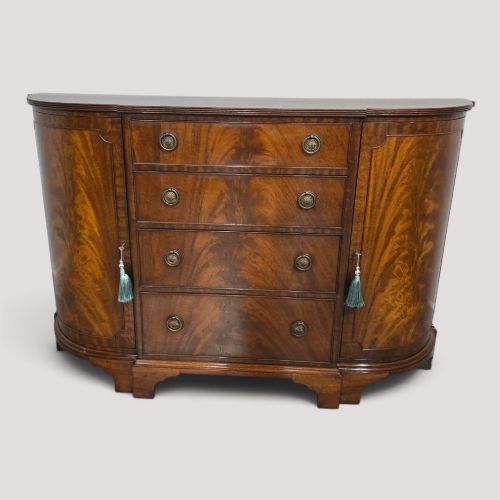
The pieces on this page appear predominantly in mahogany, with flame mahogany veneer, satinwood, and burr walnut also frequent. Forms span traditional sideboards, side tables, console tables, and cocktail cabinets sharing the characteristic curved front profile.
Originating largely from the 18th, 19th, and early 20th centuries, these items reflect changing dining habits and interior fashions across the Georgian, Regency, Victorian, and Edwardian eras.
How they were made
Cabinet makers constructed these pieces using solid timbers such as mahogany, walnut, and satinwood, often applying flame mahogany or burr walnut veneers to the exterior surfaces for visual depth. The complex curved bow front required precise joinery to bend or shape the wooden frame without compromising structural integrity.
Decoration relied on contrasting timber inlays like boxwood and purpleheart banding, alongside fine marquetry work seen in Sheraton revival and Edwardian examples. Brass hardware, including handles and drawer pulls, complemented the polished timber finish.
Bow Fronted Server Retail Price Guide 2026
Typical asking prices for bow fronted server among the pieces listed under this phrase on Sellingantiques today, from the lower quarter to the upper quarter. They describe what is for sale here now, not the wider market.
Several servers come with hidden compartments designed specifically for storing twelve-piece cutlery sets out of sight.
What varies in quality
Quality in these pieces depends on the selection of timber veneers and the precision of the inlay work, where symmetrical grain patterns and tight boxwood stringing elevate the visual impact. The crispness of carved details, such as those found on pedestal or stage-back forms, distinguishes master craftsmanship from simpler production.
Construction methods also separate standard items from superior examples, visible in the dovetail joints of the drawers and the smooth operation of the curved doors. The condition and originality of the brass hardware and surface polish further indicate the standard of the piece.
The Bow Fronted Server Glossary
- Bow front
- A convex curved front profile that swells outward from the centre, characteristic of these servers and sideboards. This shape softens the room's geometry while maximising internal cabinet space.
- Flame mahogany
- A highly figured wood veneer cut from the fork of the mahogany tree, displaying flickering, flame-like patterns. Cabinet makers used this to create striking symmetrical designs on drawer fronts and cabinet doors.
- Inlay
- A decorative technique where contrasting materials such as boxwood or satinwood are inserted into recesses in the primary timber surface. This creates fine borders and geometric patterns.
- Pedestal sideboard
- A form featuring distinct side pedestals connected to a central section, popular during the Regency period. These structures often housed cupboards or specialised storage for dining paraphernalia.
- Stage-back
- An elevated tier or superstructure at the rear of a sideboard surface, designed for displaying serving dishes or plates. This feature adds height and architectural presence to larger dining room pieces.
Bow Fronted Server: Frequently Asked Questions
Where did people use a bow fronted server?
These pieces traditionally stood in dining rooms and formal halls to hold serving platters, cutlery, and glassware during meals.
They also functioned as display surfaces for silver and decorative items when not in active use during dining service.
How do I care for mahogany and walnut surfaces?
Maintain the timber by keeping the piece away from direct sunlight and sudden temperature changes that can dry out the wood and veneers.
Apply a traditional beeswax polish occasionally to nourish the grain and preserve the polished finish without building up heavy residue.
Can I use a bow fronted server in a modern hallway?
The shallow curved profile makes these servers suitable for narrow spaces like hallways and living rooms where standard rectangular furniture might obstruct movement.
Their drawer and cupboard storage provides a practical spot for everyday items while adding period character to contemporary interiors.
How do I distinguish a Georgian piece from an Edwardian revival?
Georgian pieces generally display heavier solid timber construction, hand-cut dovetails, and simpler, structural use of mahogany or satinwood.
Edwardian and Sheraton revival items often exhibit lighter frames, extensive marquetry, machine-milled components, and brighter polished veneer finishes.