


Bow Front Wooden Buffet
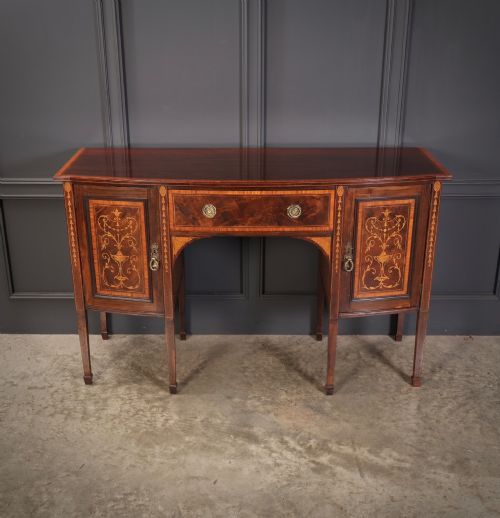
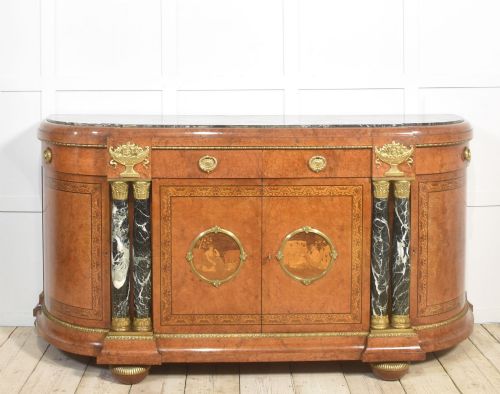
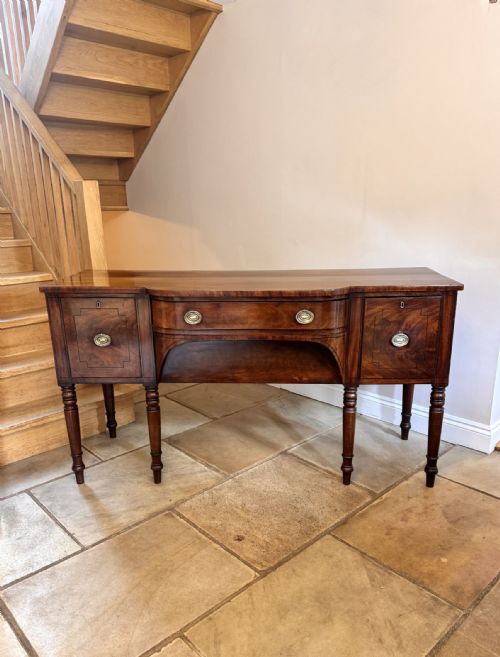
These bow front wooden buffet pieces offer curved storage and surface space, bringing Georgian and Victorian craftsmanship into a dining room.
Bow Front Wooden Buffet
A bow front wooden buffet is a dining room storage piece defined by its convex curved front. When you search for this phrase, you encounter sideboards, side tables, and servers spanning the eighteenth, nineteenth, and early twentieth centuries.
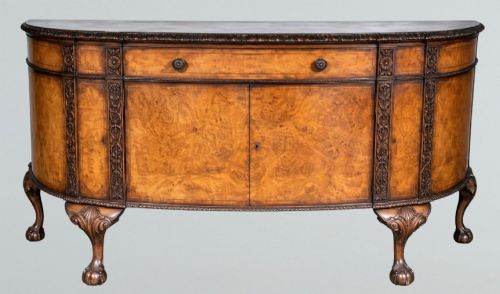
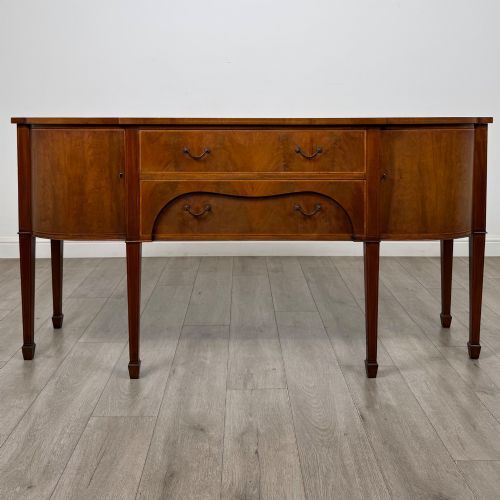
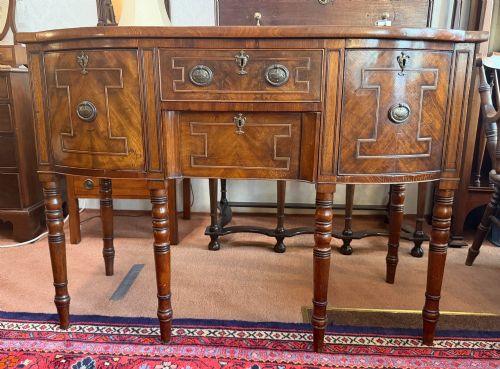
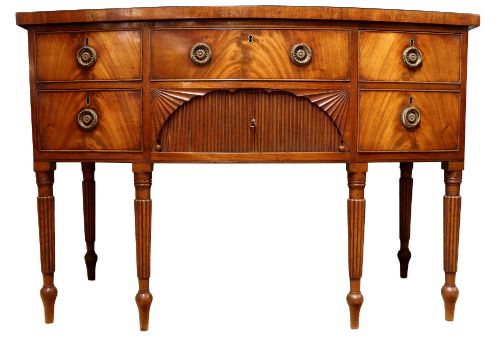
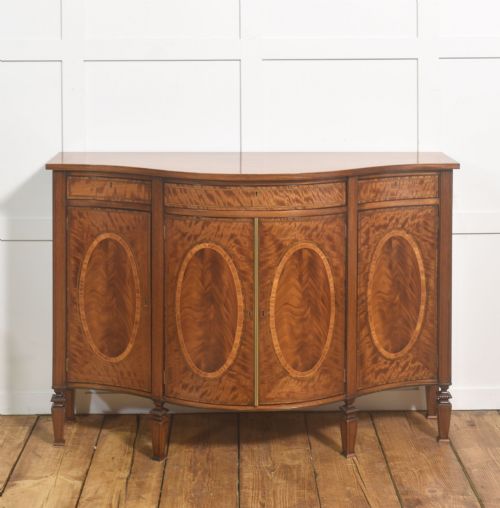
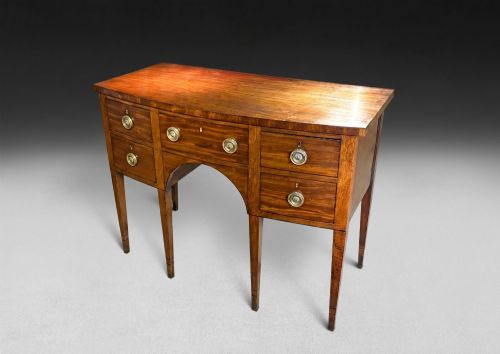
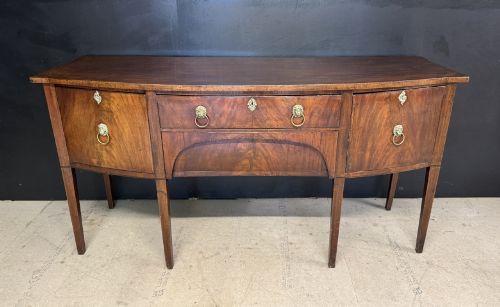
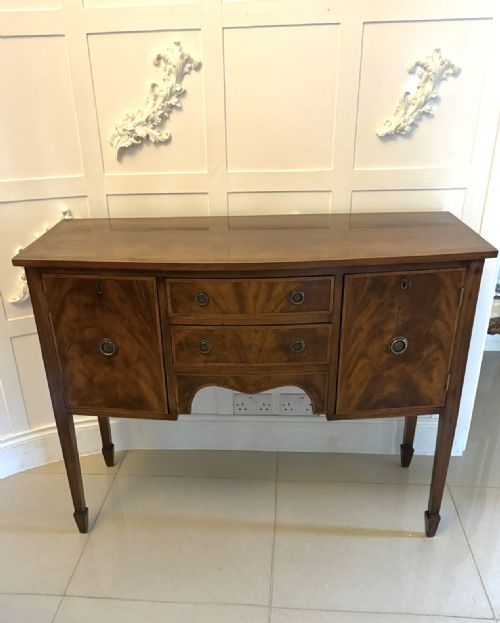
The version you are most likely to meet on this page is a mahogany sideboard from the Georgian or Victorian period. These pieces combine cupboards and drawers behind a sweeping curved facade, resting on tapered or turned legs.
Originating as formal dining room furniture for serving food and storing silver, these items bridge the gap between utility and display. They appear in styles ranging from plain Georgian timber to Sheraton Revival satinwood and Edwardian Art Nouveau.
Materials and construction methods
Cabinet makers constructed the primary carcase using solid mahogany or walnut, frequently selecting flame mahogany veneer to create figured grain patterns across the curved doors and drawer fronts. Hardwood frames provided structural stability.
Inlay and stringing techniques defined the decorative surface, utilising contrasting boxwood and satinwood to form geometric lines and floral motifs. Brass handles and drawer pulls completed the joinery, often original to the period.
Design influences include Sheraton Revival, Louis XV, and Edwardian Art Nouveau across various sideboards and side tables.
Judging the standard of execution
The refinement of the curved drawer fronts and the tightness of the mitre joints distinguish superior examples from ordinary production. Skilled makers matched the grain symmetrically across the sweep of the bow.
The choice of secondary timbers inside the drawers and the crispness of any boxwood stringing indicate the workshop standard. Well-executed marquetry inlay and original brass hardware elevate a piece above standard utilitarian items.
The Bow Front Wooden Buffet Glossary
- Bow front
- A convex curved cabinet front that swells outward in the centre. This shape softens the rectangular geometry of a dining room.
- Flame mahogany
- A veneer cut from the fork of the mahogany tree where the branch meets the trunk. It creates a distinctive flamy or feathery pattern across large surfaces.
- Stringing
- Thin inlay lines of contrasting wood, such as boxwood, set flush into the primary timber. It creates delicate borders around drawer fronts and tabletops.
- Marquetry
- Elaborate decorative patterns formed by fitting together thin slices of various coloured woods and veneers. It covers furniture surfaces in pictorial or geometric designs.
Bow Front Wooden Buffet: Frequently Asked Questions
Where do I put a bow front wooden buffet?
These pieces suit dining rooms, hallways, and large living spaces where their curved fronts can be appreciated without blocking narrow walkways. They function effectively as serving surfaces during meals or as display tables for lamps and decorative objects.
Ensure the wall space accommodates the curved projection, which extends further out than a standard flat-fronted cabinet. Placing the piece away from direct heat sources protects the timber and veneer from drying out.
How do I clean a mahogany buffet?
Dust the surface regularly with a soft, dry cloth to prevent dirt accumulation in the carved details and stringing. Apply a traditional beeswax polish occasionally to nourish the timber and maintain the natural sheen of the wood.
Avoid silicone-based sprays and commercial chemical cleaners, which can damage antique French polish and penetrate the grain. Wipe up any liquid spills immediately to prevent water marks on the polished surface.
How do I tell Georgian from Victorian pieces?
Georgian pieces, dating from the eighteenth and early nineteenth centuries, often feature restrained classical proportions and fine boxwood stringing. The timber selection prioritises solid mahogany with subtle grain figures and hand-cut dovetail joints.
Victorian items from the later nineteenth century frequently utilise bolder flame mahogany veneers and heavier proportions. They may incorporate more elaborate decorative carving or stylistic revivals reflecting the tastes of the later era.
Can I store heavy items inside?
The interior cupboards and drawers handle standard dining room items such as table linen, cutlery sets, and serving dishes with ease. The internal shelving supports moderate weights typical of domestic tableware.
Avoid overloading antique drawers, as the historical runners and joints benefit from sensible weight distribution. Distribute heavier items evenly across the base of the cabinet rather than relying on upper shelves.