

Bow Front Storage Cabinet
When you search for a bow front storage cabinet, you look for a curved silhouette that softens a room while hiding clutter.
Bow Front Storage Cabinet
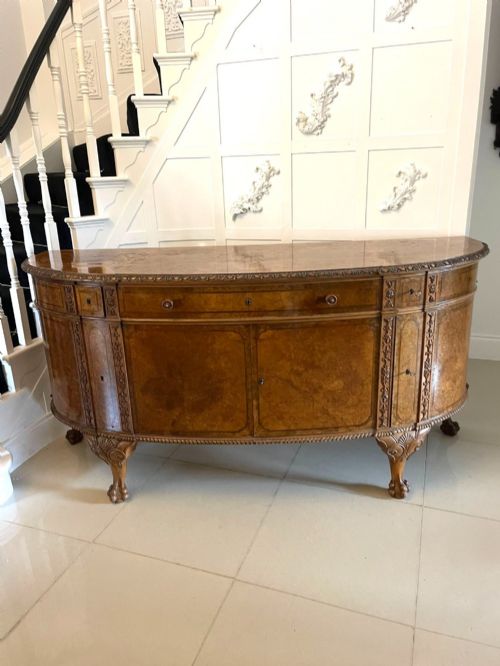
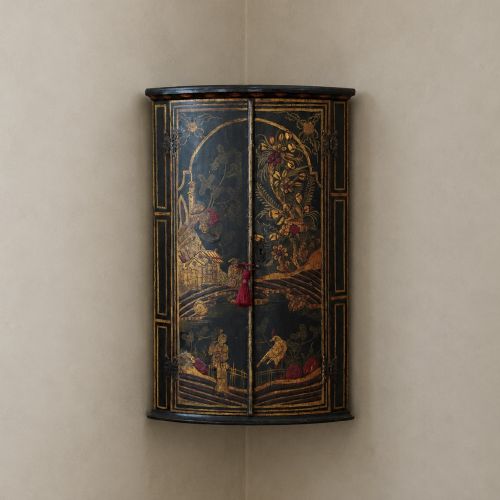
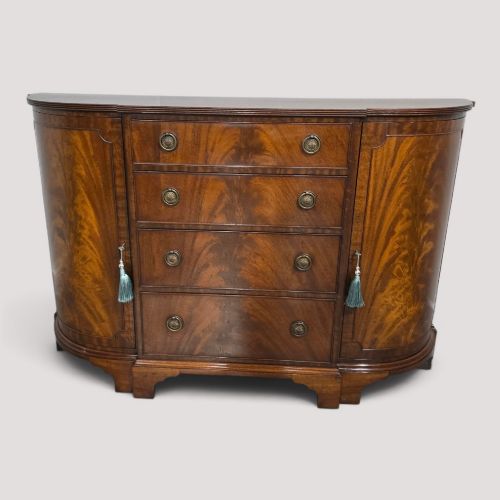
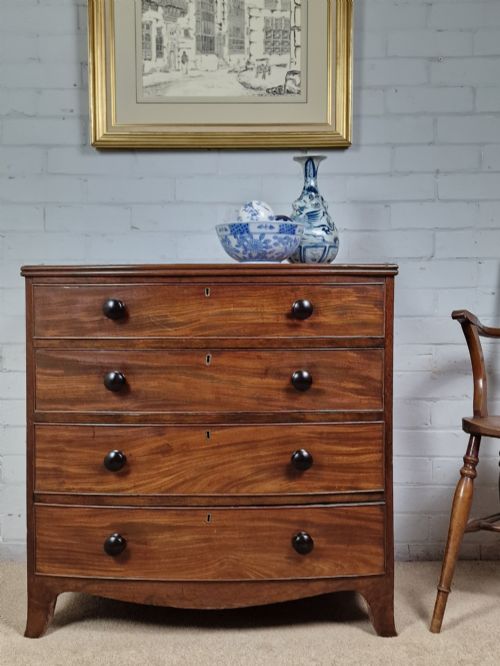
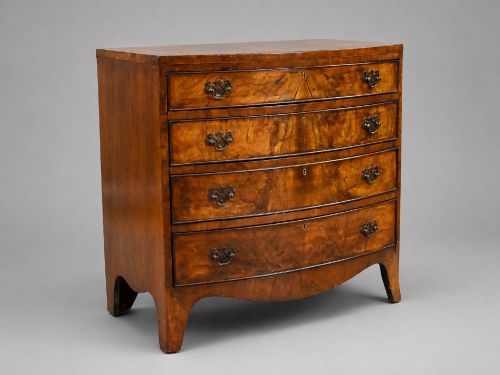
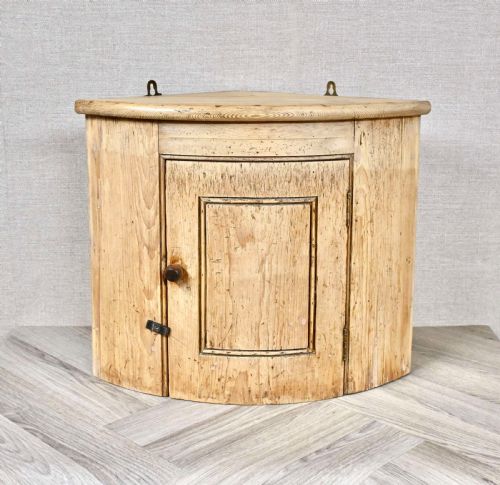
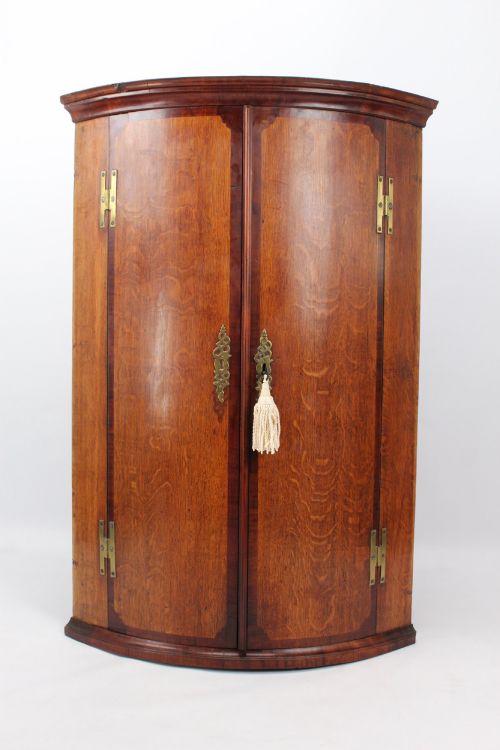
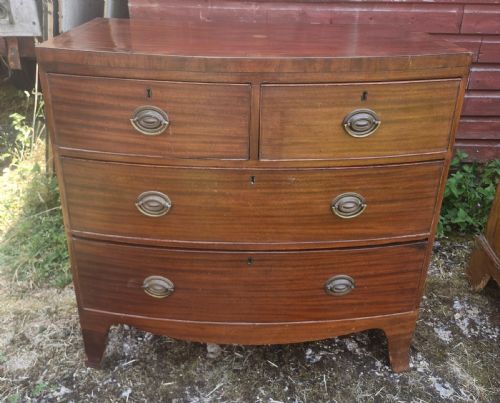
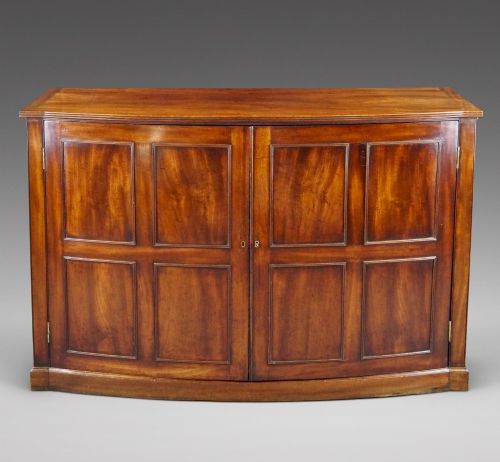
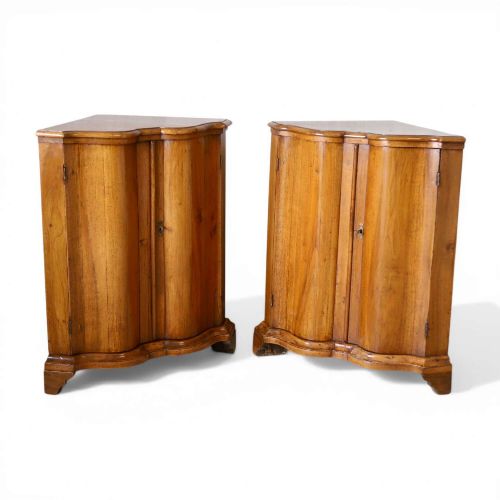
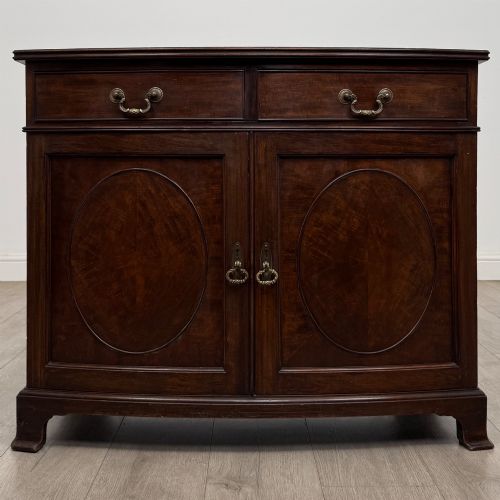
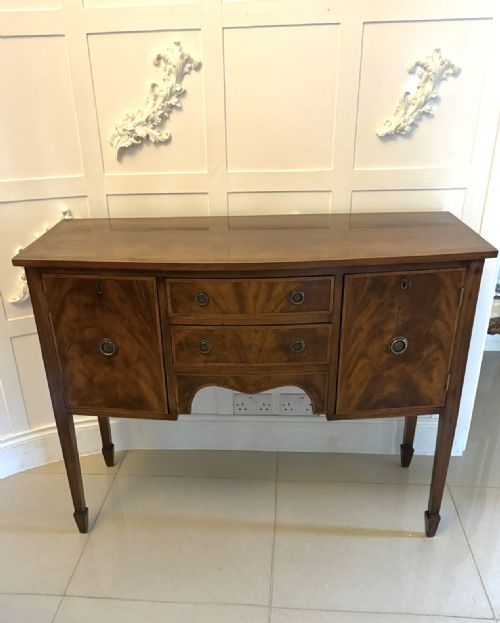
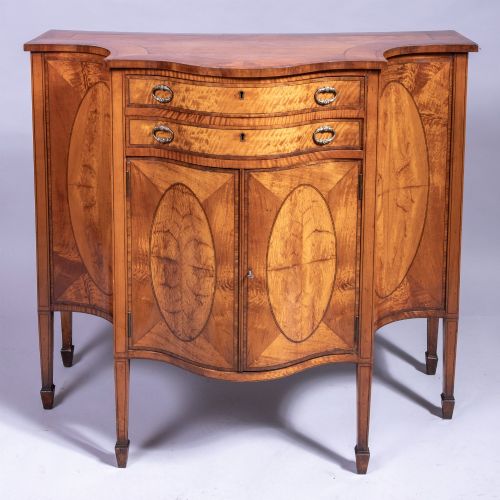
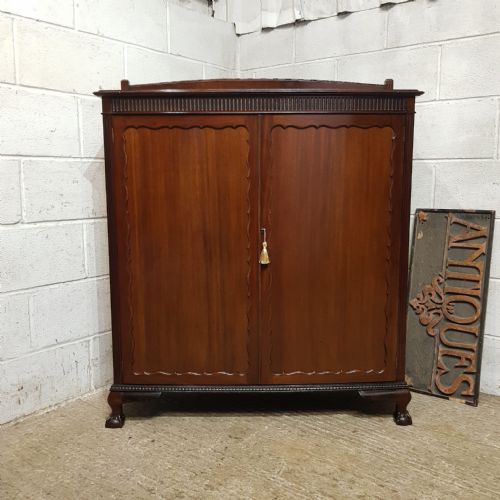
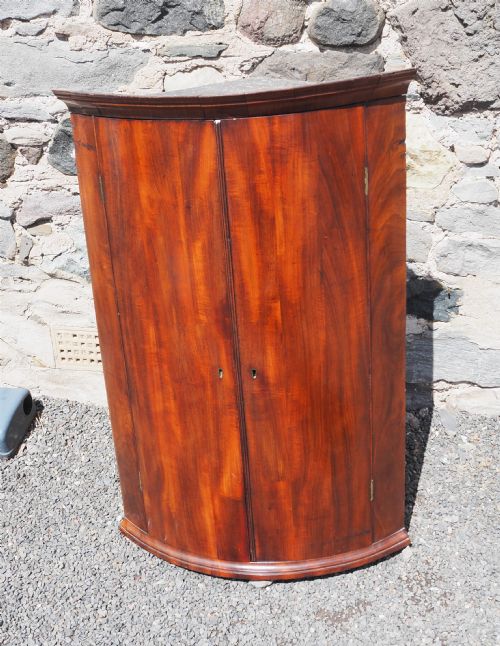
A bow front storage cabinet brings together a curved projecting front and practical interior space, appearing primarily as chests of drawers, sideboards, corner cupboards, and side cabinets. The selections span the Georgian period, the 18th century, the Regency era, the Victorian period, and the Edwardian era, alongside pieces dated across the 1900s, 1910s, 1920s, and 1930s.
The material palette reflects traditional cabinet-making traditions, using mahogany, oak, walnut, satinwood, pine, elm, maple, and kingwood, often enhanced with boxwood and brass fittings. Stylistic treatments range from George III and Sheraton Revival designs to Chinoiserie and Queen Anne Revival pieces, offering both corner placements and freestanding furniture.
Materials and technique
Makers constructed these cabinets using dense timbers such as mahogany, oak, and walnut, frequently selecting figured veneer and flame mahogany to emphasise the curved grain of the bow front. Inlays of boxwood and satinwood provide linear contrast, while brass handles and hinges secure the doors and drawers.
Joinery techniques adapted to the convex curve of the facade, requiring specialist bending and shaping of wood for the drawers and door frames. Corner cupboards utilised housing joints and hanging brackets to secure the unit safely to walls.
Several corner cupboards are built with secret compartments inside to hide small valuables from inquisitive guests.
Distinctions in quality
Quality rests in the selection of timber veneers, where symmetrical flame mahogany or burr walnut figure across the curved drawers elevates the piece. Superior construction shows in the precision of the drawer linings, dovetail joints, and the retention of original brass hardware.
The harmony of the proportions and the crispness of any inlaid decoration dictate the refinement of the cabinet. Finer examples maintain smooth operation in their curved doors and drawers without binding against the frame.
Maple and Co·Edwards and Roberts
The Bow Front Storage Cabinet Glossary
- Bow front
- A convex curved cabinet or drawer front that projects outward from the centre. This shape softens the linear geometry of a traditional room layout.
- Flame mahogany
- A veneer cut from the fork of a mahogany tree where the branches join the trunk. It creates a distinctive, flickering flame pattern across the wood surface.
- Corner cupboard
- A triangular cabinet designed to fit neatly into the corner of a room. These units make efficient use of dead space.
- Demi-lune
- A half-moon shape used for the footprint of specific cabinets and sideboards. This profile sits flush against a wall while projecting into the floor space.
Bow Front Storage Cabinet: Frequently Asked Questions
Where should I place a bow front storage cabinet?
These cabinets suit living rooms, hallways, and dining spaces where their curved silhouette prevents sharp corners from jutting into walkways. Corner cupboards utilise empty wall angles effectively.
Freestanding chests of drawers and sideboards work well against flat walls, providing surface display area while concealing household items inside.
How do I tell a Georgian piece from an Edwardian revival?
Georgian pieces display the joinery methods, timber ageing, and construction marks typical of the 18th and early 19th centuries. They often feature solid secondary woods like oak or pine inside the drawers.
Edwardian revival pieces from around 1900 reflect later manufacturing standards, sometimes incorporating machine-cut dovetails or specific revival motifs associated with Sheraton designs.
Are corner cupboards meant to hang on walls?
Many period corner cupboards are designed as hanging units with built-in brackets for wall mounting. Others stand directly on the floor as larger fitted or freestanding furniture.
Check the base and top mouldings to determine whether a particular piece requires wall support or rests securely on its own feet.
What is the difference between a sideboard and a chest of drawers?
Sideboards combine cupboards and drawers specifically for dining room storage and serving, often featuring a longer, lower profile. Chests of drawers consist primarily of stacked horizontal drawers for clothing and general storage.
Both forms utilise the bow front design to project outward and create visual depth.