

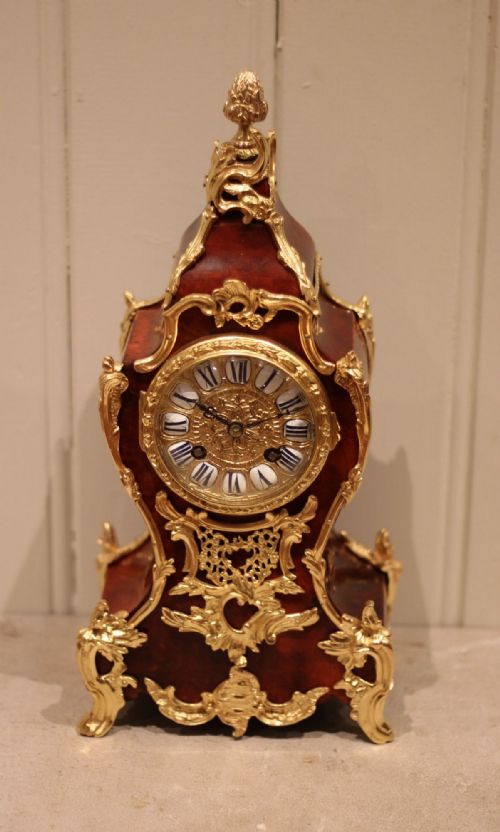


Boulle Style Clock
A boulle style clock brings dramatic tortoiseshell and brass marquetry into a room, capturing the ornate grandeur of French court design.
What these clocks are
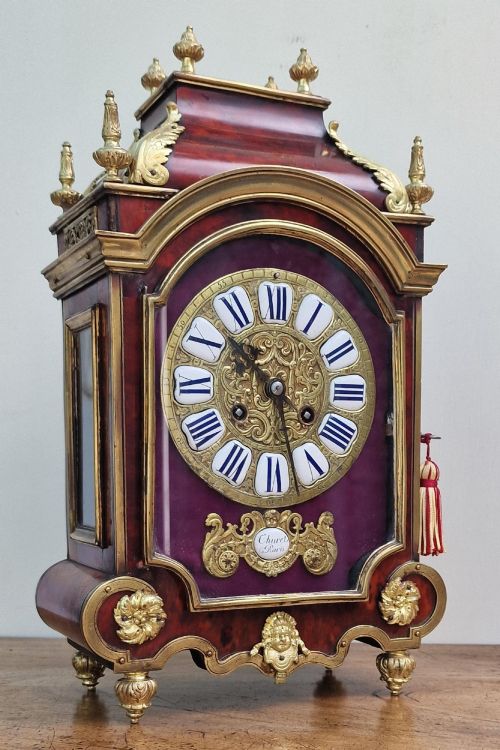
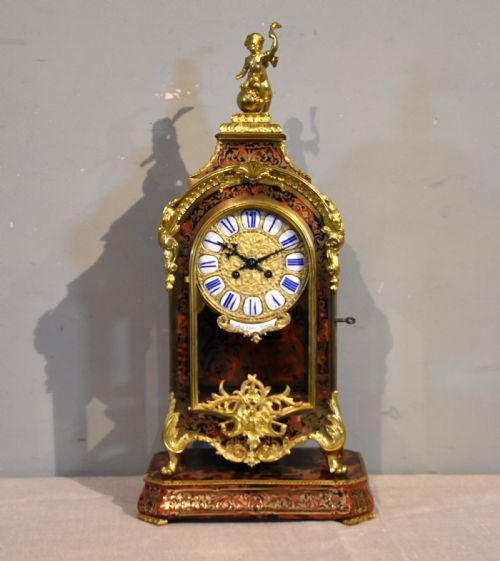
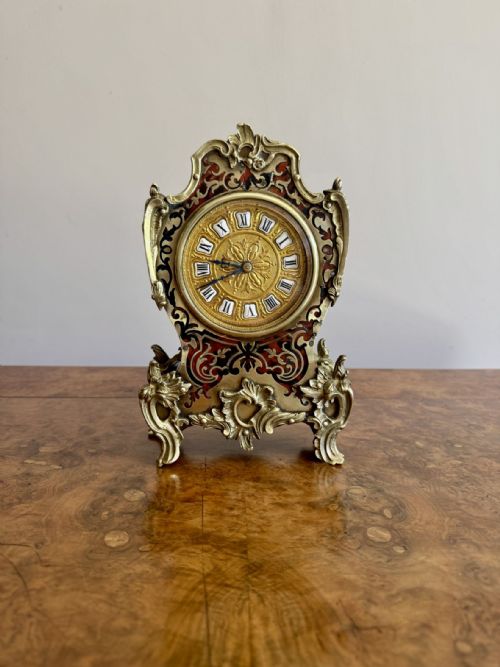
A boulle style clock represents the enduring appeal of opulent French horology, taking inspiration from the elaborate marquetry techniques popularised during the reigns of Louis XIV and Louis XV. When searching for a boulle style clock, buyers encounter pieces primarily originating from the nineteenth century, including Victorian interpretations and Napoleon III revivals, alongside earlier Georgian influences.
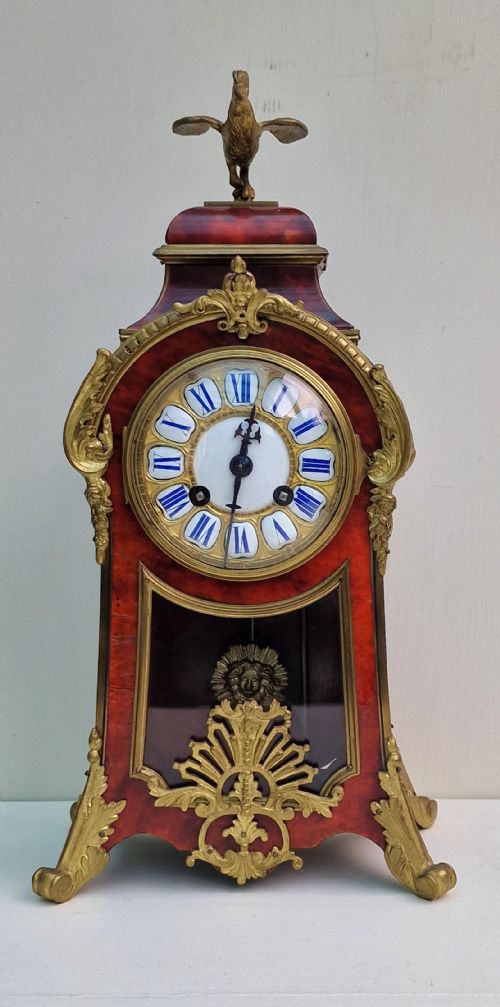
These timepieces predominantly manifest as mantel clocks and bracket clocks, often featuring waisted cases or dedicated matching brackets. The forms draw heavily on French Baroque and Rococo Revival styles, translating historical court aesthetics into decorative objects suited for nineteenth-century drawing rooms.
The evidence shows that these pieces frequently incorporate distinctive materials such as red tortoiseshell and contrasting brass inlay. Alongside standard timekeeping functions, surviving examples occasionally integrate thermometers or quarter-striking movements.
How they were made
Craftsmen built these cases using timber carcases overlaid with tortoiseshell and intricate brass or gilt metal marquetry. The technique relies on precision cutting of contrasting sheets to create elaborate floral and scroll patterns.
Mounts in gilt bronze or ormolu adorn the corners, feet, and crests of the cases, fixed securely to accentuate the sculptural silhouette. Enamel cartouche numerals appear on the dials, paired with delicate glass bezels and housed movements driven by traditional mechanical gears.
Retail Price Guide 2026
Typical UK retail prices for boulle style clock, calculated from the Sellingantiques database of over a million retail prices indexed since 2003. This retail price guide relies exclusively on Sellingantiques data; no external sources or auction records are used, so the figures do not describe the wider market.
Listings demonstrate a strong presence of nineteenth-century French manufacture, spanning Louis XIV and Louis XV revival styles executed in tortoiseshell and brass.
What varies in quality
The sophistication of the brass marquetry and the depth of the tortoiseshell ground separate standard production from superior work. Finer examples display meticulous alignment in the cut patterns and richer colouration in the shell layers.
The quality of the cast ormolu mounts dictates much of the visual impact, where sharper chisel work and heavier gilding distinguish exceptional pieces. Movement provenance also matters, with signed mechanisms by established makers conferring greater horological interest.
Thuret·Vincenti·Samuel Marti·Charles Hour·Japy Freres
The Boulle Style Clock Glossary
- Boulle
- A style of marquetry using contrasting sheets of tortoiseshell and brass, named after the famous cabinetmaker André-Charles Boulle. It creates a shimmering, highly decorative surface pattern.
- Ormolu
- Gilded bronze used for decorative mounts and accents on furniture and clock cases. The technique involves applying a mercury and gold amalgam to bronze before heating.
- Bracket Clock
- A portable mechanical clock traditionally designed to sit upon a wall bracket or a dedicated matching shelf. These often feature elaborate architectural cases and striking trains.
- Marquetry
- The art of applying pieces of veneer to a structure to form decorative patterns and pictures. In these clocks, it typically combines metal and organic shell materials.
- Cartouche
- A framed panel or tablet, often used on clock dials to house individual enamel numeral plaques. This design element mimics historical scrollwork.
Frequently Asked Questions
What is a boulle style clock?
A boulle style clock is a decorative timepiece featuring elaborate marquetry composed of tortoiseshell and brass inlay. These pieces draw heavily upon seventeenth and eighteenth century French court aesthetics.
They serve as both functional timekeepers and striking decorative objects, reflecting revivalist periods during the nineteenth century when historical cabinetmaking techniques were highly sought after.
How do I identify the period?
Dating relies on examining the casework style, materials, and movement signatures. Nineteenth century interpretations often blend Louis XIV and Louis XV revival motifs with Victorian manufacturing methods.
Looking at the construction of the wooden carcase and the style of the enamel dial helps narrow down whether a piece originates from the Regency era or later Victorian decades.
Where should I place a bracket clock?
Bracket clocks are traditionally designed to sit securely on dedicated wall brackets or sturdy mantel surfaces where their decorative sides can be appreciated. Because of their height and ornamentation, they require a stable platform.
Placing them away from direct sunlight and temperature fluctuations helps protect the delicate tortoiseshell and gilt bronze surfaces from environmental damage.
What movements do they use?
These clocks typically utilise mechanical brass gear movements, with many examples featuring quarter-striking capabilities or bim-bam chimes. Some house movements produced by notable French industrial makers of the period.
Regular winding and professional servicing ensure these intricate mechanical systems continue to keep accurate time.