




Boulle Side Cabinets
Boulle side cabinets are richly inlaid display pieces combining tortoiseshell and brass, bringing opulent French design into nineteenth-century British and continental interiors.
Boulle Side Cabinets
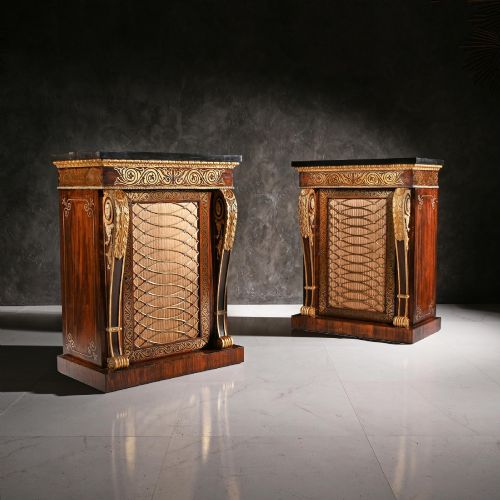
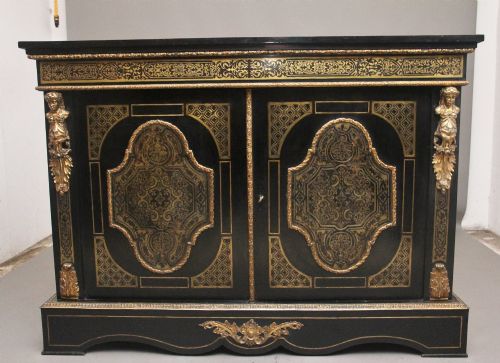
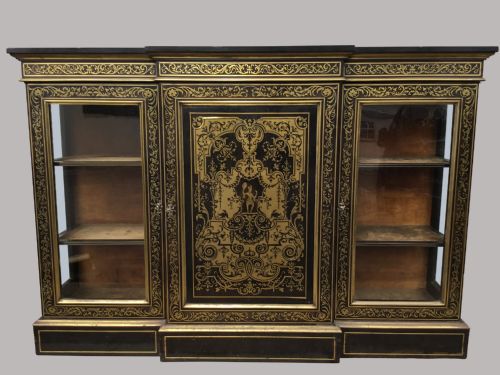
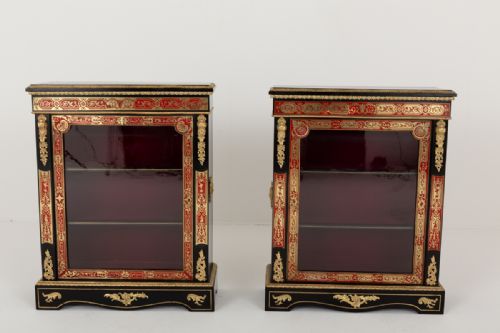
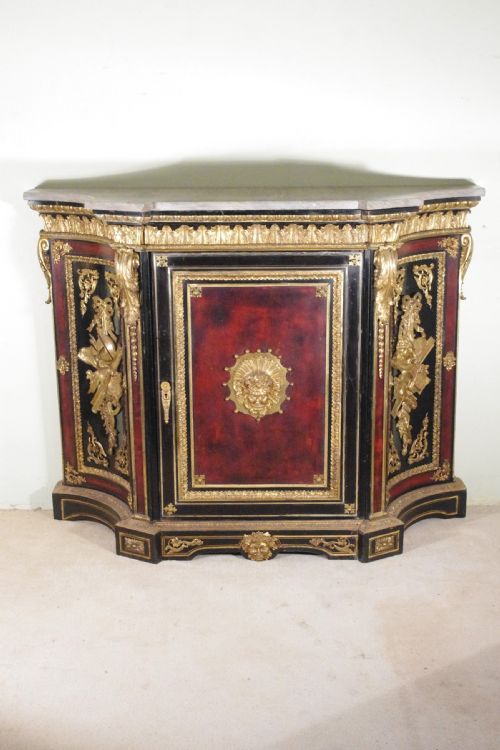
When searching for boulle side cabinets, buyers encounter a variety of nineteenth-century forms including pier cabinets, credenzas, display cabinets, and breakfront side cabinets. These pieces serve as striking focal points in a room, offering display surfaces and enclosed storage while showcasing elaborate decorative surfaces.
The pieces listed on this page predominantly date from the nineteenth century, including specific years like 1850, 1860, 1870, and 1880, alongside Victorian and French Napoleon III periods. English interpretations also appear alongside French examples, demonstrating the widespread popularity of the style across different makers and workshops.
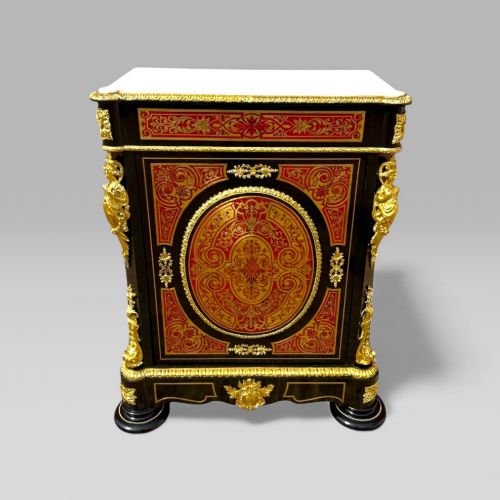
Forms vary from serpentine fronts to flat-fronted pier cabinets, often topped with marble or glass for display purposes. Buyers are most likely to meet ebonised wood versions mounted with ormolu or gilt metal, reflecting the grand aesthetic of the era.
How they were made
The construction relies heavily on ebonised wood, ebony, and rosewood as a dark foundation that accentuates the metallic and organic inlay. Craftsmen cut intricate patterns into brass and tortoiseshell using traditional marquetry techniques, creating contrasting first-part and counter-part designs known as première-partie and contre-partie.
Ormolu and gilt bronze mounts finish the structural edges, corners, and feet, adding architectural definition and sculptural weight to the wooden carcasses. Marble tops frequently complete the upper surface, providing a cool, polished contrast to the warm metallic sheen of the brass inlay.
Even the smallest child-sized credenzas received the full royal treatment of tortoiseshell and brass inlay.
What varies in quality
The precision of the brass and tortoiseshell marquetry distinguishes high-end examples from standard production, as tighter joints and sharper engraving require exceptional skill. The depth of the chasing on the ormolu mounts and the weight of the gilt bronze indicate the level of craftsmanship invested in the cabinet's hardware.
Choice of secondary woods and the stability of the ebonised carcass influence longevity, while the quality of the original marble top adds substantial character. Pieces attributed to specific makers like Louis Constantin Le Gaigneur demonstrate a higher degree of workshop finesse and design pedigree.
Louis Constantin Le Gaigneur
The Boulle Side Cabinets Glossary
- Boulle
- A style of marquetry using brass and tortoiseshell inlaid into wood, named after André-Charles Boulle, the famous cabinetmaker to Louis XIV. This technique creates a luminous, contrasting surface pattern that defines the aesthetic.
- Ormolu
- Gilt bronze mounts used to decorate furniture edges, corners, and feet. The process involves applying a gold amalgam to bronze, providing a rich metallic accent.
- Pier Cabinet
- A narrow cabinet designed to fit against a pier or wall space between windows. These pieces often feature glass doors for displaying porcelain or ornaments.
- Credenza
- A large sideboard or cabinet used for storage and display, frequently featuring a breakfront or serpentine shape in nineteenth-century interpretations.
- Marquetry
- The art and craft of applying pieces of veneer to a structure to form decorative designs. In these pieces, it typically involves metals and organic shells rather than just wood veneers.
Boulle Side Cabinets: Frequently Asked Questions
What is a boulle side cabinet?
A boulle side cabinet is a nineteenth-century storage and display piece decorated with brass and tortoiseshell marquetry set into ebonised wood.
These cabinets often feature ormolu mounts and marble tops, reflecting French revival and Napoleon III styles popular in both Britain and France.
How do I identify a Victorian boulle cabinet?
Victorian examples typically combine dark ebonised wood with intricate brass inlay and gilt metal mounts, mirroring French Napoleon III designs.
Look for structural forms like pier cabinets and breakfront credenzas that indicate mid-nineteenth-century manufacturing periods.
Where were these cabinets placed in a room?
These cabinets were designed to stand against drawing room walls or between windows as pier cabinets, maximising both surface display and storage.
Their decorative frontages and marble tops made them ideal for showcasing ornaments and reflecting light in formal reception rooms.
What materials make up boulle furniture?
The primary materials are ebonised wood, brass, and tortoiseshell, combined to create contrasting patterns across the surface.
Additional elements include ormolu, gilt bronze mounts, and marble or glass tops that complete the structured silhouette.