

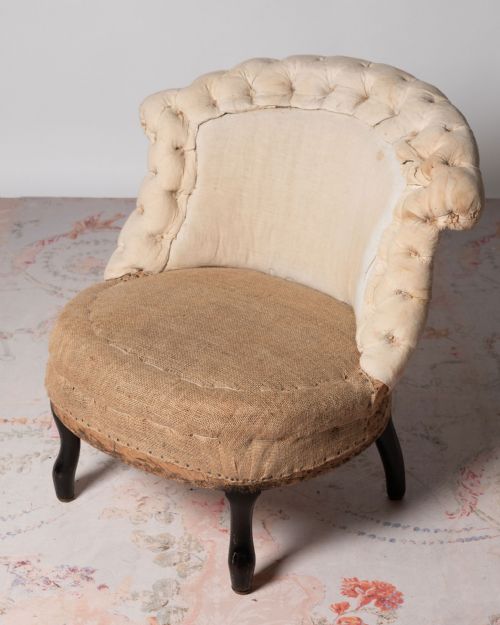


Boudoir Armchair
A boudoir armchair offers low, comfortable seating designed for private rooms, combining intimate scale with decorative flair.
Boudoir Armchair
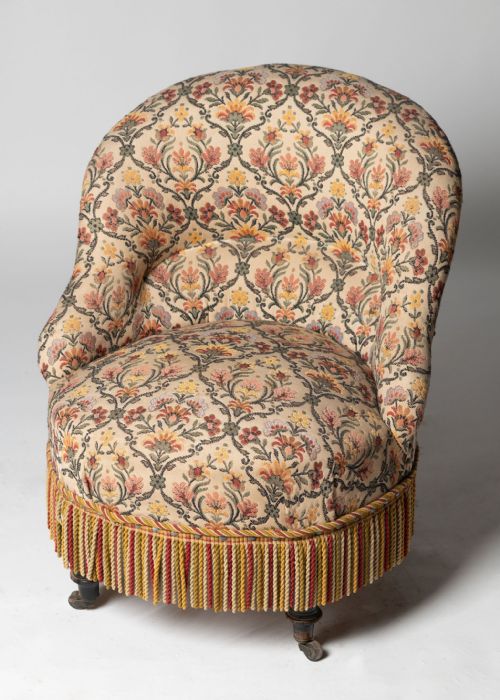
A boudoir armchair is a small, low-seated chair designed for private sitting rooms, bedrooms and dressing spaces. These pieces combine intimate proportions with supportive arms or backs, offering a comfortable place to sit while dressing or reading.
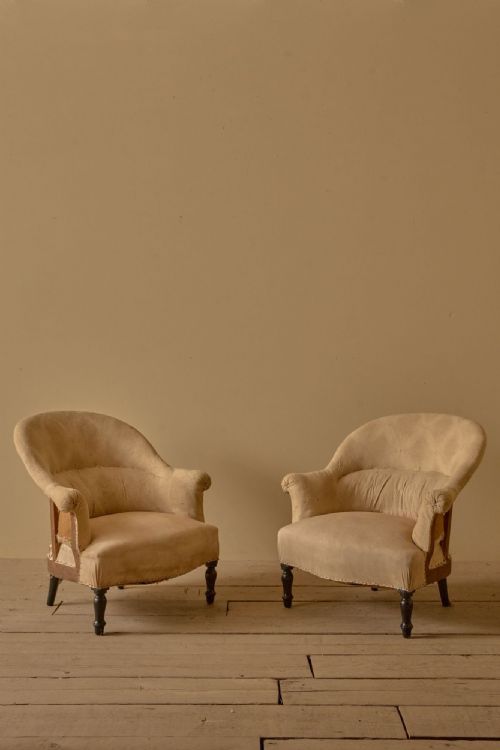
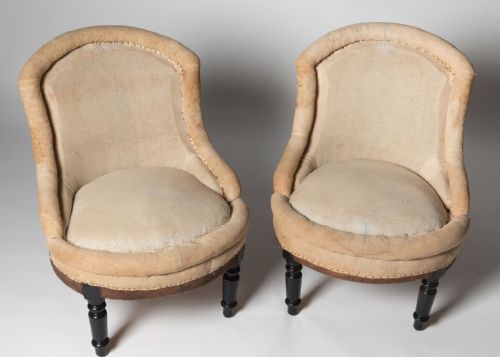
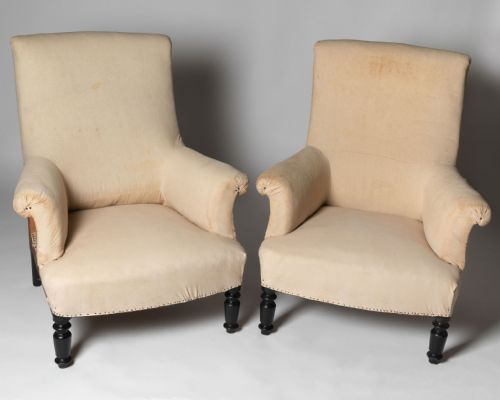
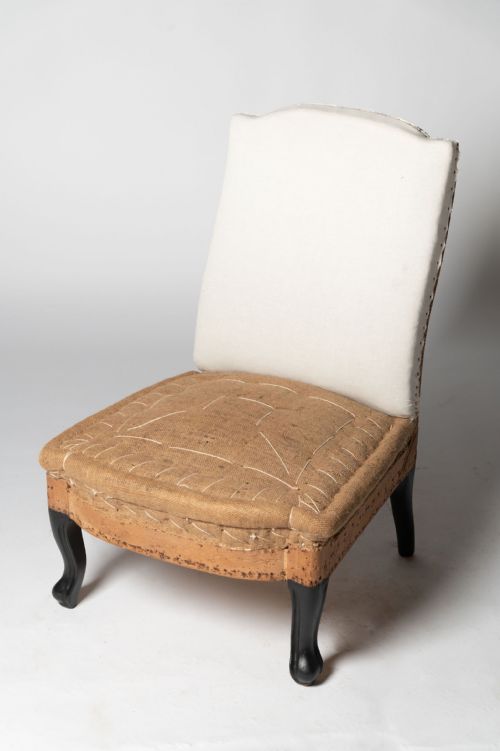
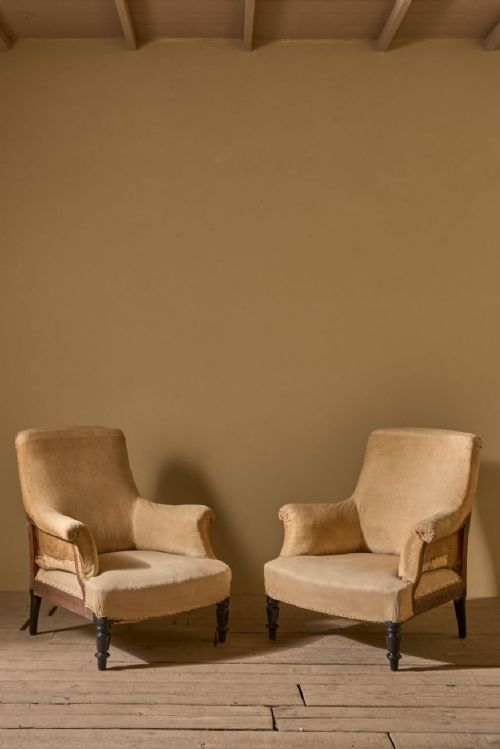
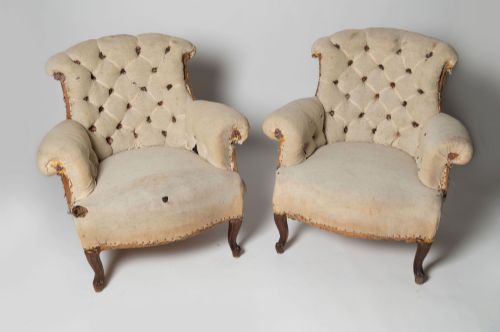
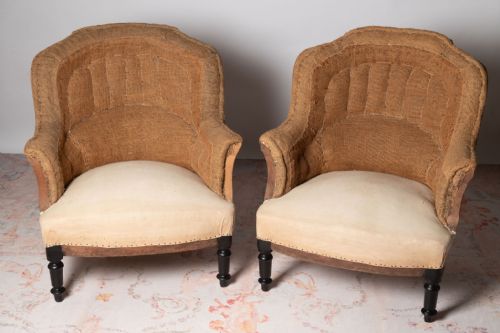
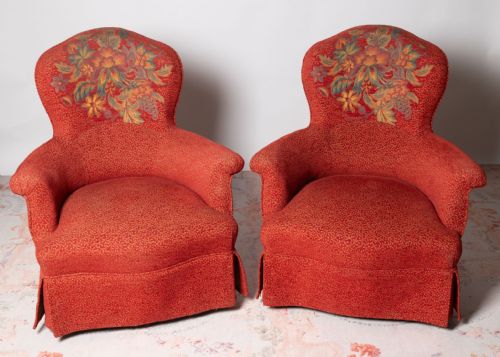
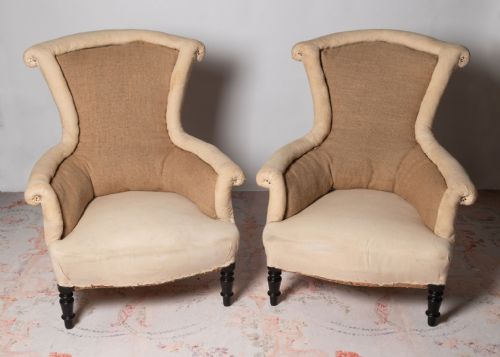
The versions most commonly found here date from the nineteenth and early twentieth centuries, spanning Victorian, Edwardian and French Napoleon III styles. They appear singly or in pairs, sometimes stripped to hessian and calico or upholstered in velvet.
Makers such as Howard and Sons produced notable examples alongside French chateau pieces and simple slipper chairs. Buyers encounter everything from intact vintage velvet models to frames requiring complete re-upholstery.
Materials and construction
Frames rely on sturdy timbers including beech and mahogany, providing internal strength for upholstered seating. Brass fittings appear on castors or decorative elements, supporting mobility and detailing on period chairs.
Traditional upholstery techniques utilise hessian, calico and cotton as foundational layers beneath top covers. Velvet provides a rich finish for decorative rooms, while pieces offered in calico or hessian are prepared for custom fabric selection.
Boudoir Armchair Retail Price Guide 2026
Typical asking prices for boudoir armchair among the pieces listed under this phrase on Sellingantiques today, from the lower quarter to the upper quarter. They describe what is for sale here now, not the wider market.
Distinctions in quality
The integrity of the wooden frame dictates the baseline worth of any boudoir armchair. Solid timbers like mahogany and beech, joined securely at the stress points, outlast softer woods that loosen over decades of use.
The refinement of the carving and the original proportions set finer examples apart from standard bedroom seating. Pieces bearing maker stamps or retaining thoughtful upholstery architecture command greater interest from collectors.
Howard and Sons
The Boudoir Armchair Glossary
- Hessian
- A coarse woven fabric typically made from jute fibres, used historically as the foundation layer for traditional upholstery stuffing. It provides structural tension beneath calico and outer covers.
- Calico
- A plain-woven cotton cloth used as an inner lining layer on upholstered chairs. It holds the stuffing in place before the final decorative fabric is applied.
- Slipper chair
- A low-seated upholstered chair originally designed for bedrooms to assist with putting on shoes or garments. Its close proximity to the floor defines its comfortable proportions.
- Napoleon III style
- A French design movement spanning the mid to late nineteenth century that reinterprets earlier Rococo and Empire forms. It favours exuberant curves, button-tufting and rich upholstery.
- Tub chair
- An armchair featuring a rounded, enclosed back that curves continuously into the arms. This form creates a snug, enveloping seat well suited to smaller rooms.
Boudoir Armchair: Frequently Asked Questions
What is a boudoir armchair?
A boudoir armchair is a compact, low-seated chair designed for private rooms like bedrooms or dressing areas. These chairs prioritize intimate scale and comfortable proportions over the grander dimensions of standard parlor seating.
They appear in various nineteenth and twentieth-century styles, offering a versatile seating option that fits easily into corners or beside dressing tables.
Where were boudoir armchairs used?
These chairs traditionally belonged in private domestic spaces such as bedrooms, dressing rooms and boudoirs. Their smaller dimensions made them suitable for sitting while dressing, reading or receiving close acquaintances.
Today, buyers place them in similar private spaces, as well as reading nooks and hallways where larger armchairs would overwhelm the floor plan.
How do I choose between upholstered and un-upholstered chairs?
Choosing an upholstered chair gives you an immediate decorative piece ready for placement, often featuring period velvet or cotton. Selecting a chair in hessian or calico allows you to choose your own fabric to match an interior scheme.
Un-upholstered frames also reveal the underlying woodwork and construction quality more clearly, making them appealing for bespoke restoration projects.
How do I identify a French Napoleon III chair?
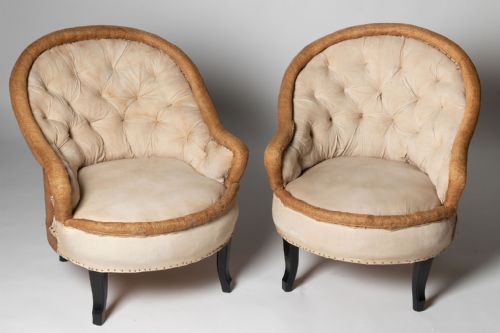
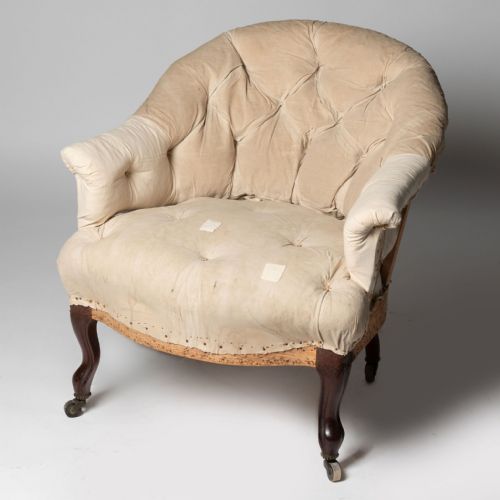
French Napoleon III chairs date from the mid to late nineteenth century and often feature graceful curved frames, low seats and button-tufted upholstery. They reflect eclectic revivals of earlier Rococo and Baroque tastes adapted for comfortable nineteenth-century living.
Detailing may include exposed wooden framing, scrolled arms and brass castors supporting the legs.