

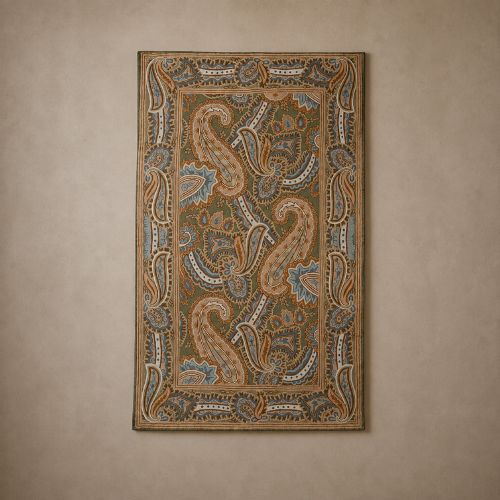


Boteh Motif Runner
A boteh motif runner brings the timeless, flame-like paisley symbol into narrow hallway spaces with remarkable historic character.
Boteh Motif Runner
When you search for a boteh motif runner, you enter a world of elongated floor coverings defined by the iconic seed or almond-shaped botanical motif, often called paisley. The examples you meet here span the nineteenth century through the early twentieth century, originating from Persian and Caucasian weaving traditions.
The selections on this page appear in various formats including traditional runner rugs, long rugs, and gallery carpets that incorporate the distinctive boteh design. These pieces draw on styles such as Persian Tribal, Caucasian Tribal, and traditional Kurdish, offering narrow formats suited for corridors and passageways.
How they were made
Weavers constructed these textiles primarily using wool, often set against cotton or linen foundations, knotted by hand to create durable floor coverings. The artisans utilised natural dye methods to achieve the rich colour palettes seen across the nineteenth and early twentieth-century examples.
The construction involves precise hand-knotting techniques characteristic of regional workshops and nomadic tribes in Persia and the Caucasus. This meticulous assembly ensures the structural integrity of the long runner format under heavy foot traffic.
Boteh Motif Runner Retail Price Guide 2026
Typical asking prices for boteh motif runner among the pieces listed under this phrase on Sellingantiques today, from the lower quarter to the upper quarter. They describe what is for sale here now, not the wider market.
Nomadic weavers often introduced subtle deliberate irregularities into repeating boteh rows to ward off the evil eye.
What varies in quality
The distinction between tiers of quality rests in the crispness of the knotting and the complexity of the boteh arrangement. Finer pieces display sharply delineated motifs and harmonious tonal transitions across the wool pile.
Structural preservation and the integrity of the foundational weaves also dictate the standing of a runner. Examples retaining their original selvedges and balanced proportions demonstrate superior craftsmanship from their period of origin.
The Boteh Motif Runner Glossary
- Boteh
- A stylised almond, pear, or flame-shaped motif of Persian origin that forms the primary decorative element of these runners. It is frequently associated with the modern paisley pattern.
- Selvedge
- The reinforced edge of a rug that protects the sides from fraying and unraveling. Traditional runners often feature overcast wool bindings along these borders.
- Pile
- The upright yarn loops or cut ends that form the usable surface of the carpet. In antique pieces, the height and density of this wool layer vary by region.
- Kelleh
- A specific format of Persian rug that is longer than a standard room size rug but wider than a typical hallway runner. These grand pieces accommodate substantial floor spaces.
Boteh Motif Runner: Frequently Asked Questions
Where should I place a long runner?
These narrow floor coverings suit high-traffic corridors, hallways, and bedside spaces where length is required. Their linear proportions draw the eye down a passage while protecting wooden flooring.
Ensure you place a suitable underlay beneath the textile to prevent sliding and reduce wear on the historic wool pile.
How do I clean an antique wool rug?
Gentle surface brushing and careful professional dusting remove embedded grit without damaging the natural fibres. Avoid aggressive mechanical beating or modern chemical immersion.
Consult a specialist experienced in handling antique Persian and Caucasian textiles for any washing requirements.
What does the boteh symbol represent?
The motif originates as an ancient Persian symbol representing a cypress tree combined with a floral spray, often interpreted as life and eternity. Over centuries, weavers adapted the shape into the distinctive seed or flame design seen today.
Its presence connects nineteenth-century village and tribal weaving traditions directly to classical Persian iconography.
How do I identify a Kurdish runner?
Kurdish pieces typically exhibit robust wool construction, saturated colour palettes, and sturdy geometric framing around the central motifs. The weaving structure tends to feel dense and substantial in the hand.
Look for traditional tribal markers that distinguish these village carpets from court-manufactured workshop equivalents.