




Boteh Motif Rug
These boteh motif rug examples bring centuries of Persian and Caucasian weaving traditions into modern interiors through enduring village and tribal patterns.
Boteh Motif Rug
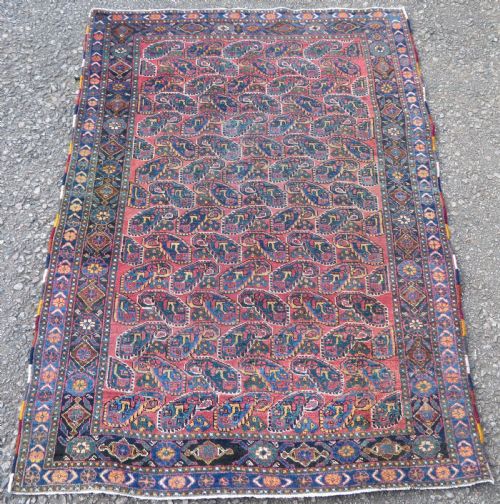
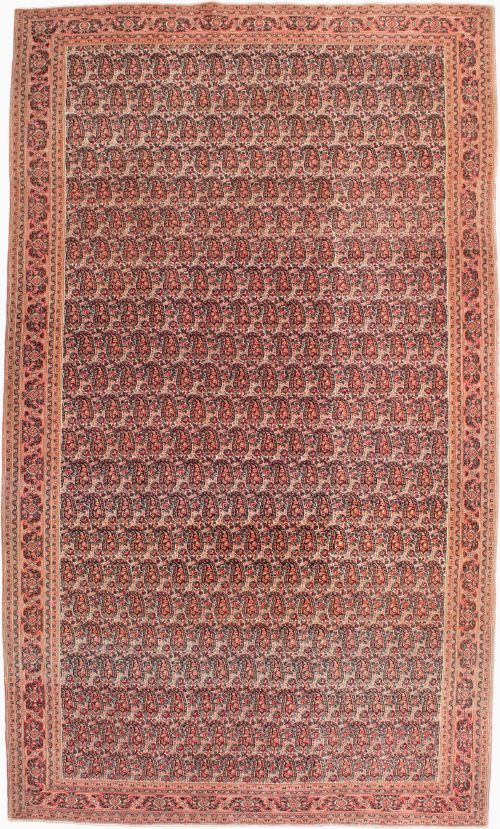
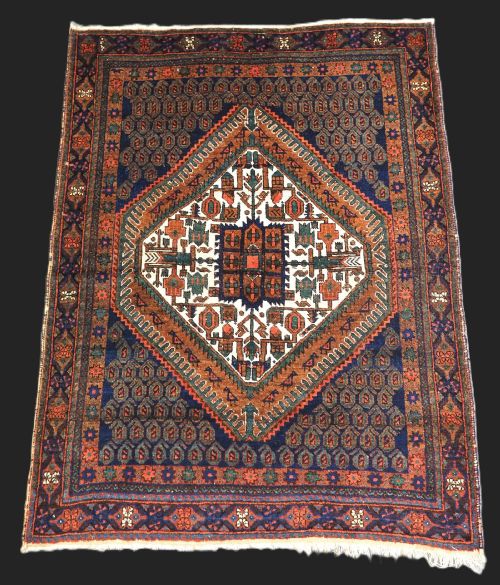
A boteh motif rug displays the ancient seed, almond or flame-shaped icon across tribal and village formats, connecting modern spaces to nineteenth-century Persian and Caucasian workshops. Buyers search for these pieces to introduce storied geometry and rich regional character into domestic rooms.
The selections on this page span from compact tribal bag faces and area rugs to long gallery runners, originating primarily from weaving centres such as Afshar, Malayer, Serapi, Kirman and the Caucasus. These pieces demonstrate how weavers transformed a single recurring motif into all-over repeats, medallion layouts and narrative designs.
Materials and Construction
These floor coverings and tribal weavings rely on natural wool pile knotted onto sturdy cotton foundations, providing the resilience required for daily use. The interplay of hand-spun yarn and traditional dyeing methods yields the characteristically soft colour palettes seen across nineteenth- and early twentieth-century examples.
Weavers constructed each piece on vertical or horizontal looms, employing dense knotting techniques that allowed for precise rendering of complex curved motifs and geometric borders. The structural integrity of these carpets stems from disciplined village and nomadic craftsmanship passed down through generations.
Boteh Motif Rug Retail Price Guide 2026
Typical asking prices for boteh motif rug among the pieces listed under this phrase on Sellingantiques today, from the lower quarter to the upper quarter. They describe what is for sale here now, not the wider market.
One enterprising village weaver apparently lost count of the rows, resulting in a slightly plump boteh that looks perpetually surprised.
Markers of Quality
The fineness of the knotting and the crispness of the boteh outline distinguish superior examples from simpler village work, dictating how sharply the iconic motifs separate from the field. Superior execution involves harmonious tonal transitions within the pile and balanced proportions between the central field and the surrounding borders.
Structural preservation and the original integrity of the outer edges and kilim ends play a significant role in determining the standing of a textile. Examples that retain their initial dimensions and untruncated guard borders offer a more authentic representation of regional tribal artistry.
The Boteh Motif Rug Glossary
- Boteh
- An ancient Persian motif resembling a bent almond, pear or flame, often interpreted as a symbol of life and eternity. It serves as the primary design element across these tribal and village carpets.
- Knot density
- The number of knots per square unit, which influences the durability, handle and graphic definition of the design. Higher density typically permits finer curves within motifs like the boteh.
- Field
- The central background area of a rug enclosed by the borders. In these pieces, the field frequently showcases either a single large medallion or an all-over repeat of smaller motifs.
- Runner
- A long, narrow carpet format designed for hallways, corridors or narrow spaces. These pieces often feature repeating geometric or floral arrangements down their length.
- Tribal weaving
- Textures produced by nomadic or semi-nomadic groups rather than urban manufactories. These works prioritize expressive geometry, memory-based designs and robust utility.
Boteh Motif Rug: Frequently Asked Questions
How do I clean an antique rug?
Professional specialist cleaning is essential for nineteenth-century wool and cotton textiles to prevent dye bleeding or structural damage.
Regular gentle vacuuming without a rotating beater bar helps remove embedded dust from the pile.
Are these rugs suitable for hallways?
Long runner formats and durable village weaves function well in high-traffic corridors when paired with a quality underlay.
The resilient wool pile absorbs foot traffic while protecting the underlying cotton foundation from premature wear.
What does the boteh symbol mean?
The boteh represents a stylized floral spray, cypress tree or flame, carrying deep cultural resonance throughout Persian and Caucasian textile traditions.
Variations range from formal curvilinear iterations to abstracted tribal interpretations on village bags and runners.
How do I date an old rug?
Dating relies on assessing the dye palette, wool quality, structural construction, and stylistic nuances typical of specific periods like the nineteenth century.
Comparison with documented examples from regions such as Afshar, Malayer or Shirvan provides further chronological context.
Can I place furniture on them?
Placing furniture on these carpets is acceptable provided the weight is distributed evenly using protective cups or felt pads.
Rotating the textile periodically ensures even exposure to light and wear across the pile.