




Bookmatched Walnut Table
A bookmatched walnut table brings striking mirrored grain patterns into a room, offering both practical surface space and a strong visual focal point.
What bookmatched walnut tables are
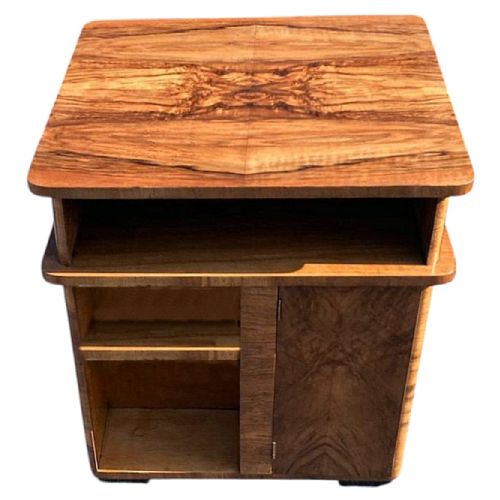
A bookmatched walnut table displays symmetrical wood grain patterns created by placing two adjacent veneer slices next to each other like open pages. This technique highlights the natural figures of the timber across various furniture forms.
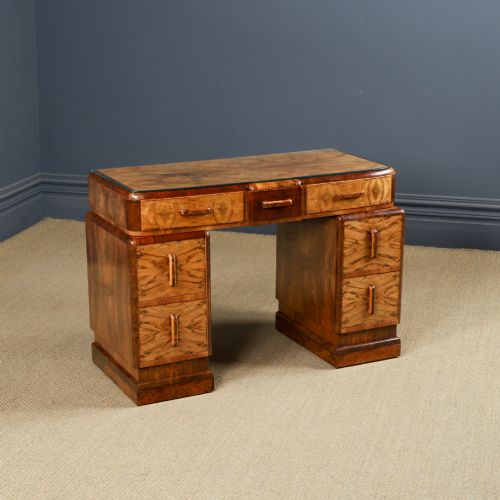
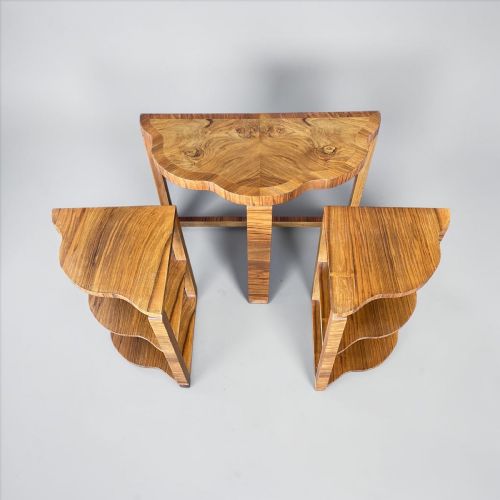
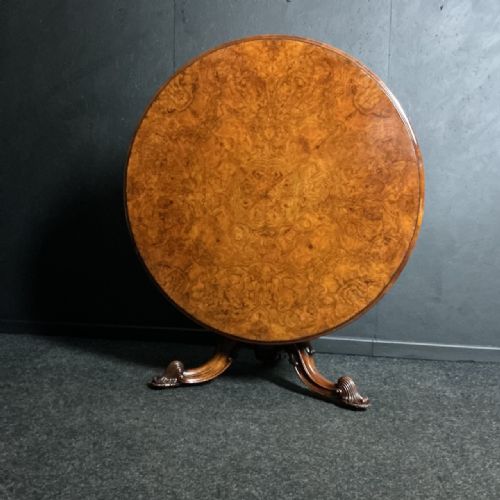
The selection on this page includes pieces from the Victorian era and the Art Deco period, alongside 19th-century examples. Forms range from coffee tables and nests of three tables to centre tables, side tables, tilt top tables, dining tables, console tables, and occasional tables.
Victorian examples sit alongside 1930 and 1940 Art Deco designs, demonstrating how makers adapted this grain-matching method across different stylistic periods. Buyers will find occasional tables, nesting sets, and larger dining formats among the current selection.
How they were made
Makers utilised walnut, burr walnut, and burr walnut veneer applied to a supportive core, sometimes incorporating brass, chrome, and ebony for contrast and structural detail. The primary material walnut is paired with specialised veneers to achieve complex, figured surfaces.
The defining characteristic of these tables relies on veneer cutting techniques, where thin slices of timber are laid out to mirror one another precisely. Secondary materials such as ebony and brass appear in specific designs, particularly within Art Deco pieces like the tulip occasional table.
Retail Price Guide 2026
Typical UK retail prices for bookmatched walnut table, calculated from the Sellingantiques database of over a million retail prices indexed since 2003. This retail price guide relies exclusively on Sellingantiques data; no external sources or auction records are used, so the figures do not describe the wider market.
Current listings feature pieces spanning the 19th century, Victorian period, and Art Deco era of the 1930s and 1940s.
What varies in quality
Quality in these pieces rests upon the precision of the veneer alignment and the choice of timber figures, particularly when burr walnut is employed. The symmetry of the grain match determines the visual impact of the surface top.
The integration of secondary materials such as ebony or brass details and the overall execution of the form, whether an Art Deco console or a Victorian dining table, dictate the sophistication of the piece. Craftsmanship is visible in how seamlessly the mirrored grain meets at the centre seam.
The Bookmatched Walnut Table Glossary
- Bookmatched
- A technique where two adjoining veneer surfaces are mirrored to create a symmetrical pattern resembling an open book. This method emphasises the natural movement and swirls of the timber grain.
- Burr Walnut
- A specialised wood cut from a tree growth or burl, yielding dense, swirling patterns highly prized for decorative furniture surfaces. It appears frequently in fine table tops.
- Art Deco
- A design style prominent in the 1930s and 1940s characterised by sleek geometric forms, streamlined silhouettes, and modern material combinations like chrome and ebony.
Frequently Asked Questions
What periods do these tables come from?
The available pieces span the Victorian era, the 19th century, and the Art Deco period of the 1930s and 1940s. These dates reflect the specific manufacturing eras represented in the current collection.
Buyers will find that Victorian items often feature heavier traditional proportions, whereas 1930s designs showcase streamlined geometry and alternative accents like chrome or ebony.
What materials are used in their construction?
Construction primarily involves walnut and burr walnut, frequently applied as veneers over a base structure. Additional materials such as brass, chrome, and ebony appear as decorative or structural elements.
The use of burr walnut veneer allows makers to display intricate grain figures across the surface of tables ranging from small nests to large dining formats.
What table types are available?
The selection encompasses a diverse range of forms designed for various domestic uses. Options include coffee tables, nests of tables, centre tables, side tables, tilt top tables, dining tables, console tables, and occasional tables.
This variety allows a buyer to find a suitable surface for both small living spaces and larger reception rooms.
How does bookmatching work?
Bookmatching involves taking consecutive slices from a log and opening them up like pages in a book. This places identical grain patterns side by side to form a symmetrical mirror image.
The technique requires careful cutting and placement by the maker to ensure the natural figures align harmoniously across the centre seam of the table top.