


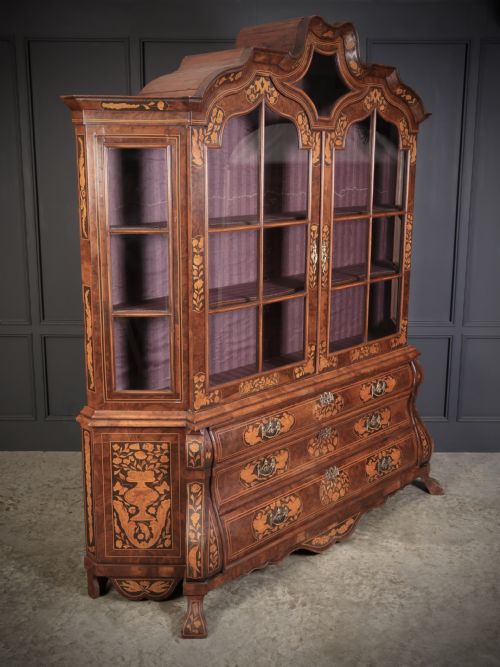
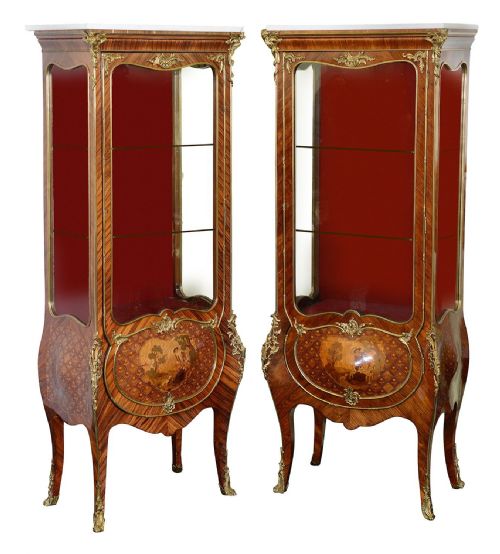


Bombe Glazed Vitrine
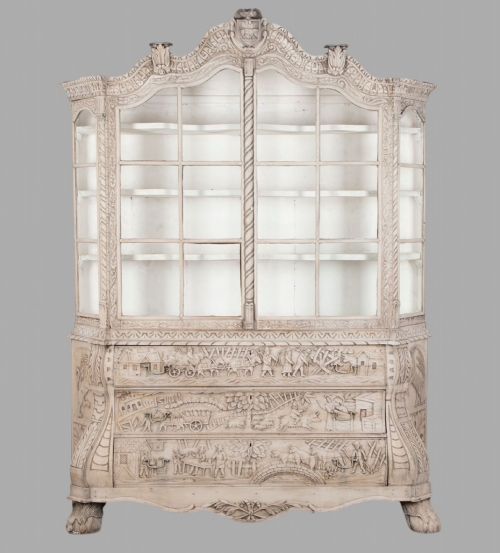
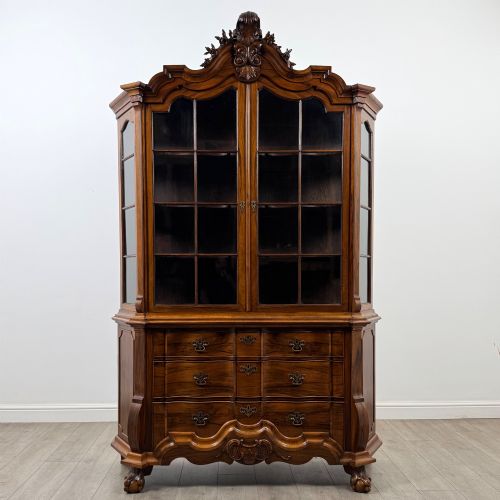
These bombe glazed vitrine pieces bring together curved woodwork and glass display space, offering a refined way to show porcelain and silver.
Bombe Glazed Vitrine
A bombe glazed vitrine is a display cabinet defined by swelling, convex lower profiles and glass panels designed for showing precious objects. When searching for a bombe glazed vitrine, buyers encounter forms spanning the eighteenth, nineteenth and early twentieth centuries.
The pieces on this page lean heavily towards Dutch and French traditions, ranging from Dutch Baroque and Rococo revivals to Louis XV styles. Cabinets appear in standalone vitrine formats as well as larger cabinet-on-chest constructions.
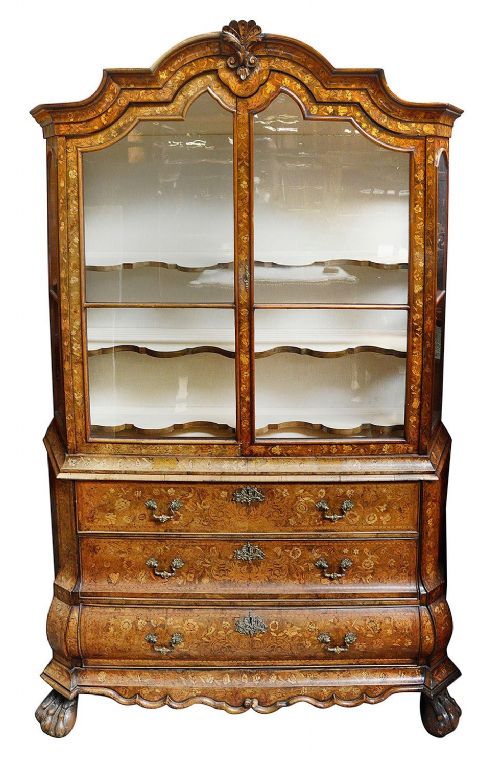
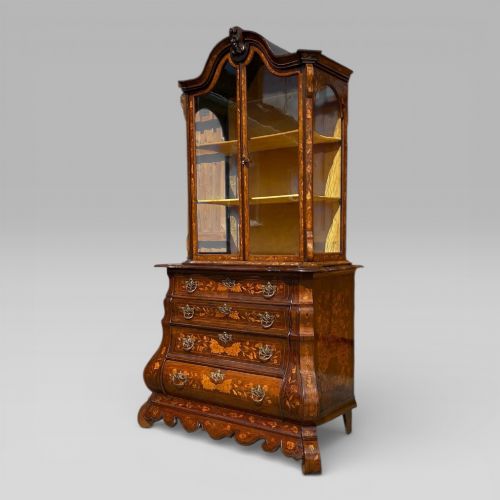
Walnut, kingwood and oak form the structural backbone of these cabinets, frequently decorated with floral marquetry or Vernis Martin lacquer. Forms vary from serpentine fronts to deep, swelling curves paired with brass or ormolu mounts.
Materials and construction
Cabinet makers built these pieces using dense hardwoods like walnut, oak, fruitwood and kingwood as a stable base for complex curved fronts. Veneers of walnut and kingwood were carefully sawn and laid over carcases to create flowing grain patterns across the swelling bombe contours.
Marquetry decoration involved hand-cutting intricate floral patterns from various tinted woods and setting them flush into the primary surfaces. Ormolu mounts and brass hardware were cast and chased to accent the corners and framing, while glass panels were fitted into wooden doors to display the interior.
The inventory spans the eighteenth century through to the Edwardian period, uniting eighteenth-century designs with later nineteenth-century revivals.
Assessing quality and craftsmanship
Quality rests in the precision of the curved bombe shaping and how seamlessly the wooden veneers follow the undulating contours without buckling. Superior examples display crisp, deeply detailed marquetry inlay where the individual wood types retain sharp definition and natural colour variation.
The execution of the ormolu mounts and the weight of the timber framing separate standard production from exceptional cabinet work. Furthermore, the integration of the glass doors and the preservation of original lacquer surfaces dictate the standing of a piece within its period.
Edwards and Roberts
The Bombe Glazed Vitrine Glossary
- Bombe
- A swelling, outward-curving shape found on the lower sections of chests and cabinets. This contour requires advanced woodworking skill to build from straight timbers or thick veneers.
- Vitrine
- A glass-fronted display cabinet intended for showing fine porcelain, glass or curiosities. The term originates from the French word for glass.
- Marquetry
- The art of applying decorative veneer pieces of different woods to a structure to form intricate pictures or floral patterns. Master craftsmen matched grain directions to create naturalistic depth.
- Ormolu
- Gilt bronze mounts utilised for decorative enrichment and edge protection on fine furniture. The technique involves applying a gold amalgam to bronze before firing.
- Vernis Martin
- A type of simulated Japanese lacquer developed in France during the eighteenth century. It employs multiple layers of varnish to achieve a glossy, translucent finish often decorated with painted scenes.
Bombe Glazed Vitrine: Frequently Asked Questions
What is a bombe glazed vitrine?
A bombe glazed vitrine is a cabinet featuring convex, swelling sides and glass doors made for displaying decorative objects.
These pieces combine functional storage with decorative display space, drawing on eighteenth and nineteenth-century cabinet-making traditions.
How were these cabinets used?
Historically, owners utilised these vitrines in reception rooms and parlours to exhibit imported porcelain, silver, and collection items.
The glass panels protected delicate possessions from dust while allowing guests to admire them during social gatherings.
How do I distinguish Dutch from French examples?
Dutch examples frequently employ dense walnut with elaborate floral marquetry inlay across swelling baroque and rococo forms. French pieces tend to feature kingwood veneers, ormolu mounts, and Vernis Martin lacquer work in Louis XV styles.
Examining the secondary woods and specific inlay motifs helps clarify the regional origin of each cabinet.
Where should I place a vitrine at home?
Position these cabinets against sturdy interior walls away from direct sunlight to protect the aged wood veneers and internal linings. Ensure the floor is level so the heavy glass doors hang true on their original hinges.
Allow enough clearance around the swelling bombe base to let the curved silhouette stand clear in the room.