


Bohemian Green Glass
Bohemian green glass brings together vibrant colour and skilled hand-finishing, spanning centuries of Central European artistry from decanters to vases.
Bohemian Green Glass
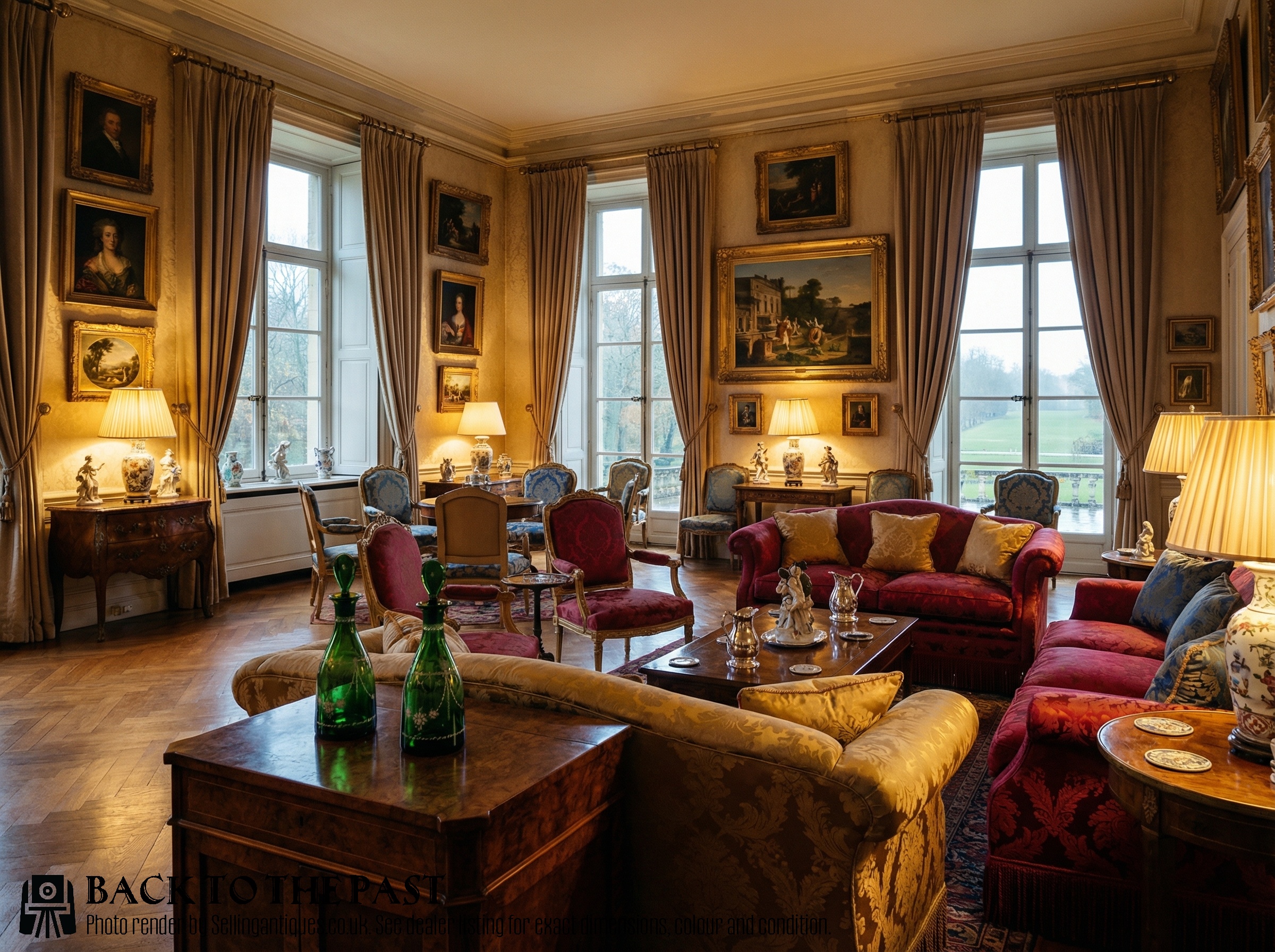
When you search for bohemian green glass, you encounter an array of functional and decorative items produced across Central European workshops. The selection ranges from nineteenth-century wine glasses and mantle lustres to twentieth-century perfume bottles and trinket boxes.
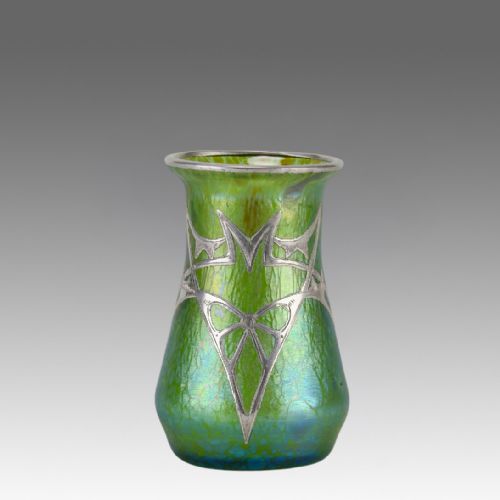
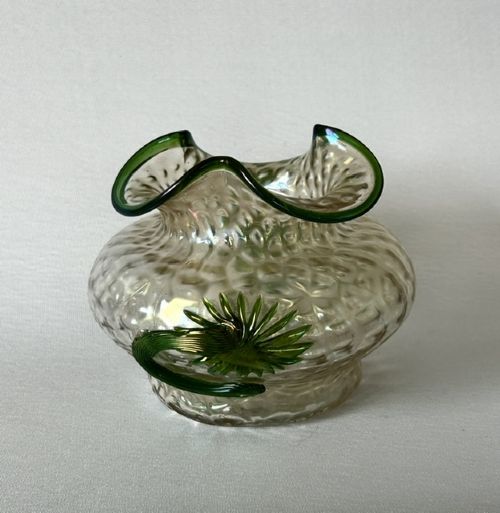
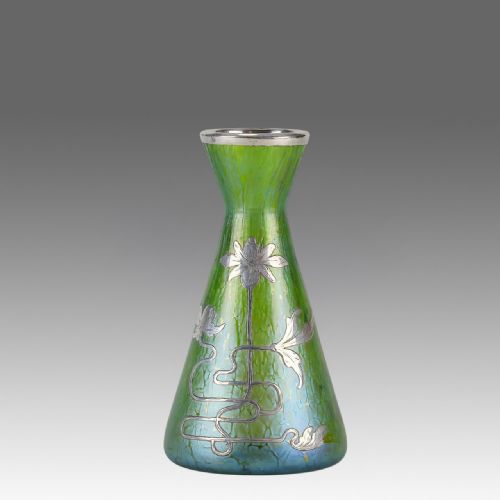
Vases and decanters dominate the forms available, often showing the influence of periods such as Victorian historicism, Art Nouveau, and Art Deco. Buyers frequently find pieces featuring overlaid glass, enamel decoration, or metallic mounts.
The objects reflect distinct shifts in taste, moving from heavy cut crystal and armorial gilding towards organic iridescent surfaces and geometric modernist lines. These items served both display and domestic utility in their original settings.

How they were made
The primary material is blown glass, often manipulated through casing or flashing layers of colour over clear crystal. Artisans shaped molten glass by hand, employing techniques like deep cutting, wheel engraving, and surface overlays.
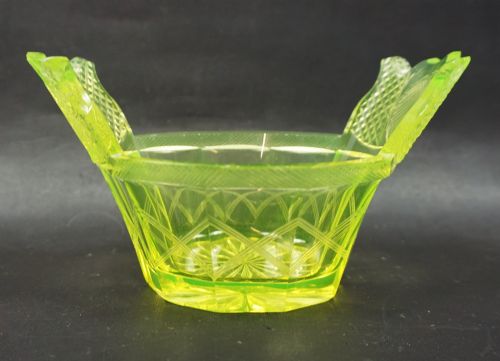
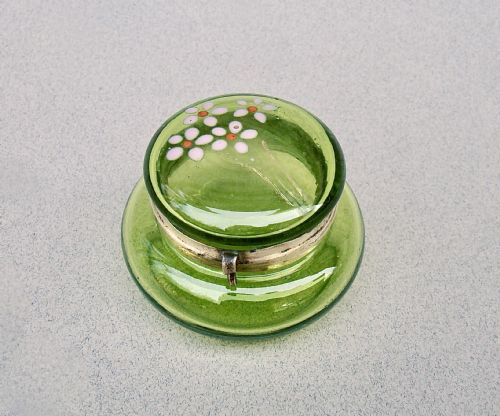
Decoration often involved polychrome enamel painting, gilding with gold leaf, and the application of silver overlay mounts. Certain pieces utilise uranium glass, which reacts under ultraviolet light due to the inclusion of uranium dioxide in the batch.
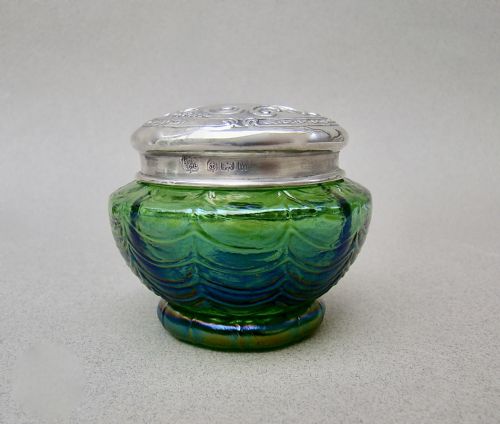
Iridescent surfaces were achieved by treating hot glass with metallic vapours to create shimmering, multicoloured sheens. Metalwork components, such as silver lids and collars, were frequently added by collaborating silversmiths.
The listings feature glass from the 1800s through the 1930s, encompassing Victorian, Art Nouveau, and Art Deco styles.
What varies in quality
The standard of craftsmanship depends heavily on the precision of the glass cutting and the delicacy of the hand-painted enamel. Superior items exhibit crisp facets, deeply carved overlays, and finely detailed pictorial scenes rather than simple stencilling.
The integration of secondary materials, such as sterling silver mounts or applied silver overlay, marks the distinction between standard production and higher workshop outputs. Maker attribution also influences standing, with documented output from major glassworks commanding particular attention.
Preservation of fragile elements like gilding, enamel work, and glass droppers determines the overall integrity of a piece. Original components and untruncated forms retain greater documentary value for collectors.
Johann Loetz·Loetz Witwe·Kralik glassworks·Karl Palda·Frits Hechert·Lobmeyer·Moser·Salviati·A. J. Pepper & Co·Hermanova
The Bohemian Green Glass Glossary
- Uranium glass
- Glass containing uranium oxide that glows green under ultraviolet light. It was produced in various shades of yellow and green during the nineteenth and early twentieth centuries.
- Mantle lustre
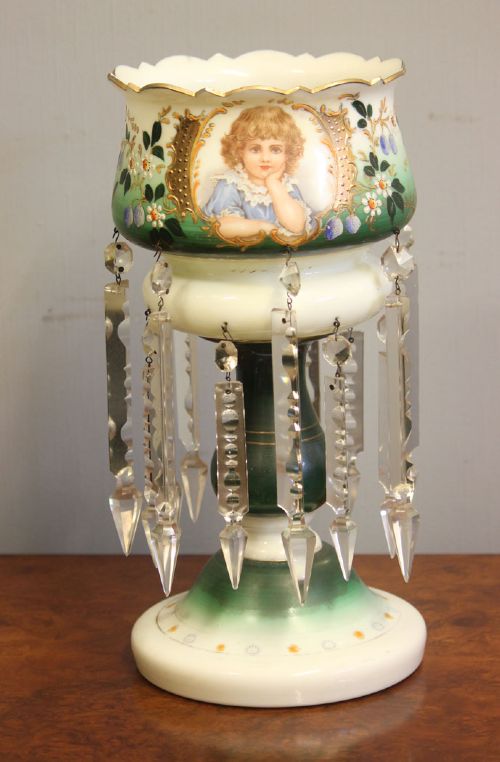
- A decorative glass ornament fitted with hanging glass prisms or droppers designed to catch the light. They were traditionally placed on fireplace mantles during the Victorian era.
- Roemer
- A traditional Germanic wine glass featuring a wide bowl atop a cylindrical stem decorated with applied prunts. These glasses were frequently made in green glass during the nineteenth century.
- Silver overlay
- Sterling silver deposited chemically or applied mechanically onto the surface of a glass object in decorative patterns. This technique was popular in the late nineteenth and early twentieth centuries.
- Papillon decor
- An iridescent surface treatment developed by Loetz that creates a mottled, butterfly-wing pattern across the glass. It represents one of the most recognisable finishes of the Art Nouveau period.
Bohemian Green Glass: Frequently Asked Questions
How do I identify uranium glass?
Uranium glass typically exhibits a distinct yellowish-green hue under natural light and glows bright green when exposed to ultraviolet light. The glass owes this property to small amounts of uranium added during the melting process.
While many pieces date to the nineteenth and early twentieth centuries, confirmation requires a UV light source. The colour intensity can vary from pale transparent green to deep vaseline tones.
What is the difference between cut glass and overlay?
Overlay glass consists of a clear or contrasting glass body encased in a layer of coloured glass, which is then partially cut away to reveal the base material. This technique creates high contrast and tactile depth.
Standard cut glass relies on geometric incisions made directly into a single layer of material. Overlay requires precise coordination between the glassblower and the cutter to expose the underlying colour evenly.
How should I clean antique glass with enamel?
Enamelled and gilded glass requires gentle maintenance using lukewarm water and mild soap, avoiding harsh scrubbing or abrasive cloths. The painted decorations applied to these pieces can wear away if subjected to chemical cleaners or dishwashers.
Dry the pieces promptly with a soft lint-free cloth after washing. Silver mounts should be polished carefully with a dedicated cloth while avoiding contact with the glass surface.
How do I date an Art Nouveau piece?
Art Nouveau glass items generally date from the late nineteenth century up to the outbreak of the First World War. Look for organic forms, iridescent finishes, and stylised natural motifs characteristic of makers like Loetz and Kralik.
Silver mounts often bear hallmarks that provide exact assay years and maker marks. Unmarked pieces are usually dated by stylistic comparisons to documented workshop patterns from the period.