


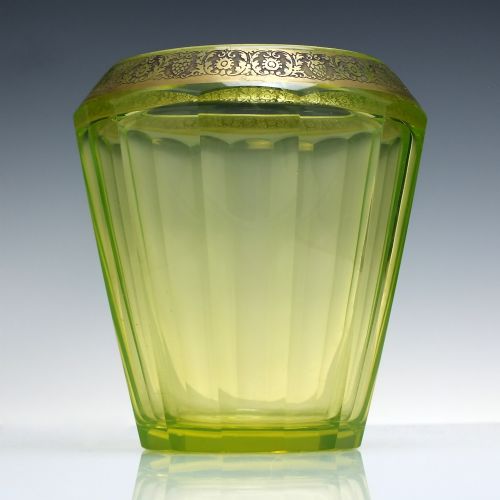
Bohemian Green Glass Vase
A bohemian green glass vase brings vibrant colour and organic form to a room, spanning the rich decorative movements of the late nineteenth and early twentieth centuries.
Bohemian Green Glass Vase
A bohemian green glass vase encompasses a striking variety of vessels shaped by glassmakers across the nineteenth and twentieth centuries. These pieces emerge from periods such as the Victorian era, the Art Nouveau movement, and the Art Deco years, capturing the shifting tastes of European design.
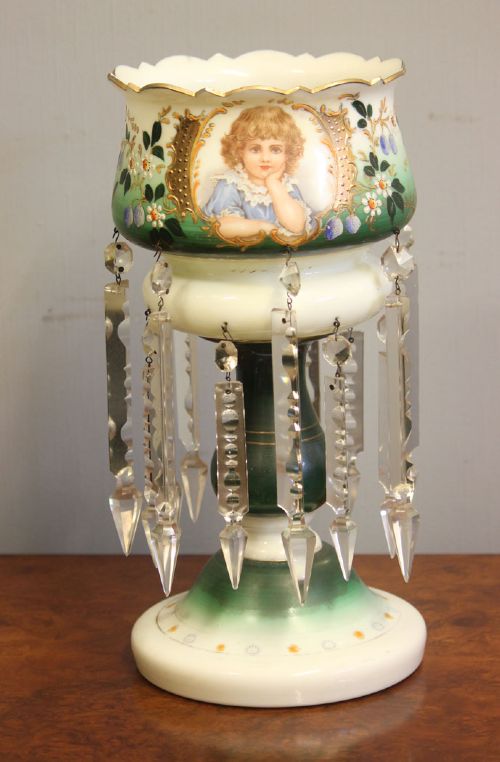
The objects on this page include hand-blown examples, mantel lustres, garniture sets, and grand mantle displays. Forms range from organic shapes influenced by nature to structured conical and faceted profiles.
Makers and glassworks from Bohemia produced work that aligned with styles like Jugendstil, Vienna Secession, and Secessionist aesthetics. Collectors encounter everything from tall, iridescent art glass to robust flashed and overlay glass decorated with enamels and metal mounts.
What varies in quality
The distinction between ordinary production and exceptional work rests on the complexity of the glass technique and the finesse of the surface embellishment. Pieces featuring intricate iridescent treatments, careful hand-painted enamelling, or precise metal overlays demonstrate superior craftsmanship.
Design attribution and original mounts also influence the standing of a piece. Vases framed in structural pewter stands or marked by established glassworks command attention for their integration of material and form.
Listings feature pieces from the nineteenth century through the nineteen-thirties, incorporating Victorian, Art Nouveau, and Art Deco styles.
Johann Loetz·Loetz Witwe·Kralik glassworks·Karl Palda·Moser
The Bohemian Green Glass Vase Glossary
- Iridescent Glass
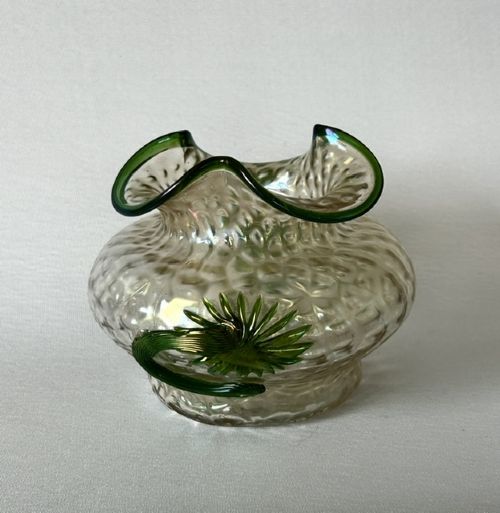
- Glass treated with metallic salts while hot to produce a rainbow sheen on the surface. This finish reflects light and shifts colour as the angle changes.
- Silver Overlay
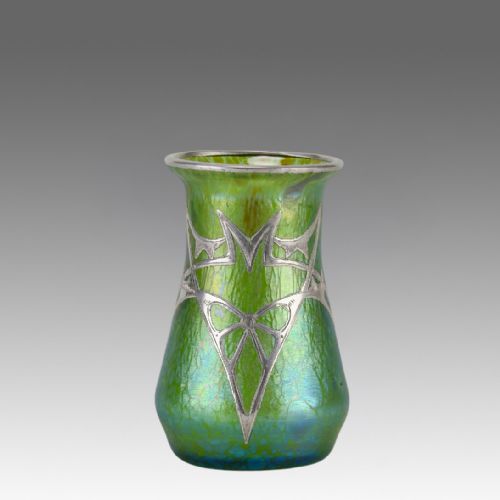
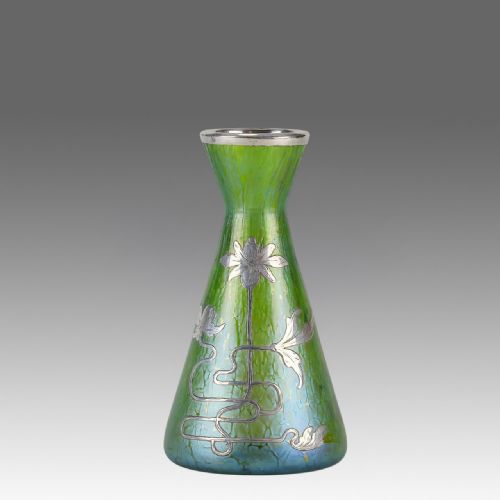
- A decorative technique where pure silver is deposited onto the glass body in intricate patterns. It creates a striking contrast against the green glass beneath.
- Mantel Lustres
- Decorative glass vases fitted with hanging glass prisms around the rim. They were designed to sit on a fireplace mantel and catch the ambient light.
- Jugendstil
- The German-language variant of Art Nouveau, prominent around the turn of the twentieth century. It emphasises flowing, plant-inspired lines and naturalistic forms.
- Papillon
- A specific iridescent glass decor resembling butterfly wings, characterised by mottled patches of metallic colour. It is closely associated with the Loetz factory.
Bohemian Green Glass Vase: Frequently Asked Questions
How do I identify Art Nouveau pieces?
Art Nouveau pieces display organic, fluid shapes inspired by plant stems and natural forms. Look for iridescent glass treatments like the Papillon decor that mimic natural textures.
These items often date from around nineteen hundred and reflect the Jugendstil movement's rejection of rigid historical revivals in favour of dynamic, curving lines.
What is silver overlay?
Silver overlay is a decorative process where a fine layer of silver is bonded directly to the glass surface in floral or geometric motifs. The metal stands in sharp relief against the green glass.
This technique required skilled metalsmiths to work in tandem with glasshouses to ensure the silver adhered permanently to the curved vessel.
Where were these pieces made?
These vessels originated in the Bohemia region of Central Europe, which possessed a long and celebrated tradition of glassmaking. Major workshops operated across this area, producing works for international export.
Makers utilised local raw materials and traditional blowing skills, combined with contemporary artistic movements originating in Vienna and Germany.
How should I display mantel lustres?
Mantel lustres look best placed in spaces with natural light where the hanging glass prisms can catch and refract the illumination. They traditionally sat upon a fireplace mantelpiece as a matched pair.
Ensure they have stable placement away from high-traffic areas to protect the delicate crystal prisms dangling from their rims.