



Bohemian Glass Dish
A bohemian glass dish brings rich colour and tactile weight to a room, ranging from deep cranberry tones to iridescent art glass.
Bohemian Glass Dish
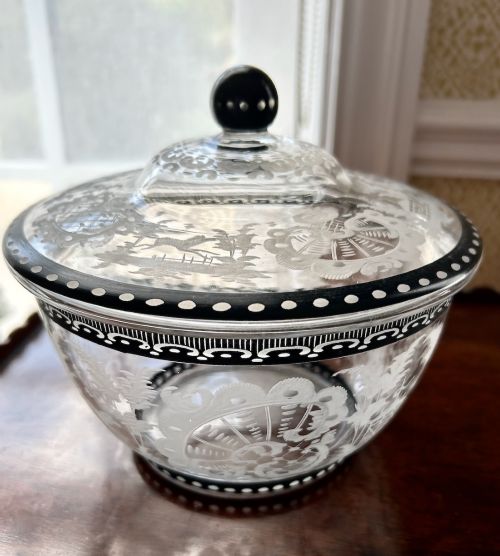
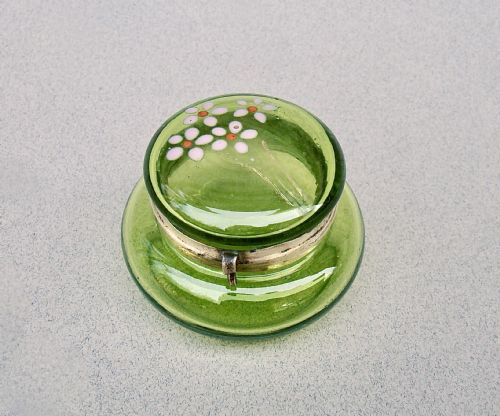
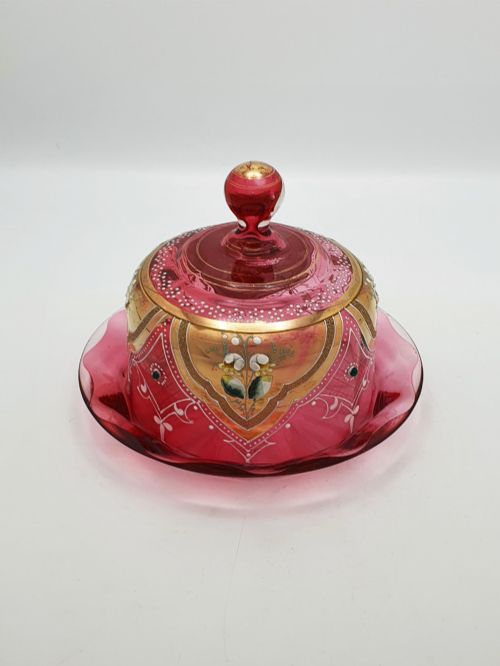
When you search for a bohemian glass dish, you encounter a diverse array of decorative items spanning the nineteenth and twentieth centuries. The selection encompasses practical forms such as covered cheese dishes, salt cellars, and trinket boxes alongside purely decorative bowls and tazzas.
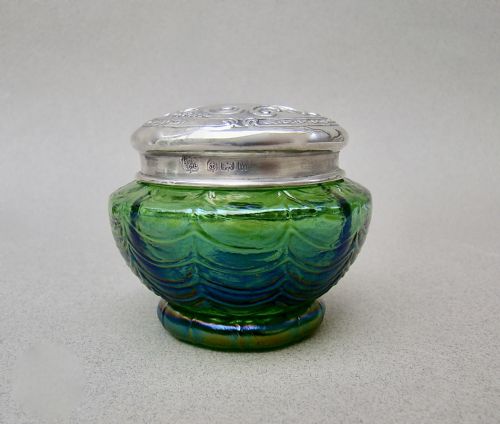
Victorian and Edwardian examples sit alongside striking Art Nouveau iridescent pieces and later Art Deco designs. Most items originate from workshops in Bohemia, often paired with sterling silver mounts or detailed enamel decoration.
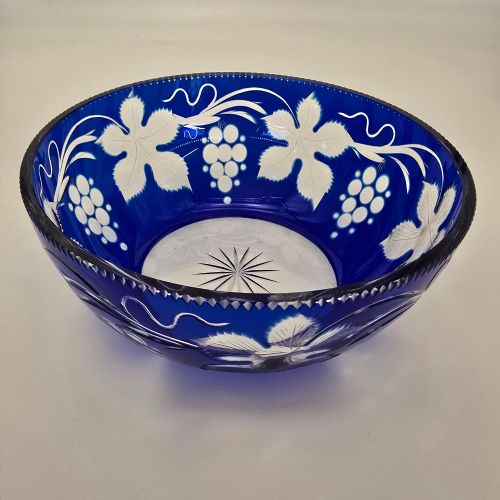
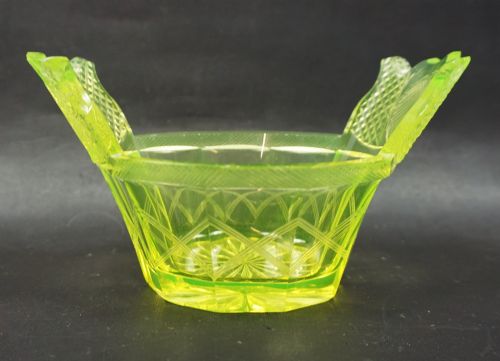
The variety includes vibrant ruby glass, uranium glass, and cobalt blue vessels shaped by traditional cutting and engraving techniques. These pieces demonstrate the remarkable versatility of central European glassmaking across successive aesthetic periods.
How they were made
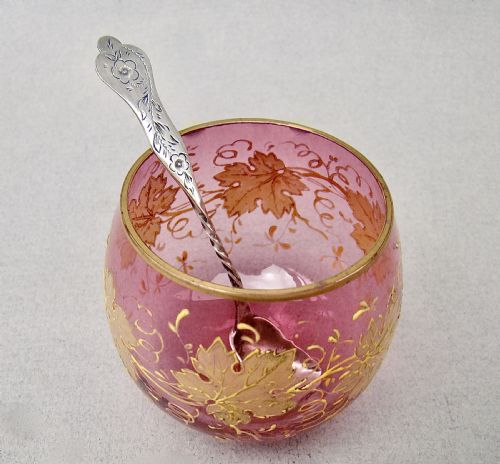
The makers utilised coloured glass batches, incorporating minerals and metals to achieve rich hues like cranberry, ruby, and cobalt blue. Artisans shaped these vessels through blowing and pressing, frequently applying gold leaf or intricate enamel decoration by hand.
Many pieces feature precise wheel-cut patterns or engraved motifs that catch the light across the surface of the dish. Metalwork additions, such as silver lids and mounts, were often forged by separate silversmiths to complete the objects.
Bohemian Glass Dish Retail Price Guide 2026
Typical asking prices for bohemian glass dish among the pieces listed under this phrase on Sellingantiques today, from the lower quarter to the upper quarter. They describe what is for sale here now, not the wider market.
Periods represented span from the early nineteenth century through the Art Deco era of the 1930s.
What varies in quality
Quality rests upon the depth of the glass colour, the crispness of any cut or engraved detailing, and the preservation of surface elements like gold leaf and enamel. Superior examples display careful hand-finishing and well-balanced proportions that mark them out from standard production.
The integration of secondary materials, such as sterling silver mounts or fitted lids, distinguishes finer pieces. When a workshop like Loetz or Moser executed a design, the standard of the glass body and the originality of the decor elevate the piece.
Kralik·A. J. Pepper & Co·Moser·Hoffman·Loetz
The Bohemian Glass Dish Glossary
- Cranberry glass
- A rich pinkish-red glass created by adding gold chloride to the molten batch during production. This distinct colour appears frequently in Victorian tableware and small decorative dishes.
- Iridescent glass
- Glass treated with metallic vapours while hot to produce a shimmering, multicoloured surface sheen. This technique defines many Art Nouveau pieces associated with makers like Loetz.
- Tazza
- A shallow bowl or cup elevated on a stem and foot, traditionally used for serving small items or display. Antique examples often feature ruby glass and gilded decoration.
- Uranium glass
- Glass containing a small percentage of uranium dioxide, which imparts a yellow-green hue and glows brightly under ultraviolet light. Early nineteenth-century Bohemian dishes often utilise this material.
- Enamel
- An opaque or translucent glassy substance fused to the surface of the glass through firing. It provides raised, colourful decoration on trinket boxes and bowls.
Bohemian Glass Dish: Frequently Asked Questions
How do I identify bohemian glass?
Look for characteristic deep colouring, heavy crystal weight, and traditional decorative techniques such as cutting, engraving, and enamel work. Many pieces reflect regional styles from the nineteenth and twentieth centuries, ranging from Victorian opulence to Art Nouveau iridescence.
Examining the base and interior for wear helps confirm age and origin. Continental pieces frequently display distinct forms, such as cobalt blue bowls or uranium glass dishes characteristic of Bohemian workshops.
How were glass dishes used originally?
These vessels served various domestic and decorative functions in period homes, holding small food items, sweets, or personal trinkets. Covered dishes kept butter, cheese, or condiments fresh on the dining table.
Open bowls and tazzas functioned as centrepieces or display vessels for fruit and confectionery. Smaller boxes and salt cellars occupied dressing tables and formal dining settings alike.
How do I date an antique dish?
Examine the manufacturing style, material composition, and any accompanying metal mounts or hallmarks for chronological clues. Art Nouveau iridescent pieces typically date to the early twentieth century, while heavy cut crystal often points to the Victorian era.
Wear patterns on the base provide further indication of age through natural handling over time. Comparing the object type and decorative motifs with documented workshop output helps narrow down the period.