


Cut Glass Basket
A cut glass basket brings remarkable weight and refracted light to a room, uniting heavy crystal or glass with brass, ormolu, silver plate, or silver mounts.
Cut Glass Basket
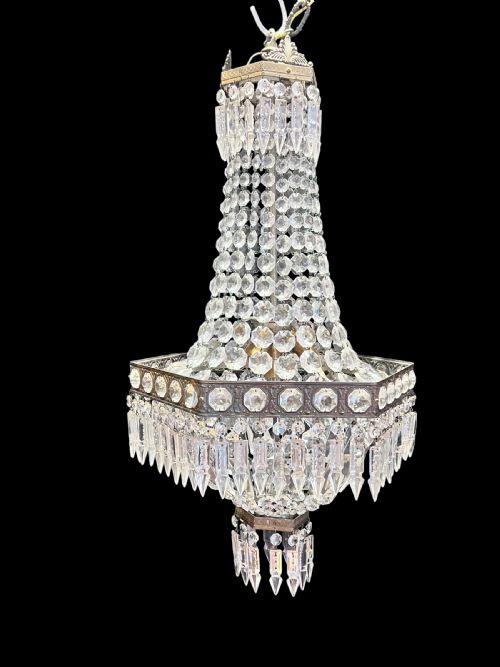
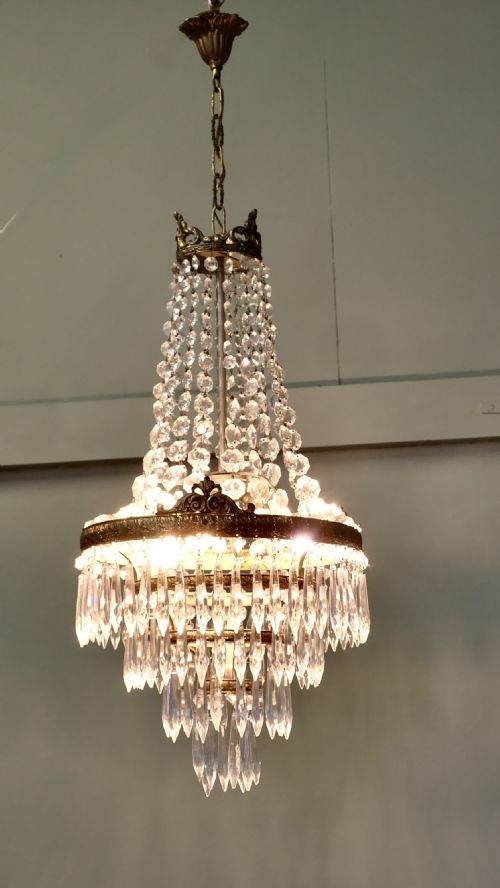
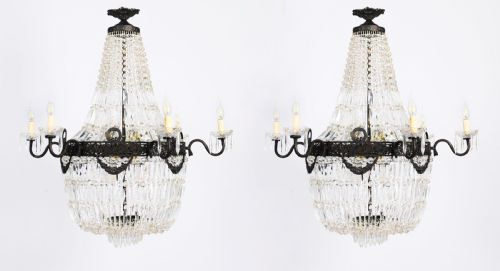
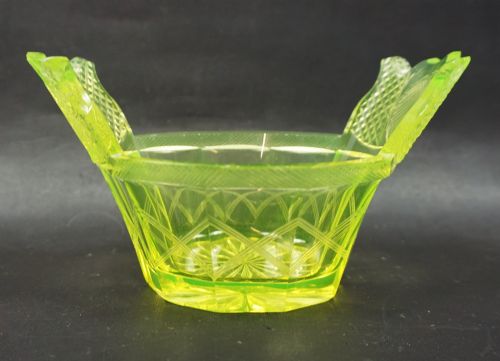
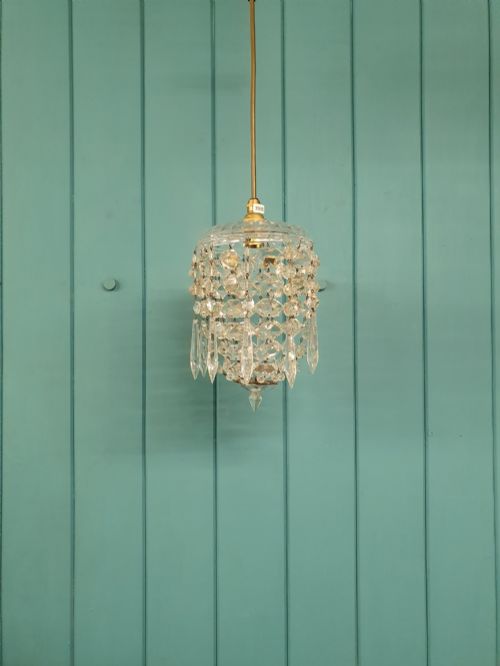
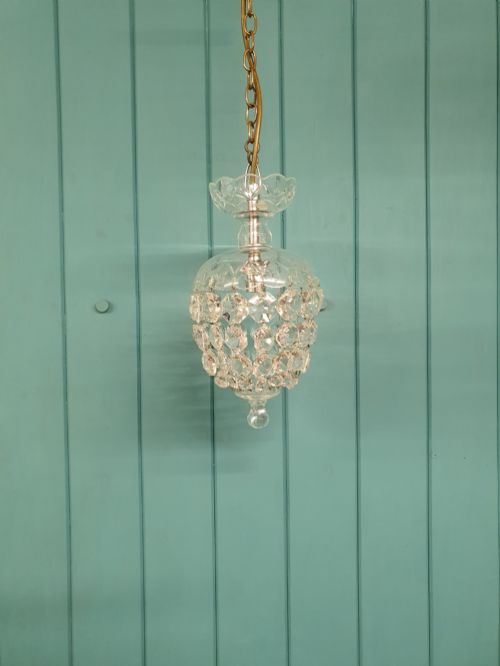
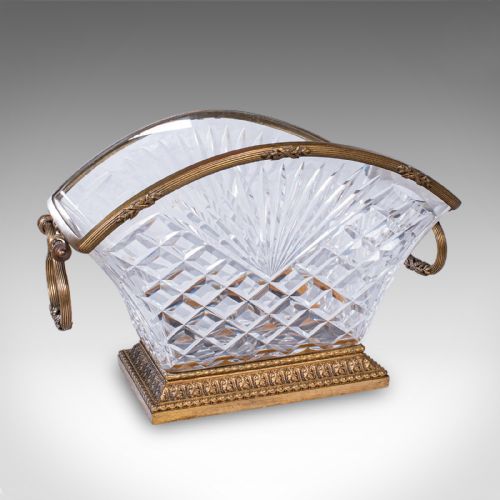
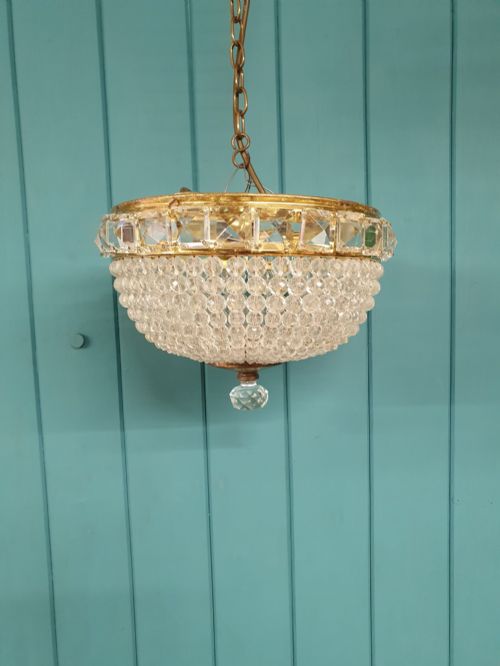
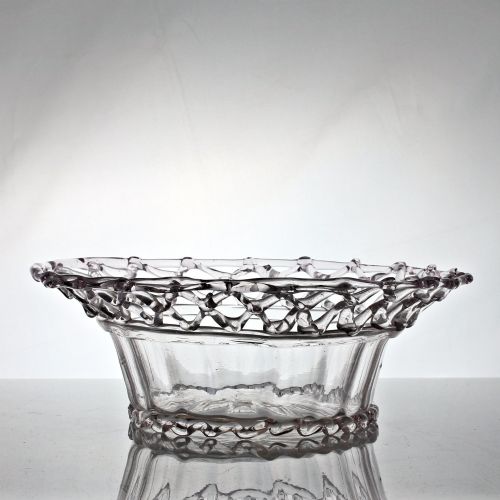
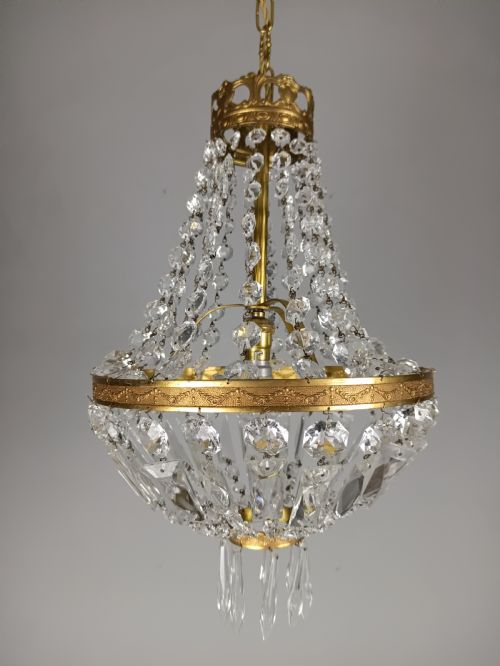
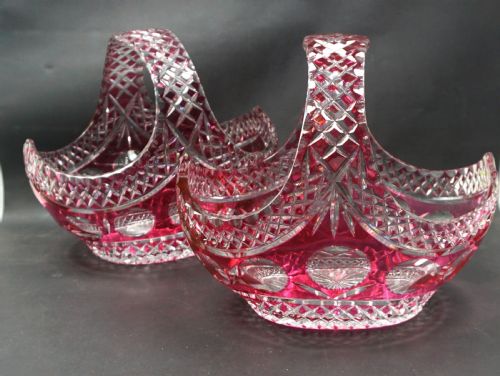
A cut glass basket spans several distinct forms across the periods, appearing most frequently as ceiling lighting such as bag, tent, and basket chandeliers, alongside tabletop serving dishes, condiment baskets, and potpourri pots. These pieces emerge in styles ranging from Victorian and Edwardian to French Empire and Art Deco, reflecting diverse European craftsmanship from Belgium, France, and England.
The materials paired with the glass vary widely by object type, shifting from brass and ormolu frames on hanging chandeliers to silver plate and solid silver swing handles on tabletop baskets. Dating spans from the eighteenth century through the 1930s, offering buyers a choice between early Georgian glassware, nineteenth-century silver-mounted vessels, and early twentieth-century crystal light fittings.
Materials and construction
The primary material combination unites heavy cut glass, lead crystal, or cut crystal with structural mounts of brass, bronze, silver plate, or solid silver. Artisans shaped the crystal bodies through glass-cutting techniques to maximise light refraction, then secured the components onto metal frames using wirework, prisms, beads, and drops.
Tabletop examples incorporate cast or pierced metal components, such as ormolu mounts and silver swing handles, while hanging light fittings rely on brass rings and chains to support the weight of the glass baskets, domes, and beaded bags.
Form variations range from tabletop condiment baskets and swing-handle potpourri pots to ceiling-mounted tent, bag, and waterfall chandeliers.
Distinctions in quality
Quality rests upon the crispness of the glass cutting and the weight and purity of the crystal, which dictates how sharply the facets catch and disperse light. Superior examples show precise geometric cutting without surface clouding, alongside robust metal framing that maintains structural integrity under the heavy load of numerous crystal drops.
The refinement of the supporting mounts, whether cast brass, ormolu, or hallmarked silver, further separates standard production from finer workshop pieces. Intricately pierced metalwork and securely wired crystal prisms demonstrate superior craftsmanship compared to simpler, heavier utilitarian fittings.
William Comyns·Val St Lambert·Joseph Simon·WMF
The Cut Glass Basket Glossary
- Bag chandelier
- A light fitting shaped like a flattened bag or basket, densely hung with glass beads and crystal prisms.
- Tent and bag chandelier
- A lighting form featuring an upper conical tent of strung crystals above a lower bag-shaped basket.
- Ormolu
- Gilded bronze used for decorative mounts and frames, frequently seen on French Empire and Victorian pieces.
- Traforato
- Pierced or openwork decoration found on glassware and metalwork, allowing light and air to pass through the vessel.
- Over crystal
- A glass-making technique involving a layer of coloured glass encased over a clear crystal body.
Cut Glass Basket: Frequently Asked Questions
How are cut glass basket chandeliers installed?
Hanging chandeliers require secure ceiling anchorage due to the substantial combined weight of the glass body, crystal prisms, and metal frame. A professional electrician should mount the fixture to a structural joist using an appropriate ceiling hook.
Once secured, the delicate crystal drops and beaded strands, which are often packed separately during transit, must be reattached to the brass or bronze frame by hand.
How do I clean an antique cut glass basket?
Maintenance requires gentle cleaning using warm water and a mild detergent solution applied with a soft cloth. Harsh chemical cleaners can damage historical metal plating, brass mounts, and silver surfaces.
For hanging light fittings with numerous crystal prisms, cleaning individual drops in situ avoids damaging the delicate wirework holding the arrangement together.
How do I date a cut glass basket?
Dating relies on examining the manufacturing techniques, metal alloys, and stylistic markers present in the frame and glass. Georgian and eighteenth-century pieces often display hand-blown irregularities and simpler pierced mounts, whereas Edwardian and 1930s examples utilise machine-cut precision and standardised brass or silver-plated fittings.
Silver components often feature hallmarks that provide exact assay office dates and maker marks.