




Cut Glass Serving Bowl
A cut glass serving bowl brings genuine weight and sharp refraction to the table, formed from heavy crystal cut deep by hand.
Cut Glass Serving Bowl
A cut glass serving bowl spans robust Georgian and Anglo-Irish forms from the early nineteenth century alongside lighter Edwardian, Victorian, and early twentieth-century examples. The selection ranges from large fruit bowls and punch bowls to covered serving dishes, sweet dishes, and salad services.
You will encounter pieces originating from English, Irish, Scottish, French, and Bohemian workshops. Styles stretch from Empire taste and Bohemian Biedermeier through to Edwardian elegance and Art Deco geometric lines.
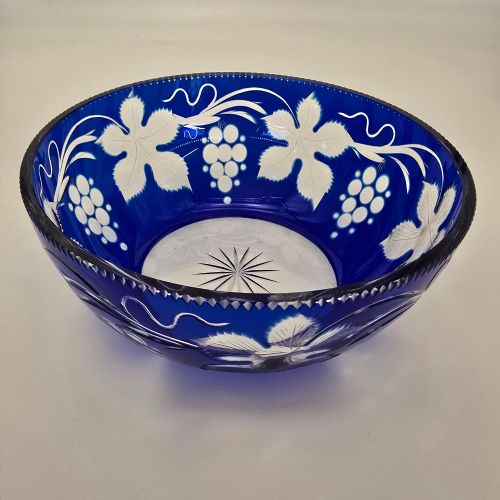
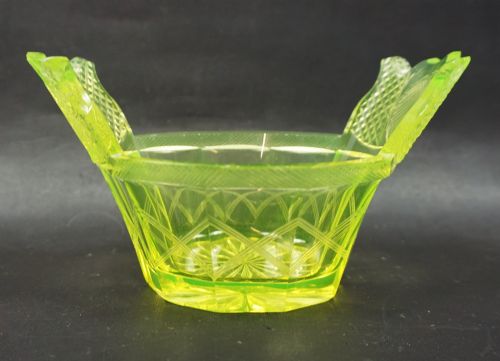
The heavy Irish and Anglo-Irish serving bowls with deep diamond cuts represent the most frequent historical forms in this lineage. Alongside clear lead crystal, the selection accommodates coloured variants including cobalt blue and uranium glass.
Materials and construction
These vessels utilise heavy lead crystal and cut glass formed through hot-blowing and press-moulding before workers applied abrasive wheels to carve facets, flutes, and star patterns into the thick walls. The resulting depth of cut produces distinct sharp edges and heavy refraction.
Mounts and fittings incorporate sterling silver, silver plating, or cast ormolu and bronze, particularly on lidded serving dishes and French empire-style pieces. Cobalt glass and uranium glass introduce colour to the tradition, while specialised cutting achieves the high clarity seen in Irish crystal.
Cut Glass Serving Bowl Retail Price Guide 2026
Typical asking prices for cut glass serving bowl among the pieces listed under this phrase on Sellingantiques today, from the lower quarter to the upper quarter. They describe what is for sale here now, not the wider market.
One standout piece is a dedicated Halloween pumpkin punch bowl from the early twentieth century.
Assessing quality and finish
The distinction between ordinary and superior pieces rests on the crispness of the wheel cutting and the weight of the metal. Fine examples display sharp, precise facet junctions that catch the light cleanly, whereas lower tiers show softened edges and lighter blanks.
The integration of secondary materials such as hallmarked silver rims, cast ormolu mounts, or heavy bronze hardware marks the upper end of the range. Furthermore, condition matters significantly, with superior items maintaining clear surfaces and minimal rim wear.
The Cut Glass Serving Bowl Glossary
- Anglo-Irish
- Pertaining to glass production in Ireland and England during the period of unified legislation, noted for heavy lead content and deep brilliant cutting. These pieces are prized for their exceptional weight and greyish clarity.
- Lead crystal
- Glass containing a high proportion of lead oxide, which increases density, weight, and light refraction. This material allows for deeper and sharper cutting without fracturing.
- Ormolu
- Gilt bronze mounted onto decorative objects and furnishings, often providing rims or handles for French and Victorian serving dishes. The technique involves applying a gold amalgam to bronze.
- Uranium glass
- Glass coloured with uranium oxide, which glows bright green under ultraviolet light. This material appears in early nineteenth-century Bohemian production.
- Punch bowl
- A large, wide vessel designed for mixing and serving communal drinks, frequently encountered in heavy cut glass formats from the early twentieth century. These bowls often accommodate ladles and substantial volumes of liquid.
Cut Glass Serving Bowl: Frequently Asked Questions
Are these bowls safe for serving food?
Most antique glass bowls function well for serving dry foods, fruit, salads, or cold desserts. Acidic foods should not remain in lead crystal or uranium glass vessels for long periods.
Hand-washing is essential for daily maintenance. Keep these items away from modern dishwashers, as thermal shock and harsh detergents can damage the historical surface.
How do I identify Irish cut glass?
Irish pieces typically feature thick walls, deep brilliant cutting, and a distinct bluish-grey hue within the heavy lead crystal. Look for substantial weight and crisp geometric facets.
Many early nineteenth-century examples originate from Cork or Waterford workshops. They often present large scalloped rims and intricate diamond patterns.
What is the difference between a fruit bowl and a punch bowl?
Fruit bowls generally feature shallower profiles with wide rims designed to display produce openly on a table or sideboard. They appeared frequently in Edwardian and Victorian dining arrangements.
Punch bowls are deeper and rounder, constructed to hold large quantities of liquid and ice. They often pair with matching cups or ladles.