







Bobbin Turned Legs Stand
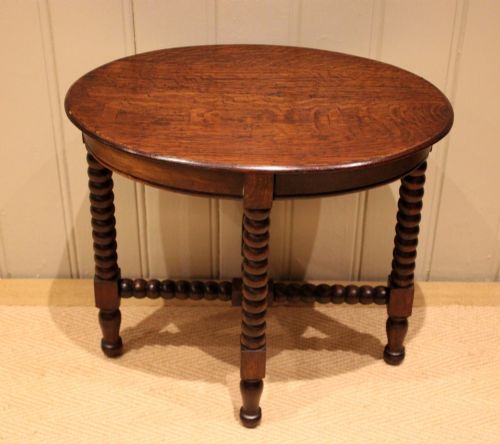
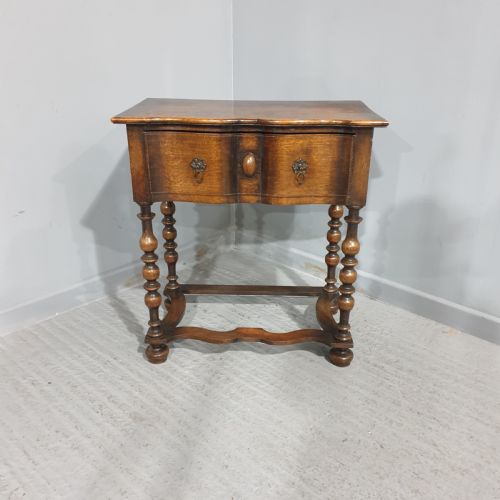
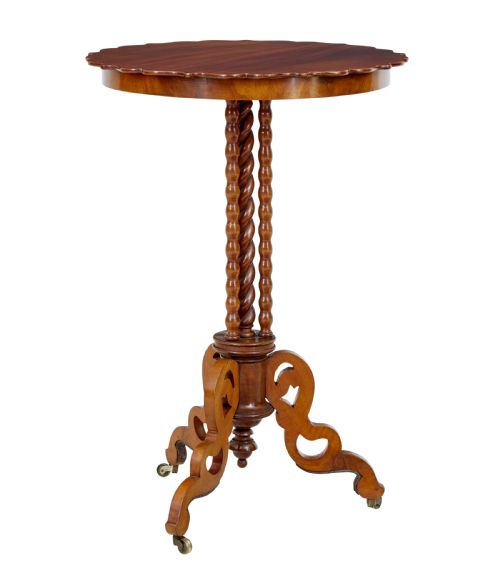
Bobbin turned legs stand pieces are robust timber supports featuring characteristic spool-moulded uprights that suit period interiors.
Bobbin Turned Legs Stand
When you search for a bobbin turned legs stand, you encounter compact occasional furniture, side tables, and cabinets raised on distinctive spool-turned supports. The selection on this page draws predominantly from the late nineteenth century and the early twentieth century, alongside earlier revivals.
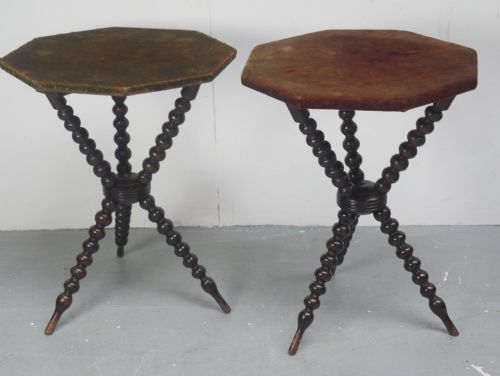
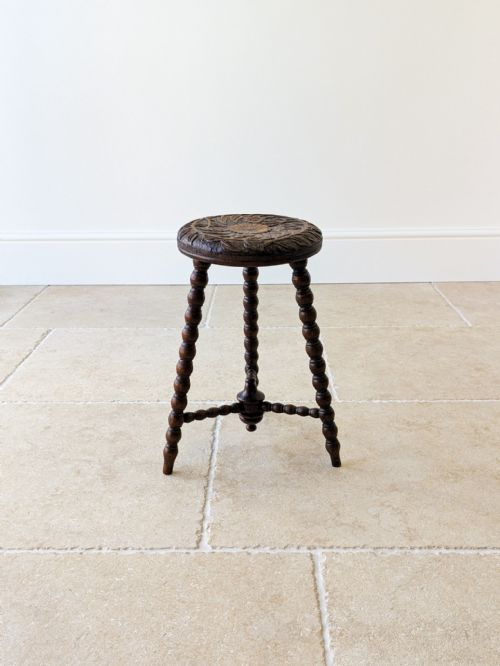
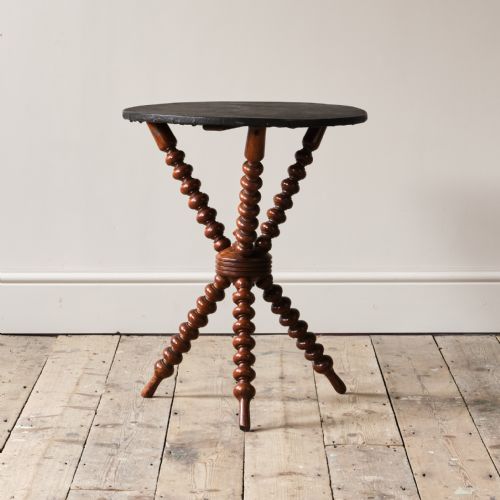
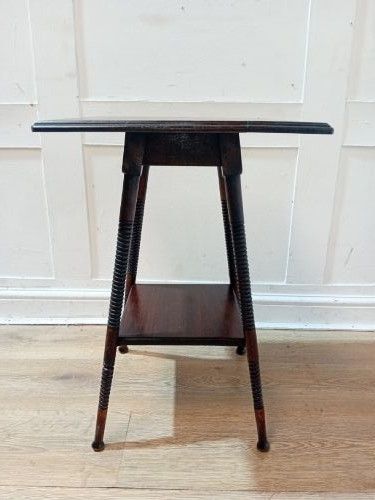
The forms vary from small circular occasional tables and gypsy tables to console tables and oak lamp tables. Oak and mahogany appear frequently as the primary timbers, often paired with ebonised finishes.
Makers working in the Aesthetic Movement and Arts and Crafts styles utilised this spool-moulded turning to add texture and linear rhythm to domestic spaces. These pieces function readily as lamp tables, small side surfaces, or display stands in hallways and sitting rooms.
How they were made
Craftsmen shaped solid timbers such as oak, mahogany, and walnut on lathes to produce the repeating rounded segments characteristic of bobbin turning. Ebonised wood finishes also feature widely across the selection, achieved through staining or painting the hardwood frames.
Joinery methods rely upon traditional pegged mortise and tenon joints for stability, particularly in heavier oak frameworks. Surfaces occasionally incorporate brass fittings, velvet textiles, or hand-painted details depending on the stylistic movement of the period.
Bobbin Turned Legs Stand Retail Price Guide 2026
Typical asking prices for bobbin turned legs stand among the pieces listed under this phrase on Sellingantiques today, from the lower quarter to the upper quarter. They describe what is for sale here now, not the wider market.
Listings span periods from the seventeenth century through to 1920, with a strong concentration of late nineteenth-century Victorian and Edwardian examples.
What varies in quality
Quality rests upon the crispness and uniformity of the turned bobbins along each leg, where sharply defined spool mouldings indicate superior lathe work. The selection of timber also dictates standard, with dense quarter-sawn oak and figured mahogany commanding higher regard than plain stained hardwoods.
Structural integrity depends on the tightness of the leg joints and the absence of distortion in circular tabletops. Pieces retaining their original ebonised finishes or authentic brass details demonstrate better preservation over time.
Liberty of London·William Birch
The Bobbin Turned Legs Stand Glossary
- Bobbin turning
- A form of woodturning characterised by a succession of rounded, spool-like shapes resembling bobbins of thread placed end to end. This technique gained popularity during the seventeenth century and saw major revivals in the Victorian and Aesthetic periods.
- Ebonised wood
- Timber treated with a dark stain or paint to imitate the appearance of ebony. It was frequently utilised during the nineteenth century for furniture influenced by Japanese design.
- Gypsy table
- A lightweight occasional table featuring three turned legs, often draped with fabric or fitted with a painted top. These emerged during the Aesthetic Movement and late Victorian eras.
- Occasional table
- A small, portable table designed for specific, intermittent use within a room. Examples include lamp tables, side tables, and small display stands.
- Jacobean Revival
- A nineteenth-century design movement that reinterpreted the heavy, carved oak furniture styles of the early seventeenth century. It often incorporates spool turning and panelled construction.
Bobbin Turned Legs Stand: Frequently Asked Questions
What rooms suit a bobbin turned legs stand?
These compact tables fit readily beside armchairs in sitting rooms or serve as lamp stands in hallways. Their slender profile prevents them from overwhelming smaller spaces.
They also function effectively as display surfaces for ceramic pieces or decorative objects without dominating the room layout.
How do I identify a bobbin turned table?
Look closely at the table legs for the repeating spherical or spool-shaped turnings that define the style. These wooden modules are carved directly into the upright supports.
Most examples date from the late nineteenth or early twentieth centuries, drawing inspiration from seventeenth-century furniture traditions.
Are these tables sturdy enough for daily use?
Solid timber construction and traditional joinery give these small tables reliable everyday stability. Oak and mahogany frames handle standard loads like lamps and books without difficulty.
Checking that the turned legs remain firm at the joints ensures the piece withstands regular movement around the home.
What is the difference between oak and ebonised tables?
Oak tables display the natural grain and warm tones of the hardwood, often associated with Arts and Crafts or Jacobean revival styles. Ebonised tables feature a dark, painted or stained finish that aligns with Aesthetic Movement interiors.
Both finishes rely on the same bobbin turned structural form but project entirely different visual weights in a room.