




Parquetry Veneer Cabinet
These parquetry veneer cabinet examples bring geometric wooden patterns to interiors through centuries of skilled French and English design.
Parquetry Veneer Cabinet
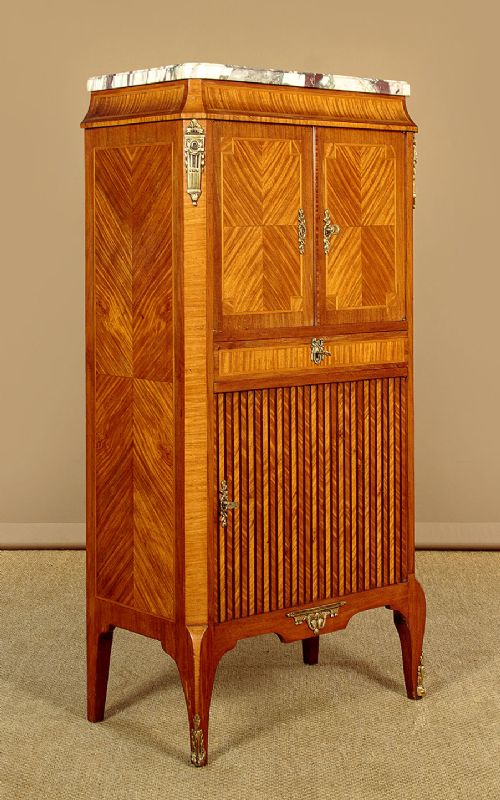
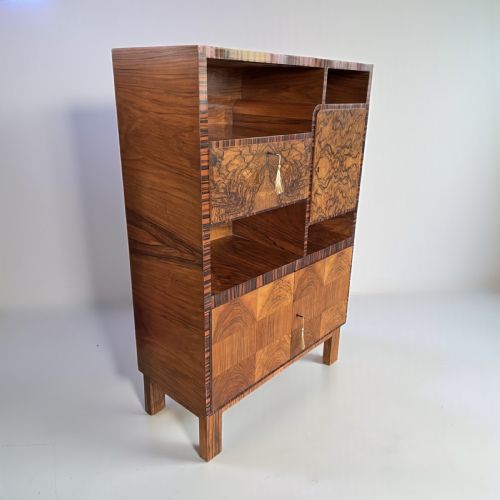
A parquetry veneer cabinet combines structural carcases with precise geometric wood chips laid in patterns on the surface. These pieces range from towering 17th-century cabinets on stands to compact Art Deco cabinets and bedside tables from the 1900s to 1930s.
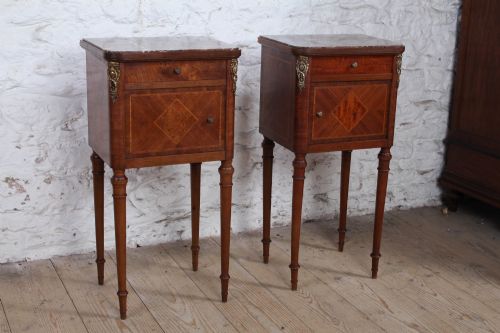
You will frequently encounter French Revival styles, including Louis XV and Louis XVI designs, alongside miniature chests of drawers and side tables. The forms rely on contrasting timbers like kingwood, walnut, and rosewood to create striking visual depth across fronts and tops.
Earlier examples from the 17th century emphasise architectural majesty, while 20th-century iterations focus on curved kidney shapes and clean Art Deco lines. Each configuration serves a distinct domestic purpose, from bedside storage to display bookcases.
Materials and construction methods
Cabinet makers sliced fine timbers into thin sheets of veneer, applying them meticulously to stable secondary woods to prevent warping. Woods such as kingwood, tulipwood, burr, fruitwood, and walnut provide the natural colour variation required for complex geometric parquetry.
Metal elements like ormolu mounts, brass details, and marble tops frequently complete the construction, particularly on French commodes and bedside cabinets. Artisans matched the grain orientation carefully so that light reflects differently off adjacent sections of veneer.
Parquetry Veneer Cabinet Retail Price Guide 2026
Typical asking prices for parquetry veneer cabinet among the pieces listed under this phrase on Sellingantiques today, from the lower quarter to the upper quarter. They describe what is for sale here now, not the wider market.
Listings feature timbers including kingwood, rosewood, walnut, and tulipwood combined with marble and brass.
Distinguishing finer examples
Quality rests in the precision of the veneer joints and the harmonious selection of timber grains within the parquetry pattern. Superior pieces align the geometric motifs seamlessly across drawers and doors, demonstrating high technical competence from the maker.
The integration of supporting materials, such as genuine marble slabs and fire-gilded ormolu mounts rather than plain brass, separates standard production from exceptional works. Careful preservation of the original wood surface without excessive over-finishing maintains the integrity of the piece.
The Parquetry Veneer Cabinet Glossary
- Parquetry
- A geometric mosaic of wood pieces used for decorative veneer on furniture surfaces. It creates patterned floors, tabletops, and cabinet doors.
- Veneer
- A thin slice of fine timber applied to a coarser underlying wood carcase. This technique allows makers to utilise expensive woods efficiently while preventing structural warping.
- Ormolu
- Gilded bronze used for decorative mounts and furniture trim. It is characteristic of fine French cabinet making across the 18th and 19th centuries.
- Kingwood
- A dense, heavily figured Brazilian timber with dark violet and brown tones. It remains a primary material for high-status veneered furniture.
- Commode
- A low chest of drawers, often standing on relatively tall legs. The form evolved significantly through successive French decorative styles.
Parquetry Veneer Cabinet: Frequently Asked Questions
How do I date a cabinet?
Dating relies on combining the underlying wood construction methods with stylistic cues from the specific historical period. Pieces from the 17th century show different structural joinery compared to 20th-century Art Deco interpretations.
Examining the secondary woods inside drawers and the ageing patterns of the veneer helps confirm the era of manufacture.
Where should I place my cabinet?
These cabinets suit living spaces, bedrooms, or hallways where their decorative veneer surfaces catch natural light. Smaller bedside tables and miniature chests fit well beside low seating or beds.
Keep wooden furniture away from direct heat sources and strong sunlight to protect the delicate natural veneers from drying out.
How do I care for the veneer?
Maintain the wood surfaces by dusting gently with a dry, soft cloth and avoiding silicone-based polishes. Natural wax applied sparingly helps nourish antique timber.
Protect marble tops from acidic spills and moisture to prevent permanent etching on the stone surface.
What is the difference between marquetry and parquetry?
Parquetry uses geometric shapes like squares, triangles, and cubes to create symmetrical, repeating patterns across a wooden surface. Marquetry involves pictorial designs, such as flowers or landscapes, formed from various organic materials.
Both techniques use fine wood veneers, but parquetry focuses strictly on abstract geometry.