





Kingwood Storage Chest
A kingwood storage chest brings together dense exotic timbers and polished stone surfaces, offering practical storage disguised as Continental display furniture.
Kingwood Storage Chest
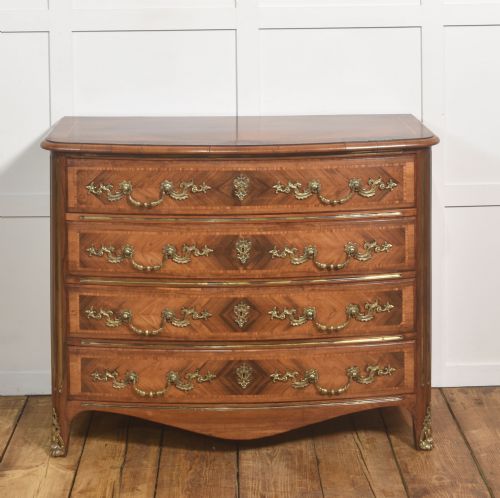
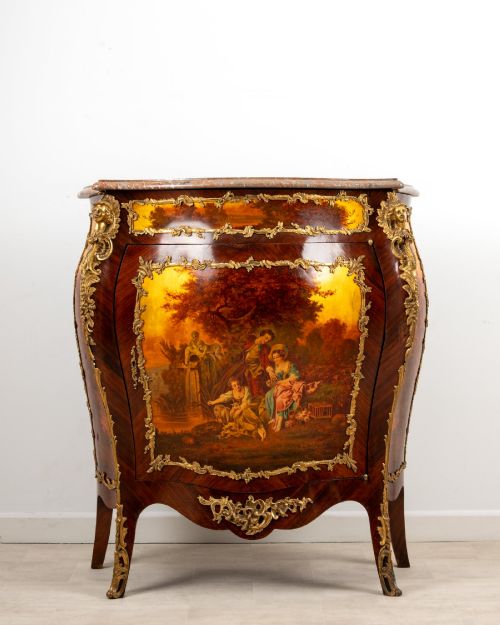
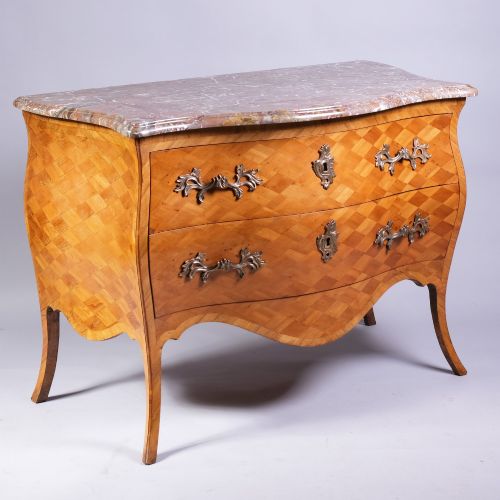
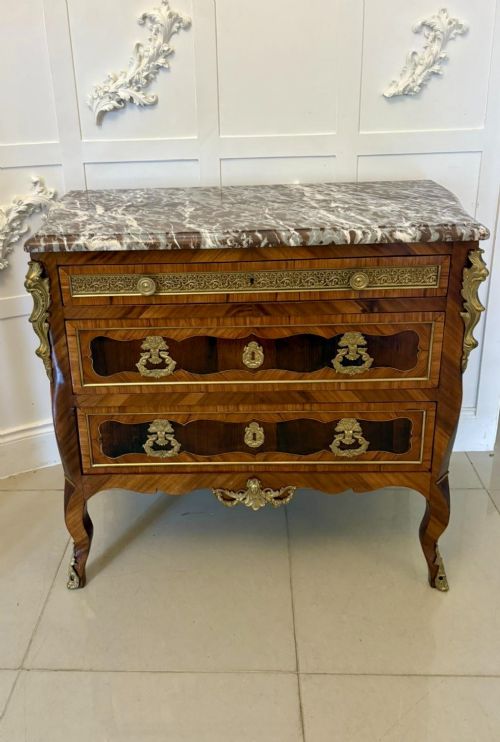
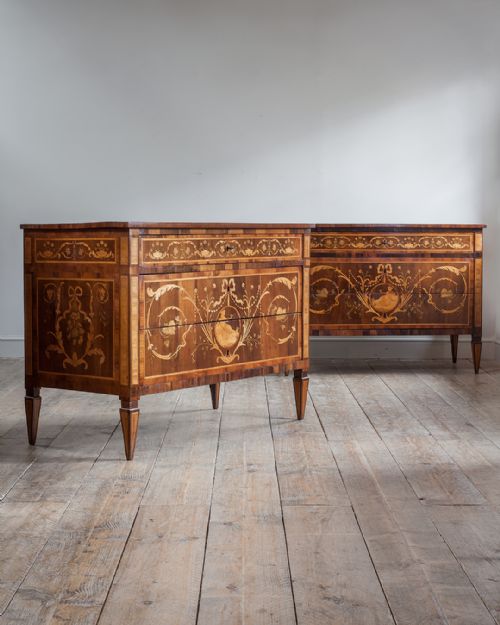
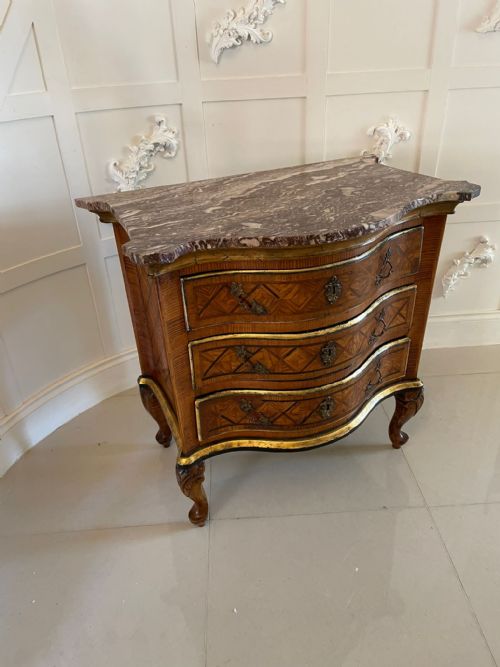
When you search for a kingwood storage chest, you encounter formal case furniture originating primarily from French and Italian workshops across several centuries. The selections range from seventeenth-century parquetry cabinets to nineteenth-century revival commodes and serpentine chests of drawers.
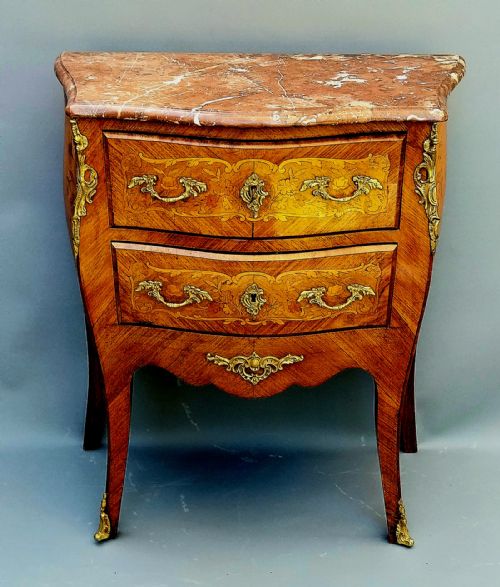
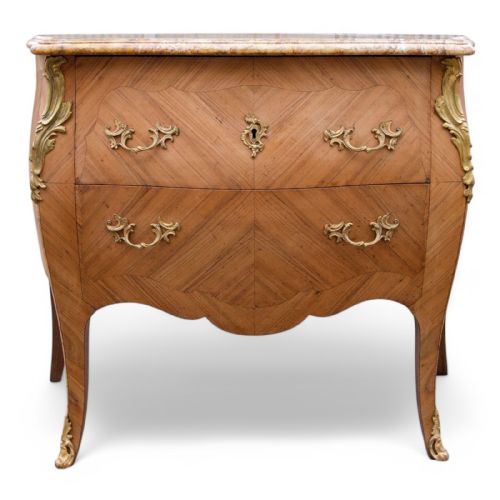
The most common forms on this page are marble-topped commodes and side cabinets utilising bombé or serpentine shapes. These pieces combine deep wooden drawer arrangements with decorative mounts, reflecting seventeenth-century origins and subsequent revival periods up to the twentieth century.
Materials and construction
Cabinetmakers applied highly figured kingwood veneers over structural carcases of oak or walnut, often arranging grain patterns in geometric parquetry or floral marquetry designs. Slabs of shaped marble, frequently paired with cast or gilt ormolu mounts, finished the tops and corners of these storage forms.
Joinery involved precise carcass construction and veneering techniques that allowed curved bombé and serpentine drawer fronts to retain stability over centuries. Metal mounts were cast in bronze or brass and hand-chased before being secured to the wooden frames.
Cabinetmakers occasionally hid secret drawers behind decorative mouldings to secure small valuables.
Assessing quality and execution
Quality rests in the crispness of the veneer layout and the precision with which the parquetry matches the complex curves of the chest. Better examples display harmonious grain movement across the drawer fronts without lifting or shrinkage in the timber.
The sophistication of the ormolu mounts and the thickness of the marble slab further separate standard production from superior work. Finer items exhibit deeply chased bronze mounts that follow the exact contours of the wood framing.
Mercier Frères·Leonard Boudin
The Kingwood Storage Chest Glossary
- Kingwood
- A dense Brazilian timber featuring rich dark brown tones with golden streaks, frequently used for decorative veneers in eighteenth-century and revival furniture. It is prized for its fine grain and ability to take a high polish.
- Commode
- A low chest of drawers or cabinet developed in France during the seventeenth century. These pieces usually feature multiple drawers and often stand on short cabriole or tapered legs.
- Ormolu
- Gilded bronze used for decorative mounts, handles, and feet on high-end European furniture. The technique involves applying a gold-mercury amalgam to cast bronze.
- Parquetry
- Geometric mosaic woodwork arranged in patterns such as cubes or chequers. Craftsmen used contrasting timbers to create three-dimensional optical effects across cabinet surfaces.
- Bombe
- A swollen or outward-curving contour found on the sides and fronts of certain case furniture. This shape requires considerable woodworking skill to veneer accurately.
Kingwood Storage Chest: Frequently Asked Questions
What is a kingwood storage chest?
A kingwood storage chest is a decorative case furniture piece, often shaped as a commode or cabinet, faced with dense Brazilian wood veneers.
These items combine deep drawer space with polished marble tops and cast bronze mounts, serving functional and display roles in formal interiors.
How do I identify a period commode?
Period identification relies on examining the secondary woods inside the carcass, the construction of the drawer dovetails, and the style of the bronze mounts.
Eighteenth-century pieces typically show hand-cut joinery and specific regional timbers, whereas later revival items from the nineteenth century reflect different interpretations of earlier designs.
Where were these cabinets placed?
These chests were designed for principal rooms such as reception spaces, drawing rooms, and formal bedrooms. Their finished backs and sides often allowed them to stand free against walls or within room schemes.
The inclusion of a marble top provided a durable surface for displaying porcelain, clocks, and candelabra.
How do I care for kingwood veneer?
Kingwood furniture requires stable indoor humidity and protection from direct sunlight to prevent the timber and underlying glue from drying out.
Maintenance involves gentle dusting with a dry cloth and avoiding silicone-based polishes that can damage the historical polish finish.