
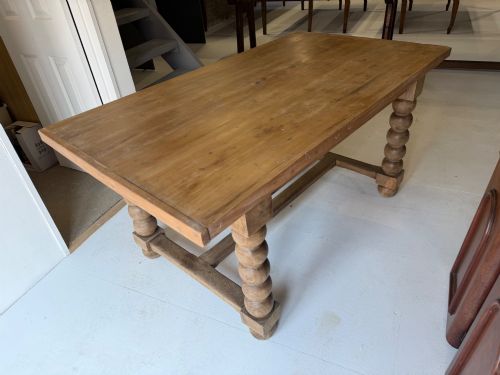
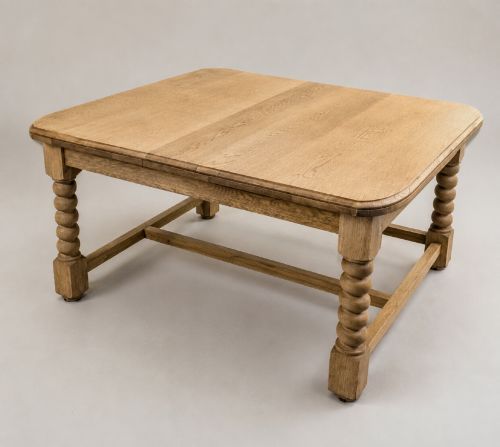
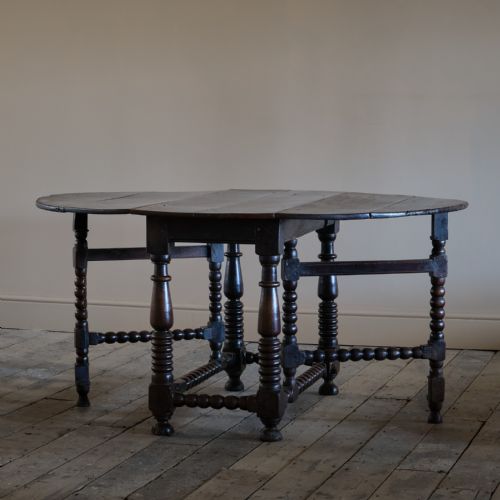


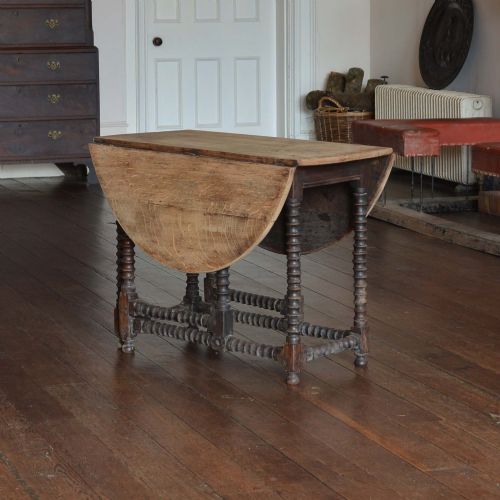

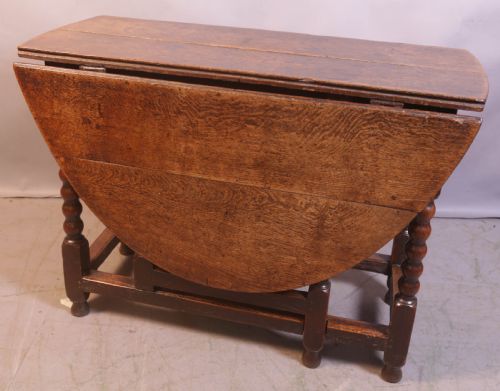


Bobbin Turned Dining Table
A bobbin turned dining table brings substantial seventeenth century presence and clever folding utility to a room through distinctive spool shaped turned supports.
Bobbin Turned Dining Table
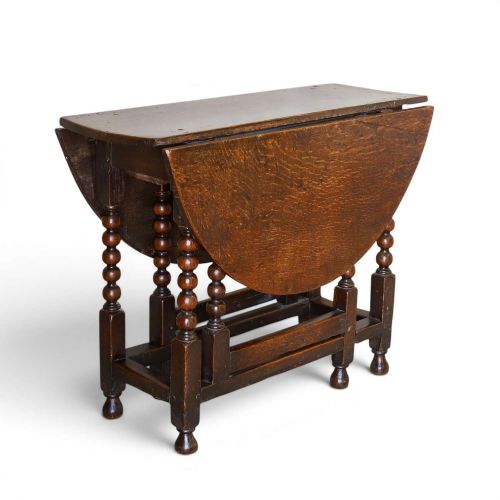
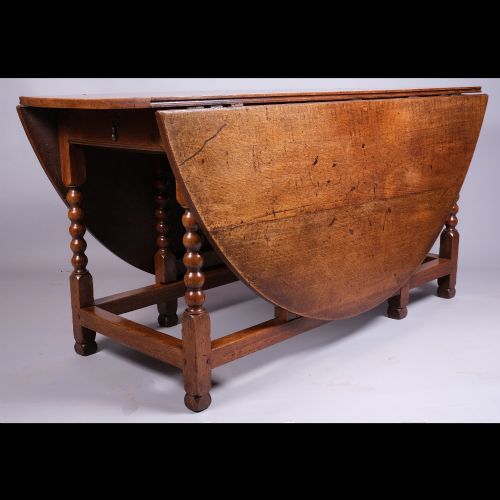
When you search for a bobbin turned dining table, you encounter sturdy timber furniture primarily rooted in the seventeenth century and nineteenth century revival periods. These pieces frequently manifest as gateleg or drop leaf tables, designed to expand for dining and fold compactly against a wall.
The version most commonly met on this page is the oak gateleg table featuring characteristic spool turnings along its underframe. Alongside oak, examples surface in walnut, elm, and beech, ranging from compact side tables to generous six seater dining formats.
Stylistic descriptors associated with these forms span Jacobean, Charles II, English country, and rustic farmhouse aesthetics. The lineage connects early modern craftsmanship directly to later nineteenth century reinterpretations.
Construction and materials
Makers shaped the distinctive spool motifs by turning solid timber on a lathe, repeating spherical and cylindrical blocks along the length of the legs and stretchers. Oak serves as the primary structural material, supplemented by elm, walnut, and beech.
Gateleg mechanics rely on pivoted hinged legs that swing outward to support folding leaves, distributing weight evenly across the frame. Joinery typically employs pegged mortise and tenon connections to secure the heavily turned underframe.
Listings feature oak predominantly, alongside elm, walnut, and beech timbers across centuries spanning the seventeenth to the nineteenth.
Assessing quality and proportion
The upper tier of these tables displays crisply defined turnings with consistent spacing and rich timber patination developed over centuries of use. Lesser examples may exhibit clumsy replacement elements or heavy timber splitting that compromises the structural stability of the gate mechanism.
Proportion and scale dictate the desirability of a piece, with smaller tables retaining a pleasing domestic intimacy while larger six seater formats require robust joinery to support extended leaves. The integration of original brass hinges and sound timber framing distinguishes superior pieces from heavily restored alternatives.
The Bobbin Turned Dining Table Glossary
- Gateleg table
- A table with hinged leaves supported by legs that swing outward like a gate. This clever design allows the surface area to double when needed.
- Bobbin turning
- A type of lathe turning that produces a series of rounded spool shapes resembling bobbins or spools of thread. It defines the characteristic silhouette of these underframes.
- Drop leaf table
- A table featuring a fixed centre section and hinged flaps that drop down at the sides. It offers adjustable surface space for flexible dining arrangements.
- Refectory table
- A long dining table traditionally used in communal halls and monasteries. These sturdy communal boards provide ample seating capacity.
- Patina
- The surface sheen and mellow colour developed by wood over years of handling, polishing, and ageing. It reveals the genuine history of the timber.
Bobbin Turned Dining Table: Frequently Asked Questions
How do I use a gateleg table daily?
Keep the leaves dropped against the wall for everyday circulation, raising them only when guests arrive for meals.
Place the table away from direct heat sources to prevent the folding leaves from warping or sticking at the hinges.
Are these tables sturdy enough for dining?
Seventeenth century and later gateleg tables are built from heavy timbers like oak and elm, offering remarkable structural stability.
Ensure the swinging leg mechanism is properly positioned beneath the leaf to support weight securely during meals.
How do I distinguish seventeenth century from nineteenth century pieces?
Early pieces display authentic hand tool marks, pegged joinery, and deep timber patination acquired through centuries of continuous use.
Nineteenth century revival examples often feature cleaner machine sawn elements and standardised turnings characteristic of later workshop production.
What woods were used for these tables?
Oak forms the primary structural foundation for the vast majority of these early dining tables and gateleg frames.
Alternative timbers such as walnut, elm, beech, and occasional ceramic accents appear depending on the regional workshop and period.